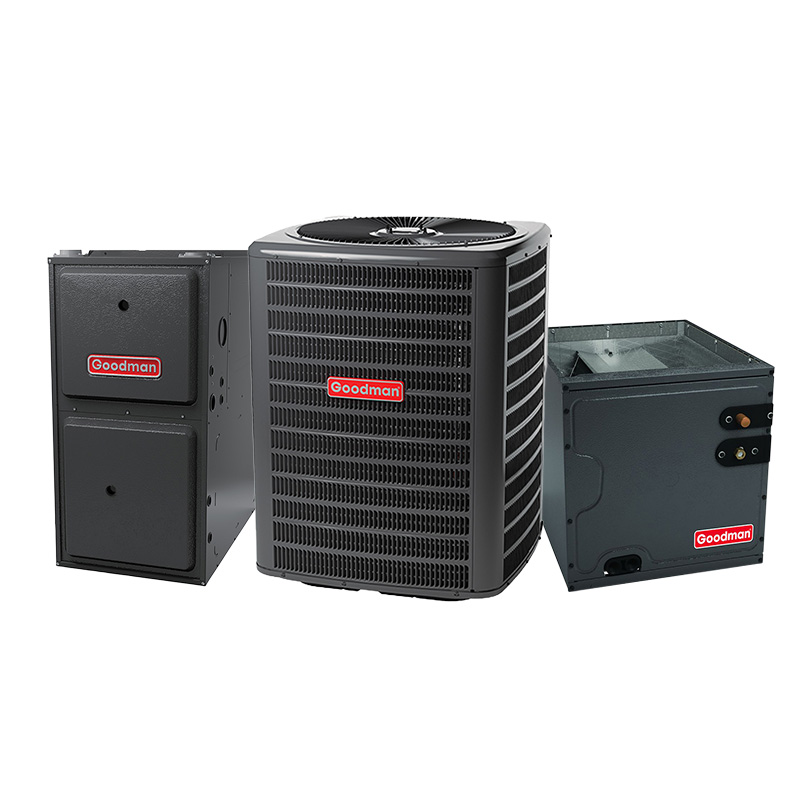
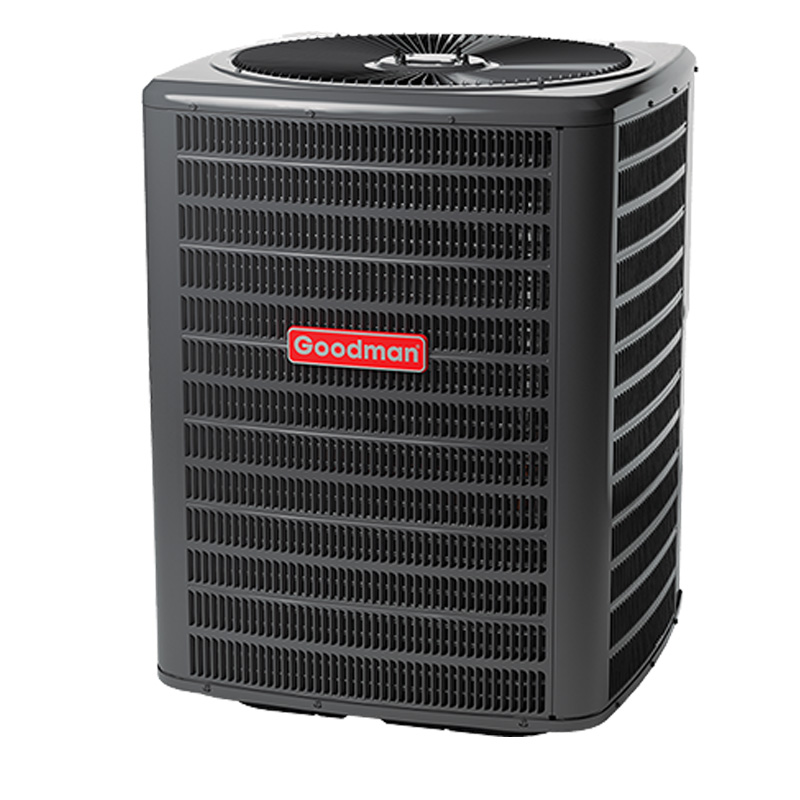
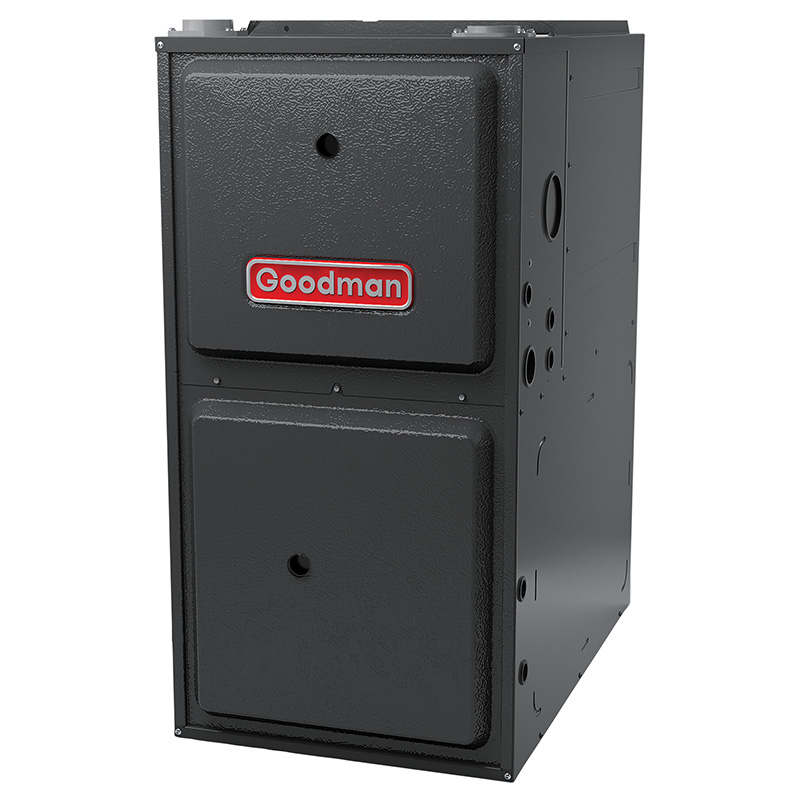
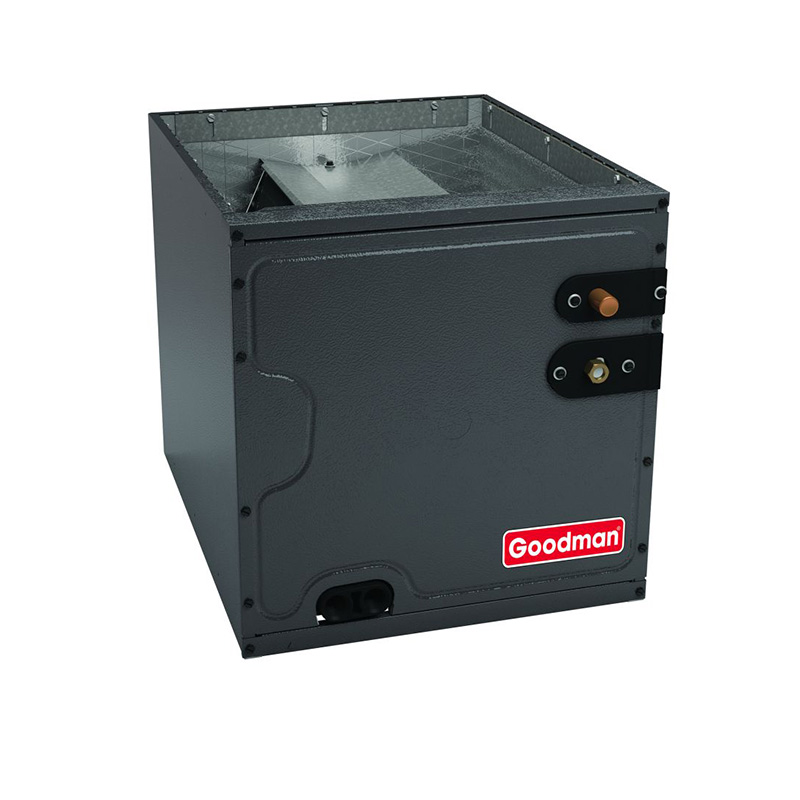
Goodman 2.5 Ton 14.5 SEER2 Dual Fuel Heat Pump & Gas Furnace Hybrid System – Modulating, Variable-Speed, 80000 BTU Gas Furnace, 97% AFUE, Upflow, R32
View on AC Direct see your lowest price →Check current price on AC Direct →
Key features
- Dual-fuel hybrid design switches automatically between heat pump and 97% AFUE gas furnace for fuel-cost optimization
- Modulating gas furnace stages output between approximately 40% and 100% capacity for steadier temps and quieter operation
- Variable-speed ECM blower motor reduces electricity use during fan, cooling, and low-demand heating cycles
- 14.5 SEER2 cooling efficiency meets current federal minimum standards for most U.S. climate regions
- R-32 refrigerant replaces R-410A with a lower global warming potential and marginally better thermodynamic efficiency
- Upflow configuration designed for installations where supply air exits the top of the air handler, typical in basement or closet setups
About this system
The Goodman GLXS5BA3010D is a 2.5-ton dual-fuel hybrid system pairing a 14.5 SEER2 heat pump with an 80,000 BTU, 97% AFUE modulating gas furnace in an upflow configuration. Dual-fuel means the system automatically switches between the electric heat pump and the gas furnace depending on which fuel source is more cost-efficient at a given outdoor temperature, a real advantage in climates where winters dip well below freezing but mild stretches are common. The R-32 refrigerant charge aligns with the industry’s gradual move away from higher-global-warming-potential refrigerants, and it carries a slight efficiency edge over R-410A in comparable equipment.
The modulating furnace and variable-speed air handler are the technical highlights here. Modulating heat output means the furnace ramps between roughly 40% and 100% capacity rather than cycling fully on and off, which translates to steadier indoor temperatures, quieter operation, and better humidity control during heating season. Variable-speed blower motor operation also reduces electricity consumption during fan-only and cooling runs. This combination suits a 1,200 to 1,800 square foot home in a mixed-climate region where both heating and cooling loads are meaningful, and where the homeowner wants lower operating costs without paying premium-brand prices upfront. It is a more complex system than a straight heat pump or straight gas furnace, so professional installation by a technician familiar with dual-fuel controls is not optional; it is essential.
The GLXS5BA3010D delivers a genuinely capable dual-fuel setup at a price point 15 to 25 percent below comparable Carrier, Trane, and Lennox hybrid systems, and the modulating furnace with variable-speed blower is real technology, not a budget compromise. The trade-off is that Goodman's long-term reliability record, particularly around evaporator coil leaks and compressor longevity past year 10, means this system rewards buyers who budget for a maintenance plan and vet their installer carefully.
Overall score is the average of the five ratings above.
What we like
- 97% AFUE modulating furnace is among the most efficient gas heating tiers available and delivers noticeably steadier comfort than single-stage units
- Dual-fuel logic can meaningfully reduce annual energy costs in climates with wide seasonal temperature swings
- R-32 refrigerant is forward-compatible with evolving environmental regulations, reducing long-term refrigerant-availability risk
- Variable-speed blower cuts electricity consumption during extended fan runs and contributes to better humidity control
- Purchase price runs 15 to 25 percent below equivalent Carrier, Trane, and Lennox hybrid configurations, freeing budget for a quality install
Trade-offs
- Goodman compressors average 10 to 14 years versus 15 to 20 years for premium brands, a real cost-of-ownership consideration over the system's life
- Evaporator coil leaks appear in a meaningful share of owner reports and can be expensive to address after the warranty period ends
- Dual-fuel controls and modulating components add installation complexity; a rushed or inexperienced install is the most common root cause of early failures
- ConsumerAffairs feedback averages around 2.5 out of 5, with repair cost complaints clustering after roughly year 7, suggesting a higher likelihood of mid-life service expenses
What homeowners and pros say about Goodman
Homeowners who post about Goodman equipment on review platforms tend to split along a familiar line. Those who had a careful install and scheduled routine maintenance often report years of uneventful operation and cite the lower purchase price as a genuine win. Those who ran into trouble frequently point to repair bills climbing after the seven-year mark, a pattern reflected in Goodman’s ConsumerAffairs score of around 2.5 out of 5, where the recurring complaint is not that the system stopped working but that it became expensive to keep running. Google dealer reviews tell a somewhat different story, averaging around 3.8 out of 5, with affordability and cooling performance showing up as the most consistent praise from buyers who worked with attentive local contractors.
HVAC technicians who service Goodman equipment regularly tend to be candid about the dual-run capacitor as the system’s most predictable weak point, noting it is a straightforward and relatively affordable repair in the 300 to 600 dollar range when caught early. They are more cautious about evaporator coil leaks, which surface in a meaningful share of owner histories and are harder to predict. Compressor longevity is the other honest conversation: Goodman compressors averaging 10 to 14 years versus the 15 to 20 years more commonly associated with Trane, Lennox, and Carrier units is a real difference over a system’s expected life. For a dual-fuel hybrid with modulating components like the GLXS5BA3010D, most experienced techs emphasize that the install quality and the dual-fuel control setup matter more than almost any other variable, and that a service agreement is worth the cost given the brand’s mid-life repair pattern.
Sources: ConsumerAffairs Goodman owner reviews, AHRI Directory of Certified Product Performance, U.S. DOE appliance and equipment efficiency standards, Goodman product specification sheets.
What it costs to run
At 14.5 SEER2, cooling this 2.5-ton system for a typical 1200-hour cooling season at the U.S. average electricity rate of $0.17/kWh works out to roughly $422 per year in cooling, about $35 less per year than a minimum-efficiency 13.4 SEER2 unit of the same size. Your real cost depends on your climate and local rate.
Method: (30,000 BTU/hr ÷ 14.5 SEER2) × 1200 hours ÷ 1000 × $0.17/kWh. Rate source: U.S. EIA average; cooling hours: moderate-climate estimate.
How it compares
| Brand | Comparable model | SEER2 | Stage | Price position |
|---|---|---|---|---|
| Goodman | GLXS5BA3010D Hybrid System | 14.5 | Variable / Modulating | Value pick |
| Carrier | Performance 15 Dual Fuel Series (25HCE5 heat pump with 59MN7 furnace) | 15+ | Two-stage | Typically 15 to 25 percent more than Goodman |
| Trane | XR15 Dual Fuel Series (XR15 heat pump with S9V2 furnace) | 15 | Two-stage | Typically 15 to 25 percent more than Goodman |
| Lennox | Merit Series Dual Fuel (14HPX heat pump with ML196E furnace) | 15 | Single-stage / Two-stage | Typically 15 to 25 percent more than Goodman |
Competitor rows are comparable single-stage units at similar efficiency; price is relative position, not a quote.
Questions about this system
How does the dual-fuel system decide when to run the heat pump versus the gas furnace?
The system uses a programmable outdoor temperature lockout, called a balance point, typically set between 35 and 45 degrees Fahrenheit. Above that threshold the heat pump handles heating; below it the gas furnace takes over because gas is generally cheaper than electricity for producing the same heat output in very cold conditions. Your installer should set this balance point based on your local utility rates and climate.
Is R-32 refrigerant going to be easy to service, and is it safe?
R-32 is classified as A2L, meaning it is mildly flammable but has a very low burning velocity and requires specific conditions to ignite. It is widely used in Europe and Asia and is becoming more common in the U.S. Most certified HVAC technicians can handle it, but you should confirm your service contractor has A2L certification before booking a repair. Refrigerant availability is not a current concern.
What are the most likely repair costs I should plan for with this Goodman system?
Dual-run capacitor failure is the most frequently reported issue across Goodman equipment and typically costs between 300 and 600 dollars to fix, including labor. Evaporator coil leaks show up in a meaningful share of owner reports and can run considerably higher. Budgeting for an extended warranty or a service plan makes sense given the brand's documented repair-cost pattern after year 7.
What size home is a 2.5-ton, 80,000 BTU system appropriate for?
As a rough guideline, 2.5 tons of cooling capacity suits approximately 1,200 to 1,600 square feet in a well-insulated home in a moderate climate, though a proper Manual J load calculation by your installer is the only reliable way to confirm sizing. The 80,000 BTU furnace output is well-matched to that cooling tonnage for most mixed-climate zones.
Does Goodman's warranty cover both the heat pump and the gas furnace components?
Goodman offers a 10-year parts warranty on registered systems, which covers both the heat pump components and the furnace heat exchanger under standard residential conditions. The heat exchanger typically carries a lifetime warranty on registered units. Registration must be completed within a set window after installation to activate the full coverage, so confirm that step with your contractor.
Specifications
| Cooling capacity | 2.5 Ton |
| Efficiency | 14.5 SEER2 |
| Furnace output | 80000 BTU |
| Furnace efficiency | 97% AFUE |
| Configuration | Upflow |
| Refrigerant | R-32 |
| Model | GLXS5BA3010D |