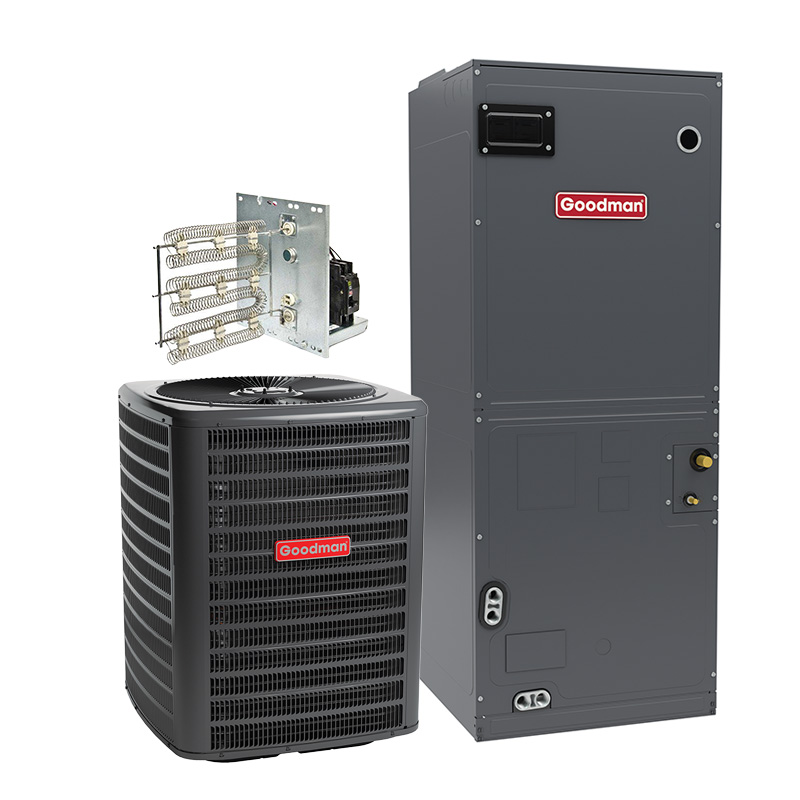
Goodman 2.5 Ton 14.5 SEER2 R32 Air Conditioner Split System With Electric Heat
View on AC Direct see your lowest price →Check current price on AC Direct →
Key features
- 2.5-ton capacity, suited to roughly 1,200 to 1,600 square feet depending on insulation and climate
- 14.5 SEER2 efficiency rating, meets current federal minimum standards for most U.S. regions
- R-32 refrigerant, lower global warming potential than R-410A and compliant with ongoing phase-down regulations
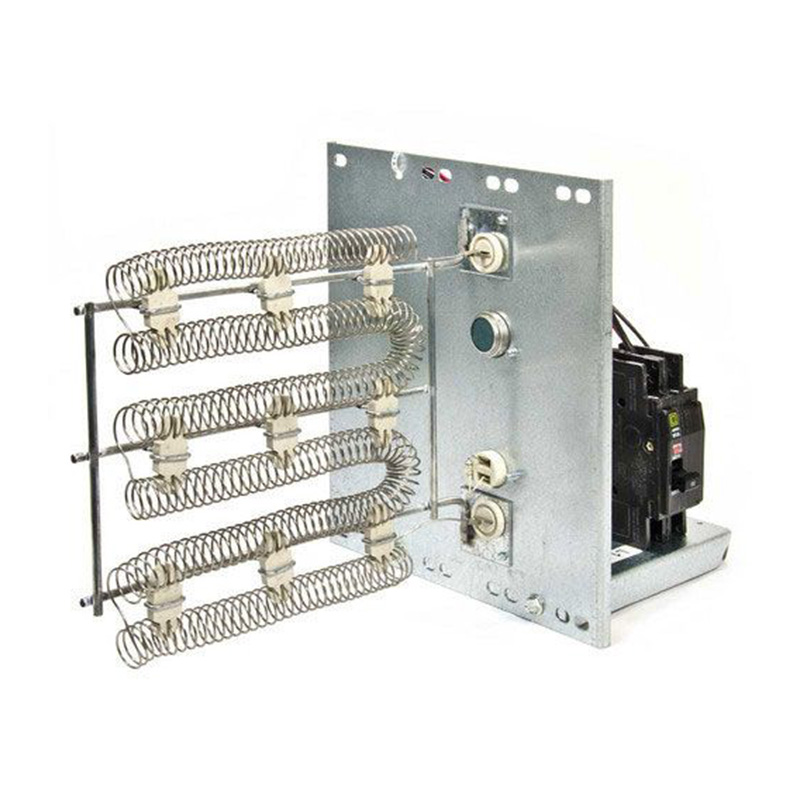
- Single-stage electric heat strip provides supplemental warmth for mild-winter climates without a gas connection
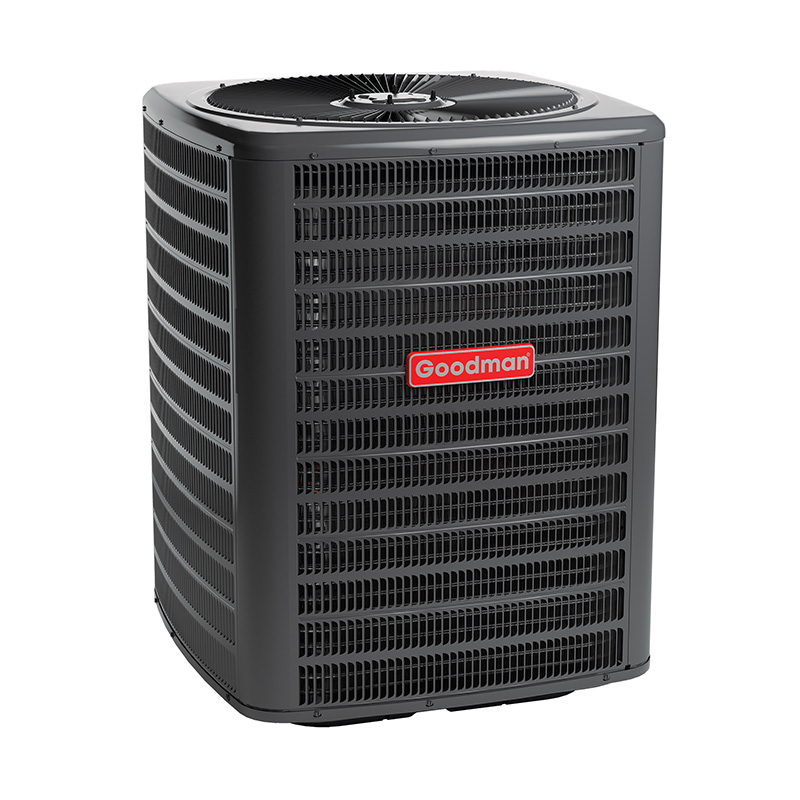
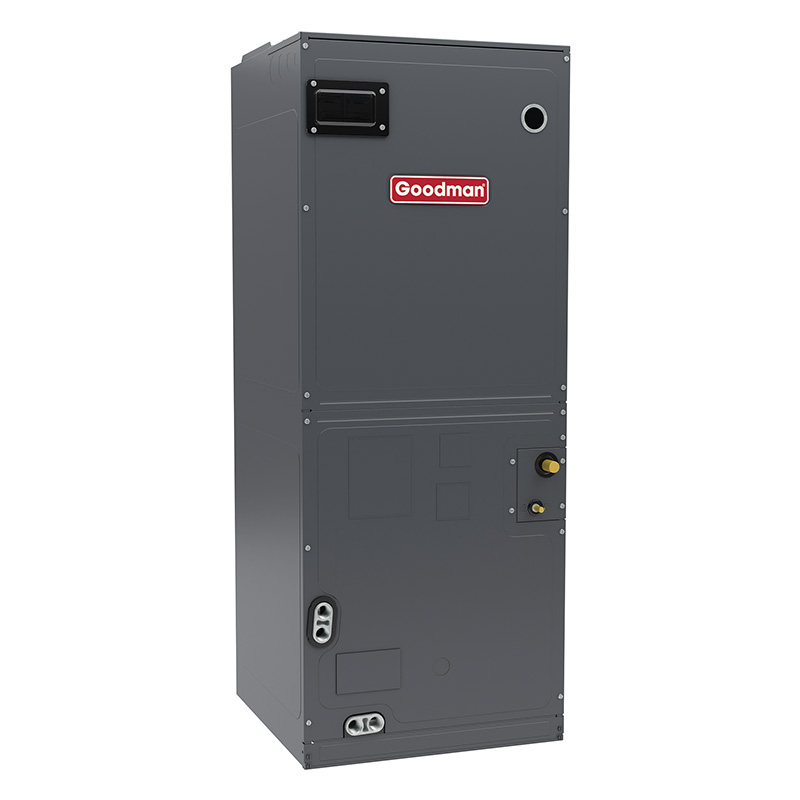
- Split-system configuration pairs an outdoor condensing unit with an indoor air handler for flexible installation
- Goodman factory warranty covers the compressor and parts; registration typically extends coverage to 10 years
About this system
The Goodman 2.5-ton 14.5 SEER2 R-32 split system targets homeowners cooling roughly 1,200 to 1,600 square feet who want a reliable, code-compliant upgrade without paying premium-brand prices. At 14.5 SEER2, it clears the federal minimum efficiency threshold for most U.S. climate zones, so you get competent seasonal performance without the added cost of variable-speed or two-stage technology. The R-32 refrigerant charge is a meaningful spec update: R-32 has a lower global warming potential than the R-410A it replaces, and it is gradually becoming the industry baseline as R-410A is phased down under EPA regulations.
The electric heat component makes this a practical all-in-one package for homes without a gas line or in mild-winter climates where a heat strip handles shoulder-season temperatures without straining the budget. A standard single-stage compressor means the system runs at full capacity whenever it cycles on, which is perfectly adequate for most residential loads but does mean it will not modulate output the way a variable-speed unit would. Homeowners who want tighter humidity control or near-silent operation may find a two-stage or variable system better suited to their needs, but for straightforward cooling and supplemental heat, this configuration gets the job done at a competitive price point.
The Goodman 2.5-ton 14.5 SEER2 R-32 system is a competent entry-level option for budget-conscious homeowners who prioritize upfront cost savings over premium longevity. It does the core job well when properly installed, but its value proposition rests heavily on that installation quality and on your comfort with a compressor lifespan that typically trails premium brands by several years. For straightforward cooling in a modestly sized home, it is a reasonable choice; for those expecting 20-plus years of trouble-free operation, the calculus is less clear.
Overall score is the average of the five ratings above.
What we like
- Priced roughly 15 to 25 percent below comparable Carrier, Trane, and Lennox equipment, lowering the upfront investment
- R-32 refrigerant is forward-compatible with the regulatory direction the industry is heading, reducing future service concerns
- 14.5 SEER2 satisfies federal efficiency minimums, keeping utility bills reasonable without overpaying for efficiency you may not need
- Single-stage operation keeps the system mechanically simple, which means fewer components that can fail
- Wide dealer and parts network means replacement capacitors and other common wear items are broadly available
Trade-offs
- Dual-run capacitors are the most frequently reported failure point, typically requiring a 300 to 600 dollar service call within the first decade
- Evaporator coil leaks appear in a meaningful share of owner feedback, a repair that can be expensive and disruptive
- Compressor longevity averages 10 to 14 years versus the 15 to 20 years documented for premium-brand compressors, a real long-term cost consideration
- Single-stage operation means the system cannot modulate output, so humidity control and comfort consistency are not as refined as two-stage or variable-speed alternatives
What homeowners and pros say about Goodman
Among homeowners who have lived with Goodman equipment, the most consistent praise is straightforward: the upfront price made a new system possible when a premium brand simply was not in the budget. On Google dealer reviews, Goodman systems average around 3.8 out of 5, with affordability cited most often as the deciding factor. The friction shows up later. On ConsumerAffairs, where scores skew toward people motivated to leave a complaint, Goodman sits at roughly 2.5 out of 5, and the recurring story is repair costs that begin climbing after about year seven. The specific components that generate the most feedback are dual-run capacitors (a relatively low-cost fix in the 300 to 600 dollar range but an annoyance that catches some owners off guard), evaporator coil leaks (a more serious and expensive repair), and general compressor longevity concerns, with documented averages running 10 to 14 years versus the 15 to 20 years commonly associated with Carrier, Trane, and Lennox compressors.
HVAC technicians who service Goodman equipment regularly tend to offer a measured take: the equipment is not bad, but it amplifies whatever the installation was. A rushed or poorly charged install produces early refrigerant leaks, and a handful of owners report refrigerant loss within the first year, typically traced back to install or initial charge quality rather than a product defect. Technicians who take time with the setup and who check refrigerant charge carefully tend to see much better long-term results from the same hardware. For this 2.5-ton R-32 unit specifically, the transition to R-32 is a genuine positive, and the single-stage simplicity means the system is not hiding complexity that could fail. The honest summary from the field is that Goodman rewards careful installation and modest expectations, and it is the right call for the right buyer.
Sources: ConsumerAffairs Goodman owner reviews, AHRI Directory of Certified Product Performance, U.S. DOE appliance and equipment efficiency standards, Goodman product specification sheets.
What it costs to run
At 14.5 SEER2, cooling this 2.5-ton system for a typical 1200-hour cooling season at the U.S. average electricity rate of $0.17/kWh works out to roughly $422 per year in cooling, about $35 less per year than a minimum-efficiency 13.4 SEER2 unit of the same size. Your real cost depends on your climate and local rate.
Method: (30,000 BTU/hr ÷ 14.5 SEER2) × 1200 hours ÷ 1000 × $0.17/kWh. Rate source: U.S. EIA average; cooling hours: moderate-climate estimate.
How it compares
| Brand | Comparable model | SEER2 | Stage | Price position |
|---|---|---|---|---|
| Goodman | 2.5 Ton 14.5 SEER2 R-32 Split System With Electric Heat | 14.5 | Single-stage | Value pick |
| Carrier | Comfort Series (24ACC6) | 14.3 to 15.2 | Single-stage | Typically 15 to 25 percent more than Goodman |
| Trane | XR14c | 14.3 to 15.0 | Single-stage | Typically 15 to 25 percent more than Goodman |
| Lennox | Merit Series (ML14XC1) | 14.3 to 15.0 | Single-stage | Typically 15 to 25 percent more than Goodman |
Competitor rows are comparable single-stage units at similar efficiency; price is relative position, not a quote.
Questions about this system
Will 2.5 tons be enough for my home, or should I size up?
Proper sizing depends on your square footage, insulation, ceiling height, window area, and local climate, not a simple square-foot rule. An HVAC contractor should perform a Manual J load calculation before installation; oversizing is a common mistake that worsens humidity control and shortens equipment life even on a quality unit.
Is R-32 refrigerant safe and easy to service in my area?
R-32 is mildly flammable (A2L classification) and requires technicians certified to handle it, which most licensed HVAC contractors now are as the industry transitions away from R-410A. Parts availability is growing rapidly, but if you are in a rural area with limited service options, confirm your local technicians are R-32 certified before purchasing.
How long should I realistically expect this system to last?
Based on documented Goodman compressor performance, a realistic expectation is 10 to 14 years before a major component failure, compared to 15 to 20 years for premium brands. Consistent maintenance, a clean filter schedule, and a good original installation push that number toward the higher end of the range.
Do I need to register the unit to get the full warranty, and what does it actually cover?
Yes, Goodman's extended warranty, typically 10 years on the compressor and covered components, requires product registration within a set window after installation. Without registration, coverage reverts to a shorter base period, so register the unit promptly and keep a copy of your installation paperwork.
What is the electric heat strip actually for, and will it handle winter heating on its own?
The electric heat strip provides supplemental or emergency heat when outdoor temperatures drop enough that the air conditioning compressor is not running in heat-pump mode. In mild-winter climates this can serve as primary winter heat, but in colder regions it is inefficient and expensive to run as the sole heat source; if you have harsh winters, evaluate whether a heat pump configuration or gas furnace pairing would be more cost-effective.
Specifications
| Cooling capacity | 2.5 Ton |
| Efficiency | 14.5 SEER2 |
| Refrigerant | R-32 |