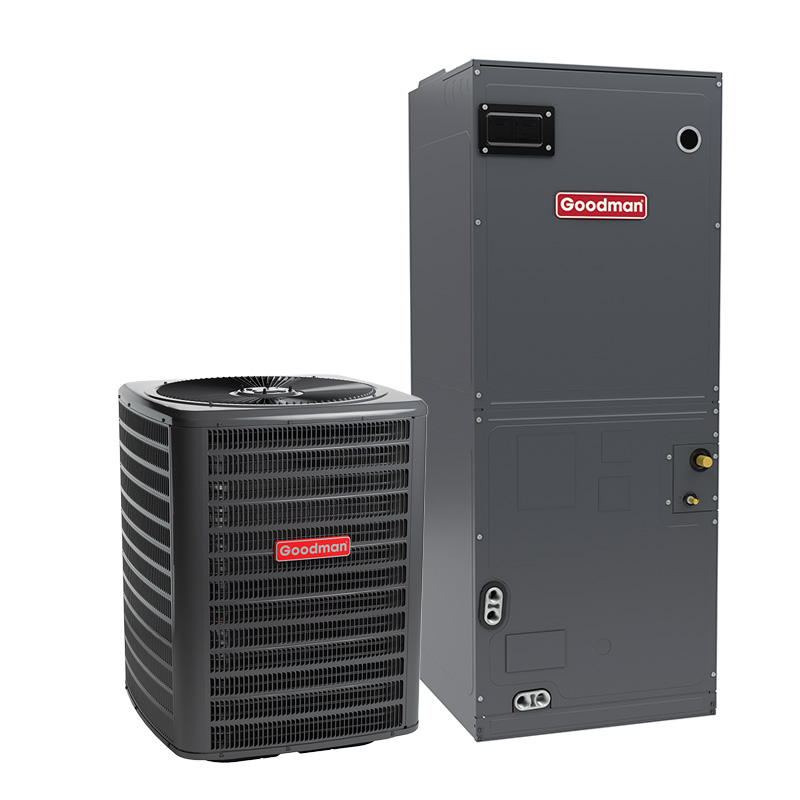
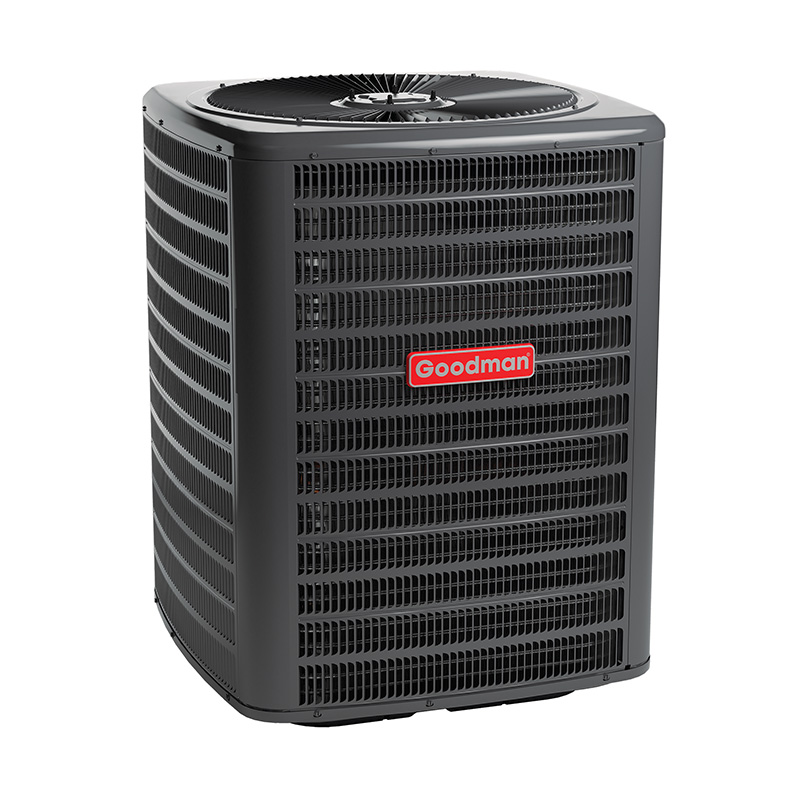
Goodman 2.5 Ton 14.5 SEER2 R32 Cooling Only Split System
View on AC Direct see your lowest price →Check current price on AC Direct →
Key features
- 2.5 ton single-stage cooling capacity for mid-size homes
- 14.5 SEER2 efficiency rating meets current federal minimums with modest running cost savings
- R-32 refrigerant with lower global warming potential than legacy R-410A systems
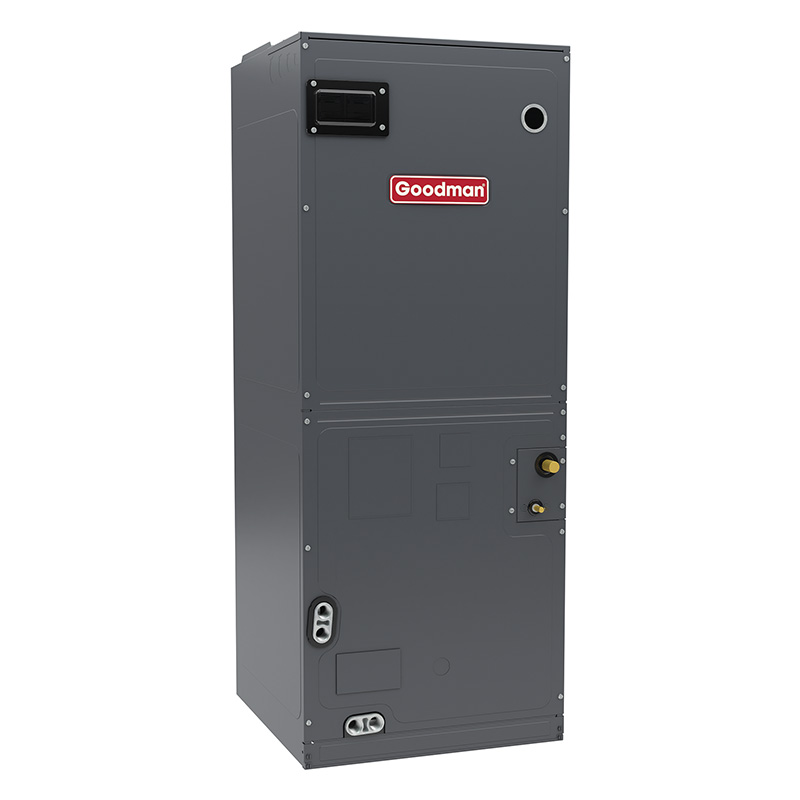
- Cooling-only split system designed to pair with a separate furnace or air handler
- 10-year parts warranty standard when registered within 60 days of installation
- Priced 15 to 25 percent below comparable Carrier, Trane, and Lennox units
About this system
The Goodman 2.5 Ton 14.5 SEER2 Cooling Only Split System is a straightforward single-stage air conditioner sized for homes roughly in the 1,200 to 1,600 square foot range, depending on local climate, insulation, and sun exposure. At 14.5 SEER2, it clears the current federal minimum efficiency standards and will deliver meaningfully lower operating costs than older R-22 or low-SEER equipment it typically replaces. The switch to R-32 refrigerant is a genuine forward-looking choice: R-32 has a global warming potential roughly 68 percent lower than R-410A, and it tends to operate at slightly better efficiency, though whether that shows up on your utility bill depends heavily on how well the system is charged and commissioned.
This is a cooling-only configuration, so it pairs with a separate gas furnace or air handler rather than functioning as a heat pump. That makes it a practical fit for climates with cold winters where a gas furnace is already in place and only the cooling side needs an upgrade. Buyers choosing this system are almost always prioritizing upfront cost over premium brand cachet. Goodman consistently prices 15 to 25 percent below comparable Trane, Lennox, and Carrier equipment, and for a homeowner planning a 10-to-12-year ownership horizon who wants reliable basic cooling without paying for variable-speed features they may not need, that math can make sense. The trade-off is that Goodman’s longevity record and repair frequency are not on par with the top-tier brands, and the system’s performance over its lifetime leans heavily on the quality of the installation.
The Goodman 2.5 Ton 14.5 SEER2 R-32 system is a reasonable entry-level choice for budget-conscious buyers who accept that lower upfront cost comes with a shorter expected compressor lifespan and a documented pattern of mid-life repair needs. It does exactly what it advertises at a price that is hard to match, but it rewards owners who hire experienced installers and keep up with maintenance. Buyers with a longer ownership horizon or lower tolerance for repair calls would be better served spending up for a premium brand.
Overall score is the average of the five ratings above.
What we like
- Competitive upfront price, consistently 15 to 25 percent below Carrier, Trane, and Lennox equivalents
- R-32 refrigerant is more environmentally responsible and future-proof than R-410A
- 14.5 SEER2 provides a solid efficiency step up over older low-SEER equipment being replaced
- 10-year registered parts warranty provides meaningful coverage on major components
- Wide installer availability across the US makes service and parts straightforward to source
Trade-offs
- Dual-run capacitor failures are the most commonly reported issue and typically begin appearing after year 5 to 7
- Compressor lifespan averages 10 to 14 years versus 15 to 20 years for premium brands, shortening the useful life window
- A minority of owners report refrigerant leaks within the first year, usually tied to installation quality rather than the unit itself
- Evaporator coil leaks appear in a meaningful share of owner reviews and can be a costly mid-life repair
What homeowners and pros say about Goodman
Homeowners who leave reviews about Goodman equipment tend to split into two camps that reflect the brand’s real position in the market. On ConsumerAffairs, where the platform skews toward complaint-driven feedback, Goodman averages around 2.5 out of 5 stars, and the recurring theme is repair costs climbing after roughly year seven. The specific failure modes that come up most in those accounts align with what technicians document in the field: dual-run capacitor failures, evaporator coil leaks, and compressors that begin showing wear earlier than owners expect, typically in the 10-to-14-year range rather than the 15-to-20 years common with premium brands. A smaller but notable group of owners also describe refrigerant leaks in the first year, which HVAC professionals generally attribute to installation or initial charge issues rather than factory defects.
The picture is more balanced when you look at Google dealer reviews, where Goodman-affiliated contractors average around 3.8 out of 5 stars across locations. In that channel, affordability is the most frequently cited positive, and many owners say the unit has run without incident for years when installed correctly. Installers tend to echo that nuance: Goodman equipment is workable, but it is less forgiving of rushed or imprecise installation than top-tier brands, and long-term performance correlates strongly with how carefully the system was commissioned. For this 2.5 Ton R-32 unit specifically, the R-32 refrigerant transition is a practical positive that pros note, since the industry is broadly moving away from R-410A and having an R-32 system already in place reduces future retrofit concerns.
Sources: ConsumerAffairs Goodman owner reviews, AHRI Directory of Certified Product Performance, U.S. DOE appliance and equipment efficiency standards, Goodman product specification sheets.
What it costs to run
At 14.5 SEER2, cooling this 2.5-ton system for a typical 1200-hour cooling season at the U.S. average electricity rate of $0.17/kWh works out to roughly $422 per year in cooling, about $35 less per year than a minimum-efficiency 13.4 SEER2 unit of the same size. Your real cost depends on your climate and local rate.
Method: (30,000 BTU/hr ÷ 14.5 SEER2) × 1200 hours ÷ 1000 × $0.17/kWh. Rate source: U.S. EIA average; cooling hours: moderate-climate estimate.
How it compares
| Brand | Comparable model | SEER2 | Stage | Price position |
|---|---|---|---|---|
| Goodman | 2.5 Ton 14.5 SEER2 R-32 Cooling Only | 14.5 | Single-stage | Value pick |
| Carrier | Comfort Series 24ACC | 14.5 | Single-stage | Typically 15 to 25 percent more than Goodman |
| Trane | XR14c | 14.5 | Single-stage | Typically 15 to 25 percent more than Goodman |
| Lennox | Merit ML14XC1 | 14.5 | Single-stage | Typically 15 to 25 percent more than Goodman |
Competitor rows are comparable single-stage units at similar efficiency; price is relative position, not a quote.
Questions about this system
Will this system work with my existing R-410A line set and air handler?
R-32 systems generally require compatible components because R-32 operates at slightly different pressures than R-410A and has different oil requirements. Your installer should verify that the existing line set is clean, properly sized, and rated for R-32 service, and that your air handler or coil is listed as compatible with this specific Goodman unit. Reusing old line sets is possible but must be assessed on a case-by-case basis by your tech.
What is the actual warranty coverage, and do I need to register the unit?
Goodman offers a 10-year parts limited warranty when the unit is registered online within 60 days of installation. If you miss that window, the default coverage drops to a shorter unregistered term, so registration is important. Labor costs are not covered by the manufacturer and must be addressed through your installer's workmanship warranty or a separate service agreement.
How important is installer quality for this specific system?
Very important. HVAC technicians consistently cite install quality as the single biggest factor in how long a Goodman unit lasts. A minority of owners report refrigerant leaks within the first year, which are typically traced back to improper charging or connection issues rather than a factory defect. Choosing a licensed, experienced contractor and confirming they will commission the system to manufacturer specs is the most impactful thing you can do to protect your investment.
What repairs should I budget for over the life of this system?
Dual-run capacitor failures are the most commonly reported issue and typically run between 300 and 600 dollars to repair. Evaporator coil leaks appear in a meaningful share of owner reviews and are more expensive to address. Compressors on Goodman units tend to average 10 to 14 years, so if you plan to keep the home longer, budgeting for a potential compressor replacement or full system swap around that window is prudent.
Is 14.5 SEER2 sufficient, or should I pay more for a higher-efficiency model?
For most moderate climates and average usage patterns, 14.5 SEER2 will provide a noticeable improvement over older equipment and keep operating costs reasonable without a large premium. In very hot climates where the unit runs long hours daily for many months, or if your utility rates are high, a 16 or 17 SEER2 model may pay back the cost difference within a few years. Running the numbers with your installer based on your local utility rate and annual cooling hours is the most honest way to evaluate the upgrade.
Specifications
| Cooling capacity | 2.5 Ton |
| Efficiency | 14.5 SEER2 |
| Refrigerant | R-32 |