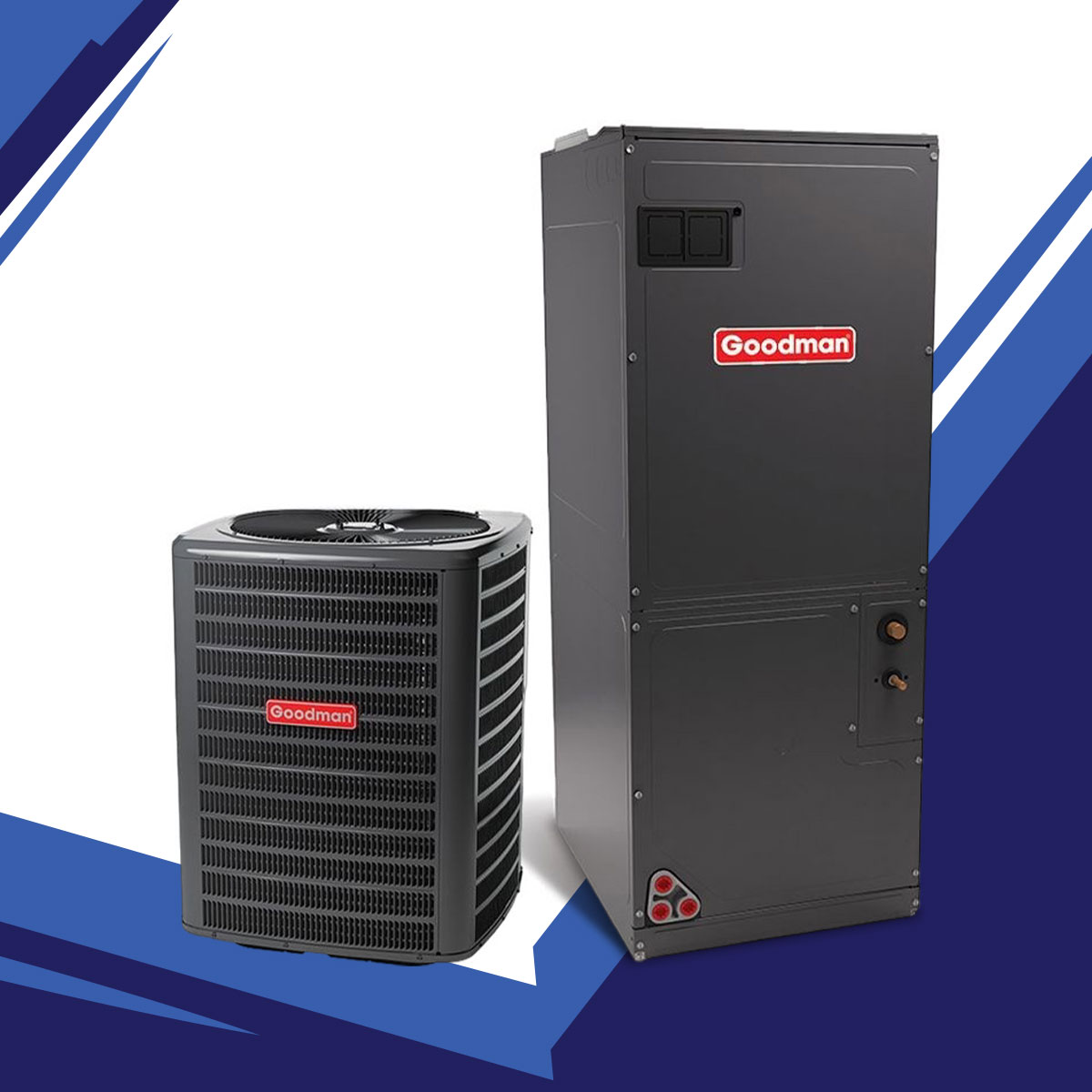
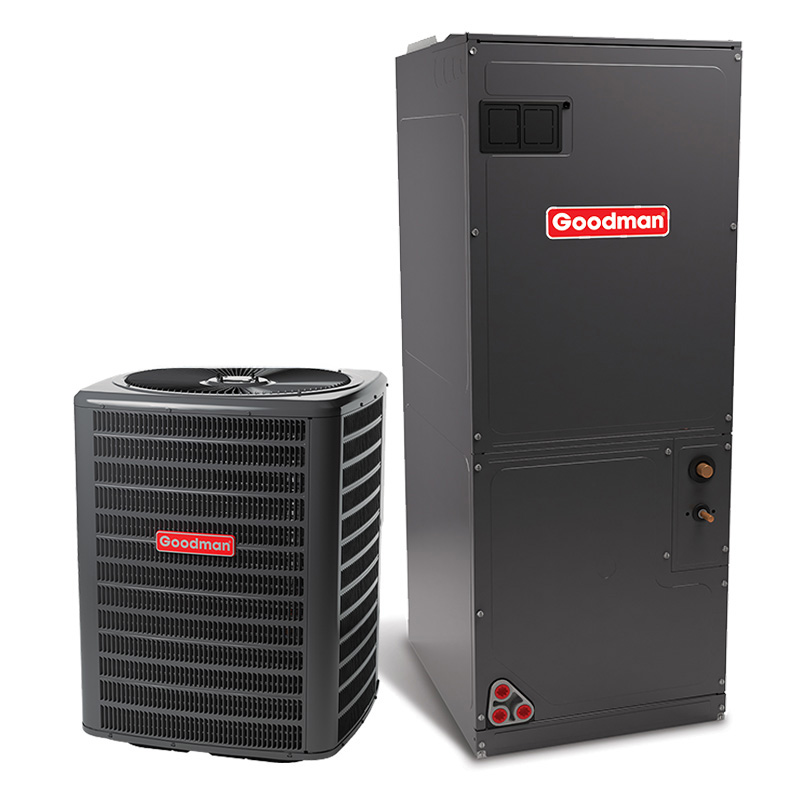
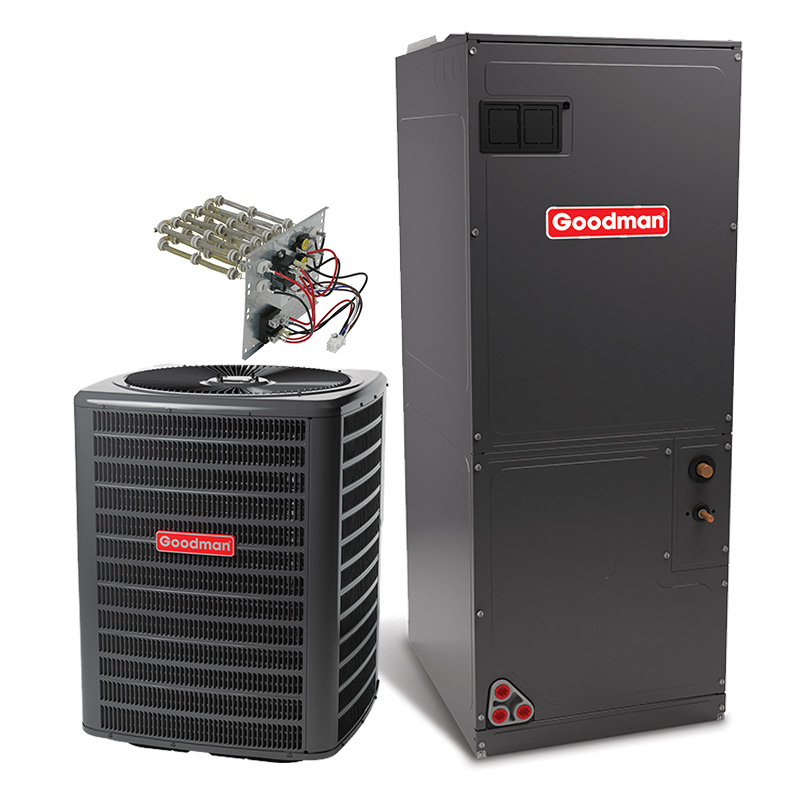
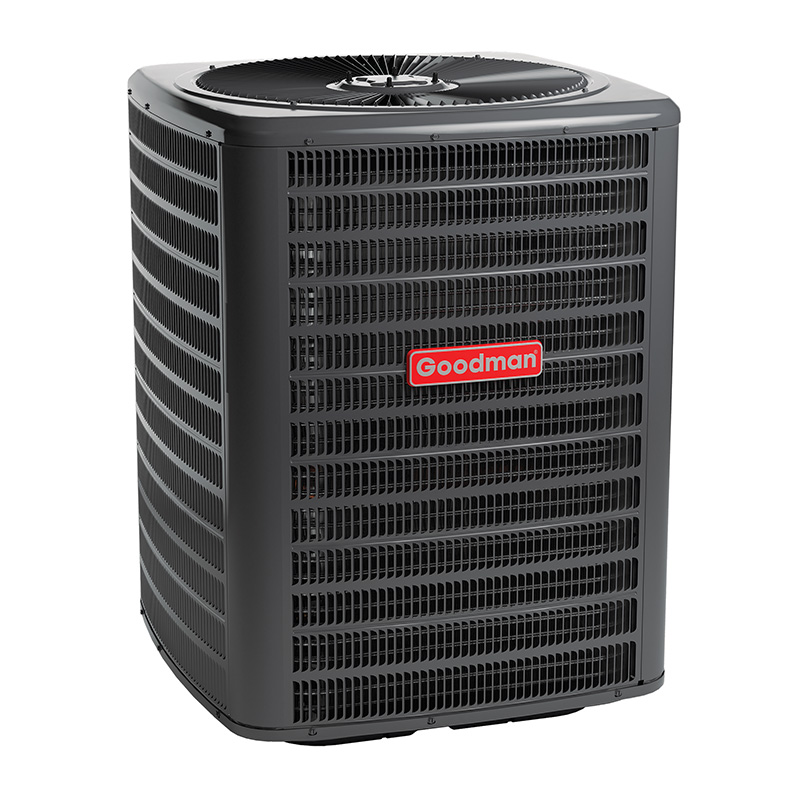
Goodman 2.5 Ton 14.5 SEER2 R32 Heat Pump Split System ***PREMIUM SEASONAL SPECIALS***
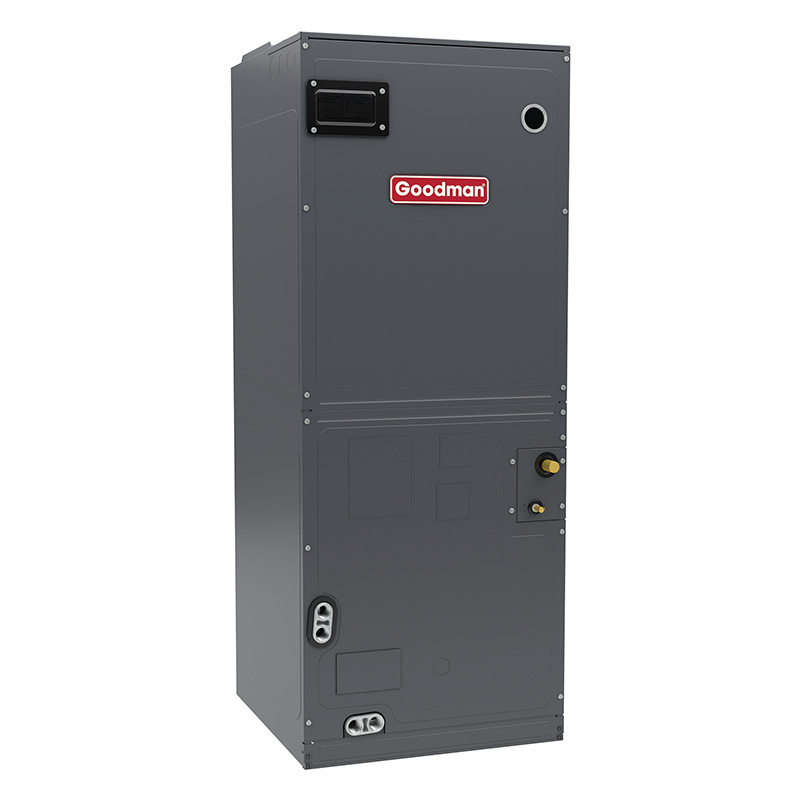
View on AC Direct see your lowest price →Check current price on AC Direct →
Key features
- 2.5-ton capacity suited to homes roughly 1,200 to 1,600 square feet depending on climate and load
- 14.5 SEER2 efficiency meets current federal minimums for year-round heating and cooling
- R-32 refrigerant with lower global warming potential than R-410A and single-component servicing
- Split-system configuration pairs an outdoor heat pump unit with a compatible indoor air handler or coil
- Single-stage compressor operation designed for straightforward installation and service
- Goodman factory warranty covers parts and compressor (verify current terms at registration)
About this system
The Goodman 2.5-ton 14.5 SEER2 R-32 heat pump split system is built for mid-size homes, typically in the 1,200 to 1,600 square foot range, where keeping first costs low matters as much as the equipment itself. A 14.5 SEER2 rating clears the current federal minimum efficiency threshold and sits at the entry level of today’s heat pump market, which is exactly what a buyer in a mild to moderate climate who is replacing aging equipment on a budget should expect. It is not a high-efficiency showcase, but it delivers reliable year-round heating and cooling without the premium price tag of major brands.
The shift to R-32 refrigerant is meaningful. R-32 has a global warming potential roughly two-thirds lower than R-410A, and its single-component makeup simplifies recovery and recharge during service. At 2.5 tons, this system handles moderate cooling loads well, but sizing should always be confirmed with a Manual J calculation before purchase. As with any Goodman system, the quality of the installation and the skill of the installer will shape long-term performance more than almost any spec on the data sheet.
The Goodman 2.5-ton 14.5 SEER2 R-32 heat pump is a workable, budget-conscious choice for homeowners who want to replace an aging system without stretching finances, provided they hire an experienced installer and budget for eventual capacitor or coil service. It will not match the longevity or quiet operation of premium brands, and efficiency is entry-level rather than impressive. What it offers is a lower upfront cost and a nationally available service network.
Overall score is the average of the five ratings above.
What we like
- Purchase price runs roughly 15 to 25 percent below comparable Carrier, Trane, and Lennox systems
- R-32 refrigerant is lower-GWP and easier for technicians to service than blended refrigerants
- 14.5 SEER2 meets federal efficiency standards and is adequate for moderate climates
- Wide parts and service availability due to Goodman's large installed base across the country
- Single-stage operation keeps the system mechanically straightforward and service costs relatively predictable
Trade-offs
- Compressor lifespan averages 10 to 14 years versus 15 to 20 years typical of premium brands, meaning earlier replacement costs
- Dual-run capacitor failures are the most documented repair, generally appearing in years five through ten and costing $300 to $600 per occurrence
- Evaporator coil leaks appear in a meaningful share of owner reports and can be expensive to address outside warranty
- A minority of owners report refrigerant leaks in the first year, most often traced to installation or factory charge issues rather than defective hardware
What homeowners and pros say about Goodman
Homeowners who track down Goodman feedback online encounter a split picture. On ConsumerAffairs, where the scoring skews toward people motivated by frustration, Goodman sits at roughly 2.5 out of 5, and the recurring complaint pattern involves repair bills that start climbing after about year seven. The specific hardware concerns named most often are dual-run capacitor failures, evaporator coil leaks, and compressor replacements that arrive earlier than owners expected, with compressor lifespan averaging 10 to 14 years compared to the 15 to 20 years owners of premium brands tend to see. On Google dealer review pages, the score rises to around 3.8 out of 5 across several hundred reviews per location, where the most consistent praise is straightforward: the system cost less than the competition, it was installed without drama, and it works.
HVAC technicians tend to have a more nuanced view of this specific system. Most will acknowledge that Goodman equipment is installable and serviceable, and that the brand’s large installed base means parts are easy to source. What experienced pros consistently emphasize is that a Goodman unit in a careful, properly commissioned installation will outperform a premium brand that was rushed or improperly sized. For this R-32 unit in particular, some technicians note that refrigerant leaks reported in the first year almost always point to installation workmanship or a charge issue at startup rather than a factory defect. The practical takeaway is that vetting your installer matters as much as the unit itself, and the capacitor should be on your annual maintenance checklist from year five onward.
Sources: ConsumerAffairs Goodman owner reviews, AHRI Directory of Certified Product Performance, U.S. DOE appliance and equipment efficiency standards, Goodman product specification sheets.
What it costs to run
At 14.5 SEER2, cooling this 2.5-ton system for a typical 1200-hour cooling season at the U.S. average electricity rate of $0.17/kWh works out to roughly $422 per year in cooling, about $35 less per year than a minimum-efficiency 13.4 SEER2 unit of the same size. Your real cost depends on your climate and local rate.
Method: (30,000 BTU/hr ÷ 14.5 SEER2) × 1200 hours ÷ 1000 × $0.17/kWh. Rate source: U.S. EIA average; cooling hours: moderate-climate estimate.
How it compares
| Brand | Comparable model | SEER2 | Stage | Price position |
|---|---|---|---|---|
| Goodman | 2.5-Ton 14.5 SEER2 R-32 Heat Pump Split System | 14.5 | Single-stage | Value pick |
| Carrier | Performance Series 24PAA (base heat pump line) | 15 to 15.2 | Single-stage | Typically 15 to 25 percent more than Goodman at similar efficiency |
| Trane | XR15 Heat Pump | 15 | Single-stage | Typically 15 to 25 percent more than Goodman at similar efficiency |
| Lennox | XP15 Heat Pump | 15.5 | Single-stage | Typically 15 to 25 percent more than Goodman at similar efficiency |
Competitor rows are comparable single-stage units at similar efficiency; price is relative position, not a quote.
Questions about this system
Is 14.5 SEER2 enough efficiency, or should I spend more for a higher-rated unit?
14.5 SEER2 meets the current federal minimum and will provide meaningful savings over an older 10 SEER system, but it is not a top-tier efficiency rating. If your electricity rates are high or you run the system heavily, stepping up to a 17 or 18 SEER2 variable-speed unit will cut operating costs further. For average climates and moderate run times, 14.5 SEER2 is functional rather than exceptional.
What does the switch to R-32 refrigerant mean for me as the owner?
R-32 is a single-component refrigerant, which means a technician can recharge it without replacing the entire refrigerant charge if a small leak is found and repaired. It also has a lower environmental impact than R-410A. From a practical standpoint, most qualified HVAC technicians are already certified and equipped to handle R-32, so service should not be harder to find than with older refrigerants.
How concerned should I be about the capacitor failures I keep reading about in Goodman reviews?
Dual-run capacitor failure is the most consistently reported repair issue with Goodman heat pumps, often appearing somewhere between years five and ten. The good news is that a capacitor is one of the least expensive HVAC repairs, typically $300 to $600 with a service call. Keeping the outdoor unit clean and having a technician check capacitor health during annual maintenance can catch a weakening capacitor before it causes a breakdown.
What indoor equipment does this heat pump need, and does it come with any of it?
A split-system heat pump requires a compatible indoor air handler or an uncased evaporator coil mounted on your furnace, plus a thermostat rated for heat pump operation. This listing covers the outdoor unit and the outdoor-indoor refrigerant line set connection; the indoor components are sold separately. Confirm compatibility with your installer before purchasing to avoid mismatched equipment that can void warranty coverage or reduce efficiency.
How does Goodman's warranty compare to what I would get from Carrier or Trane on a similar unit?
Goodman offers a competitive parts and compressor warranty when the unit is registered promptly after installation, and the coverage terms are broadly similar to what premium brands advertise. Where the difference shows up is in practice: premium brands have a stronger long-term reliability record, so the warranty is called on less often. Always register your Goodman unit within the required window and read the fine print on labor coverage, which the manufacturer warranty does not include.
Specifications
| Cooling capacity | 2.5 Ton |
| Efficiency | 14.5 SEER2 |
| Refrigerant | R-32 |