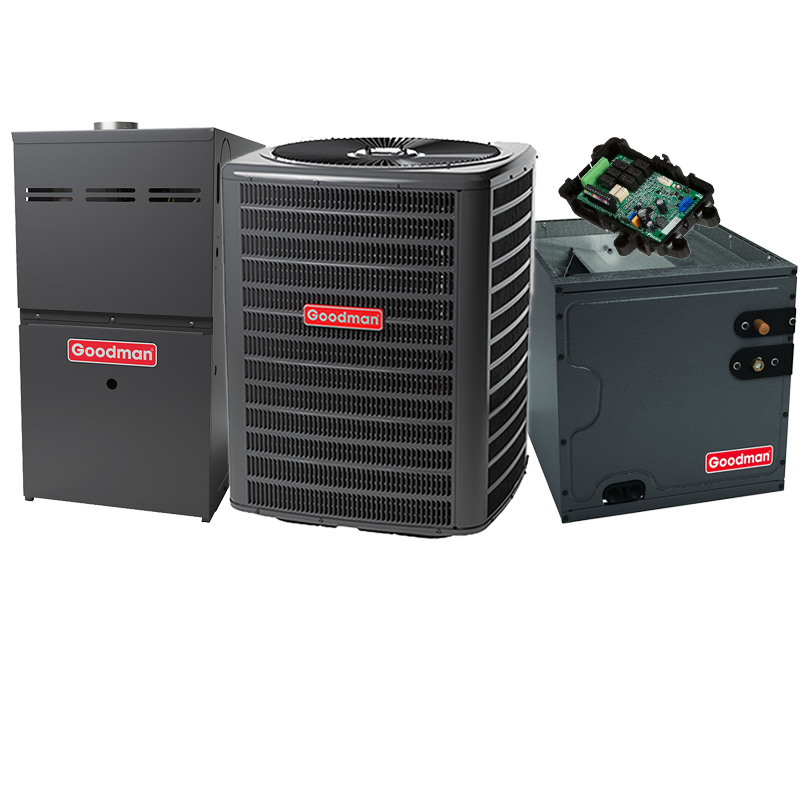
Goodman 2.5 Ton 14 SEER2 60000 BTU 80% Two-Stage Gas Furnace With R32 Air Conditioner Condenser And Coil System – Upflow
View on AC Direct see your lowest price →Check current price on AC Direct →
Key features
- 2.5-ton cooling capacity with 14 SEER2 efficiency rating
- 60,000 BTU two-stage gas furnace for more consistent heating comfort
- R-32 refrigerant with lower global warming potential than R-410A
- Upflow configuration designed for basement or ground-level installs
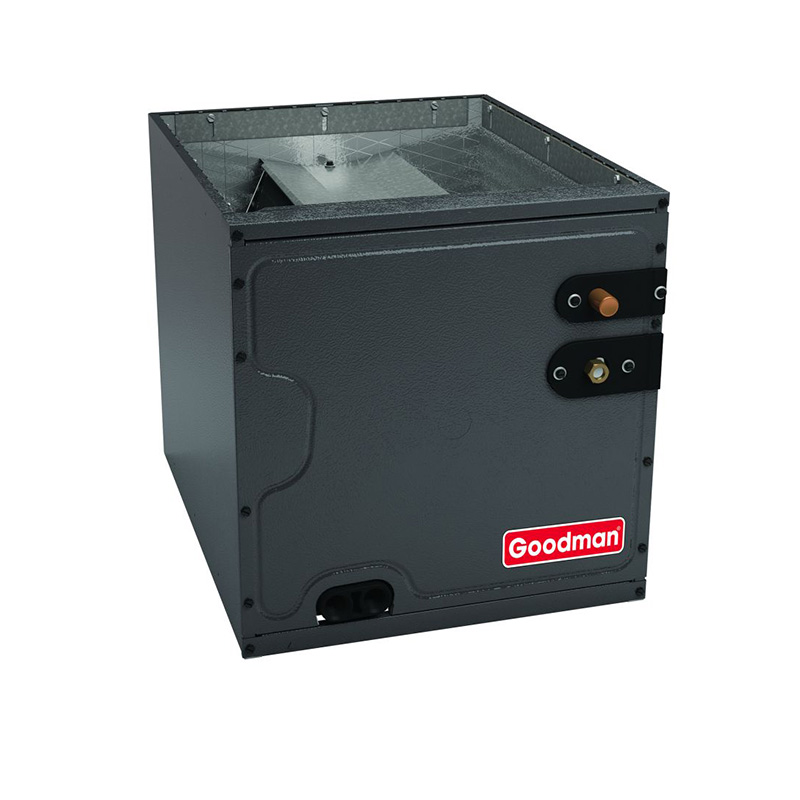
- Matched evaporator coil included for a factory-tested system combination
- Priced 15 to 25 percent below comparable Trane, Lennox, and Carrier systems
About this system
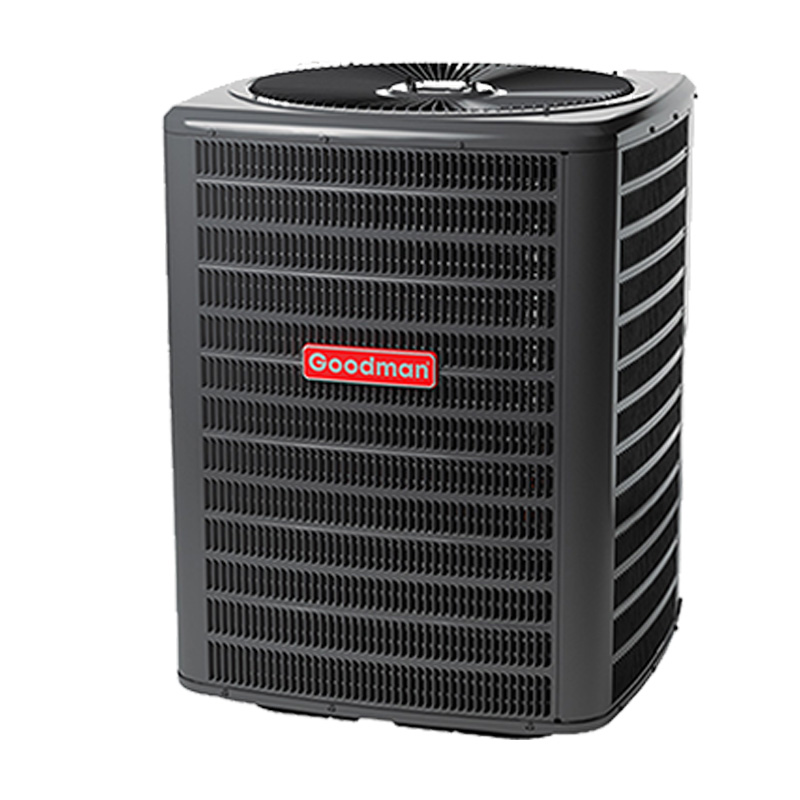
This Goodman upflow system pairs a 2.5-ton R-32 air conditioner condenser and matched evaporator coil with a 60,000 BTU two-stage gas furnace, making it a full split-system replacement suited to homes in the 1,200 to 1,800 square foot range depending on insulation, climate, and duct layout. The 14 SEER2 rating sits at the federal minimum efficiency threshold that took effect in 2023, so it meets current code but will not win any awards for energy savings compared to 16 SEER2 or higher tiers. R-32 refrigerant is a meaningful forward-looking detail here: it carries a lower global warming potential than the R-410A it replaces and is increasingly the industry standard, which should make future servicing less complicated as R-410A availability tightens.
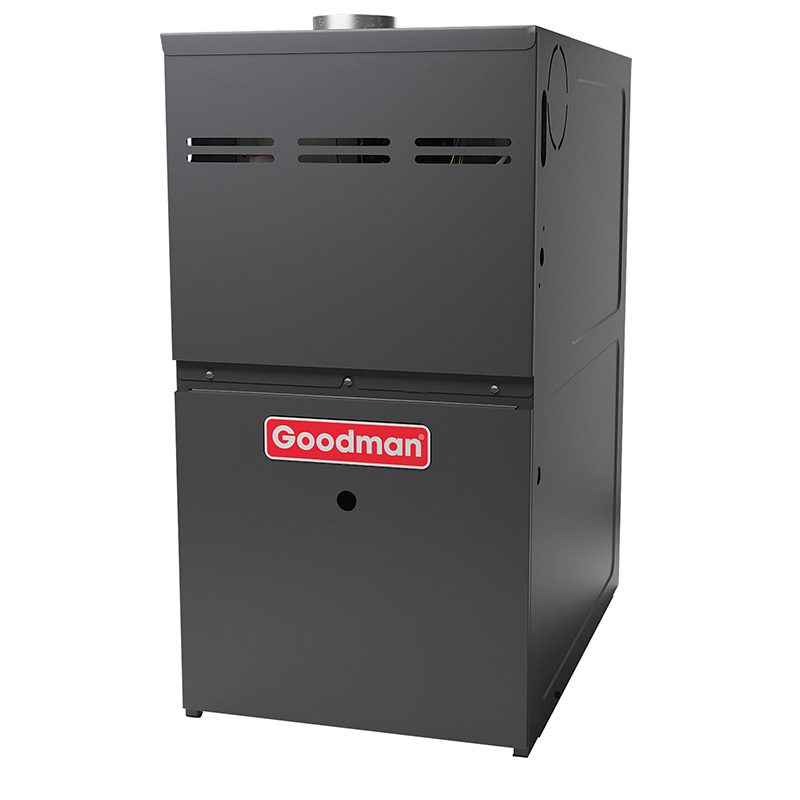
The two-stage furnace is the standout spec in this bundle. Running on low fire the majority of the time, it cycles less aggressively than a single-stage unit, which tends to produce more even temperatures room to room and reduces the temperature swings that single-stage systems create. The upflow configuration means warm air exits the top of the air handler and rises naturally through the duct system, making it the right fit for installations where the furnace sits in a basement or ground-level utility closet with supply ducts running overhead. Buyers who need a downflow, horizontal, or multi-position setup should confirm compatibility before purchasing.
This Goodman bundle delivers a complete, code-compliant split system at a price point well below premium brands, with the two-stage furnace adding real comfort value over base single-stage alternatives. The trade-offs are real: compressor and coil longevity lag behind premium competitors, and the system's long-term performance depends heavily on who installs and commissions it. Buyers prioritizing upfront cost savings and willing to budget for routine maintenance will find it a reasonable choice; those expecting set-it-and-forget-it reliability over 15-plus years may want to look higher up the market.
Overall score is the average of the five ratings above.
What we like
- Meaningfully lower purchase price than Carrier, Trane, or Lennox equivalents at similar efficiency
- Two-stage furnace reduces temperature swings and runs quieter than single-stage units most of the time
- R-32 refrigerant is forward-compatible as R-410A is phased out industry-wide
- Matched coil-and-condenser combination reduces compatibility guesswork and supports warranty coverage
- Dual-run capacitor failures, the most common reported issue, are a relatively low-cost repair in the $300 to $600 range
Trade-offs
- Compressor lifespan averages 10 to 14 years versus 15 to 20 years for premium brands, a meaningful long-term cost difference
- Evaporator coil leaks appear in a notable share of owner reviews, risking refrigerant loss and costly mid-life repairs
- 14 SEER2 is minimum-efficiency tier, so monthly energy costs will be higher than a 16 SEER2 or above alternative
- A minority of owners report refrigerant leaks within the first year, typically tied to install or charge quality rather than a factory defect, but it does happen
What homeowners and pros say about Goodman
Goodman earns consistent praise for affordability, and that comes through clearly in Google dealer reviews, which average around 3.8 out of 5 across hundreds of reviews per location, with low upfront cost as the most frequently mentioned positive. The picture gets more complicated on complaint-oriented channels: ConsumerAffairs scores Goodman at roughly 2.5 out of 5, with a recurring pattern of owners reporting that repair costs start climbing noticeably after about year seven. For a system like this one, that pattern is worth taking seriously rather than dismissing, because it tracks with documented failure modes: dual-run capacitor failures are the most commonly reported issue and are relatively affordable to fix, but evaporator coil leaks and compressor failures are costlier problems that show up in owner accounts with enough frequency to factor into any honest long-term cost estimate.
HVAC technicians who work on Goodman equipment regularly tend to have a nuanced view. They acknowledge that a well-installed, properly commissioned Goodman system can deliver solid service for a decade or more, and they point to install quality as the single biggest variable in how long one lasts. The compressor lifespan reality is harder to argue with: Goodman compressors tend to average 10 to 14 years in practice, compared to 15 to 20 years for premium brands, which is a real difference when you are deciding whether to replace or repair a system in year 12. The R-32 refrigerant in this specific bundle is a forward-thinking detail that pros generally view positively. First-year refrigerant leaks, while a minority experience, are almost always attributed to installation or initial charge quality rather than manufacturing, which underscores why choosing an experienced installer matters as much as the equipment itself.
Sources: ConsumerAffairs Goodman owner reviews, AHRI Directory of Certified Product Performance, U.S. DOE appliance and equipment efficiency standards, Goodman product specification sheets.
What it costs to run
At 14 SEER2, cooling this 2.5-ton system for a typical 1200-hour cooling season at the U.S. average electricity rate of $0.17/kWh works out to roughly $437 per year in cooling, about $20 less per year than a minimum-efficiency 13.4 SEER2 unit of the same size. Your real cost depends on your climate and local rate.
Method: (30,000 BTU/hr ÷ 14 SEER2) × 1200 hours ÷ 1000 × $0.17/kWh. Rate source: U.S. EIA average; cooling hours: moderate-climate estimate.
How it compares
| Brand | Comparable model | SEER2 | Stage | Price position |
|---|---|---|---|---|
| Goodman | 2.5 Ton 14 SEER2 / 60K BTU Two-Stage Upflow Bundle | 14 | Two-stage furnace / single-stage cooling | Value pick |
| Carrier | Comfort 14 Series (CA14NA / 59TP6) | 14 | Single-stage | 15 to 25 percent above this Goodman bundle |
| Trane | XR14c / S8X1 80% AFUE Two-Stage | 14 | Two-stage furnace / single-stage cooling | 20 to 30 percent above this Goodman bundle |
| Lennox | Merit ML14XC1 / ML180UH Two-Stage | 14 | Two-stage furnace / single-stage cooling | 20 to 30 percent above this Goodman bundle |
Competitor rows are comparable single-stage units at similar efficiency; price is relative position, not a quote.
Questions about this system
Does this system come with the AFUE rating listed anywhere, and what does it mean for my gas bills?
The specs for this bundle do not publish a specific AFUE figure, so confirm the furnace model number with the seller to look up its rated efficiency. Most Goodman 80% AFUE furnaces in this class convert 80 cents of every dollar of gas into heat, meaning 20 percent exits as exhaust. A 96% AFUE furnace would cut that waste significantly, which matters most in cold climates with long heating seasons.
Why does the system use R-32 instead of R-410A, and does that affect who can service it?
R-32 has a global warming potential roughly 68 percent lower than R-410A and is increasingly the refrigerant of choice as R-410A is phased down under EPA regulations. Any EPA Section 608-certified HVAC technician can handle R-32, but not all contractors stock it yet, so it is worth confirming your local service providers carry it before you need an emergency call.
What are the most common repairs owners run into with Goodman systems like this one?
Dual-run capacitor failures are the most frequently reported issue and typically cost $300 to $600 to fix, which is considered a routine repair. Evaporator coil leaks show up in a meaningful portion of owner reviews and are a more expensive problem. A small minority of owners have reported refrigerant leaks within the first year, which is usually traced to the installation rather than a factory defect.
Is the upflow configuration a problem if my furnace closet is in a hallway or a tight utility space?
Upflow units need adequate clearance above the unit for the supply plenum and ductwork to connect and for service access. Confirm the unit's physical dimensions against your available space before ordering, and make sure your installer reviews the manufacturer's minimum clearance requirements, which vary by model. If your ductwork runs below the unit rather than above, you need a downflow or horizontal configuration instead.
How does Goodman's warranty on this system compare to Carrier or Trane?
Goodman typically offers a 10-year parts warranty on registered systems, which is competitive on paper with Carrier and Trane warranties at similar price points. The key requirement is registering the product within a specified window after installation, and coverage depends on the unit being installed by a licensed contractor. Read the specific warranty terms for this bundle carefully, as coverage on the coil and condenser may differ from the furnace.
Specifications
| Cooling capacity | 2.5 Ton |
| Efficiency | 14 SEER2 |
| Furnace output | 60000 BTU |
| Configuration | Upflow |
| Refrigerant | R-32 |