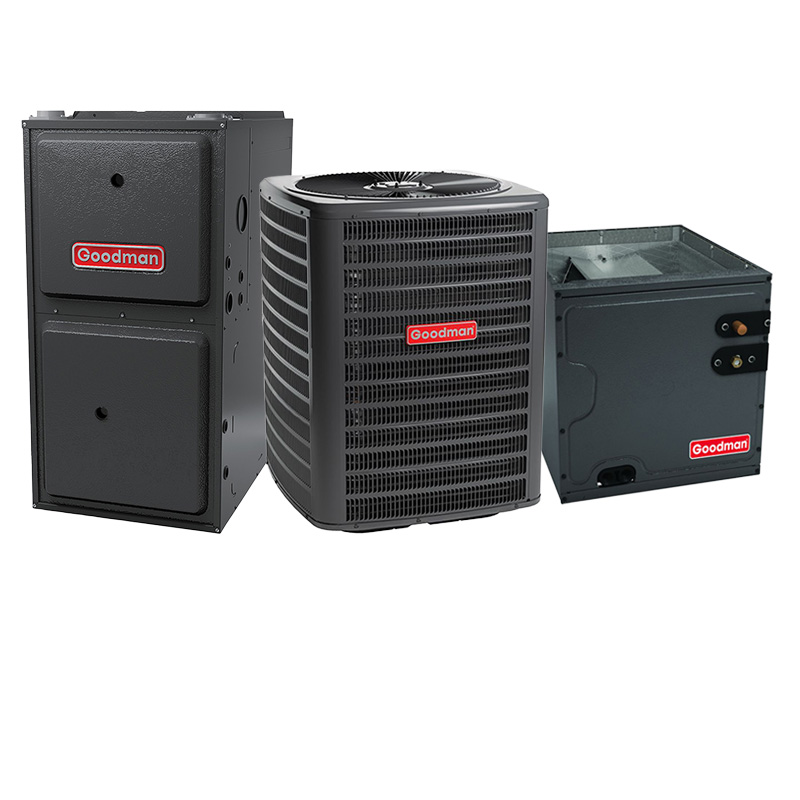
Goodman 2.5 Ton 14 SEER2 60000 BTU 96% AFUE Multi-Speed ECM Gas Furnace System – Upflow | R32
View on AC Direct see your lowest price →Check current price on AC Direct →
Key features
- 14 SEER2 cooling efficiency meets 2023+ federal minimums for most U.S. regions
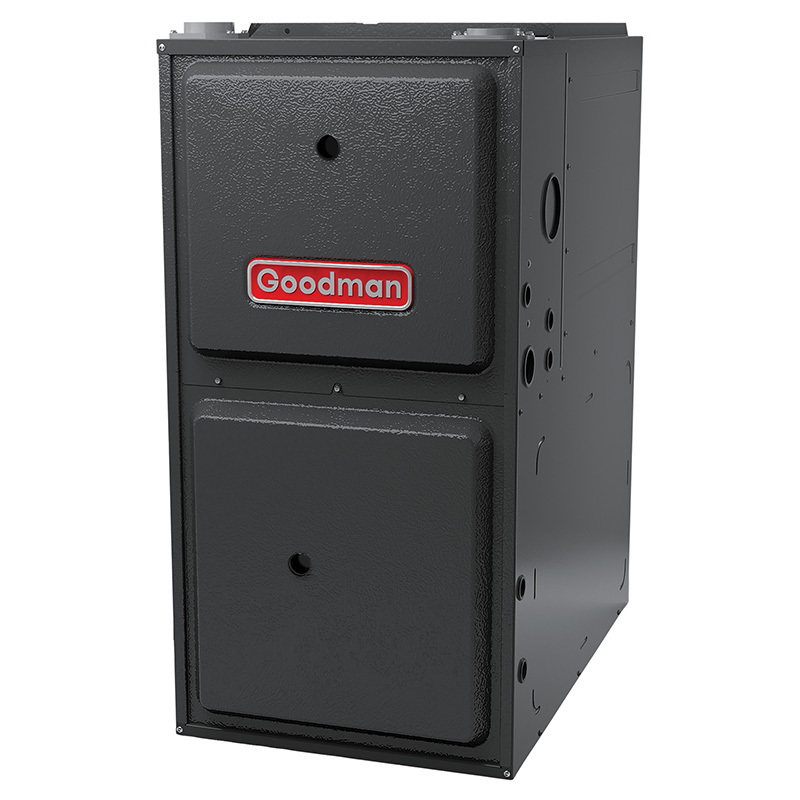
- 96% AFUE condensing furnace rated for high-efficiency heating with low standby losses
- Multi-speed ECM blower motor improves airflow consistency and cuts blower energy use vs. PSC motors
- R-32 refrigerant with lower global warming potential than outgoing R-410A
- Upflow configuration designed for basement, closet, or utility room installations with overhead duct systems
- 60,000 BTU furnace output sized for moderate-climate homes in the 1,200 to 1,800 sq ft range
About this system
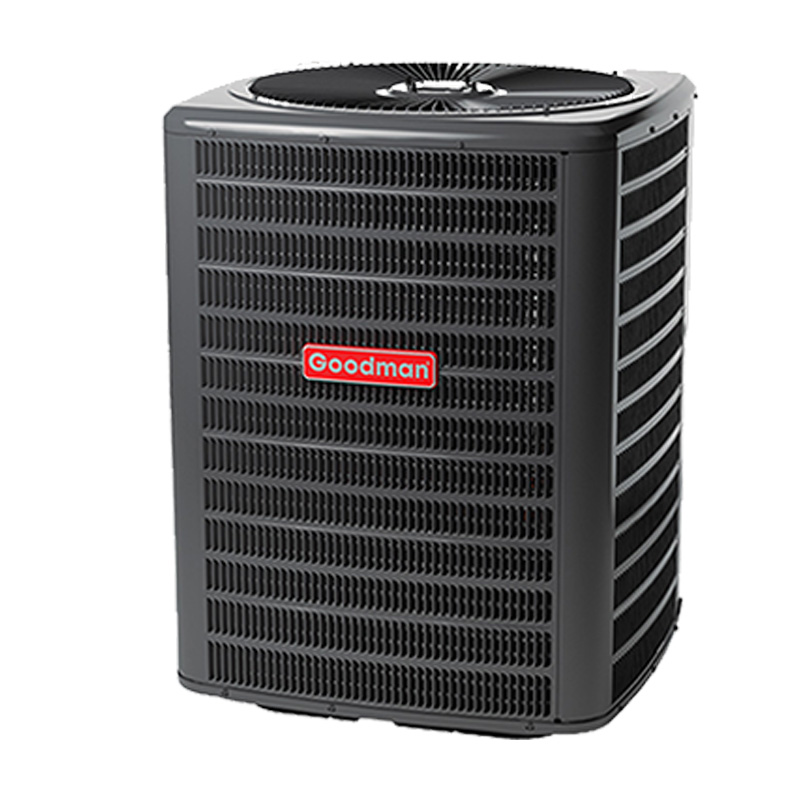
The Goodman 2.5-ton, 14 SEER2, 96% AFUE upflow system pairs a mid-efficiency central air conditioner with a high-efficiency gas furnace in a single matched package. The 2.5-ton cooling capacity suits homes roughly in the 1,200 to 1,600 square foot range, depending on local climate, insulation quality, and window load. At 14 SEER2, this unit meets the current federal minimum efficiency standard for most U.S. regions and delivers respectable operating costs without the premium price of higher-tier equipment. The 96% AFUE furnace rating means 96 cents of every dollar spent on gas goes toward usable heat, which is solidly in the condensing-furnace category and will produce meaningful savings over an older 80% unit.
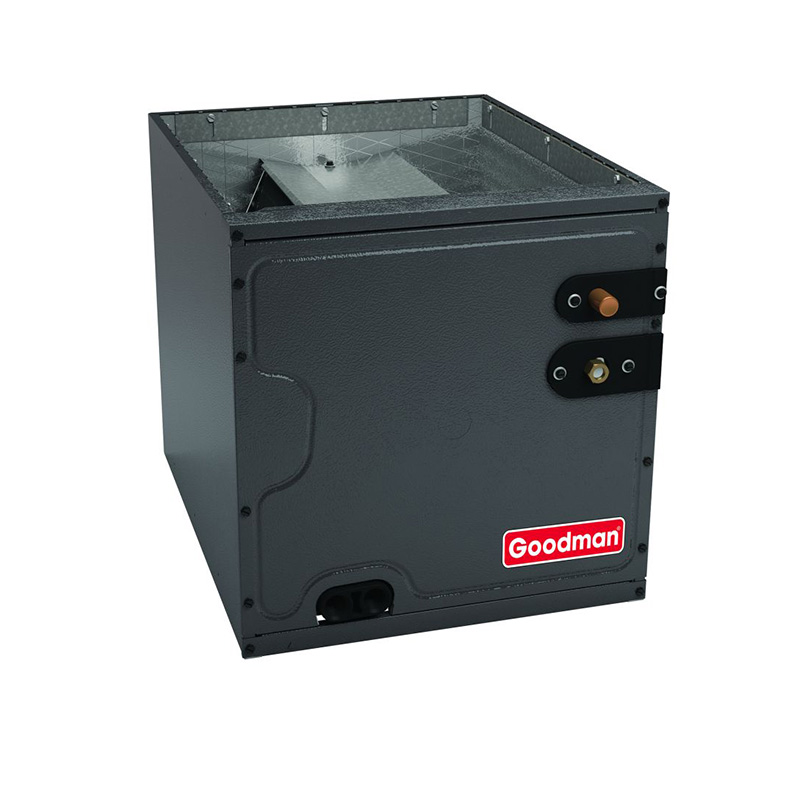
The R-32 refrigerant is a notable spec here. R-32 has a lower global warming potential than the R-410A it is replacing across the industry and is increasingly common in new equipment heading into 2025 and beyond. The multi-speed ECM blower motor runs at different airflow rates rather than simple on/off, which improves comfort distribution, reduces temperature swings, and trims blower electricity use compared to a single-speed PSC motor. The upflow configuration means conditioned air discharges from the top of the air handler, which is standard for systems installed in basements, closets, or utility rooms where ductwork runs overhead. This is not a variable-speed or two-stage system, so it will not match the whisper-quiet operation of premium variable-capacity equipment, but it covers the fundamentals reliably at a price point most budgets can absorb.
The Goodman 2.5-ton 14 SEER2 / 96% AFUE upflow system is a straightforward, competently specified package that delivers high-efficiency heating and code-compliant cooling at a price point noticeably below Carrier, Trane, and Lennox equivalents. Its long-term performance depends heavily on installation quality and a willingness to budget for eventual component-level repairs, particularly after year seven. For buyers who prioritize upfront affordability and are comfortable with that trade-off, it represents a reasonable choice; buyers expecting premium-brand durability without premium-brand maintenance costs may want to look higher up the market.
Overall score is the average of the five ratings above.
What we like
- Priced roughly 15 to 25 percent below comparable Carrier, Trane, and Lennox systems
- 96% AFUE condensing furnace is a genuine high-efficiency rating that reduces annual heating bills
- Multi-speed ECM motor improves comfort and lowers blower operating costs vs. single-speed alternatives
- R-32 refrigerant is the industry-forward choice with a lower environmental footprint than R-410A
- Dual-run capacitor failures, the most common documented issue, are typically a fast, low-cost repair in the $300 to $600 range
Trade-offs
- Single-stage cooling only, so the compressor runs at full capacity or not at all, which limits humidity control and comfort precision compared to two-stage or variable equipment
- Compressor lifespan averages 10 to 14 years versus 15 to 20 years documented for premium-brand competitors
- Evaporator coil leaks appear in a meaningful share of owner reports and can be a more costly repair
- A minority of owners report refrigerant leaks within the first year, most traced to install or factory charge issues, making contractor selection critical
What homeowners and pros say about Goodman
Homeowners who shop Goodman tend to split into two camps after a few years of ownership. Those who had the system properly sized and installed by a careful contractor often report steady, unremarkable performance and are satisfied with the savings at purchase. Those who ran into trouble point to a consistent pattern: systems that run fine for six or seven years before repair costs start adding up, which aligns with the recurring theme visible in Goodman’s ConsumerAffairs score of roughly 2.5 out of 5, a channel that skews toward frustrated owners but still reflects a real pattern of post-year-seven maintenance expense. Google dealer reviews average around 3.8 out of 5 across locations, where the most common praise is straightforward: the price was right and the system does what it is supposed to do.
HVAC technicians who service Goodman equipment regularly note that dual-run capacitor failures are the single most common call they get on these units, a repair that typically runs $300 to $600 and takes under an hour. That is the optimistic failure mode. The less optimistic ones are evaporator coil leaks, which appear in a meaningful share of owner accounts and carry higher repair costs, and compressor longevity that tends to top out around 10 to 14 years rather than the 15 to 20 years more commonly seen with Trane, Carrier, and Lennox equipment. A minority of owners also report refrigerant leaks in the first year, which technicians almost uniformly attribute to installation error or an improper factory charge rather than a defect in the equipment itself. The consistent professional advice: Goodman’s ceiling is raised or lowered almost entirely by who installs it and how well it is maintained afterward.
Sources: ConsumerAffairs Goodman owner reviews, AHRI Directory of Certified Product Performance, U.S. DOE appliance and equipment efficiency standards, Goodman product specification sheets.
What it costs to run
At 14 SEER2, cooling this 2.5-ton system for a typical 1200-hour cooling season at the U.S. average electricity rate of $0.17/kWh works out to roughly $437 per year in cooling, about $20 less per year than a minimum-efficiency 13.4 SEER2 unit of the same size. Your real cost depends on your climate and local rate.
Method: (30,000 BTU/hr ÷ 14 SEER2) × 1200 hours ÷ 1000 × $0.17/kWh. Rate source: U.S. EIA average; cooling hours: moderate-climate estimate.
How it compares
| Brand | Comparable model | SEER2 | Stage | Price position |
|---|---|---|---|---|
| Goodman | GSX14 / GMVC96 Series (2.5T / 60K BTU) | 14 | Single-stage | Value pick |
| Carrier | Comfort 14 (24ACC6 Series) | 14 | Single-stage | Typically 15 to 25 percent more than Goodman |
| Trane | XR14 Series | 14 | Single-stage | Typically 15 to 25 percent more than Goodman |
| Lennox | Merit 14 (ML14 Series) | 14 | Single-stage | Typically 15 to 25 percent more than Goodman |
Competitor rows are comparable single-stage units at similar efficiency; price is relative position, not a quote.
Questions about this system
Does this system qualify for the federal energy efficiency tax credit?
The 96% AFUE furnace meets the threshold for the 25C energy efficiency tax credit, which can cover up to 30% of equipment and installation costs up to the annual cap. The 14 SEER2 cooling portion does not meet the higher-efficiency threshold required for the AC credit on its own. Confirm current IRS limits with your tax advisor before filing, as caps and rules can change year to year.
Is R-32 refrigerant harder or more expensive to service than R-410A?
R-32 requires technicians to use recovery equipment rated for it and to be aware of its mild flammability classification, but it is not dramatically more expensive or difficult to service as adoption spreads. By 2025, most well-equipped HVAC shops handle R-32 routinely. The refrigerant itself is often cheaper per pound than R-410A was at peak pricing.
What does 'upflow' mean and how do I know if my home needs it?
Upflow means the air handler pulls return air in at the bottom and pushes conditioned air out through the top into overhead ductwork. It is the correct choice for systems installed in a basement or a first-floor utility room where supply ducts run up through the ceiling or into a second-floor system. If your ductwork exits through the floor or the unit needs to sit horizontally in an attic, you would need a downflow or horizontal configuration instead.
How concerned should I be about the documented evaporator coil leak issue?
Evaporator coil leaks show up in a meaningful share of Goodman owner reports and are not unique to Goodman, but they are worth factoring into your ownership plan. Keeping the system on a regular maintenance schedule, changing filters on time, and ensuring the coil is properly cleaned annually reduces the risk. If a leak does develop, a coil replacement on a system with an active parts warranty is a manageable repair cost compared to full system replacement.
The multi-speed ECM motor is not the same as a variable-speed motor. What is the real difference?
A multi-speed ECM motor operates at a set number of fixed speeds, typically two or three, selected by the control board based on demand. A variable-speed or inverter-driven motor modulates continuously across a wide range of outputs. Multi-speed ECM still offers meaningful efficiency and comfort improvements over a basic single-speed PSC motor, but it will not achieve the near-silent low-speed operation or the precise humidity control that a fully variable system provides.
Specifications
| Cooling capacity | 2.5 Ton |
| Efficiency | 14 SEER2 |
| Furnace output | 60000 BTU |
| Furnace efficiency | 96% AFUE |
| Configuration | Upflow |
| Refrigerant | R-32 |