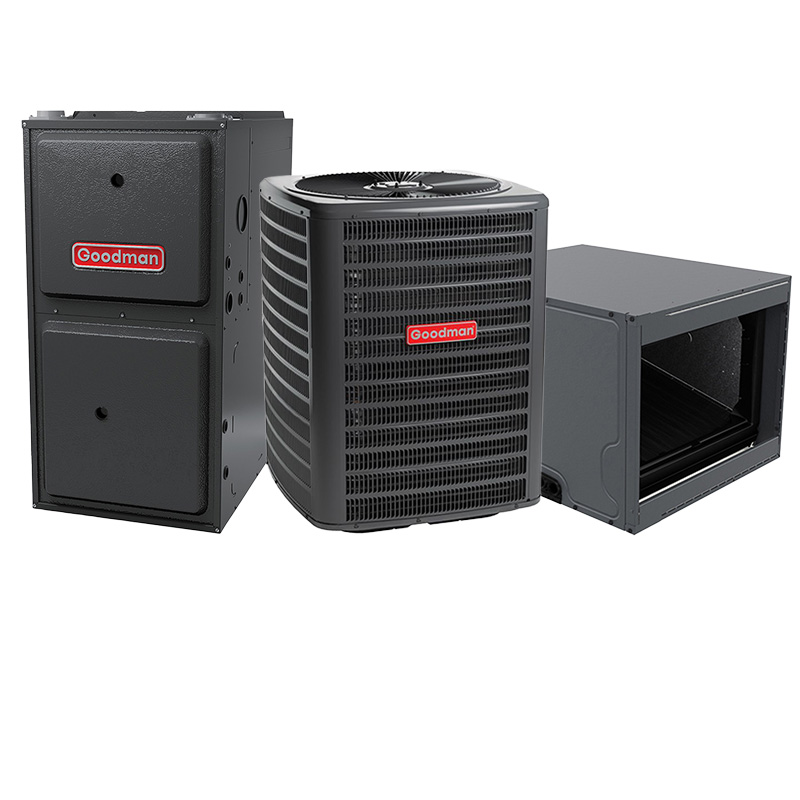
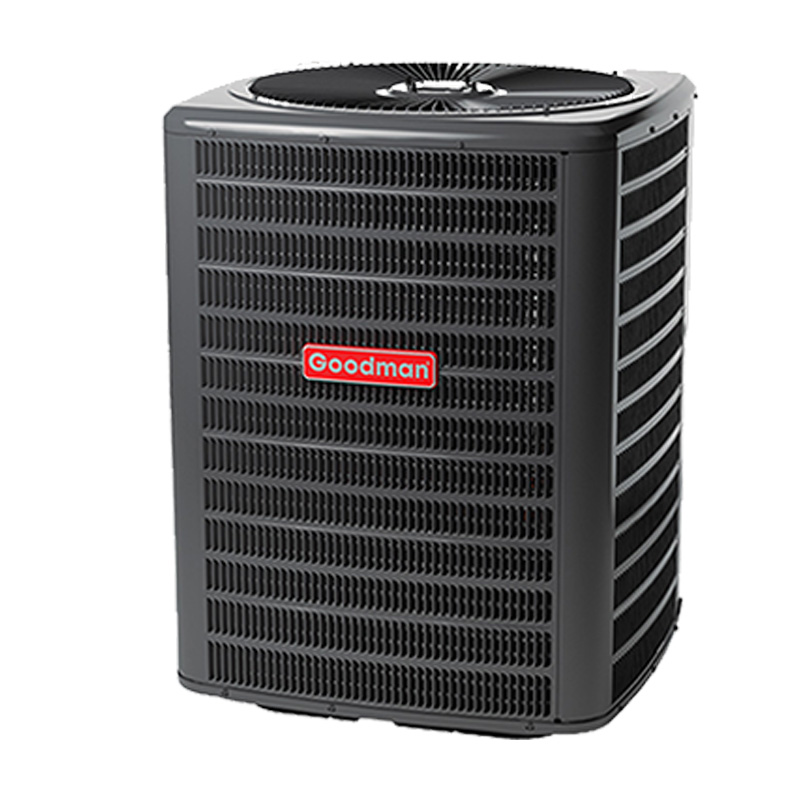
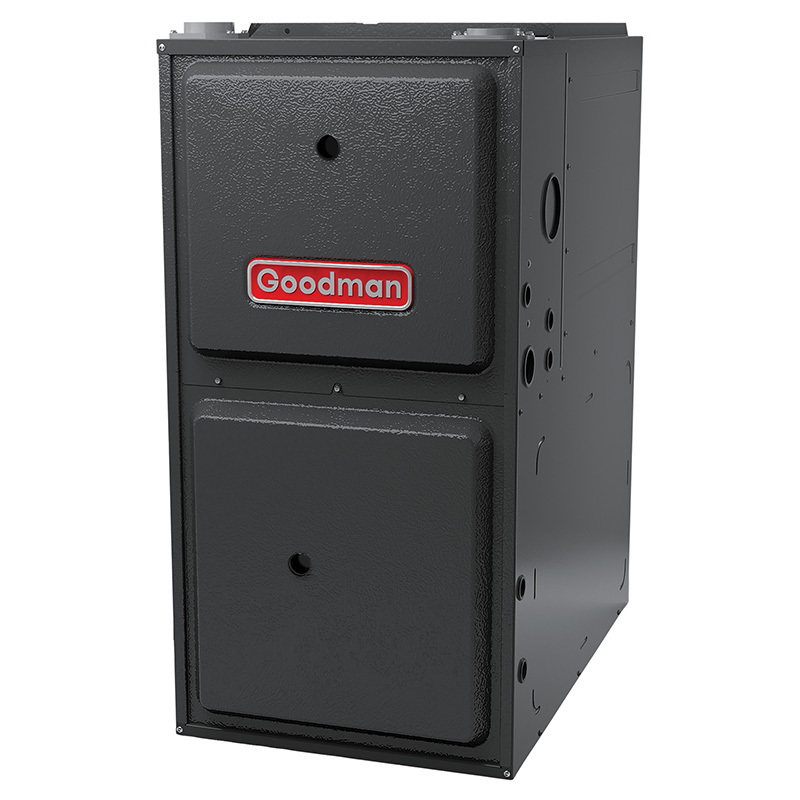
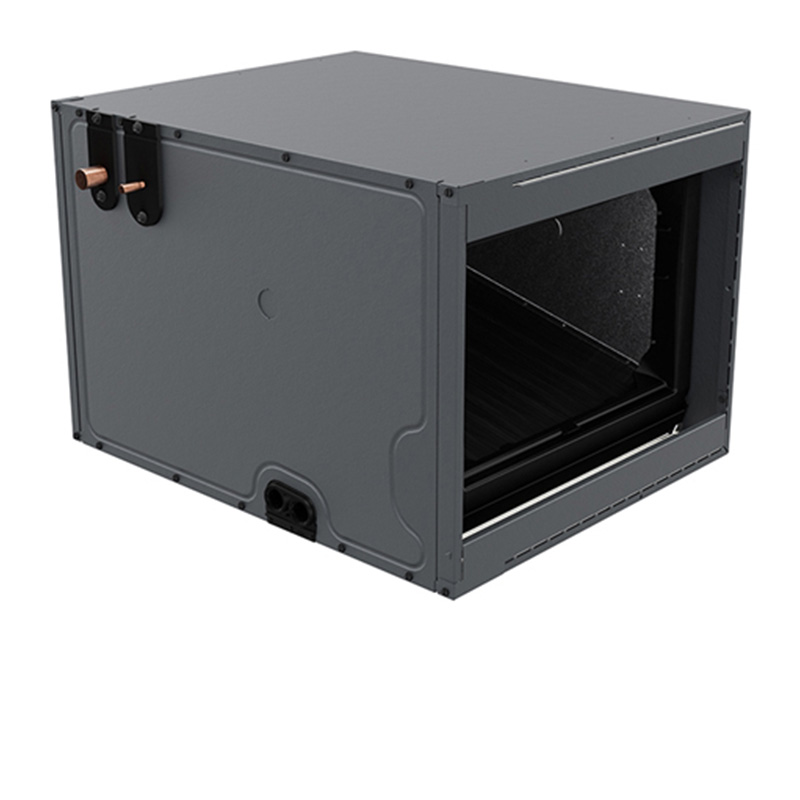
Goodman 2.5 Ton 14 SEER2 80000 BTU 96% AFUE Multi-Speed ECM Gas Furnace System – Horizontal | R32
View on AC Direct see your lowest price →Check current price on AC Direct →
Key features
- 96% AFUE gas furnace for high-efficiency heating with utility rebate eligibility
- 14 SEER2 cooling meets current federal minimum efficiency standards
- Horizontal factory configuration suited for attic and crawlspace installations
- Multi-speed ECM blower motor for quieter operation and better humidity management
- R-32 refrigerant with lower global warming potential than R-410A
- 2.5-ton capacity sized for mid-range square footage, typically 1,200 to 1,800 sq ft
About this system
The Goodman 2.5-ton, 14 SEER2, 96% AFUE horizontal gas furnace system is built for homes where attic or crawlspace installation is the only practical option. The horizontal configuration matters: not every system ships ready for that orientation, and having it factory-configured means fewer field modifications and a cleaner install. At 2.5 tons of cooling capacity paired with 80,000 BTU of heating, this system suits mid-size homes in the 1,200 to 1,800 square foot range, though a proper Manual J load calculation is the only reliable way to confirm sizing for your specific house.
The furnace side runs at 96% AFUE, which sits in the high-efficiency tier and qualifies for most utility rebate programs. That means roughly 96 cents of every dollar of gas burned goes into usable heat, a meaningful efficiency gain over the 80% systems still common in older homes. The multi-speed ECM blower motor adjusts airflow to match demand rather than running full blast continuously, which helps with humidity control in summer, reduces energy draw on the air handler, and tends to run quieter than single-speed alternatives. On the cooling side, 14 SEER2 is the current federal minimum in most regions, so you are getting a code-compliant system without paying for efficiency headroom you may not need. The R-32 refrigerant has a lower global warming potential than the R-410A it replaces, which is increasingly relevant as older refrigerants face phasedown timelines.
This system delivers real high-efficiency heating and a code-compliant cooling package at a price point that undercuts comparable equipment from premium brands by 15 to 25 percent. The horizontal configuration makes it genuinely useful for attic installations where options narrow quickly. The trade-off is a brand track record that shows higher-than-average component failure rates after year seven, so buyers should weigh the upfront savings against potential repair costs over a 12 to 15 year ownership horizon.
Overall score is the average of the five ratings above.
What we like
- 96% AFUE furnace meaningfully cuts heating bills versus mid-efficiency alternatives
- ECM multi-speed blower improves comfort and lowers electrical operating costs
- Horizontal configuration factory-ready, reducing install complexity for attic placement
- R-32 refrigerant is lower-impact and increasingly well-supported by technicians
- Lower purchase price than comparable Carrier, Trane, or Lennox equipment, freeing budget for quality installation
Trade-offs
- Dual-run capacitors are a documented early failure point, typically requiring a 300 to 600 dollar service call
- Compressor lifespan averages 10 to 14 years, shorter than the 15 to 20 year range reported for premium brands
- Evaporator coil leaks appear in a meaningful share of owner reports, a potential mid-lifecycle repair cost
- A minority of owners report refrigerant leaks within the first year, often traced to install or charge issues rather than the equipment itself
What homeowners and pros say about Goodman
Homeowners who choose Goodman consistently point to the lower purchase price as the decisive factor, and that pattern holds here. On Google dealer reviews, Goodman equipment as a category averages around 3.8 out of 5 stars across hundreds of location-level reviews, with affordability as the most frequently cited reason for satisfaction. The picture shifts on complaint-heavy channels like ConsumerAffairs, where Goodman sits at roughly 2.5 out of 5, with the recurring theme being repair costs that start climbing around year seven. For this horizontal system specifically, the documented failure modes to know going in are dual-run capacitor failures, typically a 300 to 600 dollar fix; evaporator coil leaks, which appear in a meaningful share of long-term owner accounts; and compressor lifespans that average 10 to 14 years rather than the 15 to 20 years owners of premium brands tend to see.
HVAC technicians are generally pragmatic about Goodman: they note that install quality is the single biggest determinant of how long any Goodman system lasts, which means skimping on the labor side to maximize equipment savings can backfire. Pros also flag the first-year refrigerant leak reports, which they almost universally attribute to charge errors or connection issues at install rather than factory defects, reinforcing the point that who does the work matters as much as what gets installed. For a horizontal attic application on a budget, this system is a workable choice when paired with a careful, experienced installer and a realistic expectation that some service visits are likely in the second half of its life.
Sources: ConsumerAffairs Goodman owner reviews, AHRI Directory of Certified Product Performance, U.S. DOE appliance and equipment efficiency standards, Goodman product specification sheets.
What it costs to run
At 14 SEER2, cooling this 2.5-ton system for a typical 1200-hour cooling season at the U.S. average electricity rate of $0.17/kWh works out to roughly $437 per year in cooling, about $20 less per year than a minimum-efficiency 13.4 SEER2 unit of the same size. Your real cost depends on your climate and local rate.
Method: (30,000 BTU/hr ÷ 14 SEER2) × 1200 hours ÷ 1000 × $0.17/kWh. Rate source: U.S. EIA average; cooling hours: moderate-climate estimate.
How it compares
| Brand | Comparable model | SEER2 | Stage | Price position |
|---|---|---|---|---|
| Goodman | 2.5 Ton 14 SEER2 / 96% AFUE Multi-Speed ECM Horizontal System | 14 | Multi-speed | Value pick |
| Carrier | Performance 14 Series (24ACC4 / 58TP) | 14 | Single-stage | Typically 15 to 25 percent more than Goodman |
| Trane | XR14 / S9X2 Series | 14 | Single-stage | Typically 15 to 25 percent more than Goodman |
| Lennox | Merit 14ACX / ML196E Series | 14 | Single-stage | Typically 15 to 25 percent more than Goodman |
Competitor rows are comparable single-stage units at similar efficiency; price is relative position, not a quote.
Questions about this system
Why does horizontal configuration matter, and does this system require special installation steps?
Horizontal configuration means the air handler is oriented on its side, which is the only way to fit a system in a low-clearance attic or crawlspace. Factory-configured horizontal units reduce the risk of field errors that come from reorienting a vertical unit on site. You still need a licensed technician familiar with this orientation, since condensate drainage must be set up correctly to avoid water damage.
Is 14 SEER2 going to be efficient enough, or should I pay more for a higher SEER2 rating?
14 SEER2 meets the current federal minimum and is a reasonable baseline for most climates. Upgrading to 16 or 18 SEER2 reduces cooling energy costs and can pay back over time in hotter regions with long cooling seasons, but in moderate climates the payback period stretches considerably. Run your local utility rates and estimated annual cooling hours through an efficiency calculator before deciding.
What are the most common repairs I should budget for over the life of this system?
Dual-run capacitors are the most frequently reported failure on Goodman equipment and typically cost 300 to 600 dollars to repair including labor. Evaporator coil leaks are a secondary concern reported by a meaningful share of owners and carry a higher repair cost. Setting aside a dedicated HVAC repair fund after year five is a reasonable precaution.
R-32 is new to me. Is it safe, and will local technicians be able to service it?
R-32 is mildly flammable at high concentrations but is used widely in residential equipment in Europe and Asia, and adoption in the United States is growing quickly as R-410A faces phasedown. Most HVAC technicians in the U.S. are completing R-32 certification, but it is worth confirming your service company has trained technicians before committing to the system.
Does Goodman's warranty cover parts and labor, and what do I need to do to keep it valid?
Goodman's registered warranty covers parts for up to 10 years on the compressor and heat exchanger, and typically 5 years on other components, but it does not cover labor costs, which can be substantial. Registration must be completed within 60 days of installation to activate the full term, and the system must be installed by a licensed contractor. Read the warranty certificate for your specific model before signing off on the install.
Specifications
| Cooling capacity | 2.5 Ton |
| Efficiency | 14 SEER2 |
| Furnace output | 80000 BTU |
| Furnace efficiency | 96% AFUE |
| Configuration | Horizontal |
| Refrigerant | R-32 |