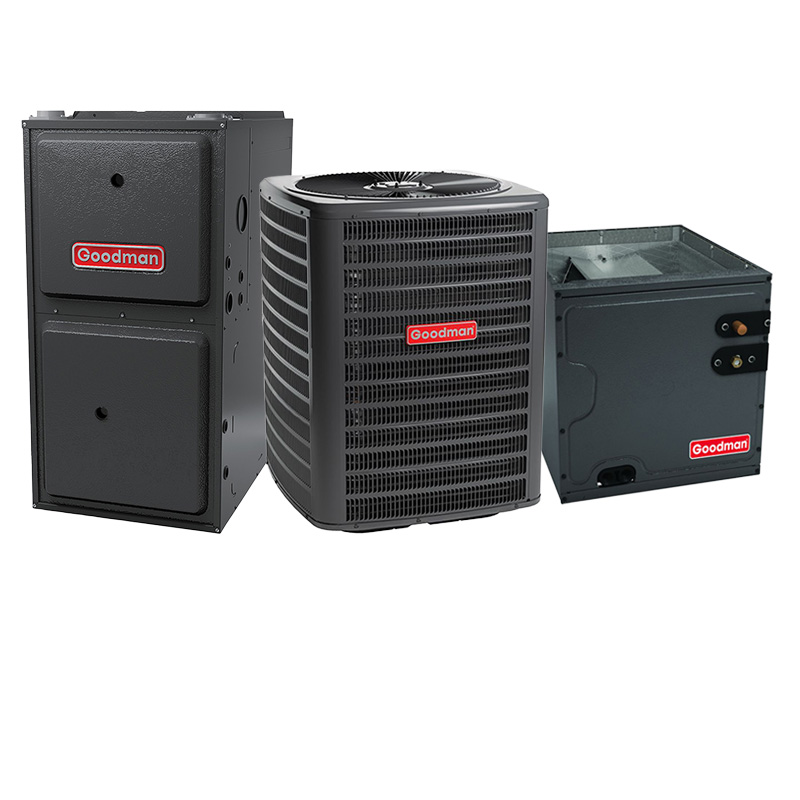
Goodman 2.5 Ton 14 SEER2 80000 BTU 96% AFUE Multi-Speed ECM Gas Furnace System – Upflow | R32
View on AC Direct see your lowest price →Check current price on AC Direct →
Key features
- 96% AFUE gas furnace converts nearly all fuel into usable heat
- 14 SEER2 cooling efficiency meets current federal minimum standards for most U.S. regions
- Multi-speed ECM blower motor reduces electricity use and improves comfort over single-speed models
- R-32 refrigerant with lower global-warming potential than legacy R-410A
- Upflow configuration suits basement or ground-level closet installations
- Priced 15 to 25 percent below comparable Trane, Lennox, and Carrier systems
About this system
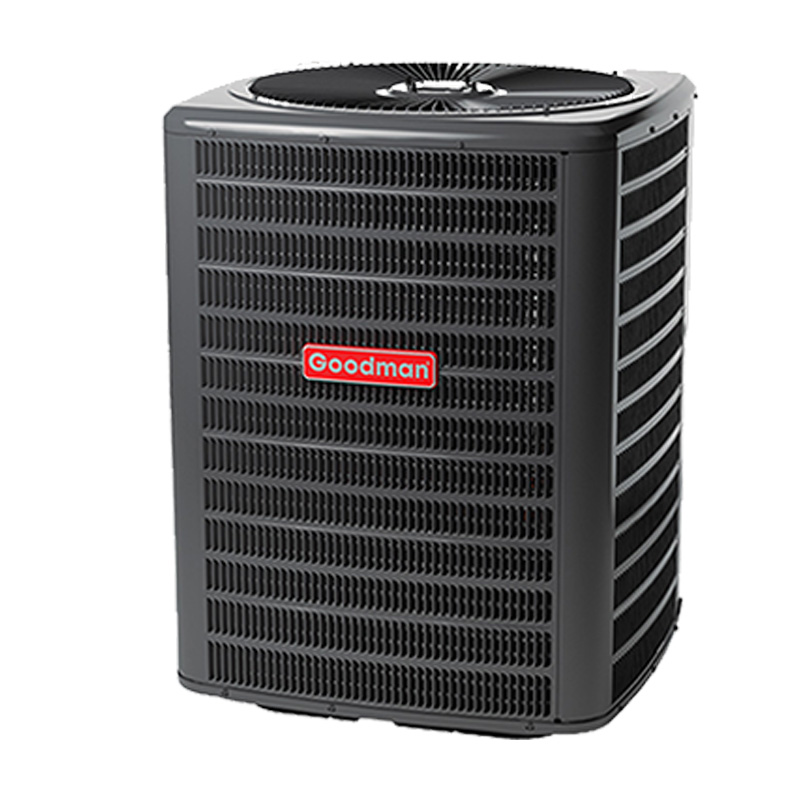
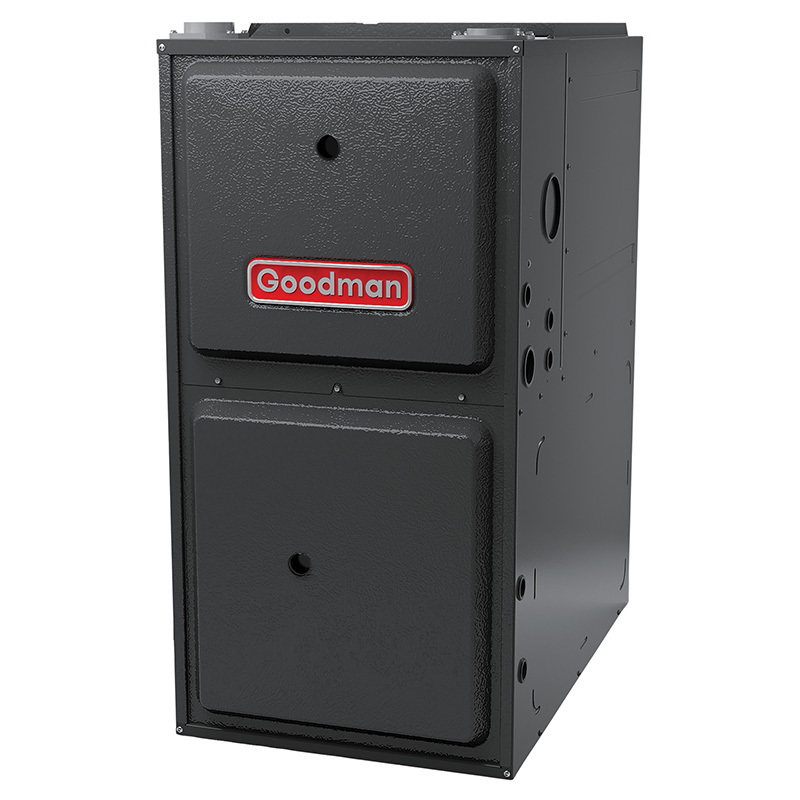
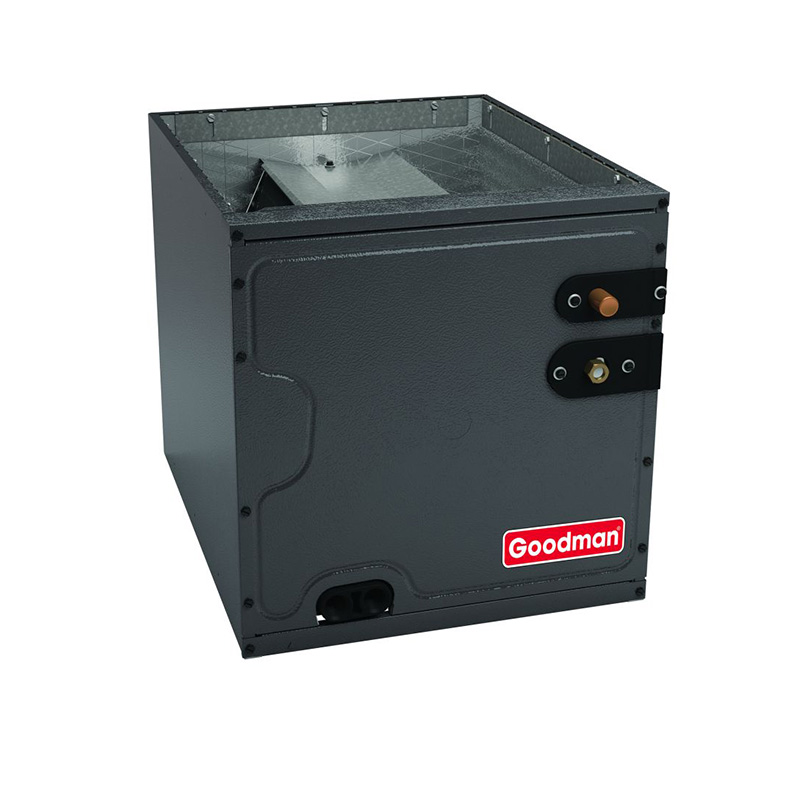
The Goodman 2.5-ton, 14 SEER2 upflow system pairs a central air conditioner using R-32 refrigerant with an 80,000 BTU, 96% AFUE multi-speed ECM gas furnace. That AFUE rating means 96 cents of every dollar spent on gas goes toward heating your home, which puts this furnace solidly in the high-efficiency tier. The multi-speed ECM (electronically commutated motor) blower is meaningfully quieter and more energy-efficient than a standard single-speed PSC motor, and it does a better job of maintaining consistent temperatures by running at lower speeds for longer cycles rather than blasting on and off.
At 2.5 tons of cooling capacity, this system is best suited for homes in the 1,200 to 1,800 square foot range, though the right sizing depends heavily on your climate, insulation, window area, and ceiling height. The upflow configuration means the furnace pulls air in at the bottom and discharges it upward, which is the standard orientation for systems installed in a basement or a utility closet on the main floor. R-32 is a lower global-warming-potential refrigerant that is increasingly common in new equipment, and any contractor servicing this system will need to use R-32-compatible tools and recovery equipment. This system will appeal most to homeowners who want a respectable efficiency package without paying the premium prices of Trane, Carrier, or Lennox.
This Goodman system delivers solid specs at a price point few competitors can match, making it a reasonable choice for budget-conscious homeowners who understand they are trading some long-term durability headroom for upfront savings. The 96% AFUE furnace and ECM blower are genuinely strong features at this price, but Goodman's track record shows reliability outcomes vary considerably with installation quality and the luck of the draw on components like capacitors and evaporator coils. Go in with realistic expectations and budget for potential repairs after year seven.
Overall score is the average of the five ratings above.
What we like
- 96% AFUE furnace is high-efficiency, reducing monthly gas bills noticeably versus 80% AFUE units
- ECM multi-speed blower motor improves comfort and lowers fan electricity costs compared to PSC motors
- R-32 refrigerant is more environmentally responsible than R-410A
- Priced 15 to 25 percent below Trane, Carrier, and Lennox at comparable specs, leaving money for a quality install
- Upflow design is widely compatible with existing ductwork in homes with basement or closet mechanical rooms
Trade-offs
- Dual-run capacitors are the most frequently reported failure, typically requiring a 300 to 600 dollar service call
- Compressor lifespan averages 10 to 14 years versus 15 to 20 years for premium-brand compressors
- A minority of owners have reported refrigerant leaks in the first year, often traced to installation or factory charge issues
- Evaporator coil leaks appear in a notable share of owner reviews, which can be costly if the coil is out of warranty
What homeowners and pros say about Goodman
Homeowners who review Goodman equipment tend to split into two camps, and that pattern shows up clearly in the brand’s ratings. On ConsumerAffairs, Goodman sits at roughly 2.5 out of 5, a score pulled down by owners who ran into escalating repair costs, particularly after the seven-year mark. The specific failure modes that come up most often are dual-run capacitor replacements, evaporator coil leaks, and compressor issues, with compressors generally averaging 10 to 14 years compared to 15 to 20 years reported for premium-brand units. A smaller but real subset of owners have also reported refrigerant leaks in the first year, which most HVAC professionals attribute to installation or factory charge problems rather than the equipment itself.
On the other side of the ledger, Google dealer reviews average around 3.8 out of 5, and the most common reason homeowners praise their Goodman purchase is straightforward: they got solid performance at a price that was several thousand dollars less than a comparable Trane, Carrier, or Lennox system. HVAC technicians who work on a variety of brands tend to echo a consistent point about Goodman specifically: the equipment’s long-term outcome is unusually sensitive to install quality. A careful, experienced installer who gets the refrigerant charge right, verifies airflow, and checks every electrical connection can get years of reliable service out of this equipment. A rushed or inexperienced install amplifies the brand’s documented weak points. For this particular system, with its R-32 refrigerant and ECM blower, confirming your installer has specific experience with R-32 equipment is worth asking about directly before signing a contract.
Sources: ConsumerAffairs Goodman owner reviews, AHRI Directory of Certified Product Performance, U.S. DOE appliance and equipment efficiency standards, Goodman product specification sheets.
What it costs to run
At 14 SEER2, cooling this 2.5-ton system for a typical 1200-hour cooling season at the U.S. average electricity rate of $0.17/kWh works out to roughly $437 per year in cooling, about $20 less per year than a minimum-efficiency 13.4 SEER2 unit of the same size. Your real cost depends on your climate and local rate.
Method: (30,000 BTU/hr ÷ 14 SEER2) × 1200 hours ÷ 1000 × $0.17/kWh. Rate source: U.S. EIA average; cooling hours: moderate-climate estimate.
How it compares
| Brand | Comparable model | SEER2 | Stage | Price position |
|---|---|---|---|---|
| Goodman | This system (14 SEER2 / 96% AFUE upflow bundle) | 14 | multi-speed | Value pick |
| Carrier | Comfort Series (24ACC / 58CV pairing) | 14-15 | single-stage/multi-speed | Typically 15 to 25 percent more than this Goodman system |
| Trane | XR14 / S9V2 pairing | 14 | single-stage/multi-speed | Typically 15 to 25 percent more than this Goodman system |
| Lennox | Merit Series (14ACX / ML196 pairing) | 14 | single-stage/multi-speed | Typically 15 to 25 percent more than this Goodman system |
Competitor rows are comparable single-stage units at similar efficiency; price is relative position, not a quote.
Questions about this system
Is 2.5 tons the right size for my home?
A rough rule of thumb is 400 to 600 square feet per ton, which would put 2.5 tons in the range of 1,000 to 1,500 square feet, but climate zone, ceiling height, insulation, and window area all shift that number. Have your installer perform a Manual J load calculation before committing to a size, because an oversized or undersized unit will hurt both comfort and efficiency regardless of the equipment's rated specs.
What does R-32 refrigerant mean for me as a homeowner?
R-32 has a lower global-warming potential than the older R-410A it replaces and is increasingly standard in new equipment. For you, the main practical point is that any technician who services your system needs to be equipped and certified to handle R-32, so confirm that with your service provider before scheduling a repair or recharge.
What is the warranty on this Goodman system?
Goodman typically offers a 10-year parts warranty when the equipment is registered within a set window after installation, with some components such as the heat exchanger carrying a lifetime warranty on certain models. Read the specific warranty documents for your model numbers carefully, and confirm registration requirements with your installer, because failing to register on time can reduce coverage to a shorter base period.
How much should I worry about the capacitor failure issue?
Dual-run capacitor failures are the most commonly reported repair on Goodman equipment, but the good news is that a capacitor is one of the least expensive HVAC repairs, generally running 300 to 600 dollars including a service call. Scheduling annual preventive maintenance gives your technician a chance to test the capacitor and replace it before it fails on the hottest day of summer.
Does the multi-speed ECM blower actually make a noticeable difference compared to a standard motor?
Yes, in two ways homeowners tend to notice: the system runs more quietly at lower speeds during mild weather, and it does a better job of keeping temperatures even throughout the house because it can run for longer periods at reduced output rather than cycling on and off abruptly. It also draws significantly less electricity than a single-speed PSC motor during those longer, lower-speed cycles, which shows up on your utility bill over a full season.
Specifications
| Cooling capacity | 2.5 Ton |
| Efficiency | 14 SEER2 |
| Furnace output | 80000 BTU |
| Furnace efficiency | 96% AFUE |
| Configuration | Upflow |
| Refrigerant | R-32 |