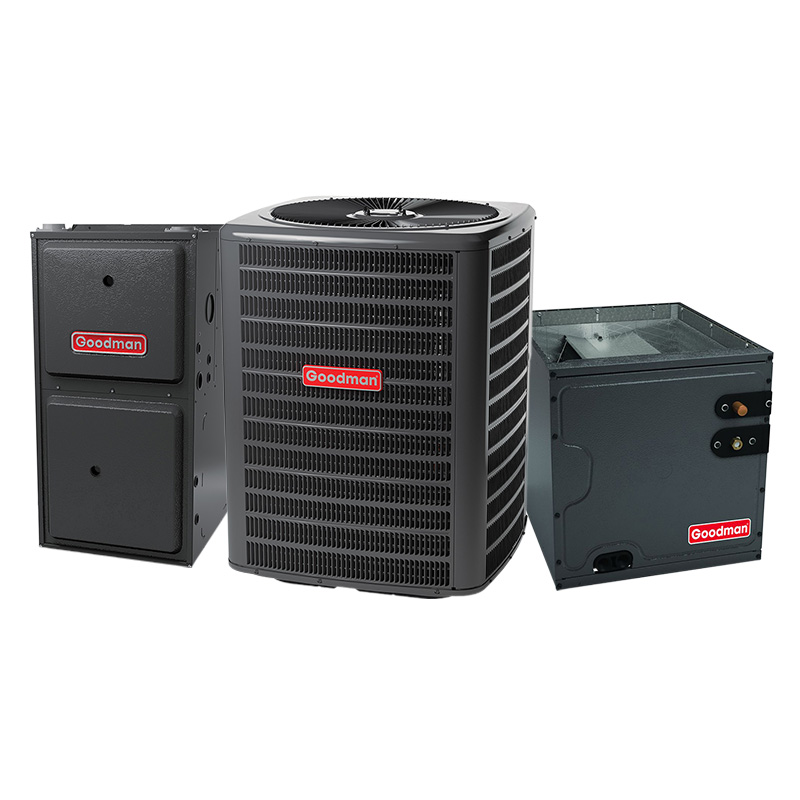
Goodman 2.5 Ton 14 SEER2 AC & Gas Furnace System – Multi-Speed, 100000 BTU Gas Furnace, 92% AFUE, Upflow, R32
View on AC Direct see your lowest price →Check current price on AC Direct →
Key features
- 2.5-ton single-stage cooling at 14 SEER2 efficiency
- 100,000 BTU upflow gas furnace rated at 92% AFUE
- Multi-speed blower motor for improved airflow and humidity distribution
- R-32 refrigerant with lower global warming potential than R-410A
- Upflow cabinet configuration for basement or ground-floor installations feeding overhead ductwork
- Goodman 10-year parts warranty when registered within 60 days of installation
About this system
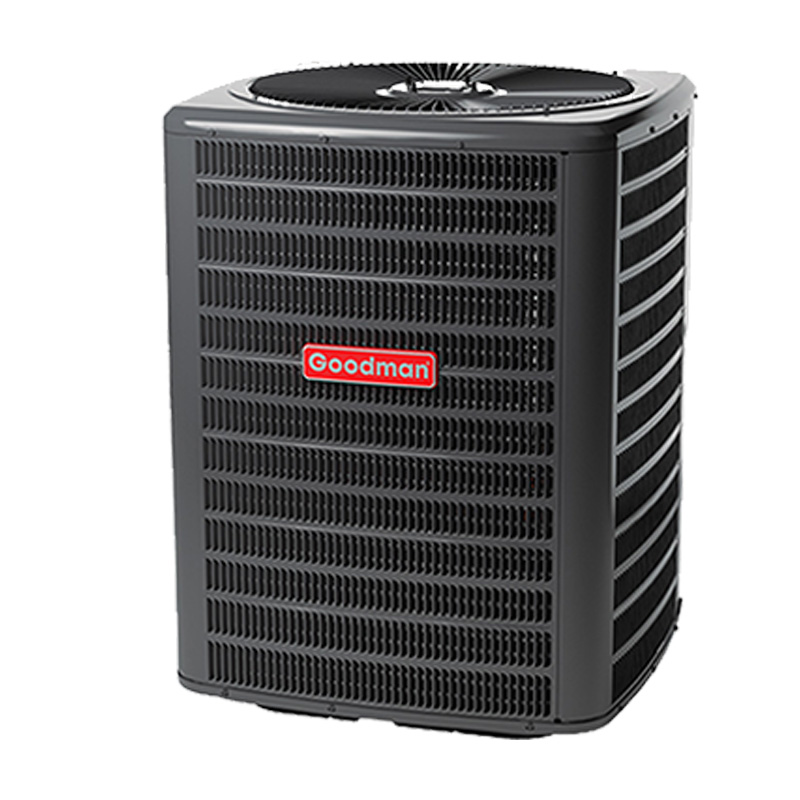
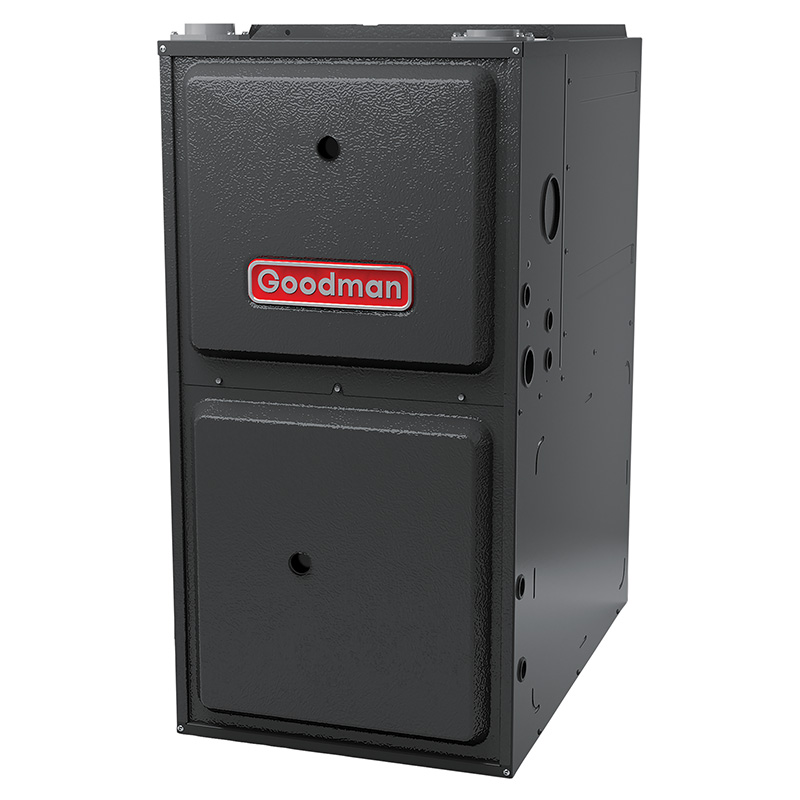
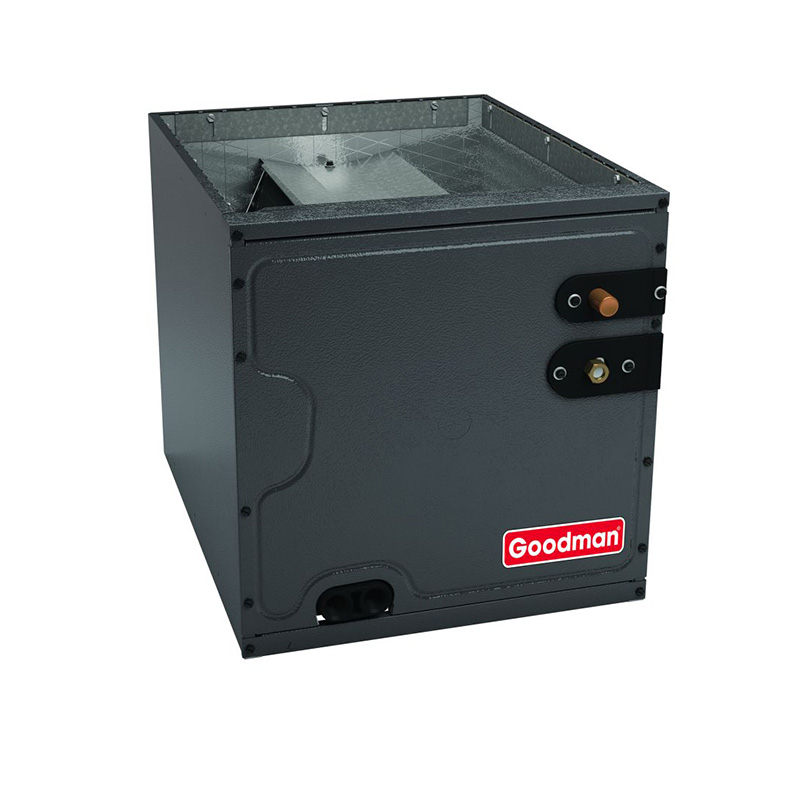
The Goodman GLXS3BN3010D pairs a 2.5-ton, 14 SEER2 single-stage air conditioner with a 100,000 BTU, 92% AFUE upflow gas furnace running on R-32 refrigerant. This combination targets homes in the 1,200 to 1,800 square foot range that need reliable year-round comfort without the price tag of a premium brand. The 14 SEER2 rating sits at the current federal minimum efficiency threshold for most U.S. climate zones, meaning it meets code but does not lead the market on efficiency. The 92% AFUE furnace recovers 92 cents of heat from every dollar of gas burned, landing it firmly in the mid-efficiency tier and making it a practical upgrade from an older 80% AFUE unit without the added cost and condensate complexity of a 96 or 97% AFUE model.
The upflow configuration means warm or cool air exits through the top of the air handler, which suits homes with basement or ground-floor mechanical rooms feeding ductwork that runs overhead through the living space. R-32 refrigerant carries a lower global warming potential than the R-410A it replaces and is increasingly common in new residential equipment. The multi-speed furnace blower improves airflow distribution and humidity control compared to single-speed alternatives, though it does not offer the fine-grained comfort tuning of a variable-speed motor. Overall this system suits a cost-conscious buyer who wants a code-compliant, functional system installed by a quality contractor and is comfortable with a realistic expectation of a 10 to 14 year compressor lifespan rather than the 15 to 20 years typical of premium brands.
The Goodman GLXS3BN3010D delivers a functional, code-compliant heating and cooling system at a price point that is typically 15 to 25 percent below comparable Trane, Carrier, and Lennox equipment. It is a reasonable choice for budget-focused buyers who pair it with a skilled installer and budget for possible capacitor or coil service after year seven. Buyers prioritizing long-term reliability and lower lifetime repair costs should weigh the premium brand alternatives carefully.
Overall score is the average of the five ratings above.
What we like
- Purchase price typically 15 to 25 percent below Trane, Lennox, and Carrier equivalents
- 92% AFUE furnace meaningfully reduces heating bills versus older 80% AFUE systems
- Multi-speed blower improves comfort and dehumidification compared to single-speed units
- R-32 refrigerant is lower-impact and broadly supported by the service industry
- 10-year registered parts warranty provides reasonable coverage for a value-tier system
Trade-offs
- Compressor lifespan averages 10 to 14 years, shorter than the 15 to 20 years documented for premium brands
- Dual-run capacitor failures are the most common service call, typically arising after year seven
- Evaporator coil leaks appear in a meaningful share of owner reports, a known weak point
- 14 SEER2 sits at the federal minimum threshold and will lag premium high-efficiency alternatives on monthly utility costs
What homeowners and pros say about Goodman
Homeowners who research Goodman online encounter a wide spread of opinion. On ConsumerAffairs, the brand scores around 2.5 out of 5, a number shaped heavily by the platform’s complaint-driven audience. The recurring pattern in those reviews is not immediate failure but rather repair costs that begin climbing after roughly year seven, with dual-run capacitor replacements and evaporator coil leaks cited most often. Google dealer reviews tell a more balanced story, averaging around 3.8 out of 5 across locations, where buyers who had a skilled contractor handle the installation frequently report satisfactory performance at a price they could not match from premium brands. The gap between those two scores reflects something real about this equipment: when the install is done right, it tends to work; when corners are cut on refrigerant charge, line set connections, or duct sizing, the documented failure modes appear sooner and more often.
HVAC technicians are generally straightforward about Goodman when pressed. They note that the compressor longevity gap is real, with Goodman units averaging 10 to 14 years against 15 to 20 for Trane, Carrier, or Lennox at similar efficiency. They also flag the dual-run capacitor as a near-certain eventual repair, and some advise clients to budget for it as routine maintenance rather than a surprise. For the GLXS3BN3010D specifically, the R-32 refrigerant is a neutral factor for most technicians, and the 92% AFUE furnace is regarded as a solid mid-efficiency performer. The honest technician consensus is that Goodman is not a bad product but is a product whose ceiling is set largely by who installs it and how well it is maintained afterward.
Sources: ConsumerAffairs Goodman owner reviews, AHRI Directory of Certified Product Performance, U.S. DOE appliance and equipment efficiency standards, Goodman product specification sheets.
What it costs to run
At 14 SEER2, cooling this 2.5-ton system for a typical 1200-hour cooling season at the U.S. average electricity rate of $0.17/kWh works out to roughly $437 per year in cooling, about $20 less per year than a minimum-efficiency 13.4 SEER2 unit of the same size. Your real cost depends on your climate and local rate.
Method: (30,000 BTU/hr ÷ 14 SEER2) × 1200 hours ÷ 1000 × $0.17/kWh. Rate source: U.S. EIA average; cooling hours: moderate-climate estimate.
How it compares
| Brand | Comparable model | SEER2 | Stage | Price position |
|---|---|---|---|---|
| Goodman | GLXS3BN3010D | 14 | Single-stage | Value pick |
| Carrier | Comfort 14 (24ACC4 series) | 14 | Single-stage | Typically 15 to 25 percent more than the Goodman |
| Trane | XR14 series | 14 | Single-stage | Typically 15 to 25 percent more than the Goodman |
| Lennox | Merit ML14 series | 14 | Single-stage | Typically 15 to 25 percent more than the Goodman |
Competitor rows are comparable single-stage units at similar efficiency; price is relative position, not a quote.
Questions about this system
Is 14 SEER2 efficient enough, or should I step up to a higher rating?
14 SEER2 meets the current federal minimum for most regions, so it is code-compliant but not a leader on efficiency. If your home runs the AC heavily from May through September, a 16 or 18 SEER2 unit will cut monthly cooling costs enough to partially offset the higher purchase price over time. For moderate climates or homes where cooling season is short, the upgrade math is less compelling.
Will this furnace work in my basement with existing overhead ductwork?
Yes, the upflow configuration is specifically designed for that setup: the unit draws return air in at the bottom and pushes conditioned air upward into overhead duct runs. Confirm that your existing duct sizing and return air openings are adequate for a 100,000 BTU furnace, as undersized ductwork is one of the most common install-related performance issues.
What are the most likely repairs I should plan for over the life of this system?
Based on documented Goodman owner experience, dual-run capacitor replacement is the most common service call and typically costs between 300 and 600 dollars when labor is included. Evaporator coil leaks are a second known failure mode that can be more expensive to address. A small number of owners also report refrigerant leaks in the first year, which are generally traced back to installation rather than the equipment itself.
Does the 10-year warranty cover parts and labor?
Goodman's 10-year registered warranty covers parts only, not labor. Labor costs on a warranty repair can still run several hundred dollars depending on your region and contractor, so it is worth asking your installer whether they offer any separate labor warranty at the time of installation.
Is R-32 refrigerant easy to service if I have a leak?
R-32 is increasingly stocked by HVAC distributors and is handled by most certified technicians, so sourcing it is generally not a problem in populated areas. It is mildly flammable, which means technicians follow specific handling protocols, but in practice this does not significantly affect the cost or availability of routine service.
Specifications
| Cooling capacity | 2.5 Ton |
| Efficiency | 14 SEER2 |
| Furnace output | 100000 BTU |
| Furnace efficiency | 92% AFUE |
| Configuration | Upflow |
| Refrigerant | R-32 |
| Model | GLXS3BN3010D |