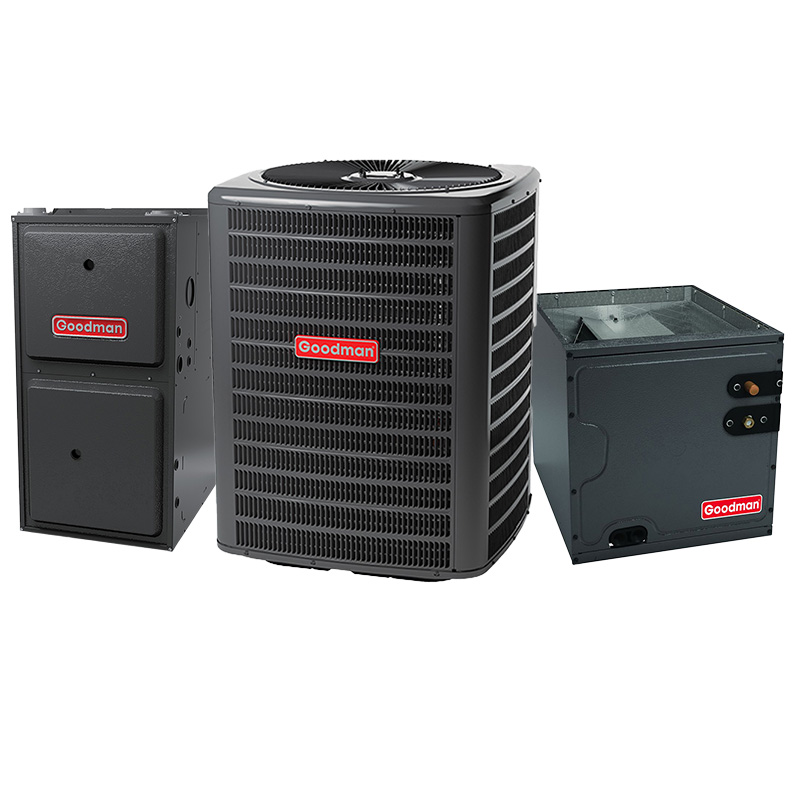
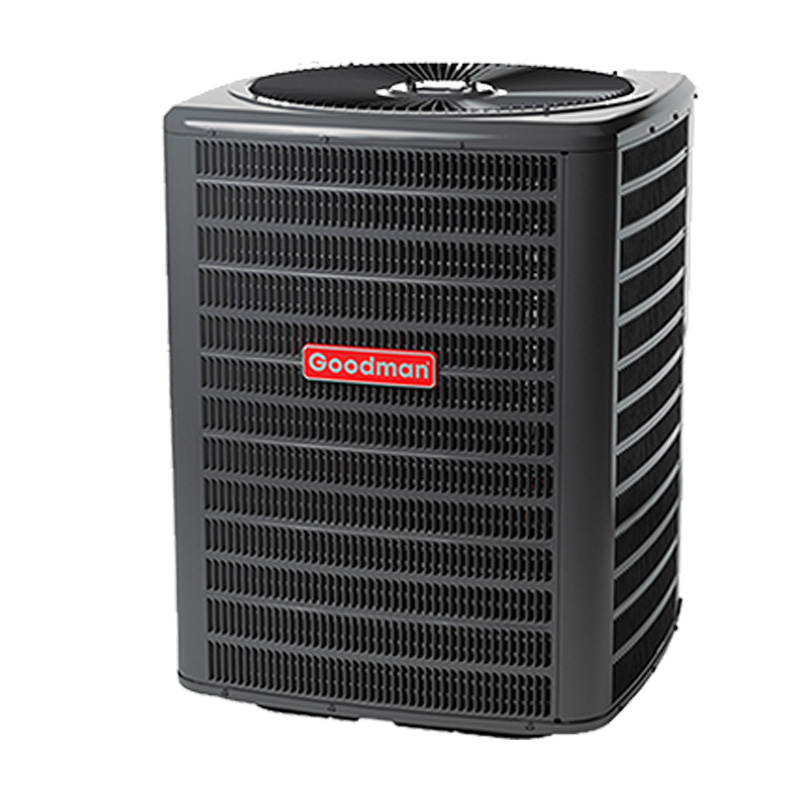
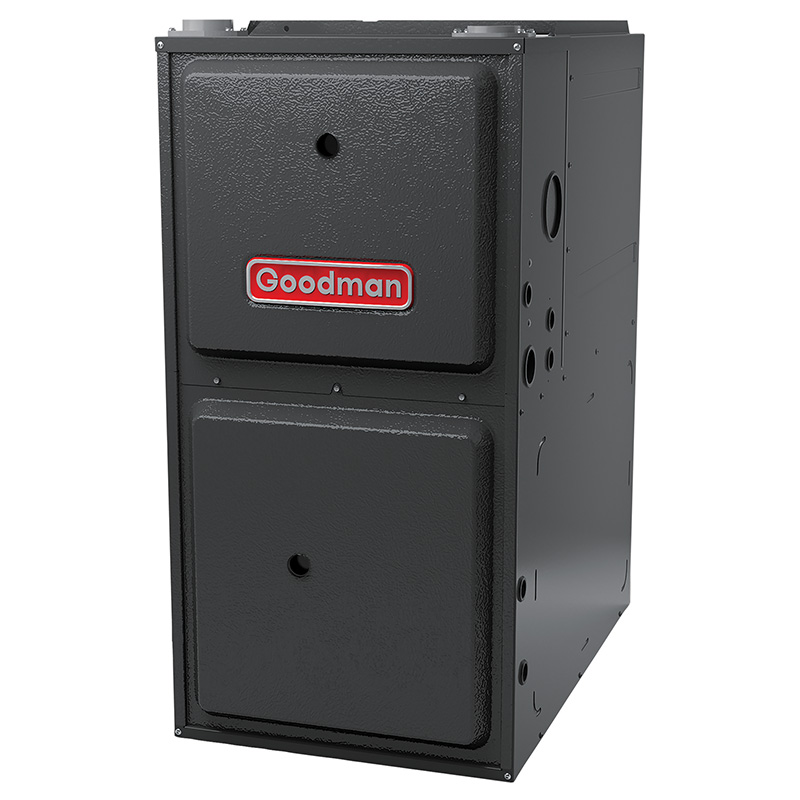
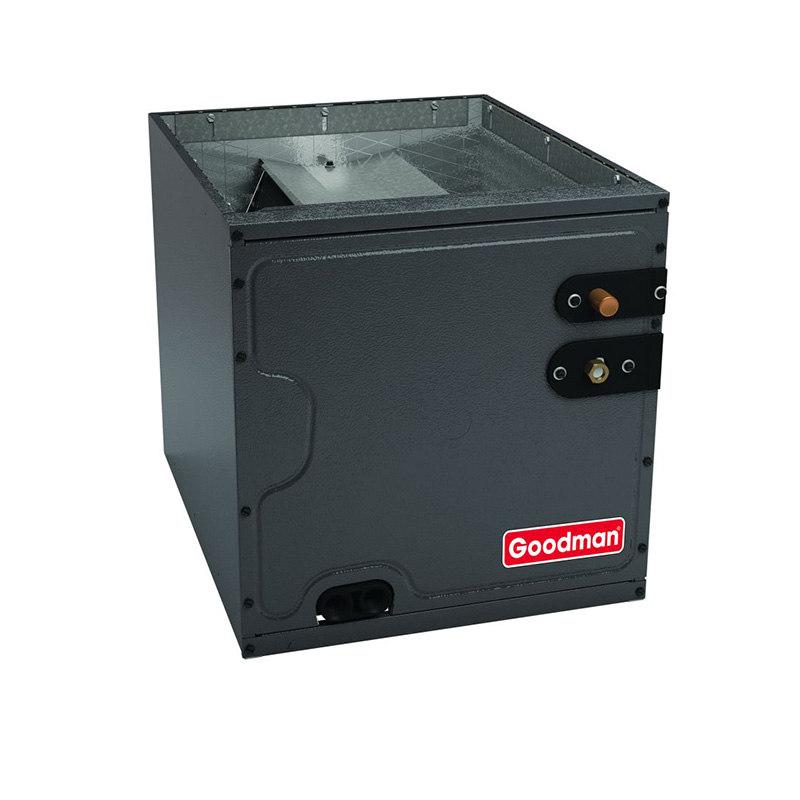
Goodman 2.5 Ton 14 SEER2 AC With 60000 BTU 96% AFUE 2-Stage Variable-Speed ECM Gas Furnace System – Upflow | R32
View on AC Direct see your lowest price →Check current price on AC Direct →
Key features
- 2.5-ton cooling capacity with 14 SEER2 efficiency rating
- 60,000 BTU two-stage gas furnace at 96% AFUE
- Variable-speed ECM blower motor for quieter, consistent airflow
- R-32 refrigerant with lower global-warming potential than R-410A
- Upflow configuration for homes with basement or closet installations and overhead ductwork
- Two-stage burner reduces temperature swings and improves humidity management on mild days
About this system
The Goodman 2.5-ton 14 SEER2 air conditioner paired with a 60,000 BTU 96% AFUE two-stage, variable-speed ECM gas furnace is a solid mid-tier system aimed at homeowners who want meaningful efficiency upgrades without paying premium-brand prices. The 96% AFUE furnace wastes only about four cents of every fuel dollar, which translates to real savings on monthly gas bills compared to an 80% unit. The two-stage burner and variable-speed ECM blower motor work together to run longer at lower output on mild days, improving humidity control and evening out hot and cold spots rather than blasting on and off at full capacity.
At 14 SEER2, the cooling side meets but does not exceed current federal minimum efficiency standards for most U.S. climate zones, so this is a competent rather than a best-in-class performer on the AC side. The R-32 refrigerant is a newer, lower global-warming-potential option that is increasingly common and serviceable by certified technicians. The upflow configuration means the furnace pulls return air from the bottom and discharges conditioned air upward into ductwork above, which suits homes with basement or closet mechanical rooms and overhead duct systems. This combination is best suited to a mid-size home, roughly 1,200 to 1,800 square feet depending on insulation and climate, where budget matters but comfort features like reduced temperature swings and quieter overnight operation are also priorities.
This Goodman combo delivers genuinely good furnace efficiency and useful comfort features at a price point that undercuts Carrier, Trane, and Lennox by a meaningful margin. The trade-off is a brand track record that shows shorter average compressor life and specific failure modes that buyers should budget for after year seven. If it is installed carefully by an experienced technician and maintained on schedule, it performs well for its price tier.
Overall score is the average of the five ratings above.
What we like
- 96% AFUE furnace is near top-tier fuel efficiency and will offset operating costs over time
- Two-stage, variable-speed operation improves humidity control and reduces temperature swings
- R-32 refrigerant is a forward-looking choice with lower environmental impact
- Priced roughly 15 to 25 percent below comparable Carrier, Trane, and Lennox systems
- ECM blower motor uses significantly less electricity than PSC motors, lowering blower operating costs
Trade-offs
- 14 SEER2 on the cooling side is the federal minimum tier, not a high-efficiency AC choice
- Dual-run capacitors are the most commonly reported failure point, typically surfacing in years 5 to 10
- Compressor lifespan averages 10 to 14 years versus 15 to 20 years for premium brands
- A minority of owners report refrigerant leaks within the first year, often tied to install or charge quality
What homeowners and pros say about Goodman
Homeowners who bought Goodman equipment and took the time to leave feedback land in two camps. On ConsumerAffairs, where the rating sits around 2.5 out of 5, the dominant complaint is not immediate failure but rather the accumulating cost of repairs after roughly year seven. Dual-run capacitor failures come up repeatedly as an early and recurring nuisance, and a smaller but notable group reports evaporator coil leaks that turned into expensive service events. A minority of owners also describe refrigerant loss within the first year, which HVAC professionals generally attribute to installation workmanship rather than a product defect, underscoring how much this brand’s real-world outcome depends on who puts it in. On Google dealer reviews, the average runs closer to 3.8 out of 5, and the most common positive theme is straightforward: the equipment cost less than comparable options and it works. Compressor longevity is the longer-term question, with average lifespans in the 10 to 14 year range falling short of the 15 to 20 years often cited for premium brands.
HVAC technicians who work on Goodman regularly tend to have a pragmatic view of this specific two-stage, variable-speed system. The furnace side draws fewer complaints because the 96% AFUE two-stage design is mechanically sound and the ECM motor is a quality component that reduces callbacks related to airflow. The AC side at 14 SEER2 is straightforward to commission and service, and R-32 is increasingly familiar to well-equipped shops. Where pros raise caution is on the capacitor and coil side: stocking a replacement dual-run capacitor as a maintenance item is advice many technicians give Goodman owners proactively. The overall professional consensus mirrors the consumer data: good value for the price, outcomes that track closely with install quality, and a parts-and-labor budget that should be planned for realistically after the equipment clears its first decade.
Sources: ConsumerAffairs Goodman owner reviews, AHRI Directory of Certified Product Performance, U.S. DOE appliance and equipment efficiency standards, Goodman product specification sheets.
What it costs to run
At 14 SEER2, cooling this 2.5-ton system for a typical 1200-hour cooling season at the U.S. average electricity rate of $0.17/kWh works out to roughly $437 per year in cooling, about $20 less per year than a minimum-efficiency 13.4 SEER2 unit of the same size. Your real cost depends on your climate and local rate.
Method: (30,000 BTU/hr ÷ 14 SEER2) × 1200 hours ÷ 1000 × $0.17/kWh. Rate source: U.S. EIA average; cooling hours: moderate-climate estimate.
How it compares
| Brand | Comparable model | SEER2 | Stage | Price position |
|---|---|---|---|---|
| Goodman | This system (2.5T 14 SEER2 AC + 96% AFUE 2-stage ECM furnace) | 14 | Two-stage furnace / single-stage AC | Value pick |
| Carrier | Comfort 14 Series (AC) with 96% Performance series gas furnace | 14 | Single-stage AC / two-stage furnace options | Typically 15 to 25 percent more than Goodman |
| Trane | XR14c (AC) with S9X2 96% AFUE gas furnace | 14 | Single-stage AC / two-stage furnace | Typically 15 to 25 percent more than Goodman |
| Lennox | Merit ML14XC1 (AC) with SLP98V high-efficiency furnace | 14 | Single-stage AC / variable-capacity furnace | Typically 15 to 25 percent more than Goodman |
Competitor rows are comparable single-stage units at similar efficiency; price is relative position, not a quote.
Questions about this system
Is 14 SEER2 still legal and worth buying in my area?
14 SEER2 meets the current federal minimum for most northern U.S. regions and some southern ones depending on exact zone rules, so it is legal in many markets. It is not a high-efficiency AC unit, and if you live in a hot climate with long cooling seasons, stepping up to 16 or 18 SEER2 would likely pay back the difference in utility savings over time. For moderate climates with shorter summers, 14 SEER2 is a reasonable choice.
What does the two-stage furnace actually do differently from a single-stage?
A two-stage furnace fires at a lower output, often around 65 to 70 percent of full capacity, on mild days and only ramps up to full capacity when temperatures are severe. This means longer, gentler heating cycles that distribute heat more evenly, reduce cold blasts of air from vents, and help remove humidity more effectively. Combined with the variable-speed ECM blower, the result is a noticeably quieter and more consistent indoor environment compared to a single-stage system.
What is the warranty on this Goodman system and what does it actually cover?
Goodman typically offers a 10-year parts warranty when the equipment is registered within a specified window after installation, covering major components including the compressor, heat exchanger, and parts. The warranty does not cover labor, refrigerant, or diagnostic costs, which are often the bulk of a real-world repair bill. Confirm the exact registration requirement and terms with your installer before purchase.
What are the most likely repair costs I should budget for over the life of this system?
Dual-run capacitor failures are the most commonly reported issue with Goodman AC equipment and typically cost between 300 and 600 dollars including labor. Evaporator coil leaks show up in a meaningful share of owner reports and can run into the thousands depending on whether the coil needs replacement. Compressors on Goodman units average 10 to 14 years, so budgeting for a potential compressor repair or system replacement before year 15 is realistic.
Can any HVAC technician work on R-32 refrigerant, or do I need a specialist?
R-32 requires a technician who holds an EPA Section 608 certification, the same credential required for R-410A, so it is not a specialty credential in short supply. However, R-32 is mildly flammable, classified as A2L, and some older or smaller shops may not yet stock the refrigerant or have updated their equipment and training for it. When scheduling service, confirm with the contractor that they are equipped and comfortable working with R-32 before booking.
Specifications
| Cooling capacity | 2.5 Ton |
| Efficiency | 14 SEER2 |
| Furnace output | 60000 BTU |
| Furnace efficiency | 96% AFUE |
| Configuration | Upflow |
| Refrigerant | R-32 |