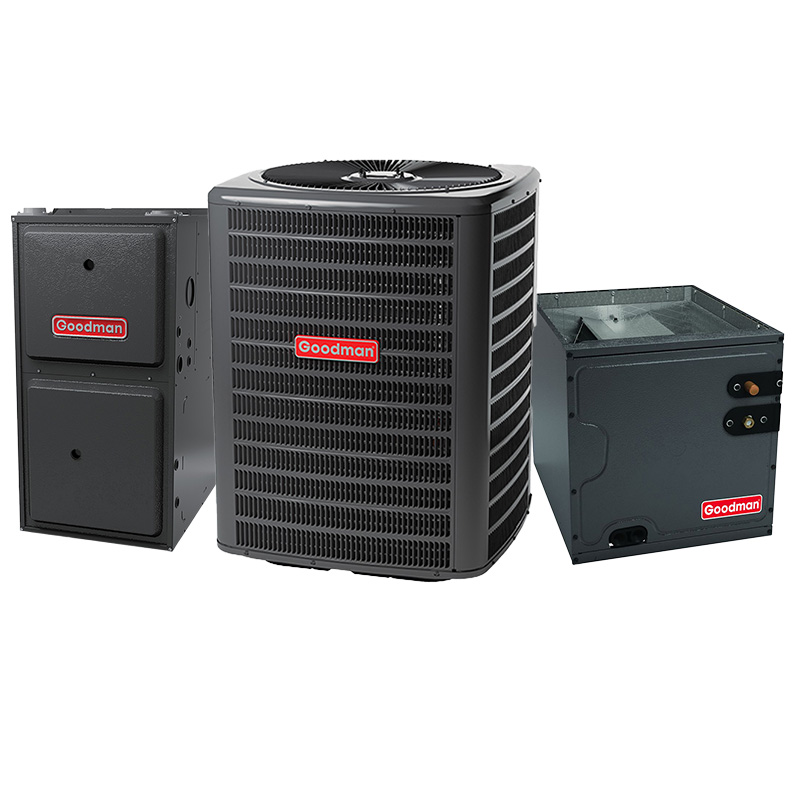
Goodman 2.5 Ton 14 SEER2 AC With 80000 BTU 96% AFUE 2-Stage Variable-Speed ECM Gas Furnace System – Upflow | R32
View on AC Direct see your lowest price →Check current price on AC Direct →
Key features
- 2.5-ton cooling capacity rated at 14 SEER2 for minimum federal efficiency compliance
- 80,000 BTU two-stage gas furnace with 96% AFUE for near-top-tier fuel economy
- Variable-speed ECM blower motor reduces cycling noise and improves humidity control
- Upflow configuration for installations where the air handler sits below the duct distribution
- R-32 refrigerant with lower global-warming potential than legacy R-410A systems
- Bundled system matching from a single manufacturer simplifies warranty coordination
About this system
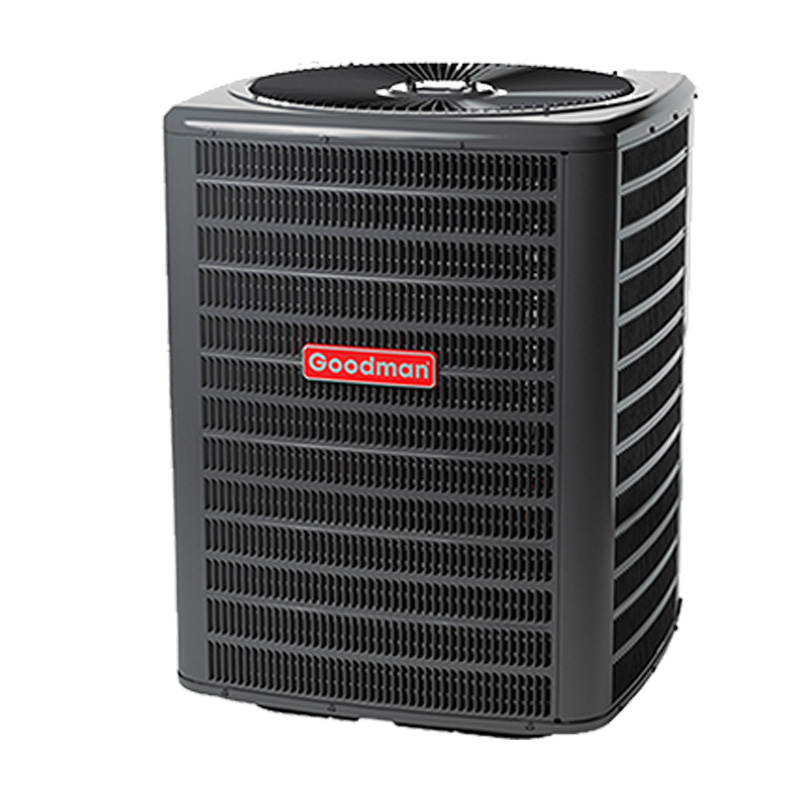
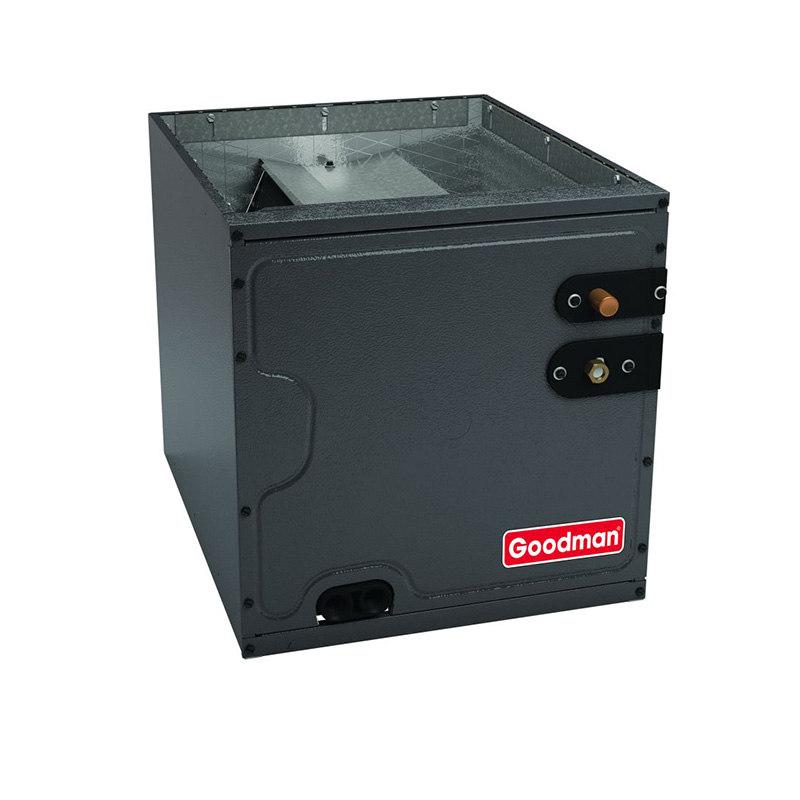
This Goodman bundle pairs a 2.5-ton, 14 SEER2 split-system air conditioner with an 80,000 BTU, 96% AFUE two-stage gas furnace in an upflow configuration, making it a practical fit for single-story homes and most finished basements where the air handler sits on the main floor and supplies conditioned air upward through the duct system. The 2.5-ton cooling capacity is well matched to roughly 1,200 to 1,600 square feet of conditioned space, depending on local climate, insulation quality, and window load. R-32 refrigerant is the modern replacement for R-410A, carrying a lower global-warming potential and slightly better thermodynamic efficiency, though it does require technicians who are certified to handle it.
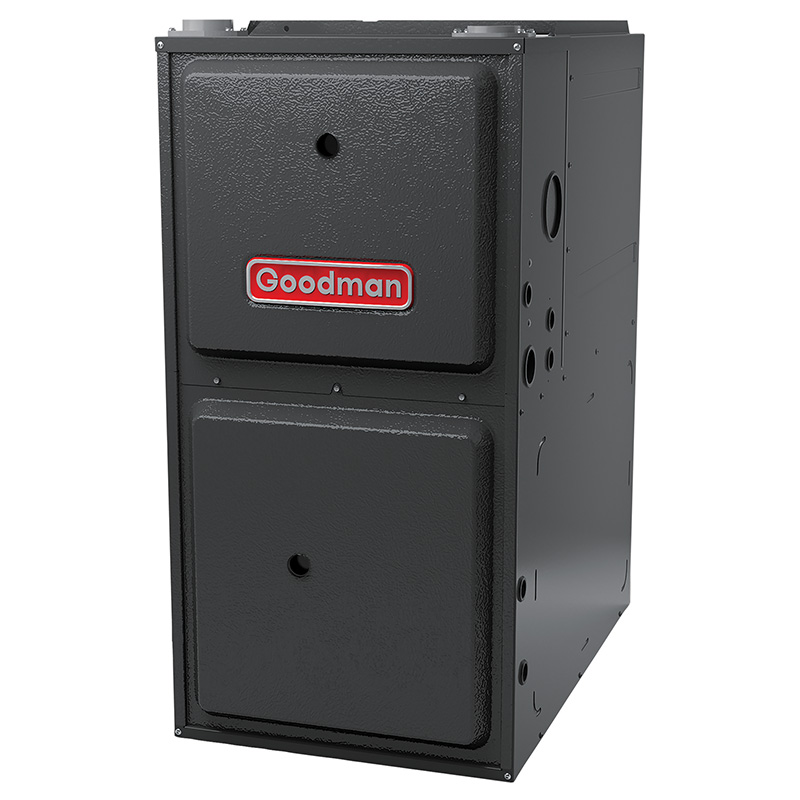
The furnace side is where this system earns its specification premium over budget single-stage alternatives. A 96% AFUE rating means 96 cents of every fuel dollar becomes usable heat, which sits near the top of the mid-efficiency tier. Two-stage operation lets the furnace run at a lower first-stage output on milder days, reducing temperature swings and cycling noise. The variable-speed ECM blower motor is the component that most directly affects comfort and energy bills: it ramps airflow up and down gradually rather than slamming on at full speed, improving dehumidification in cooling mode and delivering quieter, more even heat in winter. Together, these furnace features represent a meaningful step up in day-to-day livability versus a basic single-stage, fixed-speed system at the same price point.
This Goodman combination delivers a genuinely capable furnace spec, with two-stage operation and a variable-speed ECM motor that most competing value-brand systems do not include at this price tier. The 14 SEER2 cooling side is code-minimum efficiency in most U.S. climate zones, so buyers in hot climates who run the AC heavily should weigh whether a higher SEER2 option would recover the cost difference. Long-term ownership costs depend heavily on install quality and whether the capacitor and coil are serviced proactively, given Goodman's documented failure patterns.
Overall score is the average of the five ratings above.
What we like
- Two-stage furnace operation reduces temperature swings and lowers fuel consumption on mild days
- Variable-speed ECM blower improves comfort and dehumidification compared to fixed-speed alternatives
- 96% AFUE places this furnace in the high-efficiency tier, minimizing heat lost to flue gases
- Priced roughly 15 to 25 percent below comparable Carrier, Trane, and Lennox configurations
- R-32 refrigerant system is positioned for long-term regulatory compliance as older refrigerants phase out
Trade-offs
- Dual-run capacitors are the most commonly reported failure point, typically appearing after year 5 to 7, with repair costs in the 300 to 600 dollar range
- Evaporator coil leaks show up in a meaningful share of owner reviews and can be costly to diagnose and repair out of warranty
- Compressor lifespan averages 10 to 14 years versus 15 to 20 for premium-brand units, so total cost of ownership over 15-plus years narrows the upfront savings
- 14 SEER2 is the federal minimum in most regions, offering no efficiency cushion for households with high cooling loads or rising electricity rates
What homeowners and pros say about Goodman
Homeowners who review Goodman equipment on ConsumerAffairs give it roughly 2.5 out of 5 stars, and that channel skews heavily toward people who had a problem worth writing about. The recurring theme in those negative reviews is repair costs climbing after year 7, with dual-run capacitor failures and evaporator coil leaks cited most often. Google dealer reviews tell a more balanced story, averaging around 3.8 out of 5 across hundreds of reviews per location, where affordability comes up as the most consistent point of praise. Neither score represents a ringing endorsement, but taken together they suggest Goodman occupies a real and defensible position: an accessible entry price with performance that holds up reasonably well when installation and maintenance are done right.
HVAC technicians frequently note that Goodman’s longevity is more install-dependent than premium brands, meaning a careful, properly commissioned installation can push performance closer to the higher-end tier, while a rushed or incorrectly charged system tends to surface problems early. For this specific bundle, the variable-speed ECM motor and two-stage furnace are genuinely good specifications at the price, and professionals who work with the brand regularly say those components justify the step up from a single-stage alternative. The documented weak points, specifically the dual-run capacitors, the compressor lifespan averaging 10 to 14 years rather than the 15 to 20 years typical of Trane or Carrier compressors, and the coil leak reports, are real considerations rather than anomalies, and should factor into any honest total-cost-of-ownership comparison.
Sources: ConsumerAffairs Goodman owner reviews, AHRI Directory of Certified Product Performance, U.S. DOE appliance and equipment efficiency standards, Goodman product specification sheets.
What it costs to run
At 14 SEER2, cooling this 2.5-ton system for a typical 1200-hour cooling season at the U.S. average electricity rate of $0.17/kWh works out to roughly $437 per year in cooling, about $20 less per year than a minimum-efficiency 13.4 SEER2 unit of the same size. Your real cost depends on your climate and local rate.
Method: (30,000 BTU/hr ÷ 14 SEER2) × 1200 hours ÷ 1000 × $0.17/kWh. Rate source: U.S. EIA average; cooling hours: moderate-climate estimate.
How it compares
| Brand | Comparable model | SEER2 | Stage | Price position |
|---|---|---|---|---|
| Goodman | 2.5T 14 SEER2 AC + 80k BTU 96% AFUE 2-Stage ECM Furnace (this system) | 14 | Two-stage furnace / single-stage condenser | Value pick |
| Carrier | Performance 14 Series (24ACC4) with 96% AFUE Performance furnace (59TP6) | 14 | Two-stage furnace / single-stage condenser | Typically 15 to 25 percent more than this Goodman bundle |
| Trane | XR14c condenser with S9V2 96% AFUE variable-speed furnace | 14 | Two-stage furnace / single-stage condenser | Typically 15 to 25 percent more than this Goodman bundle |
| Lennox | Merit ML14XC1 condenser with ML196E 96% AFUE two-stage furnace | 14 | Two-stage furnace / single-stage condenser | Typically 15 to 25 percent more than this Goodman bundle |
Competitor rows are comparable single-stage units at similar efficiency; price is relative position, not a quote.
Questions about this system
Does the R-32 refrigerant require a specially certified technician, and will it be hard to find service?
Yes, R-32 is classified as a mildly flammable refrigerant (A2L), so technicians need specific training and equipment to handle it safely. Most larger HVAC contractors are already certified or in the process of becoming certified as R-32 becomes the industry standard, but in rural areas you should confirm availability before purchasing.
How much does it actually cost to fix the capacitor failure Goodman is known for?
Dual-run capacitor replacements on Goodman systems typically run between 300 and 600 dollars including the service call, parts, and labor. The part itself is inexpensive; the bulk of the cost is the technician's time. Signing up for an annual maintenance plan can catch a weakening capacitor before it causes a no-cooling call in peak summer heat.
Is 2.5 tons the right size for my home, or should I get a load calculation done first?
A Manual J load calculation is the only reliable way to confirm sizing for your specific home. An oversized system short-cycles, leaving humidity high and compressor life short; an undersized one runs constantly and cannot hold setpoint on the hottest days. As a rough reference, 2.5 tons is often appropriate for 1,200 to 1,600 square feet in a moderately insulated single-story home, but local climate, ceiling height, and window area all shift that range.
The furnace is rated 80,000 BTU but the cooling is 2.5 tons. Is that furnace oversized for this pairing?
Not necessarily. Furnace sizing is based on heating load, which is independent of cooling load. In cold-climate zones, an 80,000 BTU furnace paired with 2.5 tons of cooling is a common and reasonable combination. However, a Manual J heat-load calculation for your specific location and home will confirm whether 80,000 BTU is appropriate or whether a 60,000 BTU unit would serve you better and cycle less aggressively.
What does the upflow configuration mean, and can I install this in a crawl space or attic?
Upflow means the furnace pulls return air in from the bottom and discharges heated or cooled air out the top, feeding ductwork that runs overhead or through the ceiling. This configuration is designed for installations where the unit sits on the main floor or in a basement with overhead ducts. A crawl space or attic installation typically requires a horizontal or downflow unit; installing an upflow furnace in those locations is not recommended and can void the warranty.
Specifications
| Cooling capacity | 2.5 Ton |
| Efficiency | 14 SEER2 |
| Furnace output | 80000 BTU |
| Furnace efficiency | 96% AFUE |
| Configuration | Upflow |
| Refrigerant | R-32 |