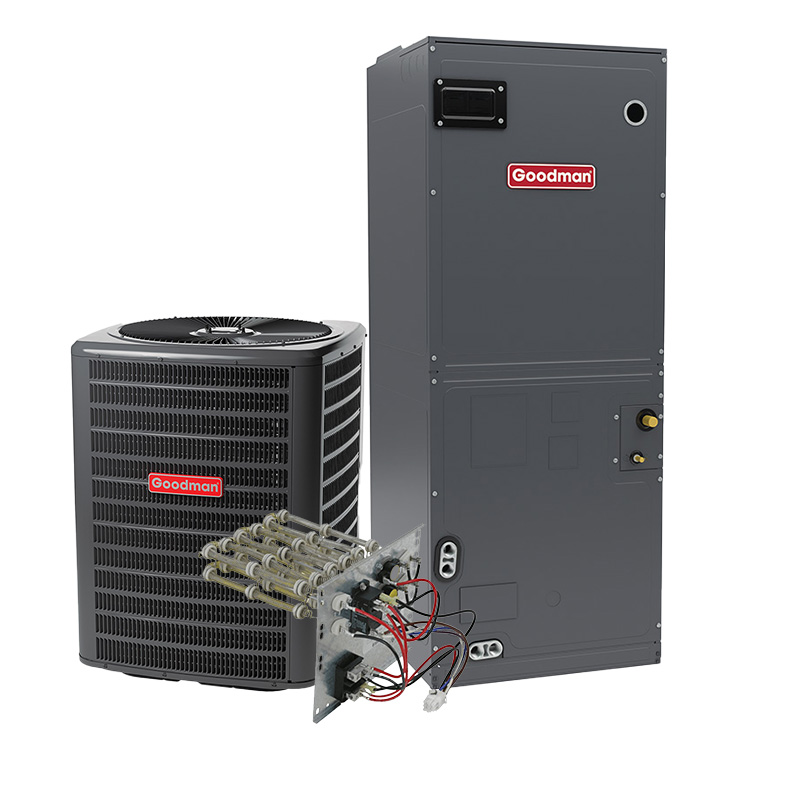
Goodman 2.5 Ton 14 SEER2 R32 Air Conditioner Split System With Electric Heat
View on AC Direct see your lowest price →Check current price on AC Direct →
Key features
- 14 SEER2 efficiency rating meets current federal minimum standards for most U.S. climate zones
- R-32 refrigerant with roughly two-thirds lower global warming potential than R-410A
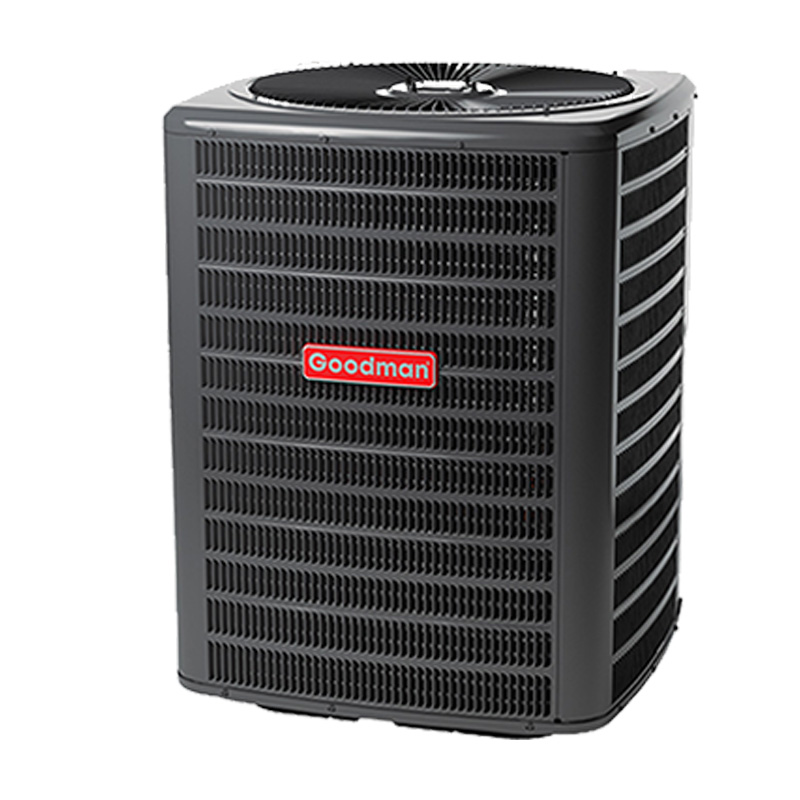
- Single-stage compressor operation sized for approximately 2.5 tons of cooling capacity
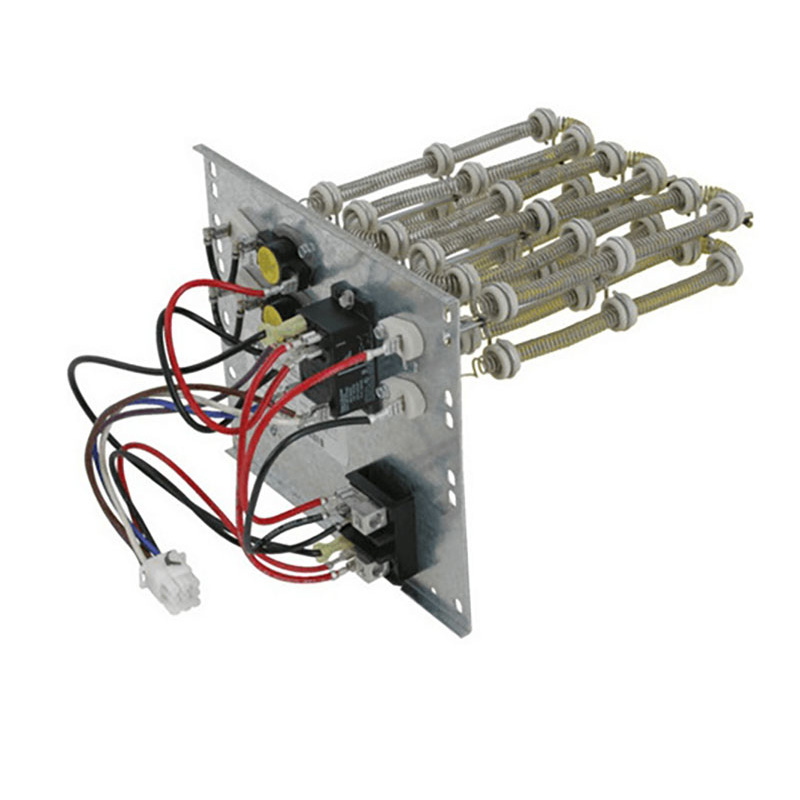
- Electric heat strips included for supplemental or primary heating in mild climates
- Priced approximately 15 to 25 percent below comparable Carrier, Trane, and Lennox units
- Goodman 10-year parts limited warranty when registered within 60 days of installation
About this system
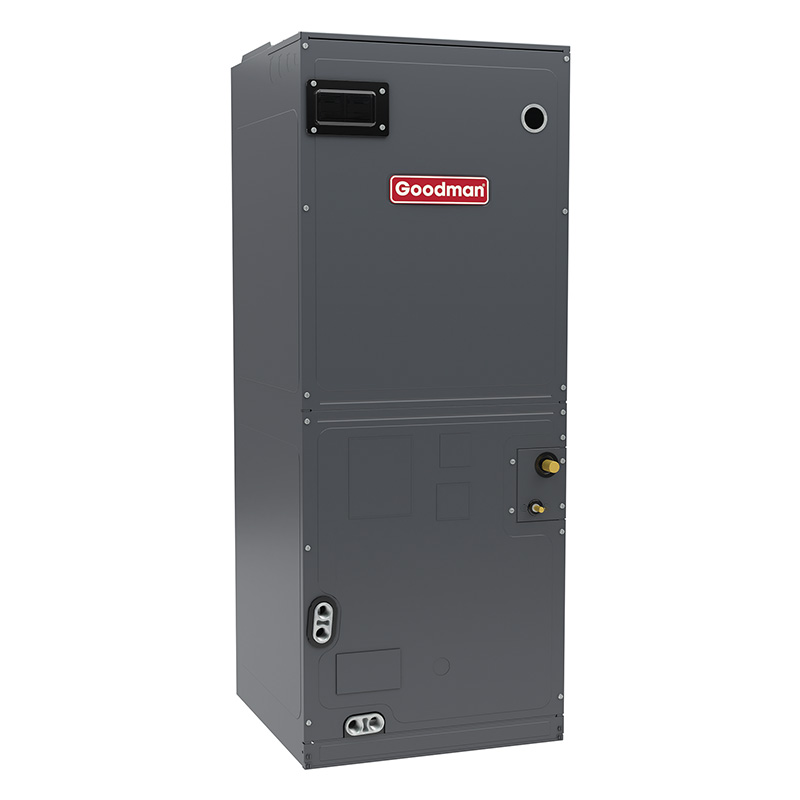
The Goodman 2.5-ton 14 SEER2 R-32 split system is a straightforward, single-stage air conditioner paired with electric heat strips, sized for homes and additions in the 1,200 to 1,600 square foot range depending on climate and insulation. At 14 SEER2, it meets the current federal minimum efficiency threshold for most U.S. regions, which keeps the equipment cost down without sacrificing basic comfort in moderate climates. The switch to R-32 refrigerant is a genuine step forward: R-32 has a global warming potential roughly two-thirds lower than the R-410A it replaces, and it operates at slightly higher efficiency under real-world conditions.
This configuration suits homeowners who need reliable cooling and supplemental electric heat in a mild-to-moderate climate, or in a region where a gas furnace already handles primary heating and the electric heat strips serve as backup. Single-stage operation means the compressor runs at full capacity or not at all, which is the norm at this price point and works fine in consistently hot climates, though it is less precise at managing humidity than variable-speed or two-stage alternatives. The package is best understood as a workhorse: competent, affordable, and heavily dependent on the quality of the installation for how well and how long it performs.
The Goodman 2.5-ton 14 SEER2 R-32 system delivers adequate cooling efficiency at a price point that is hard to argue with for budget-conscious homeowners. Its real-world lifespan and repair frequency depend more on installer skill than on any other factor, and buyers who invest in a thorough, well-reviewed installation will get far more from it than those who chase the lowest labor bid. It is not the last air conditioner you will ever buy, but in the right hands it can be a sensible one.
Overall score is the average of the five ratings above.
What we like
- Significantly lower upfront cost than comparable Carrier, Trane, and Lennox equipment
- R-32 refrigerant is more environmentally responsible and increasingly well-supported by technicians
- 10-year parts warranty (registered) is competitive at this price tier
- Replacement parts, particularly capacitors, are widely stocked and inexpensive to service
- Simple single-stage design means fewer electronic components that can fail
Trade-offs
- Dual-run capacitors are the most commonly reported failure, typically arising within the first decade
- Evaporator coil leaks appear in a notable share of long-term owner reports, a more costly repair
- Compressor lifespan averages 10 to 14 years versus 15 to 20 years for premium-brand compressors
- Single-stage operation provides less humidity control than two-stage or variable-speed systems
What homeowners and pros say about Goodman
Homeowners who share their experiences with Goodman equipment tend to cluster at the poles. On ConsumerAffairs, the brand scores around 2.5 out of 5, a reflection of a platform that attracts frustrated owners more than satisfied ones, and the recurring theme in those complaints is repair costs that climb after roughly year seven. Google dealer reviews tell a more balanced story, averaging around 3.8 out of 5, where affordability is consistently the most common reason buyers say they chose Goodman and would recommend it. For this specific 2.5-ton R-32 system, that divide is representative: buyers who got a careful installation and kept up with annual maintenance tend to report satisfactory performance, while those who went with the lowest-bid installer or skipped tune-ups are more likely to land in the complaint column.
HVAC technicians who work on Goodman equipment regularly point to a few recurring issues worth knowing before you buy. Dual-run capacitor failures are the most common service call, showing up in a meaningful share of units after several years of use and generally resolved for $300 to $600 with widely available parts. Evaporator coil leaks appear in a notable portion of long-term owner accounts and represent a more involved and costly repair. Compressor longevity is the bigger-picture concern: Goodman compressors tend to average 10 to 14 years in real-world use, a shorter runway than the 15 to 20 years more commonly associated with premium brands. The refrigerant leaks that a minority of owners report within the first year are typically traced to installation quality rather than the equipment itself, which underscores why the technician you hire matters as much as the unit you buy.
Sources: ConsumerAffairs Goodman owner reviews, AHRI Directory of Certified Product Performance, U.S. DOE appliance and equipment efficiency standards, Goodman product specification sheets.
What it costs to run
At 14 SEER2, cooling this 2.5-ton system for a typical 1200-hour cooling season at the U.S. average electricity rate of $0.17/kWh works out to roughly $437 per year in cooling, about $20 less per year than a minimum-efficiency 13.4 SEER2 unit of the same size. Your real cost depends on your climate and local rate.
Method: (30,000 BTU/hr ÷ 14 SEER2) × 1200 hours ÷ 1000 × $0.17/kWh. Rate source: U.S. EIA average; cooling hours: moderate-climate estimate.
How it compares
| Brand | Comparable model | SEER2 | Stage | Price position |
|---|---|---|---|---|
| Goodman | 2.5-Ton 14 SEER2 R-32 Split System with Electric Heat | 14 | Single-stage | Value pick |
| Carrier | Comfort 14 Series (24ACC4) | 14 | Single-stage | Typically 15 to 25 percent more than Goodman |
| Trane | XR14c | 14 | Single-stage | Typically 15 to 25 percent more than Goodman |
| Lennox | Merit ML14XC1 | 14 | Single-stage | Typically 15 to 25 percent more than Goodman |
Competitor rows are comparable single-stage units at similar efficiency; price is relative position, not a quote.
Questions about this system
Why does Goodman use R-32 now, and does that change what a technician needs to work on it?
R-32 is the refrigerant industry's current move away from R-410A due to its lower environmental impact. Most licensed HVAC technicians are already familiar with it, though some older recovery equipment may need an upgrade. You should confirm your installer has R-32-rated tools before scheduling the job.
Is 14 SEER2 going to cost me noticeably more to run than a higher-efficiency unit?
Compared to a 16 or 18 SEER2 system, a 14 SEER2 unit will use more electricity per hour of runtime, and in climates with long, hot summers that difference adds up over years of ownership. In milder climates or for a secondary space, the operating cost gap is smaller and the lower purchase price can offset it within a reasonable payback window.
How likely is a capacitor failure, and what does it cost to fix?
Dual-run capacitor failure is the most commonly documented repair issue with Goodman equipment, and it tends to show up after several years of use. It is typically a straightforward repair in the $300 to $600 range including labor, and parts are widely available, so it is not a system-ending problem.
The electric heat strips are included. Can this system fully heat my home in cold winters?
Electric resistance heat strips work in any temperature but are expensive to operate compared to a gas furnace or heat pump when outdoor temperatures drop significantly. This configuration is best suited for mild climates, sunbelt regions, or homes where the electric heat is a backup to a primary heating system rather than the sole heat source.
Does the 10-year warranty cover labor costs if something fails?
Goodman's registered 10-year limited warranty covers parts only, not labor. Labor costs for a covered repair such as a compressor or coil replacement can run several hundred dollars or more depending on your market, so some homeowners pair this system with an extended service plan through their installer to manage that exposure.
Specifications
| Cooling capacity | 2.5 Ton |
| Efficiency | 14 SEER2 |
| Refrigerant | R-32 |