Goodman 2.5 Ton 14 SEER2 R32 Cooling Only Split System
View on AC Direct see your lowest price →Check current price on AC Direct →
Key features
- 2.5-ton single-stage cooling-only outdoor condensing unit
- 14 SEER2 efficiency rating, meeting current federal minimums
- R-32 refrigerant with lower global warming potential than R-410A
- Designed to pair with a compatible indoor air handler and coil (sold separately)
- Nationwide parts availability through Goodman's broad distributor network
- Factory-installed filter drier to help protect refrigerant circuit
About this system
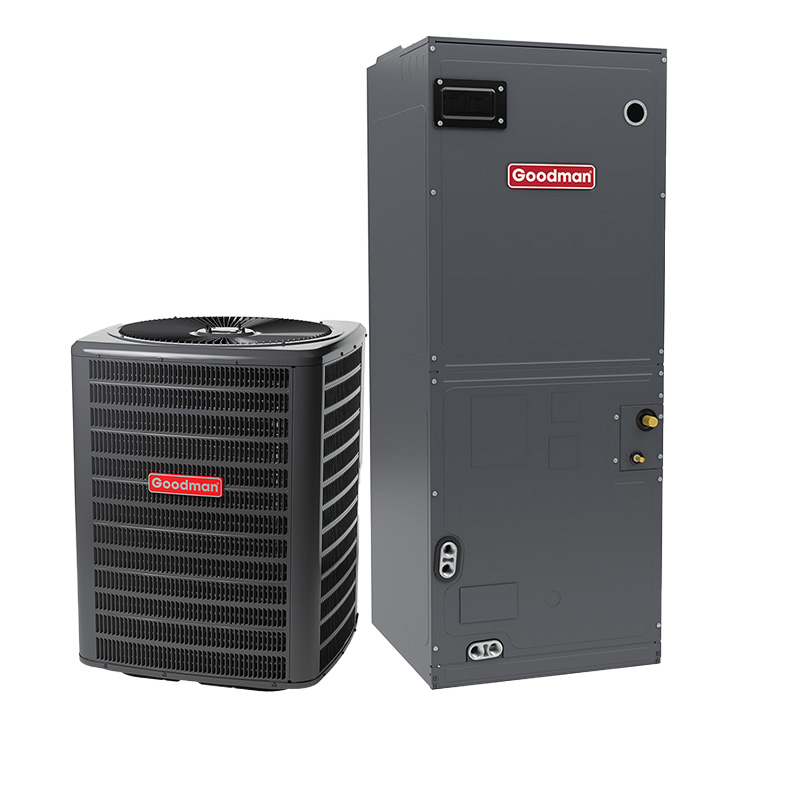
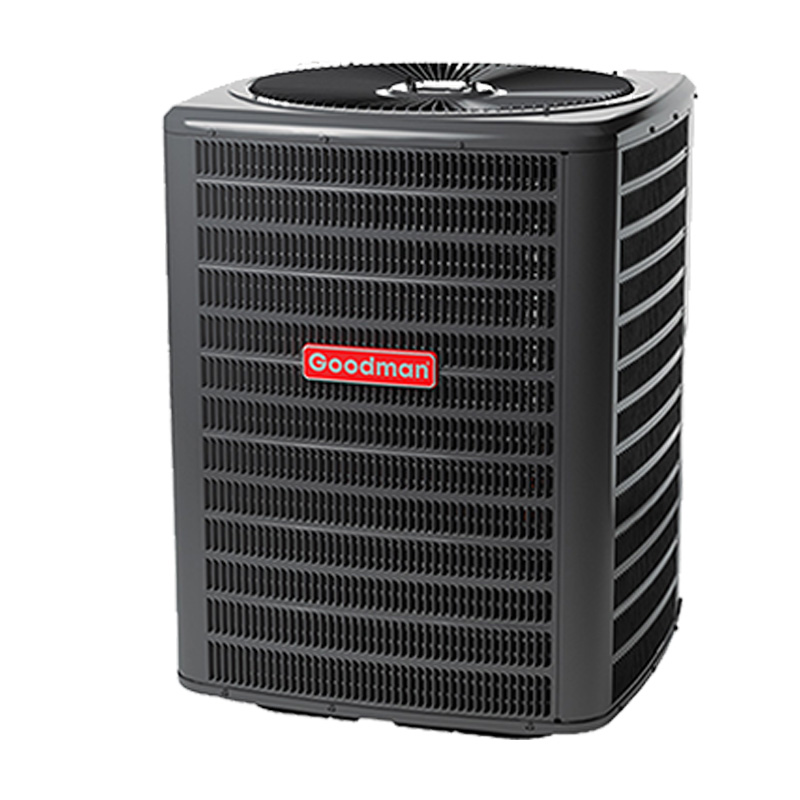
The Goodman GLXS3BN3010 is a 2.5-ton, single-stage cooling-only split system rated at 14 SEER2 and designed around R-32 refrigerant. R-32 has a lower global warming potential than the R-410A it replaces, and its higher energy density means the system can use a smaller refrigerant charge to move the same amount of heat. At 14 SEER2, this unit sits at the current federal minimum efficiency tier for most U.S. climate regions, so it meets code but does not deliver the energy savings you would see from a 16 or 18 SEER2 system over a long ownership horizon.
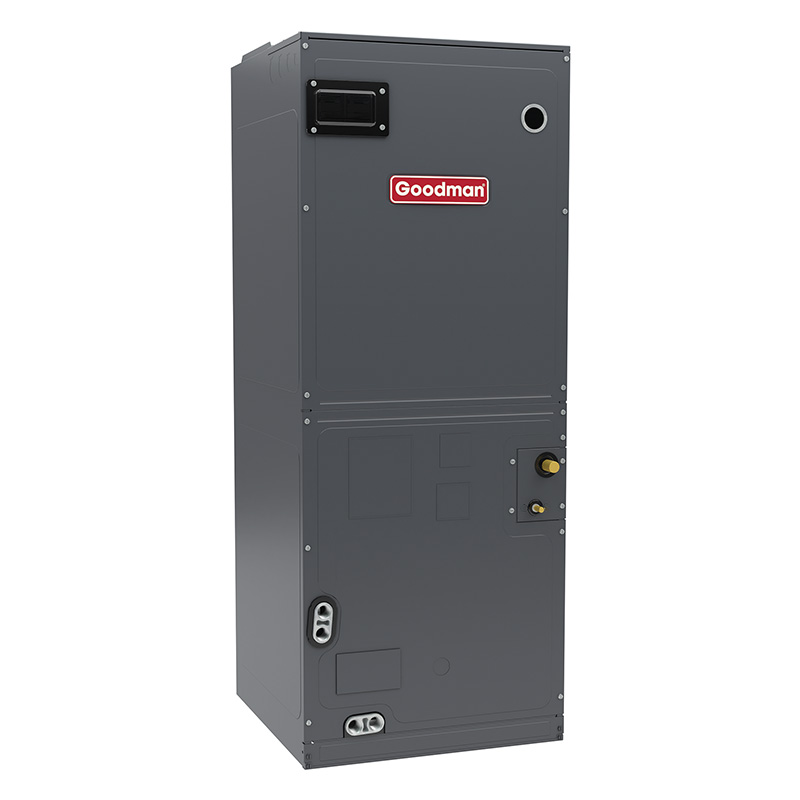
This is a cooling-only outdoor condensing unit, meaning it pairs with a separate air handler or furnace and indoor coil that you supply. That configuration suits climates where heating is handled by a gas furnace or another dedicated system and where a heat pump is not needed. At 2.5 tons, the unit is sized for roughly 1,200 to 1,600 square feet of well-insulated living space, though proper Manual J load calculations by an installer are the only reliable way to confirm whether this tonnage is right for your home. Oversizing or undersizing will hurt comfort and efficiency regardless of equipment brand.
Goodman positions this system as an entry-level replacement or new-construction option for budget-conscious buyers. It carries the Goodman name, which means accessible parts availability and widespread technician familiarity across the country, but also the trade-offs that come with value-tier construction and lower-grade components. Buyers who prioritize first cost over long-term reliability and premium efficiency will find this system competitive; those expecting a 20-year, low-maintenance ownership experience may want to look at a higher tier.
The Goodman GLXS3BN3010 delivers reliable baseline cooling at a price point that is hard to match among name-brand equipment, making it a reasonable choice for buyers replacing an older system on a tight budget. At 14 SEER2 it meets code minimums but offers no efficiency headroom, and long-term ownership costs depend heavily on install quality and whether you get an early capacitor or coil issue. It is a workable unit, not an exceptional one.
Overall score is the average of the five ratings above.
What we like
- Entry-level price point, typically 15 to 25 percent below comparable Carrier, Trane, and Lennox units
- R-32 refrigerant is more environmentally responsible than R-410A and supports forward compatibility
- Widespread technician familiarity means service calls are rarely complicated by parts sourcing
- Single-stage design is straightforward to diagnose and repair
- 10-year parts warranty is competitive for the value-brand segment
Trade-offs
- Dual-run capacitors are the most commonly reported failure point, with repairs typically running $300 to $600
- Evaporator coil leaks appear in a meaningful share of owner reports, particularly in years 5 through 10
- Compressor lifespan tends to average 10 to 14 years, shorter than the 15 to 20 years often seen in premium brands
- A minority of owners report refrigerant leaks within the first year, usually traceable to installation or initial charge quality
What homeowners and pros say about Goodman
Homeowners who have lived with Goodman equipment tend to split along a predictable line. Those who had a skilled installer and kept up with annual maintenance often report years of uneventful operation and point to the lower purchase price as a clear win. Those who ran into problems early cite capacitor failures and refrigerant leaks as frustrating surprises, and Goodman’s ConsumerAffairs score of roughly 2.5 out of 5 reflects that complaint-heavy audience, where repair costs climbing after year 7 are the most repeated theme. Google dealer reviews average around 3.8 out of 5 across locations, where affordability is consistently the top note of praise, suggesting that buyers who go in with realistic expectations tend to come away more satisfied.
HVAC technicians who service Goodman equipment regularly are generally familiar with what to watch for. Dual-run capacitor failures are the most commonly documented repair, usually a straightforward fix in the $300 to $600 range when caught early. Evaporator coil leaks are a more serious concern that shows up in a meaningful share of owner reports, and the compressor lifespan on Goodman units averaging 10 to 14 years is shorter than the 15 to 20 years technicians tend to associate with Carrier, Trane, or Lennox compressors at the same efficiency tier. For this specific R-32 unit, technicians note that first-year refrigerant leaks, when they do occur, are almost always tied to install quality or initial charge rather than a manufacturing defect, which is why installer selection matters as much as brand selection at this price point.
Sources: ConsumerAffairs Goodman owner reviews, AHRI Directory of Certified Product Performance, U.S. DOE appliance and equipment efficiency standards, Goodman product specification sheets.
What it costs to run
At 14 SEER2, cooling this 2.5-ton system for a typical 1200-hour cooling season at the U.S. average electricity rate of $0.17/kWh works out to roughly $437 per year in cooling, about $20 less per year than a minimum-efficiency 13.4 SEER2 unit of the same size. Your real cost depends on your climate and local rate.
Method: (30,000 BTU/hr ÷ 14 SEER2) × 1200 hours ÷ 1000 × $0.17/kWh. Rate source: U.S. EIA average; cooling hours: moderate-climate estimate.
How it compares
| Brand | Comparable model | SEER2 | Stage | Price position |
|---|---|---|---|---|
| Goodman | GLXS3BN3010 | 14 | Single-stage | Value pick |
| Carrier | Comfort 14 (24ACC4) | 14 | Single-stage | Typically 15 to 25 percent more than Goodman |
| Trane | XR14c | 14 | Single-stage | Typically 15 to 25 percent more than Goodman |
| Lennox | Merit 14ACX | 14 | Single-stage | Typically 15 to 25 percent more than Goodman |
Competitor rows are comparable single-stage units at similar efficiency; price is relative position, not a quote.
Questions about this system
Does this system include the indoor coil and air handler, or do I buy those separately?
This is the outdoor condensing unit only. You will need a compatible indoor evaporator coil and an air handler or furnace to complete the system. Your installer should confirm coil compatibility and refrigerant line sizing before ordering.
Why does this unit use R-32 instead of R-410A, and does that affect service costs?
R-32 has a lower global warming potential and requires a smaller refrigerant charge, which is why Goodman and other manufacturers are transitioning to it. Technicians need R-32 certification and proper recovery equipment, so service availability varies by market, though it is becoming more common as the transition continues industry-wide.
How long should I realistically expect this system to last?
Based on documented owner experience with Goodman equipment, the compressor typically averages 10 to 14 years, compared to 15 to 20 years for premium brands. Good preventive maintenance, a quality install, and prompt attention to the common capacitor failures can help push toward the longer end of that range.
The 10-year parts warranty sounds strong. What does it actually cover, and are there conditions?
The 10-year parts warranty generally requires product registration within a set window after install (often 60 days) and covers functional components. It does not cover labor, refrigerant, or damage from improper installation. Always confirm current warranty terms with your installer or on Goodman's website at time of purchase.
Is 14 SEER2 going to cost me significantly more to run than a higher-efficiency option?
At 14 SEER2 you are at the code minimum, so a 16 or 18 SEER2 unit would consume measurably less electricity over a full cooling season. The difference in annual operating cost depends on your local utility rates, run hours, and home load, but in warm climates with long cooling seasons the efficiency gap adds up over a 10-plus year ownership period.
Specifications
| Cooling capacity | 2.5 Ton |
| Efficiency | 14 SEER2 |
| Refrigerant | R-32 |
| Model | GLXS3BN3010 |