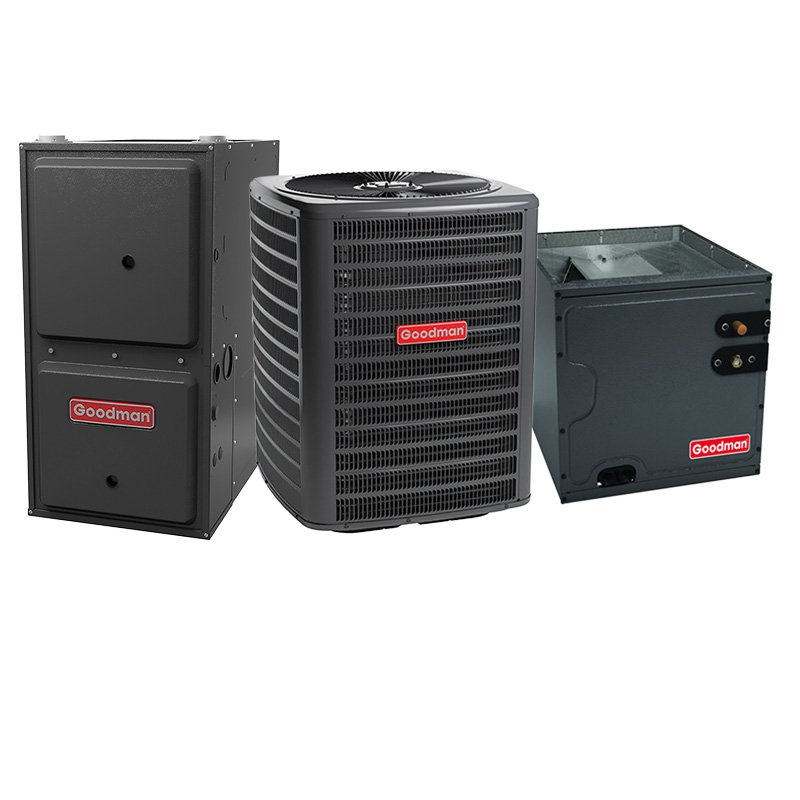
Goodman 2.5 Ton 15.2 SEER2 60000 BTU 80% AFUE Two Stage Multi-Speed ECM Gas Furnace System – Low NOX For California Downflow | R32
View on AC Direct see your lowest price →Check current price on AC Direct →
Key features
- 2.5-ton cooling capacity at 15.2 SEER2 efficiency rating
- 60,000 BTU two-stage gas furnace at 80% AFUE
- Multi-speed ECM blower motor for lower electricity draw and quieter operation
- R-32 refrigerant, California Low NOX compliant
- Downflow configuration for floor-register duct systems
- Two-stage heating reduces short-cycling and temperature swings vs. single-stage
About this system
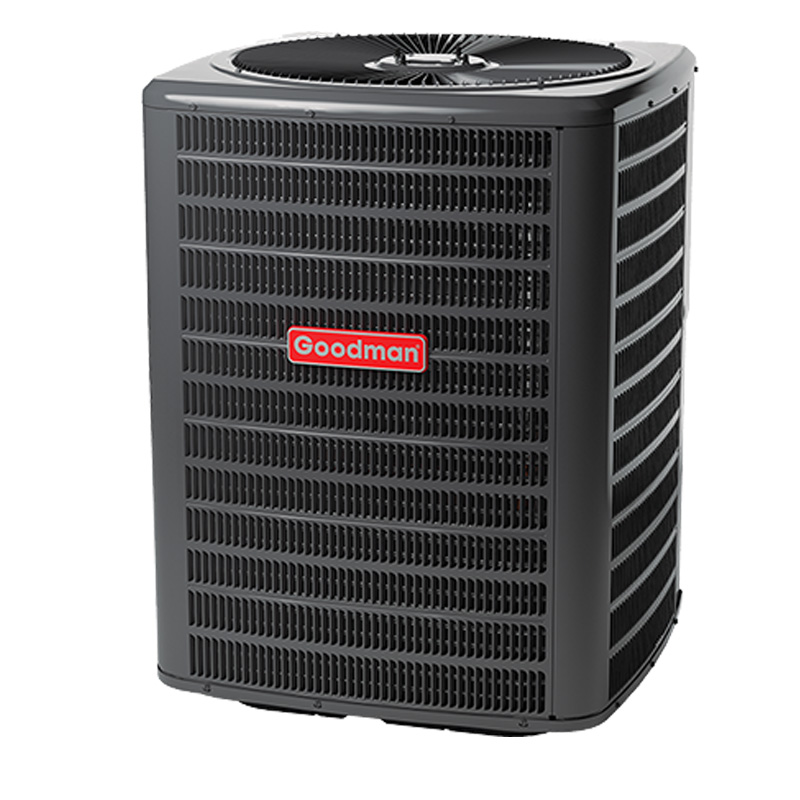
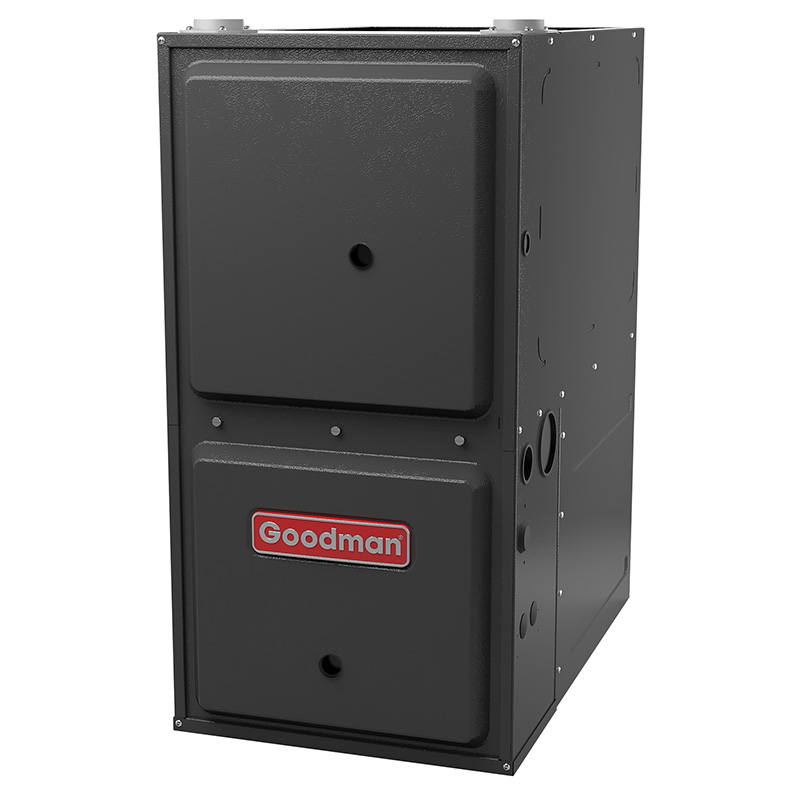
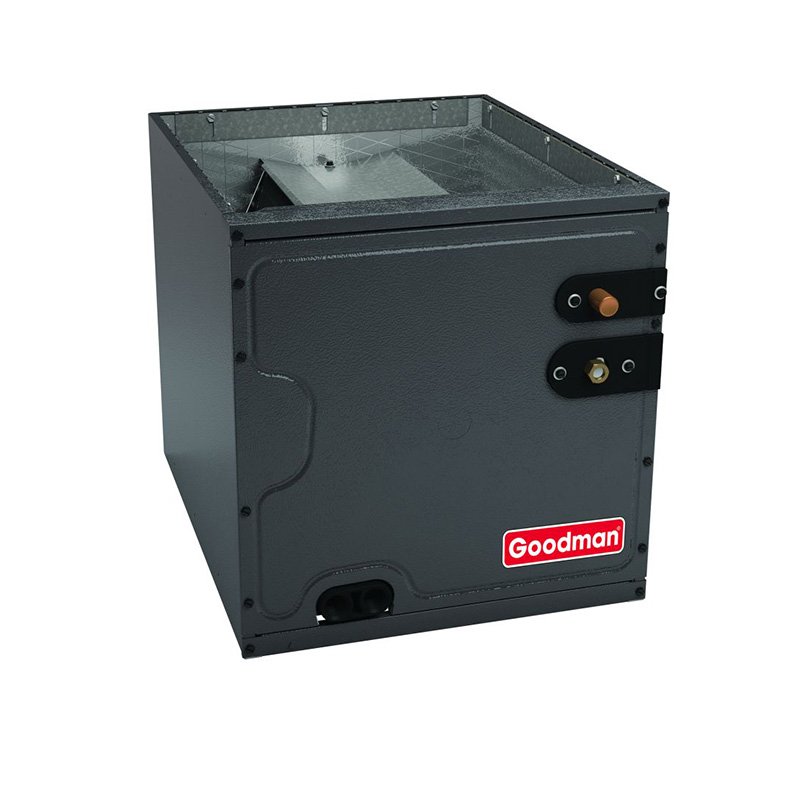
The Goodman GLXS4BA3010 packages a 2.5-ton, 15.2 SEER2 split system with a 60,000 BTU 80% AFUE two-stage gas furnace in a downflow configuration, making it a practical fit for homes where the air handler sits in a closet or utility space that supplies conditioned air downward through floor registers. The R-32 refrigerant charge meets California Low NOX requirements and positions the system ahead of the R-410A phase-out, so replacement refrigerant will remain available for the foreseeable future. At 2.5 tons, the cooling capacity is well matched to roughly 1,200 to 1,600 square feet of conditioned space, depending on local climate, insulation quality, and window load.
The two-stage furnace and multi-speed ECM blower do real work here. Two-stage heating means the furnace runs on the lower fire most of the time, cycling up only when temperatures drop sharply, which reduces temperature swings and short-cycling compared to a single-stage unit. The ECM (electronically commutated motor) blower draws significantly less electricity than a standard PSC motor and ramps speed more gradually, supporting quieter operation and more consistent airflow. At 80% AFUE the furnace is a mid-efficiency unit, meaning roughly one dollar in five of gas burned exits as exhaust rather than heat. Homeowners in mild-winter California climates will find that acceptable; those in colder regions or in homes with high heating loads may want to weigh a 96% AFUE option.
This configuration is specifically built for downflow installation, so it is not interchangeable with upflow or horizontal applications without purchasing different equipment. Confirm your duct layout and plenum dimensions before ordering. Like all Goodman equipment, the final performance and longevity of this system depend heavily on the quality of the installing contractor, a factor that matters more with this brand than with some premium competitors.
This Goodman system delivers a legitimate two-stage, ECM-equipped setup at a price that typically undercuts comparable Carrier, Trane, and Lennox packages by 15 to 25 percent, which is its clearest advantage. The trade-off is a shorter expected compressor lifespan, a documented history of capacitor failures and evaporator coil leaks in a segment of the owner base, and performance that depends heavily on install quality. For budget-conscious buyers who vet their installer carefully and set aside a modest service fund, it represents fair value; buyers who prioritize long-term reliability over upfront cost should consider premium alternatives.
Overall score is the average of the five ratings above.
What we like
- Two-stage furnace and ECM blower improve comfort and reduce energy use compared to single-stage, single-speed systems
- 15.2 SEER2 meets the 2023 federal minimums comfortably and qualifies for some utility rebates
- R-32 refrigerant is low-GWP and not subject to the phase-out timeline affecting R-410A equipment
- Priced 15 to 25 percent below comparable Carrier, Trane, and Lennox systems, lowering the entry cost for a two-stage setup
- California Low NOX certification satisfies air-quality requirements in South Coast and San Joaquin Valley districts without additional hardware
Trade-offs
- 80% AFUE is a mid-efficiency furnace; homeowners in colder climates or high-use zones will pay more in gas costs than with a 95%+ AFUE alternative
- Compressor lifespan averages 10 to 14 years versus 15 to 20 years reported for premium brands, meaning a potential mid-life replacement cost
- Dual-run capacitor failures are the most commonly reported repair, and evaporator coil leaks appear in a meaningful share of owner reviews after several years
- Performance and longevity are highly install-dependent; a poor or rushed installation amplifies every documented failure mode
What homeowners and pros say about Goodman
Homeowners who share feedback on Goodman equipment tend to split along a predictable line. On Google dealer reviews, which aggregate to roughly 3.8 out of 5 stars across hundreds of reviews per location, the most common praise centers on affordability and the fact that the units cool and heat reliably in the early years. Buyers who did their homework on the contractor and had a clean installation report solid satisfaction. The picture on ConsumerAffairs is harder, averaging around 2.5 out of 5 stars, a channel that skews toward complaints by nature, where the recurring theme is repair costs that begin climbing after roughly year seven. The specific failure modes that appear most often in that feedback match what technicians report in the field: dual-run capacitors going out (a relatively affordable fix at $300 to $600), evaporator coil leaks that are more disruptive and expensive, and a compressor lifespan that tends to run 10 to 14 years rather than the 15 to 20 years owners of premium brands more commonly report.
HVAC professionals who work on Goodman equipment regularly offer a consistent take: the equipment is not inherently poor, but it is less forgiving of sloppy installation than a Trane or Carrier unit, and it has a tighter margin for error on refrigerant charge, airflow setup, and electrical connections. Technicians who like the brand point to straightforward serviceability and widely available parts. Those who are more skeptical note that the documented capacitor and coil issues on this system mean a service call or two over a 10-year ownership window is a realistic expectation rather than a worst-case scenario. For this particular downflow, two-stage, R-32 configuration, those dynamics hold. The two-stage furnace and ECM blower add genuine comfort value, and the California Low NOX compliance removes a common regional barrier, but the reliability ceiling remains where it has been for Goodman as a brand.
Sources: ConsumerAffairs Goodman owner reviews, AHRI Directory of Certified Product Performance, U.S. DOE appliance and equipment efficiency standards, Goodman product specification sheets.
What it costs to run
At 15.2 SEER2, cooling this 2.5-ton system for a typical 1200-hour cooling season at the U.S. average electricity rate of $0.17/kWh works out to roughly $403 per year in cooling, about $54 less per year than a minimum-efficiency 13.4 SEER2 unit of the same size. Your real cost depends on your climate and local rate.
Method: (30,000 BTU/hr ÷ 15.2 SEER2) × 1200 hours ÷ 1000 × $0.17/kWh. Rate source: U.S. EIA average; cooling hours: moderate-climate estimate.
How it compares
| Brand | Comparable model | SEER2 | Stage | Price position |
|---|---|---|---|---|
| Goodman | GLXS4BA3010 (this system) | 15.2 | Two-stage | Value pick |
| Carrier | Performance 15 Series (24ACC6) | 15.2 | Single-stage | Typically 15 to 25 percent more than this Goodman |
| Trane | XR15 Series | 15.0 | Single-stage | Typically 15 to 25 percent more than this Goodman |
| Lennox | Merit 14ACX Series | 15.0 | Single-stage | Typically 15 to 25 percent more than this Goodman |
Competitor rows are comparable single-stage units at similar efficiency; price is relative position, not a quote.
Questions about this system
Can this downflow furnace be converted to upflow or horizontal installation?
No. The GLXS4BA3010 is engineered specifically for downflow applications, where supply air exits through the bottom of the unit into a floor plenum. Installing it in an upflow or horizontal position would compromise both performance and safety. If your home uses ceiling registers fed from above, you need a different configuration.
Is R-32 refrigerant readily available for service calls in California?
R-32 availability is growing alongside the industry transition away from R-410A, and most commercial refrigerant suppliers stock it. That said, not every residential HVAC technician is yet equipped to handle R-32, which requires different recovery equipment and has a mild flammability rating (A2L). Confirm your service contractor is certified and equipped for R-32 before signing a maintenance agreement.
What does the Goodman warranty actually cover on this system, and are there conditions?
Goodman's standard warranty on registered equipment is 10 years on parts and a limited lifetime warranty on the heat exchanger. Registration must be completed within 60 days of installation; unregistered units drop to a 5-year parts warranty. The warranty covers parts replacement but not labor, which is often the larger cost of a repair, so a separate labor warranty from your installer is worth negotiating.
How much difference does the two-stage furnace actually make compared to a single-stage unit?
In practice, a two-stage furnace runs on low fire the majority of heating hours, which means more consistent indoor temperatures, fewer abrupt on-off cycles, and quieter operation. The ECM blower in this system also ramps speed gradually rather than slamming on at full speed, which reduces drafts near registers. The efficiency gain over a single-stage 80% AFUE furnace is modest in milder California climates, but comfort improvement is the more tangible benefit.
What are the most common repairs owners run into after a few years with this system?
Based on documented owner experience with Goodman equipment, dual-run capacitor failure is the most frequently reported issue, typically a repair in the $300 to $600 range and a straightforward fix for a technician. Evaporator coil leaks appear in a meaningful portion of owner reviews over time and are more expensive to address. A minority of owners have also reported refrigerant leaks in the first year, which generally traces back to installation or initial charge quality rather than a manufacturing defect.
Specifications
| Cooling capacity | 2.5 Ton |
| Efficiency | 15.2 SEER2 |
| Furnace output | 60000 BTU |
| Furnace efficiency | 80% AFUE |
| Configuration | Downflow |
| Refrigerant | R-32 |
| Model | GLXS4BA3010 |