Goodman 2.5 Ton 15.2 SEER2 80000 BTU 80% AFUE Two Stage Multi-Speed ECM Gas Furnace System – Horizontal | R32
View on AC Direct see your lowest price →Check current price on AC Direct →
Key features
- 2.5-ton two-stage R-32 cooling at 15.2 SEER2 efficiency
- 80,000 BTU two-stage gas furnace rated at 80% AFUE
- Horizontal airflow configuration for crawl space, attic, or side-exit closet installs
- Multi-speed ECM blower motor for lower fan energy use and steadier airflow
- R-32 refrigerant with lower global warming potential than R-410A
- Factory-matched system designed to simplify AHJ and AHRI documentation
About this system
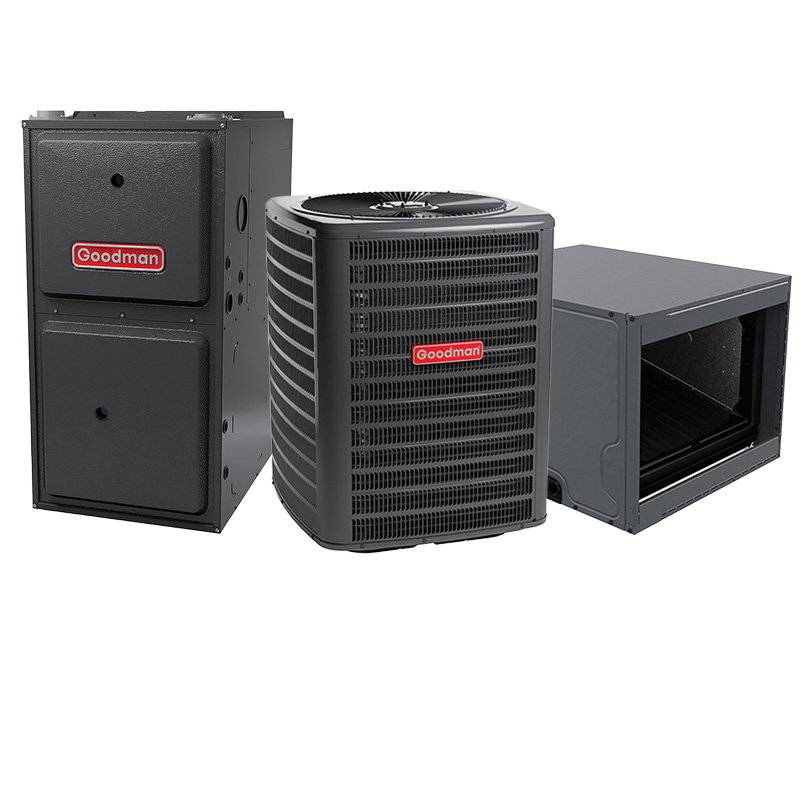
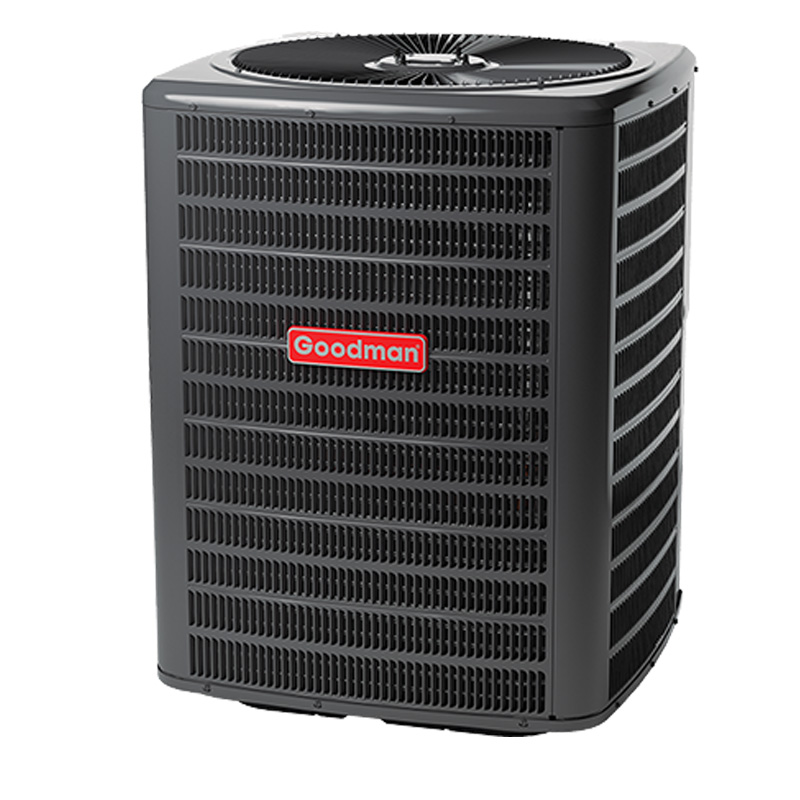
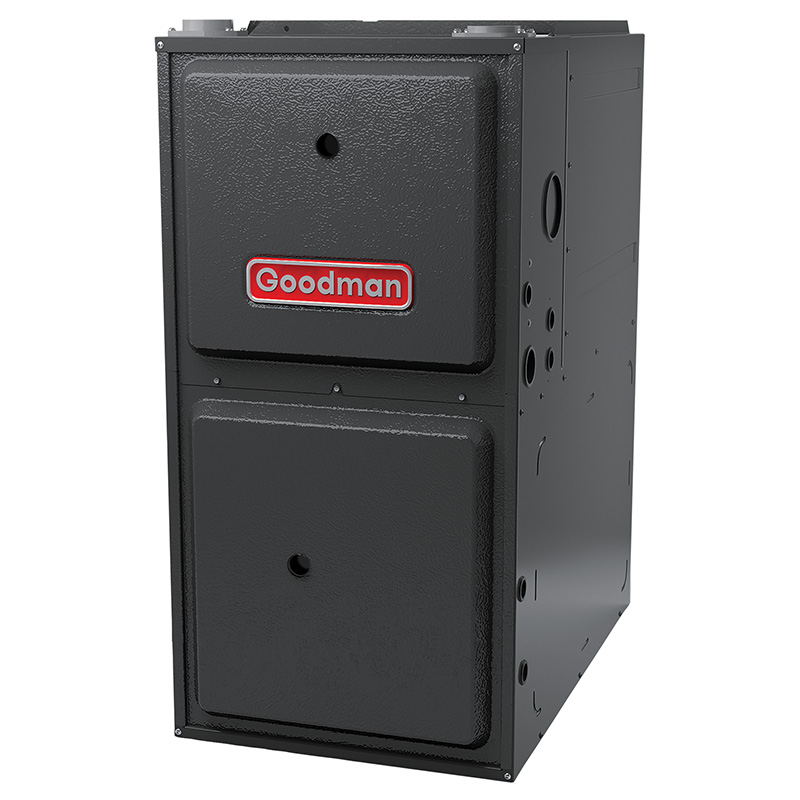
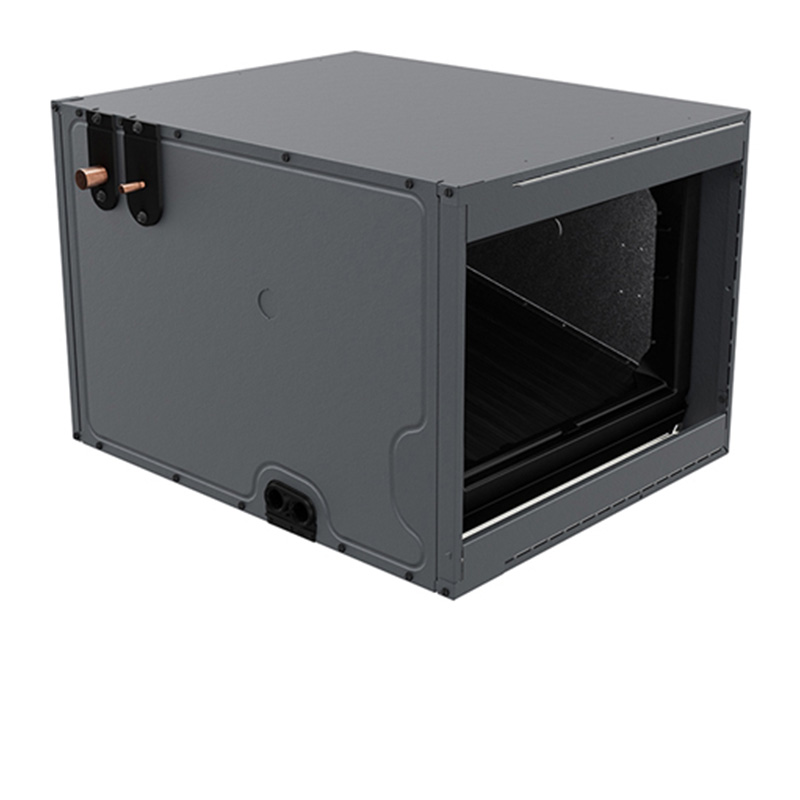
The Goodman GLXS4BA3010 pairs a 2.5-ton, 15.2 SEER2 R-32 air conditioner with an 80,000 BTU, 80% AFUE two-stage gas furnace in a horizontal configuration, making it a practical choice for homes where the air handler sits in a crawl space, attic, or closet that only accommodates side-discharge airflow. The two-stage cooling compressor runs at low capacity most of the time, cycling up to full power only on the hottest days, which tends to improve humidity removal and lower runtime noise compared with a single-stage unit. The ECM blower motor adjusts speed in fine increments to match airflow demand, reducing electricity consumption at the air handler and helping the system maintain steadier temperatures room to room.
On the heating side, 80% AFUE means 80 cents of every dollar spent on gas becomes usable heat, which meets code minimums in most regions but falls short of the 90-plus AFUE you get from a condensing furnace. If your home is in a cold climate and you run the furnace heavily from November through March, a 96% AFUE upgrade may pay back the price difference inside a decade. That said, this package suits mild-to-moderate heating climates well, and the horizontal configuration adds real-world value for buyers who simply cannot install a vertical unit. R-32 refrigerant has a lower global warming potential than the R-410A it replaces and is increasingly the industry standard, though not all technicians in every market stock it yet.
This system is priced roughly 15 to 25 percent below comparable Carrier, Trane, and Lennox equipment, which is the central reason buyers choose Goodman. That savings is real, but it comes with trade-offs in documented long-term reliability and, in some cases, component longevity. How the system actually performs over its service life depends heavily on installation quality, refrigerant charge accuracy, and whether a qualified technician commissions it properly from day one.
The GLXS4BA3010 delivers a genuinely useful efficiency step up from single-stage equipment at a price point that undercuts the major premium brands by a meaningful margin. The horizontal configuration and two-stage operation address real installation and comfort needs, but buyers should go in knowing that Goodman's documented component track record and owner satisfaction scores sit below those of Carrier, Trane, and Lennox. The value case holds up best when the system is professionally installed, properly charged, and backed by a service plan.
Overall score is the average of the five ratings above.
What we like
- Priced 15 to 25 percent below comparable Trane, Lennox, and Carrier systems, leaving budget for a service contract or duct work
- Two-stage compressor improves humidity control and reduces short-cycling compared with single-stage alternatives
- ECM blower motor cuts fan electricity use and smooths out temperature swings between rooms
- Horizontal configuration opens the system to homes where vertical units simply will not fit
- R-32 refrigerant meets current and anticipated near-term environmental regulations, reducing future retrofit risk
Trade-offs
- 80% AFUE is code-minimum in most areas and will cost noticeably more to operate than a 96% AFUE condensing furnace over a full heating season in cold climates
- Dual-run capacitors are the most commonly documented failure point and, while typically a low-cost fix, they do mean a service call roughly every 7 to 10 years for many owners
- Compressor lifespan averages 10 to 14 years in owner reports, shorter than the 15 to 20 years more commonly cited for premium-brand compressors
- Evaporator coil leaks and first-year refrigerant charge issues appear in a meaningful share of owner reviews, underscoring how much outcome depends on installation quality
What homeowners and pros say about Goodman
Homeowners shopping Goodman tend to land in one of two camps after a few years of ownership. The larger group appreciates that the upfront savings were real and that the system has worked without major incident, particularly when a careful installer verified the refrigerant charge and walked through setup thoroughly. On Google dealer review aggregates, Goodman systems score around 3.8 out of 5 across multi-hundred-review samples at individual dealer locations, with affordability and accessibility consistently cited as the reasons buyers are satisfied. The picture on ConsumerAffairs is less favorable, hovering near 2.5 out of 5, though that channel draws disproportionately from owners motivated enough by a problem to write a review. The recurring theme in those lower ratings is repair costs climbing after roughly year seven, which aligns with what HVAC technicians report in the field.
Pros who work on Goodman equipment regularly note that dual-run capacitor failures are the most predictable service call, a repair that typically runs 300 to 600 dollars and is straightforward to complete. More serious concerns they flag include evaporator coil leaks that appear in a notable share of units over time and compressor longevity that tends to average 10 to 14 years rather than the 15 to 20 years more commonly seen on Carrier, Trane, and Lennox equipment. A minority of owners also report refrigerant issues in the first year, which technicians attribute almost entirely to installation or initial charge errors rather than a factory defect. For this horizontal R-32 system specifically, those same technicians stress that level placement, condensate management, and precise charge verification at startup are non-negotiable steps, not optional ones. Get those right and this package represents a defensible value; skip them and the documented failure modes become more likely.
Sources: ConsumerAffairs Goodman owner reviews, AHRI Directory of Certified Product Performance, U.S. DOE appliance and equipment efficiency standards, Goodman product specification sheets.
What it costs to run
At 15.2 SEER2, cooling this 2.5-ton system for a typical 1200-hour cooling season at the U.S. average electricity rate of $0.17/kWh works out to roughly $403 per year in cooling, about $54 less per year than a minimum-efficiency 13.4 SEER2 unit of the same size. Your real cost depends on your climate and local rate.
Method: (30,000 BTU/hr ÷ 15.2 SEER2) × 1200 hours ÷ 1000 × $0.17/kWh. Rate source: U.S. EIA average; cooling hours: moderate-climate estimate.
How it compares
| Brand | Comparable model | SEER2 | Stage | Price position |
|---|---|---|---|---|
| Goodman | GLXS4BA3010 (this system) | 15.2 | Two-stage | Value pick |
| Carrier | Performance 15 Series (24ACC636) | 15 to 15.5 | Single-stage | Typically 15 to 25 percent more than this Goodman |
| Trane | XR15 Series | 15 to 15.6 | Single-stage | Typically 15 to 25 percent more than this Goodman |
| Lennox | Merit 14ACX Series | 14.3 to 15.5 | Single-stage | Typically 15 to 25 percent more than this Goodman |
Competitor rows are comparable single-stage units at similar efficiency; price is relative position, not a quote.
Questions about this system
Is R-32 refrigerant hard to find a technician for in my area?
R-32 is the direction the industry is heading, and most established HVAC contractors in metro and suburban markets are already equipped to work with it. In rural areas, however, supply and technician familiarity can still be patchy, so it is worth calling a few local shops before you purchase to confirm they stock R-32 and hold the required certifications.
Why does this system use 80% AFUE instead of a higher-efficiency furnace?
The horizontal configuration is the key constraint. High-efficiency condensing furnaces produce acidic condensate that must drain properly, and horizontal venting of a condensing unit adds complexity and cost that many attic and crawl-space installs cannot easily accommodate. An 80% AFUE non-condensing furnace vents combustion gases as hot flue gas through a standard B-vent, which is simpler in tight or horizontal applications. If your install location can support a condensing furnace, it is worth asking your contractor about an upgrade.
What is the most likely repair I will face in the first ten years?
Based on documented owner experience with Goodman equipment, a dual-run capacitor failure is the single most common service call, typically running 300 to 600 dollars including labor. Evaporator coil leaks and refrigerant charge loss are also reported by a meaningful share of owners, particularly in cases where initial installation was rushed or the charge was not verified precisely.
Does Goodman's warranty require professional installation and registration?
Yes. Goodman's full parts warranty, which is typically 10 years on registered systems, requires registration within a set window after installation and generally requires installation by a licensed contractor. Failing to register on time usually drops coverage to a shorter base period, so confirm the registration process with your installer before the job is complete.
How much harder is a horizontal system to install than a standard upflow unit?
Horizontal installs are more demanding because the unit must be precisely leveled, drain pans and condensate lines need careful attention to prevent overflow, and access for future service is often more restricted. Technicians consistently flag install quality as the biggest predictor of how long a Goodman system lasts, and that is especially true in horizontal applications where a rushed or slightly off-level install can cause recurring issues. Budget for an experienced installer even if a lower bid is available.
Specifications
| Cooling capacity | 2.5 Ton |
| Efficiency | 15.2 SEER2 |
| Furnace output | 80000 BTU |
| Furnace efficiency | 80% AFUE |
| Configuration | Horizontal |
| Refrigerant | R-32 |
| Model | GLXS4BA3010 |