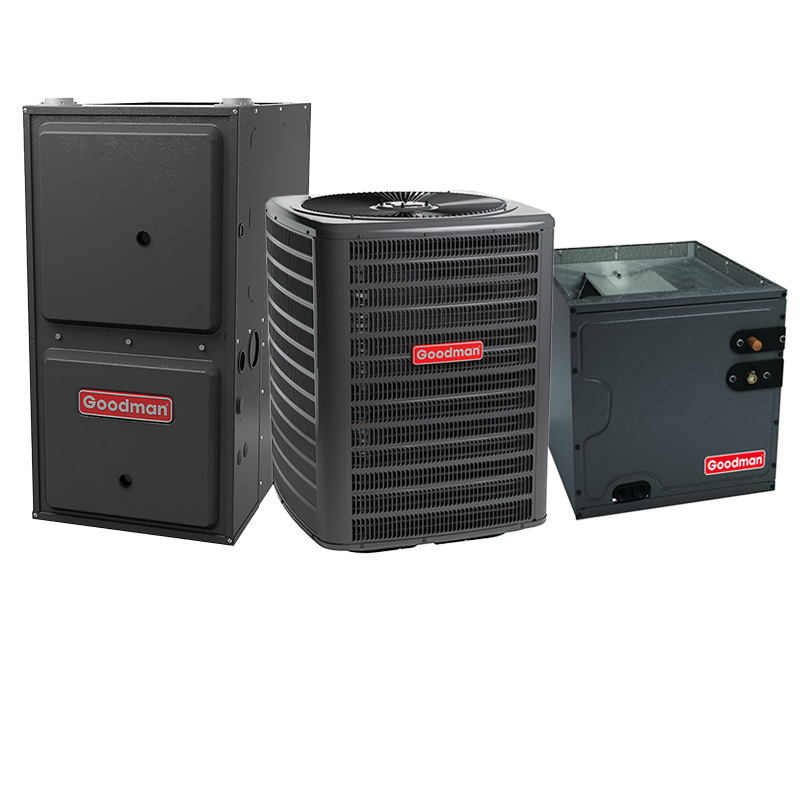
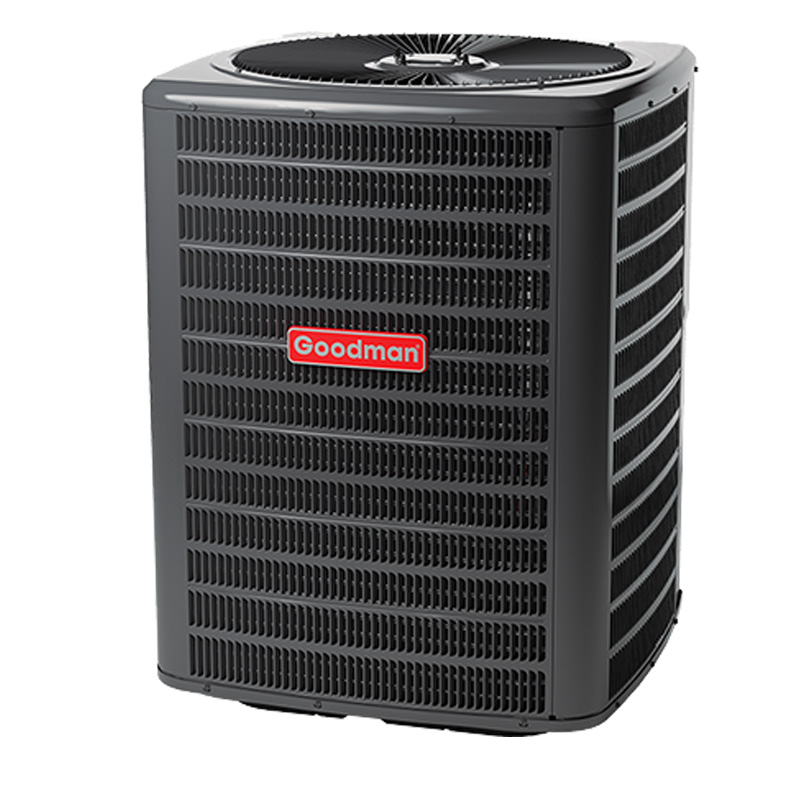
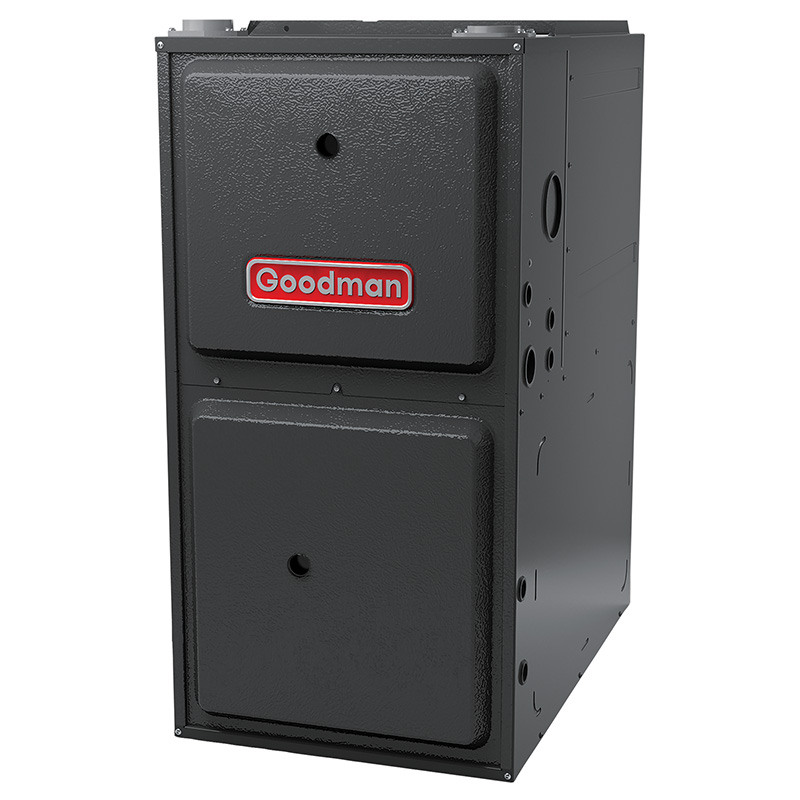
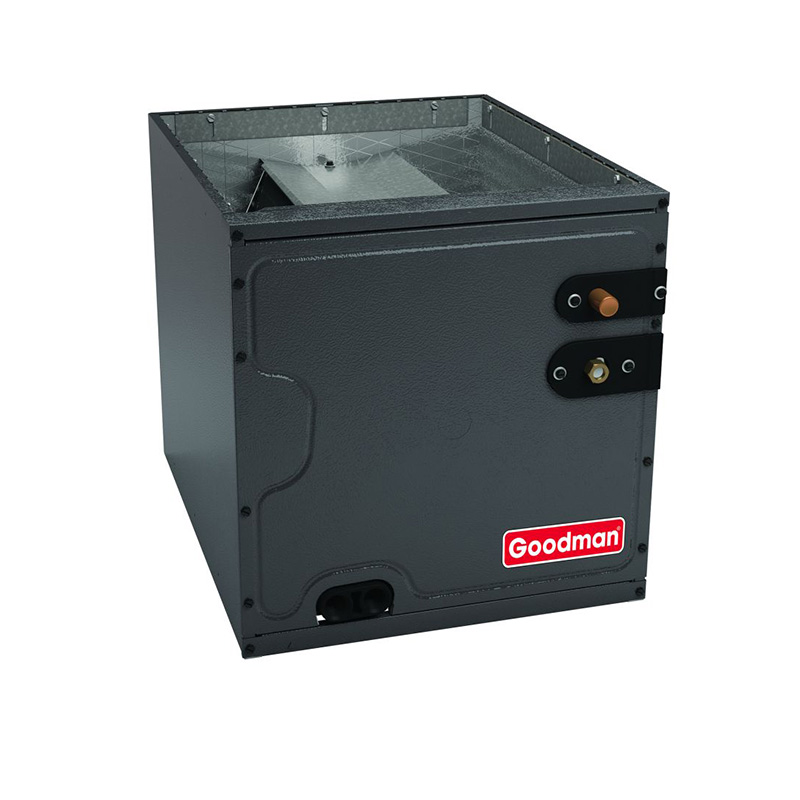
Goodman 2.5 Ton 15.2 SEER2 R32 AC System with 60,000 BTU 96% AFUE Gas Furnace – California & Colorado Ultra Low NOx, Upflow, Multi-Speed ECM
View on AC Direct see your lowest price →Check current price on AC Direct →
Key features
- 15.2 SEER2 cooling efficiency meets current federal minimums for Western U.S. markets
- 96% AFUE gas furnace qualifies as high-efficiency and may be eligible for utility rebates
- R-32 refrigerant with lower global warming potential than R-410A for long-term regulatory compliance
- Multi-speed ECM blower motor reduces electricity use and improves humidity management
- California and Colorado Ultra Low NOx certified for compliance in strict emissions jurisdictions
- Upflow configuration designed for basement or ground-level mechanical room installations
About this system
The Goodman 2.5 Ton 15.2 SEER2 R-32 air conditioning system paired with a 60,000 BTU 96% AFUE gas furnace is built for homeowners in California and Colorado who need to meet strict Ultra Low NOx emissions standards without stretching their budget to cover premium-brand pricing. The upflow configuration suits homes where the furnace sits in a basement, utility closet, or ground-level mechanical room with ductwork running up through the living space. At 2.5 tons, this system is sized for roughly 1,200 to 1,600 square feet depending on insulation quality, ceiling height, and local climate conditions, though a proper Manual J load calculation should always confirm sizing before purchase.
The 15.2 SEER2 efficiency rating sits at the entry-level of the mid-efficiency tier, meeting current federal minimums for most regions while delivering meaningful energy savings over older 13 or 14 SEER equipment. R-32 refrigerant carries a lower global warming potential than R-410A and is increasingly the industry standard as R-410A is phased out, which matters for long-term serviceability and regulatory compliance. The multi-speed ECM blower motor improves humidity control and airflow consistency compared to a single-speed PSC motor, and it draws less electricity during the longer low-speed runs that make up most of the cooling season. The 96% AFUE furnace converts 96 cents of every dollar of gas into usable heat, placing it in the high-efficiency category and reducing heating bills substantially compared to 80% AFUE equipment. Together, these two pieces form a capable, code-compliant system for budget-conscious buyers in regulated Western markets.
This Goodman system delivers solid, code-compliant performance at a price point 15 to 25 percent below comparable Trane, Carrier, and Lennox equipment, making it one of the more accessible ways to get a high-efficiency gas furnace and a modern R-32 AC into a regulated Western U.S. home. The trade-off is a brand track record that shows more repair activity after year seven and compressor longevity that typically falls short of premium competitors. For buyers who plan to stay in the home long-term and want to minimize lifetime costs, the lower purchase price has to be weighed honestly against that service history.
Overall score is the average of the five ratings above.
What we like
- Purchase price is typically 15 to 25 percent lower than Carrier, Trane, or Lennox systems at similar efficiency ratings
- 96% AFUE furnace cuts heating fuel costs significantly versus 80% AFUE equipment and may qualify for utility rebates
- R-32 refrigerant positions the system well for upcoming regulatory changes as R-410A is phased out
- Multi-speed ECM blower improves comfort and lowers blower motor electricity costs compared to single-speed alternatives
- Ultra Low NOx certification satisfies California and Colorado air quality requirements without requiring an aftermarket burner swap
Trade-offs
- Dual-run capacitor failures are the most commonly reported issue and, while relatively inexpensive to fix at roughly 300 to 600 dollars, can recur over the system's life
- Evaporator coil leaks appear in a meaningful share of owner reviews and can be a costly mid-life repair
- Compressor lifespan averages 10 to 14 years versus 15 to 20 years for premium-brand compressors, raising the likelihood of a major repair or full replacement before a premium unit would need one
- A minority of owners report refrigerant leaks within the first year, typically linked to installation quality rather than factory defects, which underscores the importance of choosing an experienced installer
What homeowners and pros say about Goodman
Homeowners who have lived with Goodman equipment long enough to write a review tend to split into two camps. Those who bought at a lower price, had it installed properly, and kept up with annual maintenance often report years of trouble-free operation and point to the affordability as the reason they chose it. Goodman’s Google dealer reviews average around 3.8 out of 5 across hundreds of reviews per location, and the most common praise is straightforward: the system works and it cost less than the alternatives. That picture is incomplete without the other side of the ledger. On ConsumerAffairs, a complaint-skewed channel, Goodman scores closer to 2.5 out of 5, and the recurring theme is repair costs that start climbing after roughly year seven. Those complaints are not random noise. Dual-run capacitor failures are the most frequently documented repair across owner forums and review platforms, and while the fix is relatively low-cost at around 300 to 600 dollars, it tends to repeat. Evaporator coil leaks show up in a meaningful portion of owner accounts and are more serious. Compressor lifespan for Goodman units averages 10 to 14 years, which is a real gap compared to the 15 to 20 years owners and technicians associate with Trane, Carrier, or Lennox compressors.
HVAC professionals tend to frame Goodman the same way the numbers suggest: a reasonable choice for the right buyer, not a universal recommendation. Technicians who service multiple brands regularly note that a well-installed Goodman running on clean power with a good filter program can run reliably for over a decade. The same technicians also note they see more Goodman service calls per installed unit than they do for premium brands past the seven-year mark, and that a first-year refrigerant leak is almost always an installation issue rather than a factory one. For this specific system, the Ultra Low NOx certification and R-32 refrigerant are genuine technical strengths that matter in California and Colorado, and the 96% AFUE furnace is a real efficiency advantage over builder-grade alternatives. The honest summary is that Goodman gives you a functional, compliant system at a lower entry cost, and the trade-off shows up in service frequency and expected compressor life rather than in any single dramatic failure point.
Sources: ConsumerAffairs Goodman owner reviews, AHRI Directory of Certified Product Performance, U.S. DOE appliance and equipment efficiency standards, Goodman product specification sheets.
What it costs to run
At 15.2 SEER2, cooling this 2.5-ton system for a typical 1200-hour cooling season at the U.S. average electricity rate of $0.17/kWh works out to roughly $403 per year in cooling, about $54 less per year than a minimum-efficiency 13.4 SEER2 unit of the same size. Your real cost depends on your climate and local rate.
Method: (30,000 BTU/hr ÷ 15.2 SEER2) × 1200 hours ÷ 1000 × $0.17/kWh. Rate source: U.S. EIA average; cooling hours: moderate-climate estimate.
How it compares
| Brand | Comparable model | SEER2 | Stage | Price position |
|---|---|---|---|---|
| Goodman | GSXH5 / GMVC96 Series (this system) | 15.2 | Single-stage / Multi-speed | Value pick |
| Carrier | Comfort 24ACC6 / 58TP Series | 15.2 | Single-stage | Typically 15 to 25 percent more than this Goodman system |
| Trane | XR15 / S9X1 Series | 15.0 to 15.5 | Single-stage | Typically 15 to 25 percent more than this Goodman system |
| Lennox | Merit ML15 / ML196 Series | 15.0 to 15.5 | Single-stage | Typically 15 to 25 percent more than this Goodman system |
Competitor rows are comparable single-stage units at similar efficiency; price is relative position, not a quote.
Questions about this system
Does this system actually meet California's Ultra Low NOx rules, and do I need any extra paperwork to get it permitted?
Yes, this unit is factory-certified for California and Colorado Ultra Low NOx requirements, so you are not required to retrofit a different burner to pass inspection. Your installing contractor will still need to pull the appropriate local permits, and the inspector may want to see the certification documentation, which Goodman provides in the product literature.
Why is R-32 refrigerant being used instead of R-410A, and does it affect repair costs?
R-32 has a significantly lower global warming potential than R-410A and is the direction the industry is moving as R-410A is phased out under federal regulations. For repair costs, R-32 is currently available and serviceable by any technician with the proper certification, though pricing for the refrigerant itself can vary by region. Over time, R-32 is expected to remain more accessible than R-410A as the phase-out progresses.
What is the most likely repair I should budget for over the first 10 years?
Based on documented owner experience with Goodman equipment, dual-run capacitor replacement is the single most commonly reported failure, and it typically costs between 300 and 600 dollars including labor. Evaporator coil leaks also appear in a meaningful share of reviews and are more expensive to address, so keeping the system on a regular maintenance schedule and catching refrigerant loss early is worthwhile.
Is the multi-speed ECM blower worth it compared to a standard single-speed motor?
For most homes, yes. The ECM motor runs at lower speeds for extended periods during moderate weather, which uses less electricity than a single-speed motor cycling on and off, and it moves air more gently across the coil, helping to pull more moisture out of the air on humid days. The difference is most noticeable in humidity control and in monthly electricity bills during the shoulder seasons.
How important is installer choice for a Goodman system specifically?
Very important. Technicians consistently cite installation quality as the single biggest factor in how long a Goodman unit lasts and how reliably it runs. The first-year refrigerant leaks reported by a minority of owners are generally attributed to improper charging or connection work at installation rather than factory defects, so selecting an experienced, licensed contractor who will perform a proper startup procedure is not optional if you want the system to perform as advertised.
Specifications
| Cooling capacity | 2.5 Ton |
| Efficiency | 15.2 SEER2 |
| Furnace output | 60,000 BTU |
| Furnace efficiency | 96% AFUE |
| Configuration | Upflow |
| Refrigerant | R-32 |