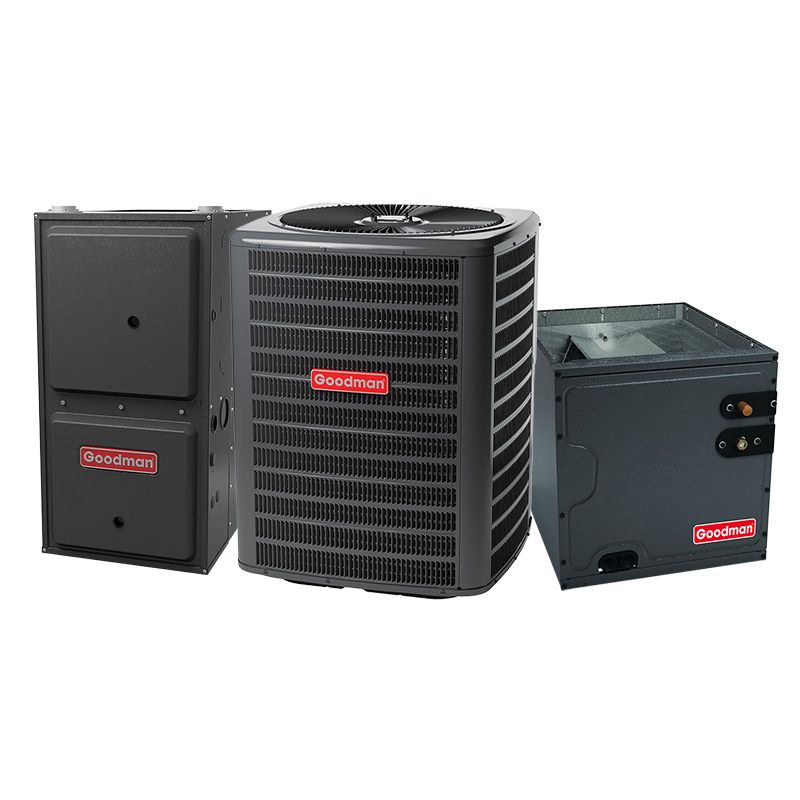
Goodman 2.5 Ton 15.2 SEER2 AC & Gas Furnace System – Modulating Variable-Speed, 60000 BTU Gas Furnace, 97% AFUE, Downflow, R32
View on AC Direct see your lowest price →Check current price on AC Direct →
Key features
- 2.5-ton variable-speed cooling rated at 15.2 SEER2
- 60,000 BTU modulating gas furnace at 97% AFUE
- Downflow-only configuration for below-unit duct systems
- R-32 refrigerant charge with lower global warming potential than R-410A
- Variable-speed blower for improved humidity control and quiet operation
- Condensing furnace design requires secondary condensate drain
About this system
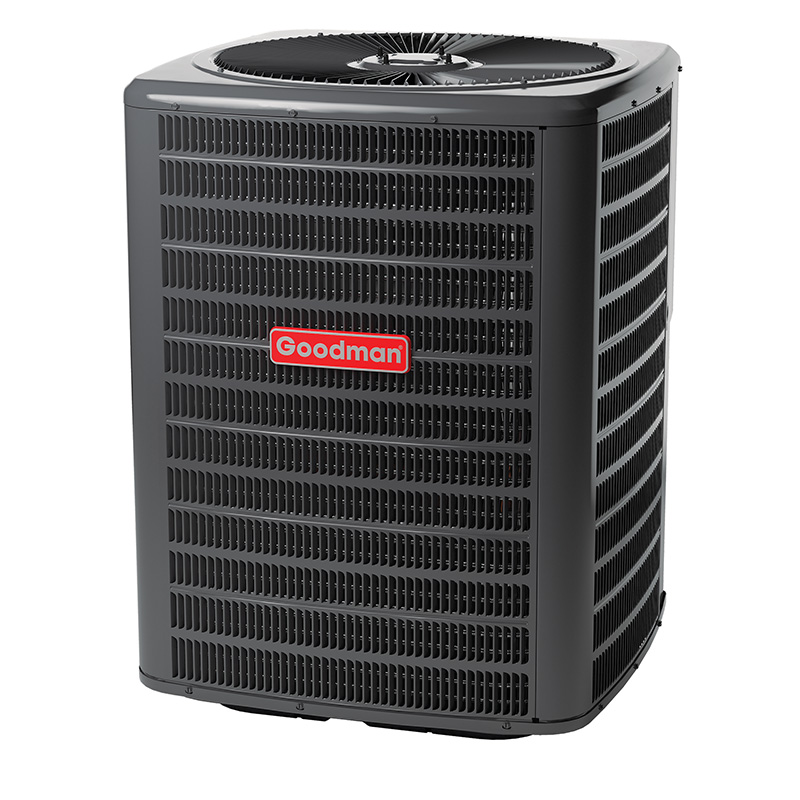
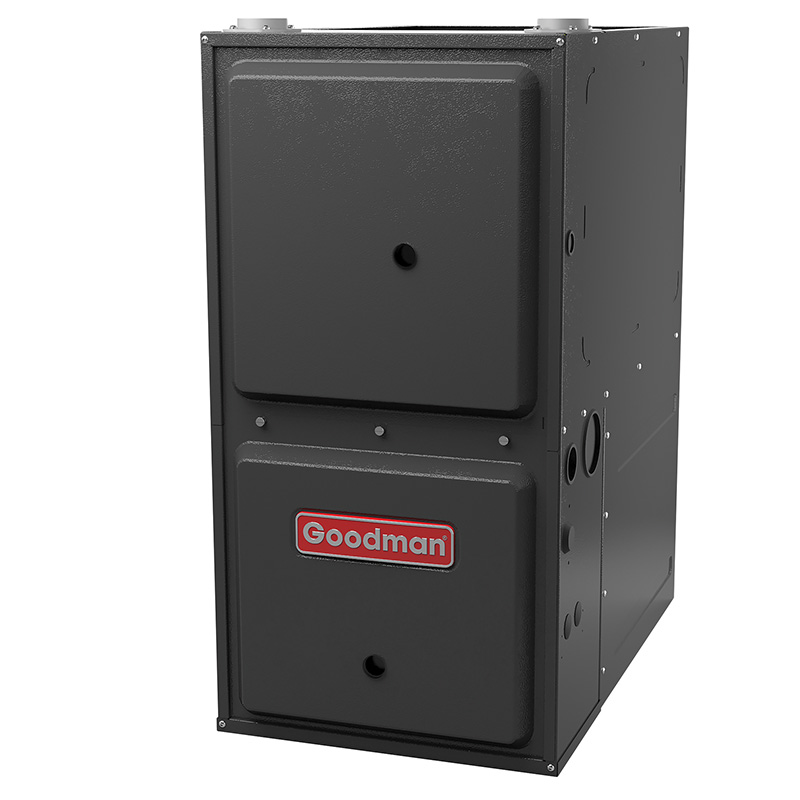
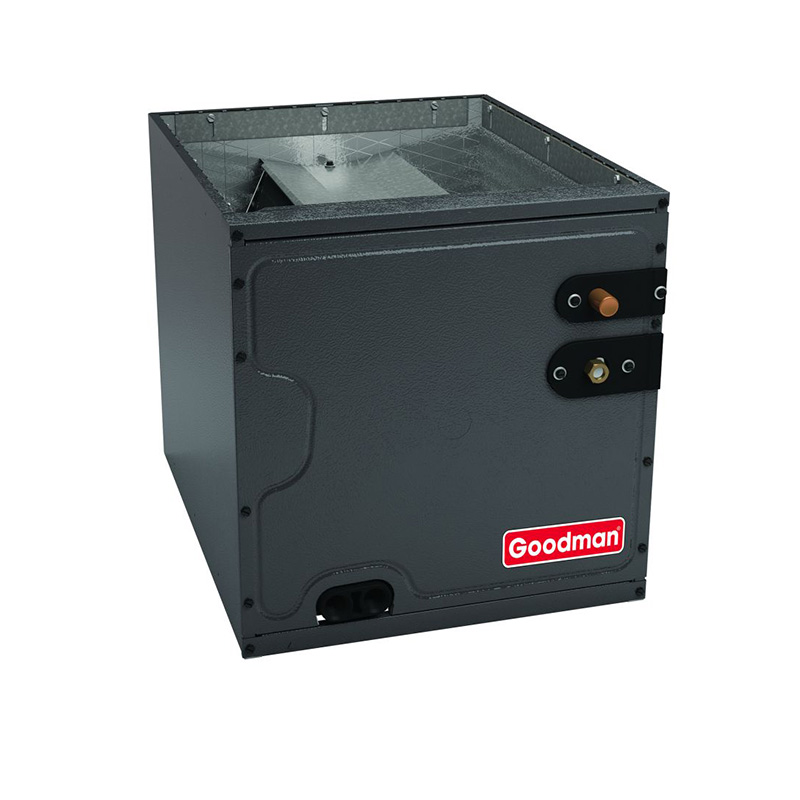
The Goodman GLXS5BA3010D pairs a 2.5-ton, 15.2 SEER2 variable-speed outdoor unit with a 60,000 BTU, 97% AFUE modulating gas furnace in a downflow configuration. That combination sits near the top of what mid-tier residential HVAC equipment can deliver: the modulating gas valve adjusts heat output in small increments rather than cycling fully on and off, which means steadier indoor temperatures and noticeably lower gas bills compared with a standard single- or two-stage furnace. The 97% AFUE rating means only about 3% of combustion energy escapes up the flue, making this a condensing furnace that requires a secondary drain line for condensate.
The downflow configuration is a specific requirement, not a universal fit. Downflow systems discharge conditioned air downward into a supply plenum below the air handler, which is typical in homes with slab foundations, utility closets positioned above living spaces, or manufactured housing. If your ductwork runs beneath the unit rather than above it, this system is purpose-built for that layout. The R-32 refrigerant charge is worth noting: R-32 has a lower global warming potential than the R-410A it replaces, and it is becoming the industry standard, so parts and refrigerant availability should remain strong for the foreseeable future. Variable-speed blower operation also reduces humidity more effectively than single-speed equipment, which matters in humid climates where latent load control is just as important as sensible cooling.
This system delivers genuinely high efficiency at a price well below Trane, Carrier, or Lennox equivalents, and the modulating furnace plus variable-speed blower combination is real comfort technology, not a marketing label. The trade-off is a brand track record that shows shorter average compressor life and a higher rate of evaporator coil issues than premium competitors, so long-term cost of ownership depends heavily on how well it is installed and maintained. It is a solid buy for homeowners who want performance features on a tighter budget and plan to keep up with annual maintenance.
Overall score is the average of the five ratings above.
What we like
- 97% AFUE modulating furnace is among the most efficient gas heat options available
- Variable-speed operation delivers better humidity control and quieter run cycles than single-stage equipment
- R-32 refrigerant is lower-GWP and well-supported going forward
- Priced roughly 15 to 25 percent below comparable Carrier, Trane, and Lennox systems
- Downflow configuration is well-suited to slab-foundation homes and manufactured housing where alternatives are limited
Trade-offs
- Compressors average 10 to 14 years versus 15 to 20 years on premium brands, raising long-term replacement risk
- Evaporator coil leaks appear in a meaningful share of owner reports, a pattern consistent across the Goodman line
- Dual-run capacitor failures are the most commonly reported service call, typically surfacing after year 7
- A minority of owners report refrigerant leaks in the first year, usually traced to installation or initial charge issues rather than the equipment itself
What homeowners and pros say about Goodman
Homeowners who research Goodman online will quickly find the brand’s ConsumerAffairs score sitting at roughly 2.5 out of 5, a number that reflects a platform built around complaints rather than representative ownership experience. Google dealer reviews land closer to 3.8 out of 5 across hundreds of reviews per location, where the word that comes up most often is affordable. The gap between those two numbers tells you something real: Goodman owners who have trouble tend to have visible, frustrating trouble, while owners who don’t often have little reason to post at all. The documented failure patterns are specific and worth knowing before you buy. Dual-run capacitors are the most commonly reported service event, usually showing up after year 7 and typically costing 300 to 600 dollars to fix. Evaporator coil leaks appear in a meaningful share of owner reports. Compressors tend to reach 10 to 14 years on average, which is a shorter window than the 15 to 20 years more commonly associated with Trane, Lennox, or Carrier equipment.
HVAC technicians who work on Goodman equipment regularly point to installation quality as the single biggest variable in how the brand performs over time. A correctly sized, properly charged, and well-commissioned Goodman system behaves differently from one that left the install truck with a sloppy refrigerant charge or undersized ductwork, and that reality applies especially to a variable-speed modulating system like this one, which has more electronics and controls to calibrate than a basic single-stage unit. The minority of owners who report refrigerant leaks in the first year almost always trace the problem to installation rather than the equipment itself, which underscores why choosing a licensed contractor with documented Goodman experience matters as much as the equipment purchase decision.
Sources: ConsumerAffairs Goodman owner reviews, AHRI Directory of Certified Product Performance, U.S. DOE appliance and equipment efficiency standards, Goodman product specification sheets.
What it costs to run
At 15.2 SEER2, cooling this 2.5-ton system for a typical 1200-hour cooling season at the U.S. average electricity rate of $0.17/kWh works out to roughly $403 per year in cooling, about $54 less per year than a minimum-efficiency 13.4 SEER2 unit of the same size. Your real cost depends on your climate and local rate.
Method: (30,000 BTU/hr ÷ 15.2 SEER2) × 1200 hours ÷ 1000 × $0.17/kWh. Rate source: U.S. EIA average; cooling hours: moderate-climate estimate.
How it compares
| Brand | Comparable model | SEER2 | Stage | Price position |
|---|---|---|---|---|
| Goodman | GLXS5BA3010D | 15.2 | Variable | Value pick |
| Carrier | Comfort 15 Series (24ACC6) | 15+ | Single-stage | Typically 15 to 25 percent more than this Goodman system |
| Trane | XR15 Series | 15+ | Single-stage | Typically 15 to 25 percent more than this Goodman system |
| Lennox | Merit 14ACX Series | 15+ | Single-stage | Typically 15 to 25 percent more than this Goodman system |
Competitor rows are comparable single-stage units at similar efficiency; price is relative position, not a quote.
Questions about this system
Why does this system only come in downflow, and how do I know if my home qualifies?
Downflow means the air handler discharges conditioned air downward into ductwork beneath the unit. This is standard in homes built on concrete slabs where ductwork runs under the floor or through a crawlspace below the unit, and in many manufactured homes. If your current system is an upflow or horizontal unit, this model is not a drop-in replacement and you would need a different configuration.
What does a condensing furnace mean for installation, and does it cost more to install than a standard furnace?
A 97% AFUE condensing furnace extracts so much heat from combustion gases that the exhaust is cool enough to vent through PVC pipe rather than a metal flue, but it also produces liquid condensate that must drain away. Installation requires running a condensate drain line to a floor drain or condensate pump, which adds a small amount of labor and material cost compared with a non-condensing furnace. Most experienced HVAC contractors handle this routinely.
The capacitor failure pattern worries me. Is there anything I can do to reduce that risk?
Dual-run capacitor failures are the most commonly reported service issue across the Goodman line and tend to appear after year 7. Annual tune-ups typically include capacitor testing, and a technician can replace a weakening capacitor proactively before it causes a no-start situation. The repair itself, when needed, generally runs between 300 and 600 dollars, which is a manageable cost.
Does R-32 refrigerant require any special handling compared to R-410A?
R-32 is mildly flammable, which means technicians need to be certified for A2L refrigerants and should use appropriate equipment when servicing the system. Most HVAC contractors are already trained for A2L handling as the industry transitions away from R-410A. Parts availability and refrigerant supply are expected to remain stable as R-32 becomes the residential standard.
Goodman's ConsumerAffairs rating is around 2.5 out of 5. Should that be a dealbreaker?
ConsumerAffairs skews heavily toward complaint-driven reviews, so a 2.5 there reflects the experience of owners who had problems rather than the full ownership population. The more balanced Google dealer review average sits around 3.8 out of 5, with affordability as the most frequent positive note. The honest picture is that Goodman produces more field complaints than premium brands, particularly around compressor longevity and coil leaks, but owners who prioritize upfront cost and maintain the system regularly generally report acceptable results.
Specifications
| Cooling capacity | 2.5 Ton |
| Efficiency | 15.2 SEER2 |
| Furnace output | 60000 BTU |
| Furnace efficiency | 97% AFUE |
| Configuration | Downflow |
| Refrigerant | R-32 |
| Model | GLXS5BA3010D |