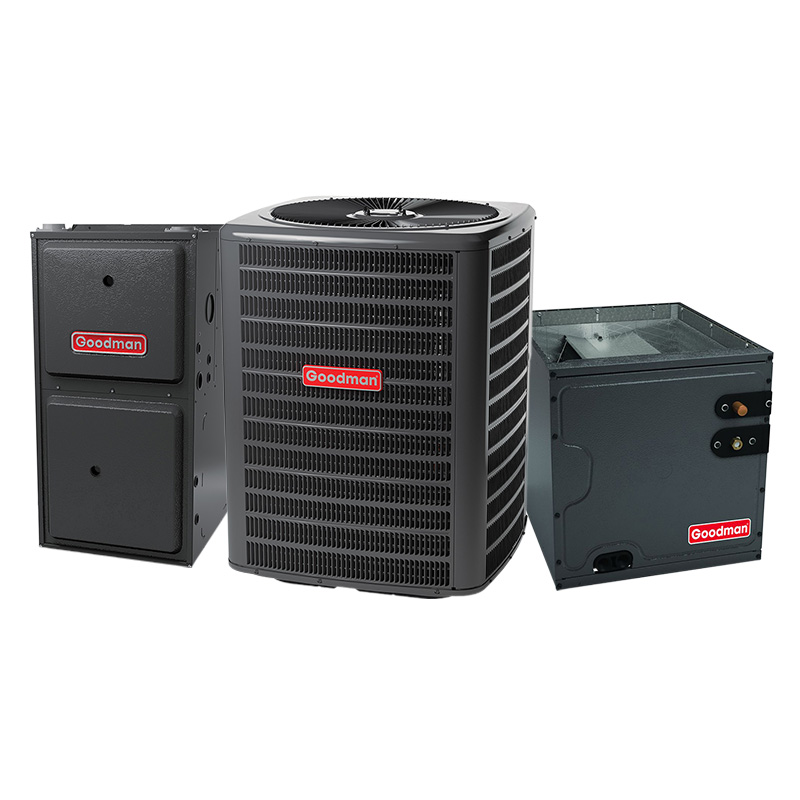
Goodman 2.5 Ton 15.2 SEER2 AC & Gas Furnace System – Multi-Speed, 80000 BTU Gas Furnace, 92% AFUE, Upflow, R32
View on AC Direct see your lowest price →Check current price on AC Direct →
Key features
- 2.5-ton cooling capacity with 15.2 SEER2 efficiency rating
- 80,000 BTU gas furnace rated at 92% AFUE for mid-efficiency heating
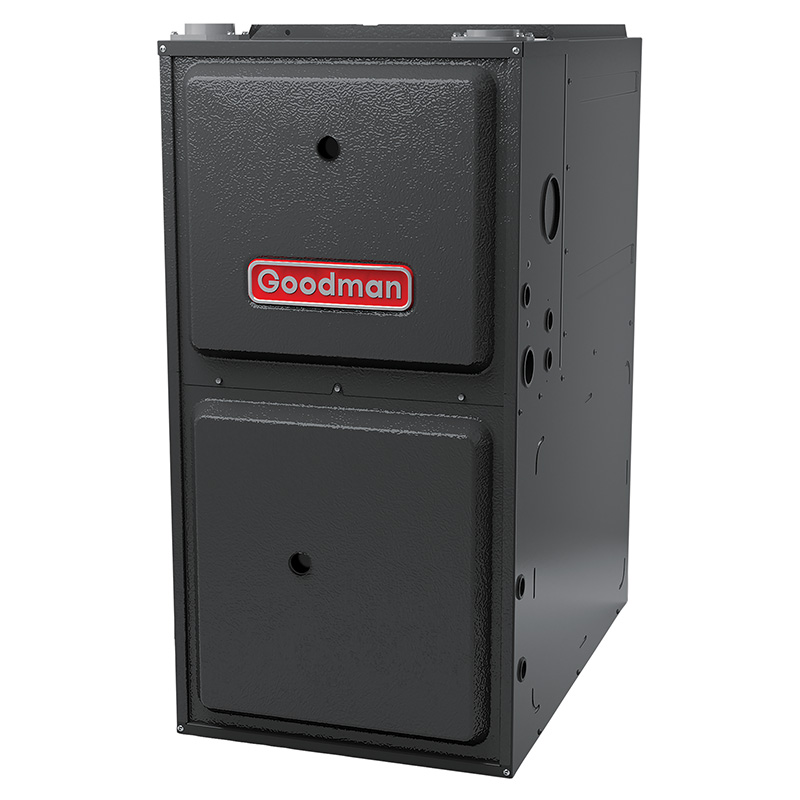
- Upflow configuration designed for basement or closet installations with overhead ductwork
- Multi-speed blower motor for quieter operation and improved humidity control versus single-speed
- R-32 refrigerant with lower global-warming potential than R-410A
- Factory-matched system for simplified equipment compatibility and warranty compliance
About this system
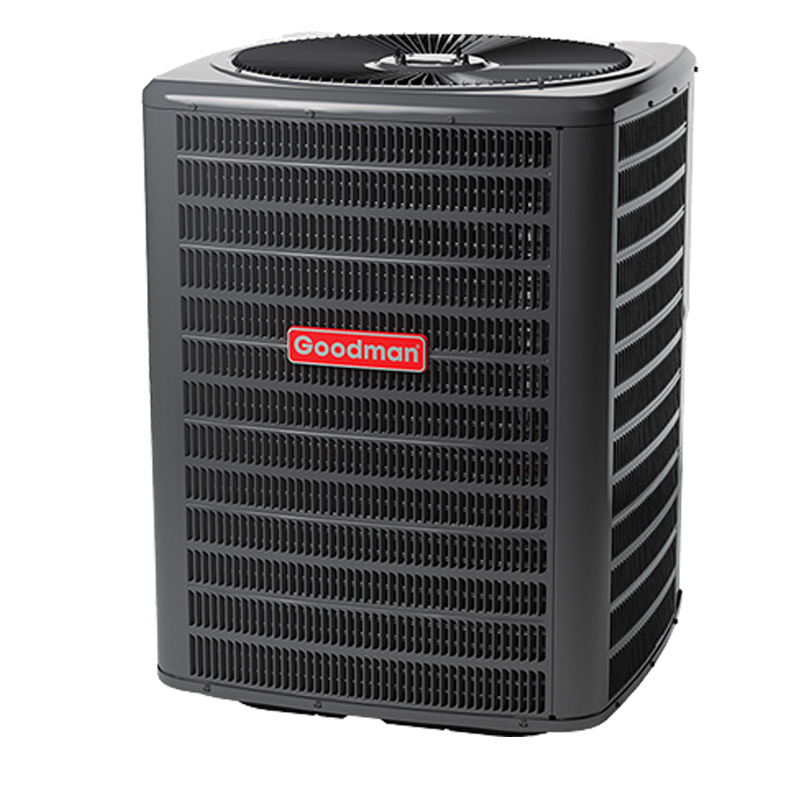
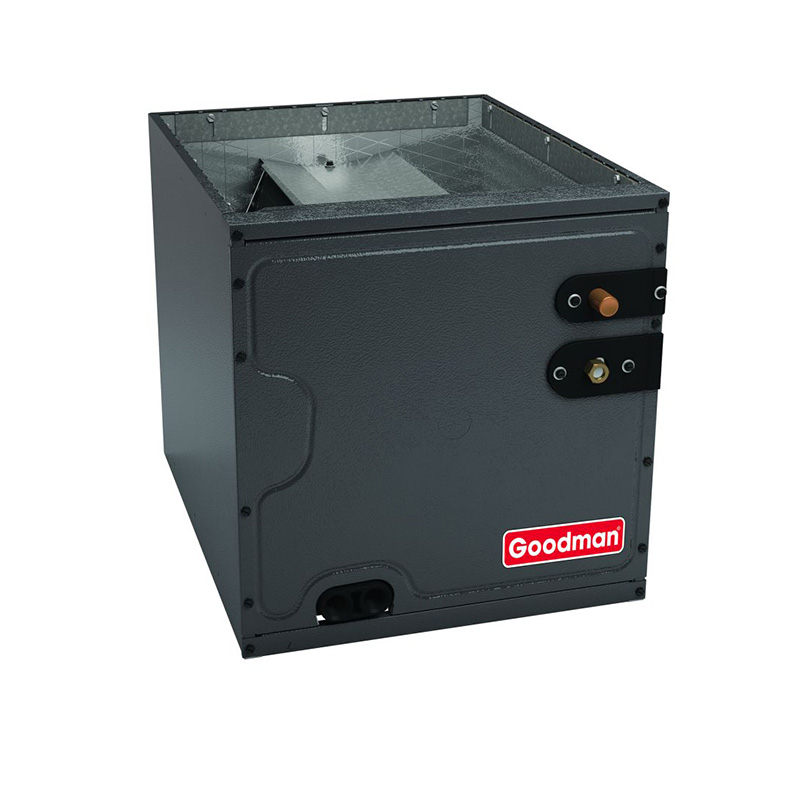
The Goodman GLXS4BA3010 pairs a 2.5-ton, 15.2 SEER2 air conditioner with an 80,000 BTU, 92% AFUE upflow gas furnace in a single matched system. The 15.2 SEER2 rating clears the federal minimum efficiency threshold by a comfortable margin without reaching the premium-tier numbers that push prices significantly higher, making it a reasonable choice for homeowners who want a meaningful step up from the floor without paying for top-shelf efficiency. The 92% AFUE furnace is a solid mid-efficiency performer: it captures 92 cents of heat from every dollar of gas, which suits most climates well, though homeowners in very cold regions may want to weigh a 96% or higher unit before committing. The upflow configuration is the most common furnace orientation and works well with a basement, closet, or utility room installation where supply air rises into overhead ductwork.
This system uses R-32 refrigerant, a lower global-warming-potential alternative to R-410A that is increasingly standard in new equipment. The multi-speed furnace blower provides quieter, more even air distribution than a single-speed unit and also improves dehumidification slightly during cooling cycles, which matters in humid climates. That said, this is not a modulating or variable-speed system, so it does not reach the comfort refinement of higher-tier equipment. The GLXS4BA3010 is best suited to budget-conscious homeowners replacing aging equipment in a 1,200 to 1,800 square foot home with reasonably well-sealed ductwork, who prioritize upfront cost savings and are comfortable with the maintenance and reliability profile that comes with the Goodman brand.
The Goodman GLXS4BA3010 delivers adequate efficiency and honest value for homeowners replacing aging equipment on a tight budget, landing noticeably below comparable Carrier, Trane, and Lennox systems in price. The trade-off is a reliability and longevity profile that lags premium brands, particularly past the seven-year mark, so it suits buyers who prioritize lower upfront cost over long-term ownership confidence. Install quality is not optional here: a skilled, careful contractor makes a larger difference with Goodman equipment than with most premium brands.
Overall score is the average of the five ratings above.
What we like
- Priced roughly 15 to 25 percent below comparable Carrier, Trane, and Lennox systems
- 15.2 SEER2 clears federal minimums with a meaningful efficiency buffer
- 92% AFUE furnace captures most of the heat value from natural gas without high-efficiency pricing
- Multi-speed blower improves comfort and humidity management over basic single-speed alternatives
- R-32 refrigerant is future-oriented and increasingly supported by service technicians
Trade-offs
- Compressor lifespan averages 10 to 14 years versus 15 to 20 years typical of premium-brand compressors
- Dual-run capacitor failures are the most commonly reported service call, usually beginning after the first few years
- A minority of owners report refrigerant leaks within the first year, typically tied to install or initial charge quality
- Evaporator coil leaks appear in a meaningful share of owner reviews and can be a costly mid-life repair
What homeowners and pros say about Goodman
Homeowners who choose Goodman equipment most often point to one thing: the price made the decision easier when the budget was tight. On Google dealer reviews, Goodman-installed systems average around 3.8 out of 5 stars, where affordability is the most repeated positive and satisfaction tends to be higher when the installing contractor is experienced and thorough. On ConsumerAffairs, the picture is more sobering at roughly 2.5 out of 5, a score shaped by owners who sought out a review platform specifically after a frustrating experience. The recurring theme in those negative reviews is repair costs rising after approximately year seven, which aligns with the documented compressor lifespan of 10 to 14 years for Goodman units compared to the 15 to 20 years more commonly associated with premium brands. Dual-run capacitor failures are the most frequently reported service call, a relatively low-cost fix but one that can repeat over the system’s life. Evaporator coil leaks also appear in a meaningful number of owner accounts and carry a higher repair cost when they occur. A smaller share of owners report refrigerant leaks in the first year, which technicians generally attribute to installation or initial charge issues rather than a manufacturing defect.
HVAC professionals who install Goodman equipment regularly make a consistent point: this brand rewards a careful, unhurried installation more than most. A technician who verifies the refrigerant charge precisely, checks all electrical connections, and commissions the system properly can get solid results from this equipment. One who rushes the job sets the customer up for early callbacks, particularly the first-year refrigerant leak pattern the data documents. For the GLXS4BA3010 specifically, the R-32 refrigerant and multi-speed blower are genuine practical improvements worth noting, but they do not change the brand’s overall reliability positioning. The honest summary from both owner feedback and trade experience is that Goodman is a workable choice when the savings are real and the installer is skilled, and a riskier one when either of those conditions is missing.
Sources: ConsumerAffairs Goodman owner reviews, AHRI Directory of Certified Product Performance, U.S. DOE appliance and equipment efficiency standards, Goodman product specification sheets.
What it costs to run
At 15.2 SEER2, cooling this 2.5-ton system for a typical 1200-hour cooling season at the U.S. average electricity rate of $0.17/kWh works out to roughly $403 per year in cooling, about $54 less per year than a minimum-efficiency 13.4 SEER2 unit of the same size. Your real cost depends on your climate and local rate.
Method: (30,000 BTU/hr ÷ 15.2 SEER2) × 1200 hours ÷ 1000 × $0.17/kWh. Rate source: U.S. EIA average; cooling hours: moderate-climate estimate.
How it compares
| Brand | Comparable model | SEER2 | Stage | Price position |
|---|---|---|---|---|
| Goodman | GLXS4BA3010 | 15.2 | Single-stage | Value pick |
| Carrier | Comfort 14 Series (24ACC4) | 15.2 | Single-stage | Typically 15 to 25 percent more than Goodman |
| Trane | XR15 Series | 15.0-15.5 | Single-stage | Typically 15 to 25 percent more than Goodman |
| Lennox | Merit ML14XC1 Series | 15.0-15.5 | Single-stage | Typically 15 to 25 percent more than Goodman |
Competitor rows are comparable single-stage units at similar efficiency; price is relative position, not a quote.
Questions about this system
What size home is a 2.5-ton system appropriate for?
A 2.5-ton unit is generally appropriate for homes in the roughly 1,200 to 1,600 square foot range, though the right size depends heavily on local climate, insulation quality, ceiling height, and window area. You should have a contractor perform a Manual J load calculation before purchasing to confirm this tonnage is correct for your specific home, since an oversized or undersized system causes comfort and efficiency problems regardless of equipment quality.
Can this system be installed in a horizontal or downflow configuration?
No. The furnace in this bundle is configured for upflow only, meaning supply air exits from the top and the unit is installed vertically. If your installation requires horizontal or downflow orientation, you would need a different furnace model. Confirm your duct layout with your installer before ordering.
Is R-32 refrigerant harder to service than R-410A?
R-32 is becoming more common in residential equipment and most licensed HVAC technicians are equipped to handle it, but it is still less universally stocked than R-410A at some smaller service shops. It is mildly flammable, which requires technicians to follow specific handling procedures. In most metro and suburban markets this is not a practical service barrier, but it is worth confirming with your local service provider.
What does Goodman's warranty cover on this system, and what are the conditions?
Goodman typically offers a 10-year parts limited warranty when the equipment is registered online within a required window after installation, dropping to a shorter period if registration is missed. The warranty covers parts replacement but not labor costs, which can be substantial. Always verify current warranty terms on Goodman's site at time of purchase, confirm your installer will handle registration, and consider whether a separate labor warranty or extended service agreement makes sense given Goodman's documented service history.
How much does a typical Goodman capacitor replacement cost, and how often does it happen?
Dual-run capacitor failure is the most frequently reported repair on Goodman AC units. The part itself is inexpensive, and a service call typically runs in the 300 to 600 dollar range including labor and the capacitor. These failures tend to show up after the first few years of operation and can recur, so it is a known and budgetable maintenance item rather than a catastrophic repair, but it is worth keeping in mind when calculating total cost of ownership.
Specifications
| Cooling capacity | 2.5 Ton |
| Efficiency | 15.2 SEER2 |
| Furnace output | 80000 BTU |
| Furnace efficiency | 92% AFUE |
| Configuration | Upflow |
| Refrigerant | R-32 |
| Model | GLXS4BA3010 |