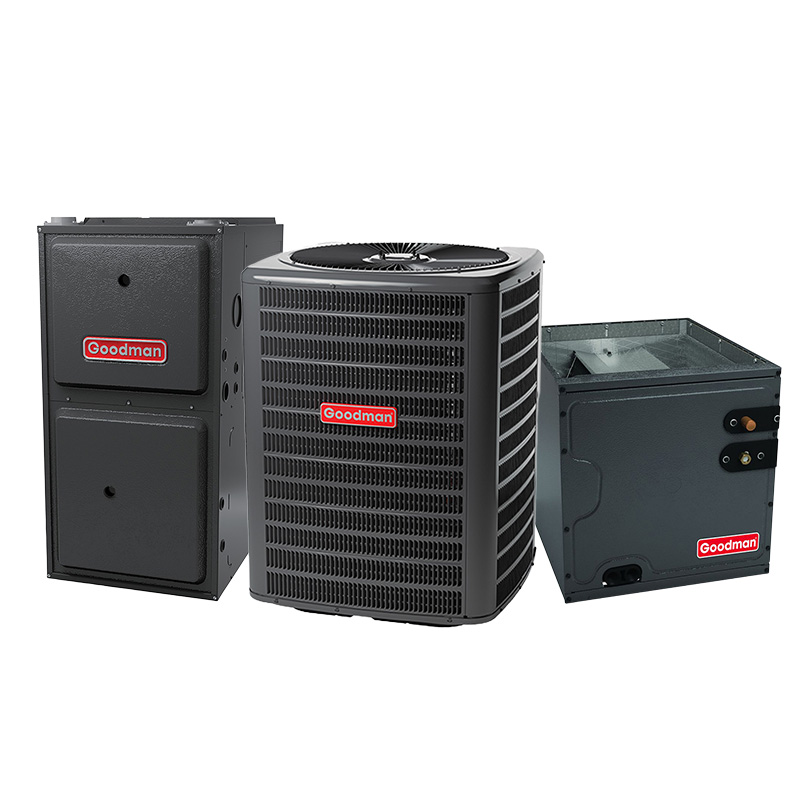
Goodman 2.5 Ton 15.2 SEER2 AC & Gas Furnace System – Two Stage Variable-Speed, 40000 BTU Gas Furnace, 96% AFUE, Upflow, R32
View on AC Direct see your lowest price →Check current price on AC Direct →
Key features
- Two-stage compressor for quieter operation and improved humidity control on mild days
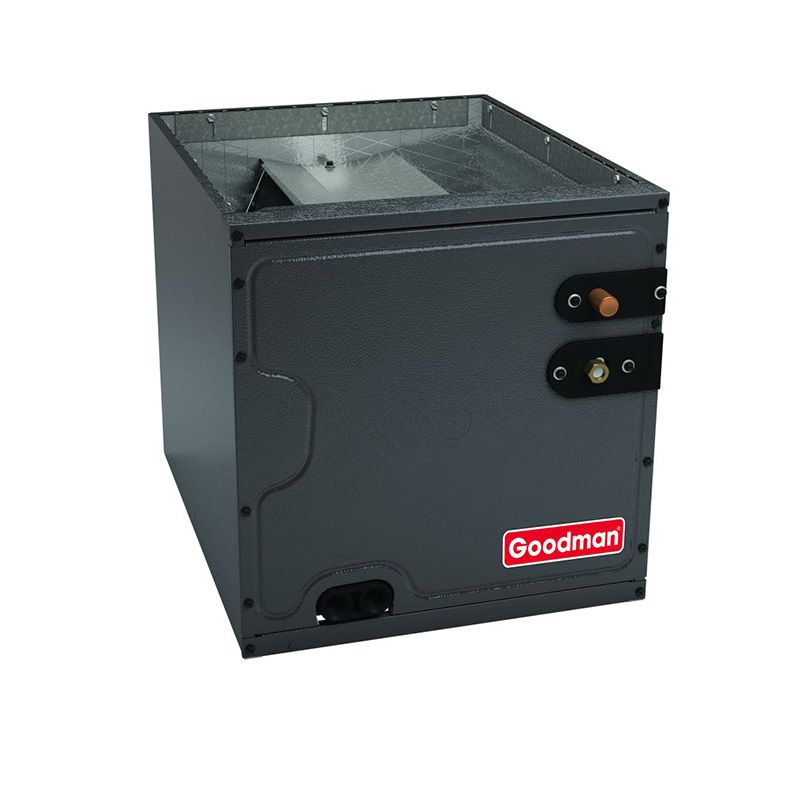
- Variable-speed air handler reduces temperature swings and lowers blower energy use
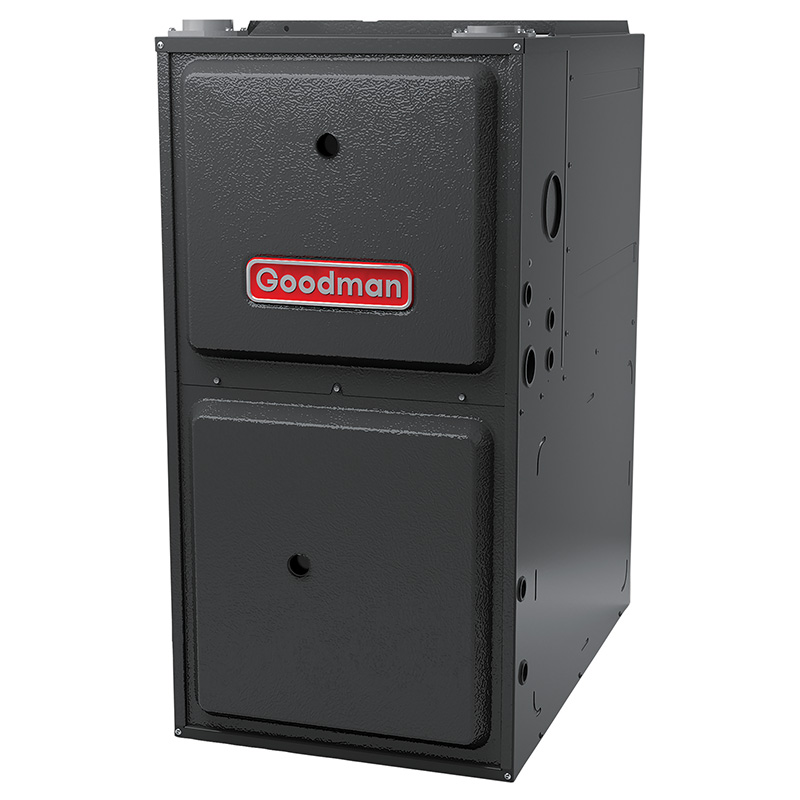
- 96% AFUE upflow gas furnace rated at 40,000 BTU for compact-home heating loads
- R-32 refrigerant with lower global-warming potential than R-410A
- 15.2 SEER2 efficiency rating meets current federal minimum standards with room to spare
- Upflow cabinet orientation for basement or utility-closet installations with overhead duct runs
About this system
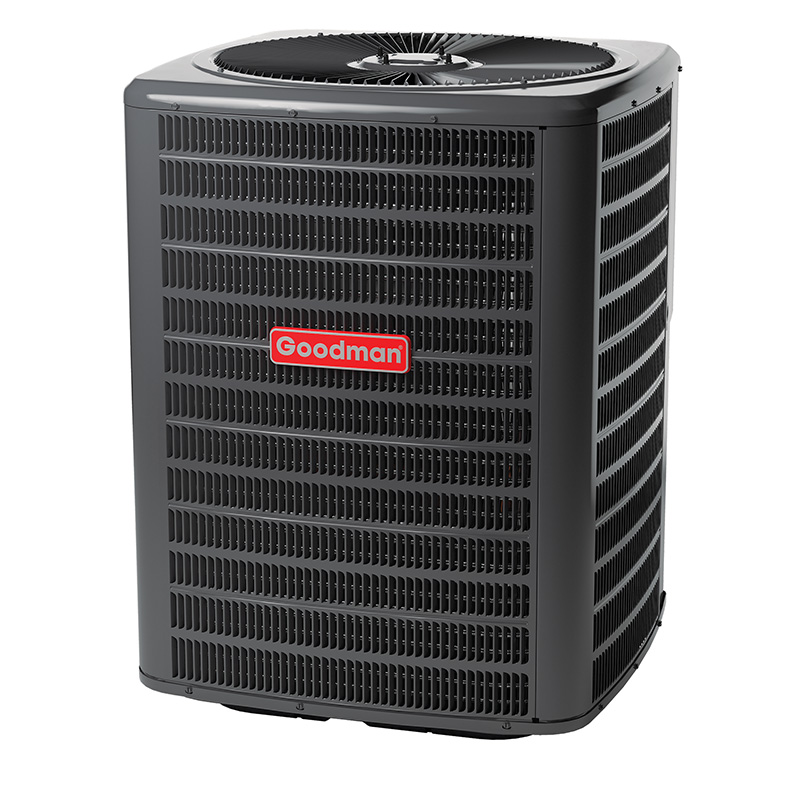
The Goodman 2.5-ton 15.2 SEER2 two-stage, variable-speed system pairs a mid-efficiency central air conditioner with a 40,000 BTU, 96% AFUE upflow gas furnace. At 2.5 tons, this is sized for homes roughly in the 1,200 to 1,600 square foot range, though your specific load calculation may shift that number depending on insulation, windows, and climate. The two-stage compressor runs at a lower capacity on mild days and steps up only when the heat is on, which means longer, quieter cycles and better humidity control compared to a single-stage unit. The variable-speed air handler moves air more gently and consistently, adding to comfort and filtration effectiveness.
The 96% AFUE furnace is a strong performer in this price tier. It means roughly 96 cents of every dollar in gas goes directly to heating your home, which qualifies for federal efficiency incentives under current guidelines. The system uses R-32 refrigerant, a lower global-warming-potential alternative to the R-410A that is being phased out industry-wide. R-32 operates at different pressures than R-410A, so your technician needs to be specifically trained and certified to service it. The upflow configuration suits basements and utility closets where air is distributed upward through the duct system.
This package suits a cost-conscious homeowner who wants noticeably better comfort than a single-stage system provides but cannot justify the price premium of a Trane, Carrier, or Lennox equivalent. The gap in comfort is real but narrower here than at the single-stage level. The gap in long-term reliability risk is worth factoring into the decision, particularly if you plan to stay in the home beyond the 10-year mark.
This system delivers genuine two-stage comfort and strong furnace efficiency at a price point that undercuts the major premium brands by 15 to 25 percent. The trade-off is a documented pattern of component failures around and after year 7, a compressor lifespan that typically trails premium brands, and performance that is meaningfully sensitive to install quality. Buyers who budget for periodic repairs and secure a skilled installer get solid value; those expecting set-it-and-forget-it reliability over 18-plus years may find the savings erode.
Overall score is the average of the five ratings above.
What we like
- Two-stage cooling provides better humidity removal and quieter part-load operation than single-stage alternatives at this price
- 96% AFUE furnace is among the more efficient options available and may qualify for federal tax credits
- R-32 refrigerant is forward-compatible as R-410A is phased out industry-wide
- Variable-speed blower reduces energy consumption and creates more even temperatures throughout the home
- Purchase price runs 15 to 25 percent below comparable Carrier, Trane, and Lennox equipment
Trade-offs
- Dual-run capacitors are the most commonly reported failure, typically surfacing within the first 7 to 10 years and costing $300 to $600 to replace
- Evaporator coil leaks appear in a meaningful share of owner reviews, a more costly and disruptive repair than a capacitor swap
- Compressor lifespan averages 10 to 14 years versus 15 to 20 years for premium-brand compressors, affecting long-term cost of ownership
- Overall reliability is heavily dependent on installer quality, meaning a poor startup charge or refrigerant handling error can cause problems within the first year
What homeowners and pros say about Goodman
Homeowners who shop Goodman often cite affordability as the deciding factor, and that sentiment shows up consistently in Google dealer reviews, where the brand averages around 3.8 out of 5 across hundreds of location-level ratings. The praise tends to cluster around upfront cost savings and the fact that the systems work as advertised when installed correctly. The ConsumerAffairs picture is less encouraging, sitting at roughly 2.5 out of 5, though that channel skews toward owners with complaints rather than satisfied customers who never feel the need to post. The recurring concern in those reviews is repair costs starting to accumulate around year 7, which aligns with the documented pattern of dual-run capacitor failures, evaporator coil leaks, and compressor lifespans that average 10 to 14 years rather than the 15 to 20 years more common in premium brands.
HVAC technicians who work on Goodman equipment regularly tend to have a pragmatic view: the systems are serviceable, parts are widely available, and a well-installed unit with routine maintenance can last a reasonable number of years. Where they flag concern is on the install side. R-32 refrigerant requires technicians who are specifically certified for it, and a minority of first-year refrigerant leaks in owner reviews point to charge or handling errors at startup. For this particular system, with its two-stage compressor and variable-speed blower adding mechanical complexity, the quality of the contractor matters even more than it does on a simpler single-stage package. Pros who take the time to commission the system properly report far fewer callbacks than those who rush the startup process.
Sources: ConsumerAffairs Goodman owner reviews, AHRI Directory of Certified Product Performance, U.S. DOE appliance and equipment efficiency standards, Goodman product specification sheets.
What it costs to run
At 15.2 SEER2, cooling this 2.5-ton system for a typical 1200-hour cooling season at the U.S. average electricity rate of $0.17/kWh works out to roughly $403 per year in cooling, about $54 less per year than a minimum-efficiency 13.4 SEER2 unit of the same size. Your real cost depends on your climate and local rate.
Method: (30,000 BTU/hr ÷ 15.2 SEER2) × 1200 hours ÷ 1000 × $0.17/kWh. Rate source: U.S. EIA average; cooling hours: moderate-climate estimate.
How it compares
| Brand | Comparable model | SEER2 | Stage | Price position |
|---|---|---|---|---|
| Goodman | GSZ2 / GMVC96 Series (this system) | 15.2 | two-stage / variable-speed | Value pick |
| Carrier | Comfort 16 (24ACC6) with 96% AFUE gas furnace | ~16 | single-stage | Typically 15 to 25 percent more than this Goodman package |
| Trane | XR15 with S9X1 96% AFUE gas furnace | ~15.2 to 16 | single-stage | Typically 15 to 25 percent more than this Goodman package |
| Lennox | Merit ML15XC1 with ML96V gas furnace | ~15 to 16 | single-stage | Typically 15 to 25 percent more than this Goodman package |
Competitor rows are comparable single-stage units at similar efficiency; price is relative position, not a quote.
Questions about this system
Why does my system use R-32 instead of R-410A, and does that affect who can service it?
R-32 is a next-generation refrigerant with a lower global-warming potential that the industry is adopting as R-410A is phased out. It operates at different pressures and has a mild flammability classification, so your technician must be specifically trained and certified to handle it. Not all local HVAC companies have made that transition yet, so confirm R-32 capability before hiring any service contractor.
What size home does a 2.5-ton, 40,000 BTU system typically cover?
A rough rule of thumb puts 2.5 tons in the 1,200 to 1,600 square foot range for cooling, but the accurate answer requires a Manual J load calculation that accounts for your ceiling height, insulation, window area, local climate, and duct condition. The 40,000 BTU furnace is on the smaller end and suits well-insulated homes in moderate climates rather than very cold regions.
What are the most common repairs I should budget for over the life of this system?
Dual-run capacitors are the most frequently reported failure on Goodman equipment and typically cost $300 to $600 to replace. Evaporator coil leaks are a more serious documented failure mode that can run significantly higher. Compressors on Goodman units tend to average 10 to 14 years, so budgeting for a potential replacement in that window is realistic if you plan to stay in the home long-term.
Does the 96% AFUE furnace qualify for any federal tax credits?
Under the current Inflation Reduction Act provisions, gas furnaces at or above 97% AFUE in most regions, or meeting specific efficiency standards for your climate zone, may qualify for the 25C tax credit. A 96% AFUE unit may or may not qualify depending on your climate zone and current IRS guidance, so confirm eligibility with a tax professional or the ENERGY STAR database before purchasing with that assumption in mind.
How important is the installer, and what should I look for when hiring one?
Installer quality is widely cited as the single biggest factor in how long a Goodman system lasts. A minority of owners report refrigerant leaks within the first year, most often attributed to improper charge or handling at startup. Look for a contractor who will perform a Manual J calculation, pull permits, verify the R-32 certification, and conduct a commissioning check including static pressure and refrigerant charge verification before signing off.
Specifications
| Cooling capacity | 2.5 Ton |
| Efficiency | 15.2 SEER2 |
| Furnace output | 40000 BTU |
| Furnace efficiency | 96% AFUE |
| Configuration | Upflow |
| Refrigerant | R-32 |