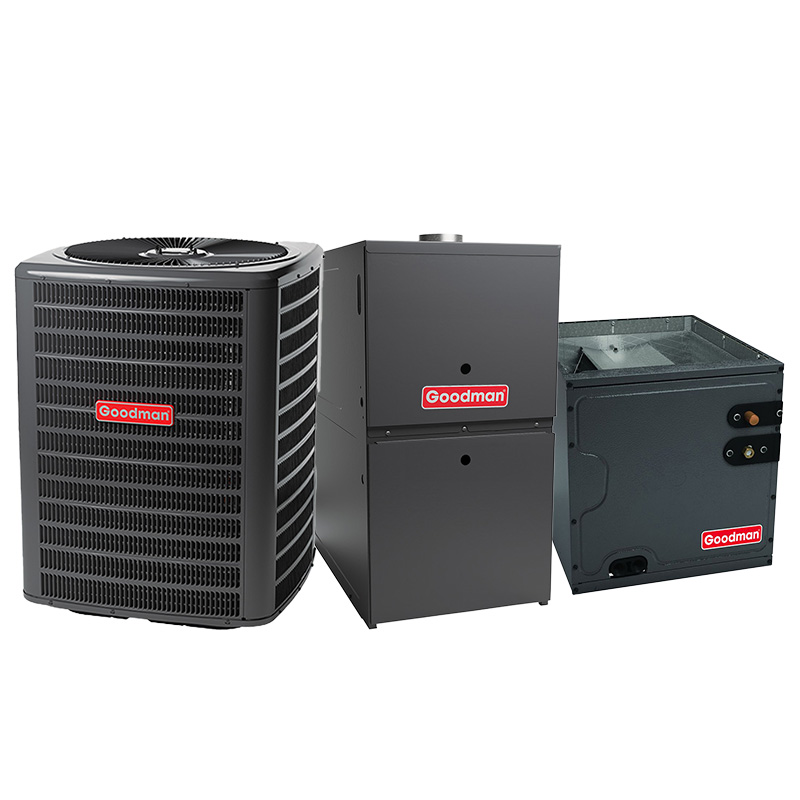
Goodman 2.5 Ton 15.2 SEER2 AC & Gas Furnace System – Two Stage Variable-Speed 60000 BTU Gas Furnace, 80% AFUE, Upflow, R32
View on AC Direct see your lowest price →Check current price on AC Direct →
Key features
- Two-stage compressor for reduced short-cycling and better humidity control
- Variable-speed ECM blower motor for quieter operation and consistent airflow
- 60,000 BTU upflow gas furnace at 80% AFUE for standard-efficiency heating
- R-32 refrigerant with lower global-warming potential than R-410A
- 15.2 SEER2 cooling efficiency rating meets current federal minimums with headroom
- Compatible with Goodman's standard communicating controls and most third-party thermostats
About this system
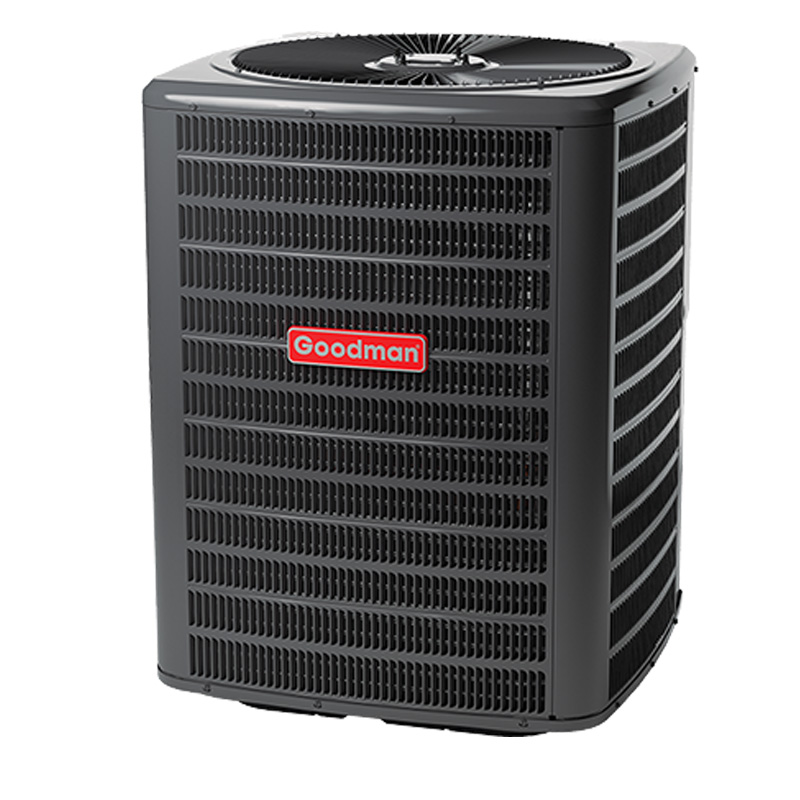
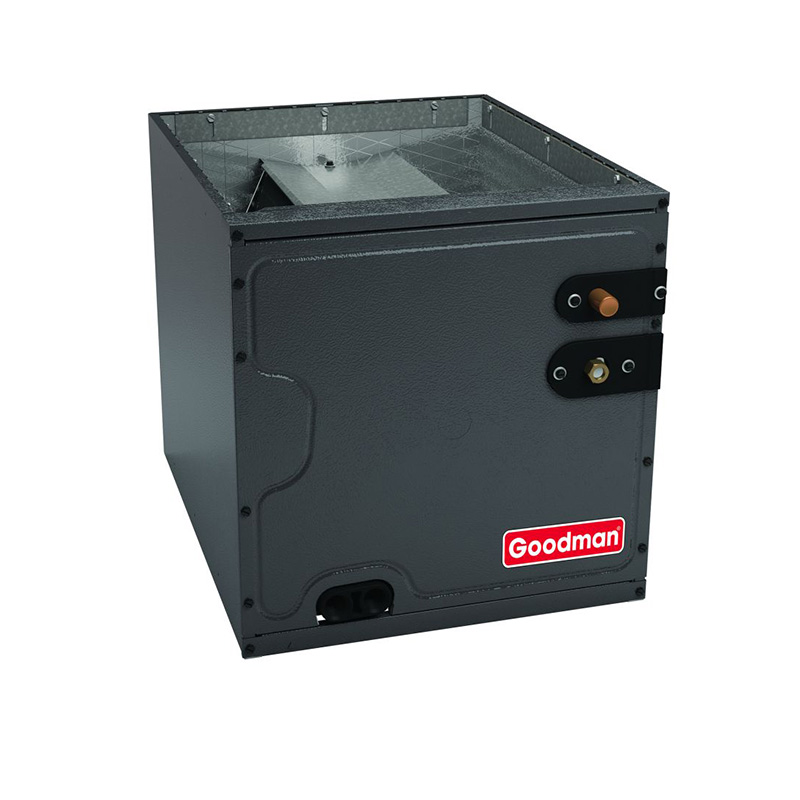
The Goodman 2.5-ton 15.2 SEER2 split system pairs a two-stage air conditioner with a variable-speed, 80% AFUE upflow gas furnace rated at 60,000 BTU. The two-stage compressor runs at a lower capacity most of the time, cycling to full output only on the hottest days, which reduces short-cycling, holds indoor humidity better than a single-stage unit, and tends to keep energy bills more predictable. The variable-speed indoor blower pairs well with that staging, ramping airflow gradually rather than blasting on and off, which also improves filtration contact time and evening-out of temperatures room to room.
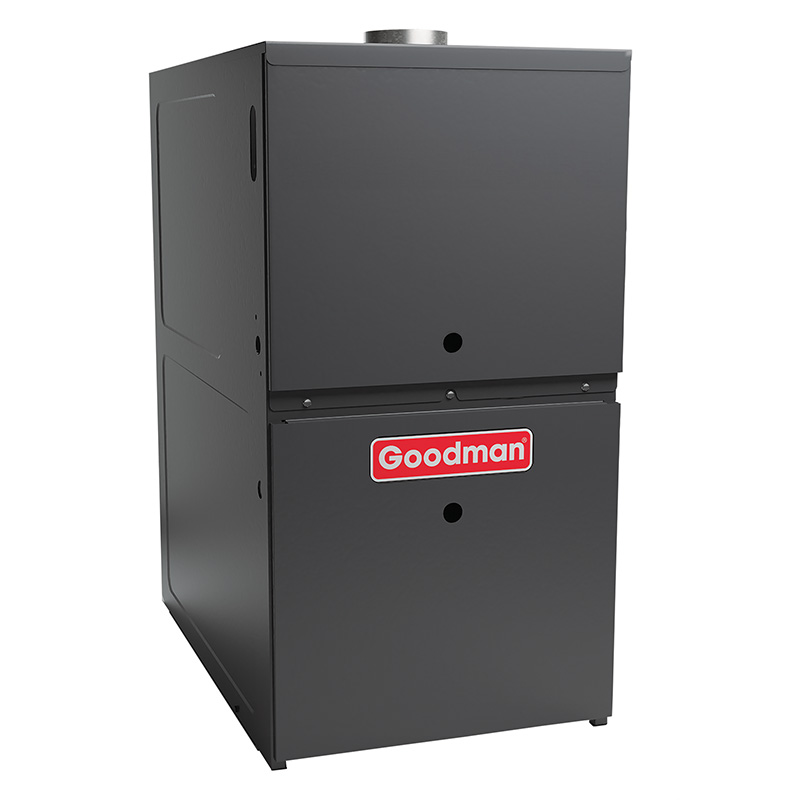
At 80% AFUE the furnace converts eight out of every ten units of gas into usable heat, placing it in the standard-efficiency tier rather than the high-efficiency (90%+) category. That trade-off makes the most economic sense in mild to moderate heating climates or in situations where an 80% upflow configuration is dictated by existing ductwork and venting. The system uses R-32 refrigerant, which carries a lower global-warming potential than legacy R-410A and is increasingly common in newer residential equipment. Buyers should confirm their servicing technicians carry R-32 handling certification before purchase, since not every local shop has made the switch yet.
This system is aimed at budget-conscious homeowners replacing aging equipment in 1,200 to 1,600 square-foot homes who want a meaningful step up from a basic single-stage unit without paying premium-brand prices. It is not a match for very cold climates where a high-efficiency condensing furnace would recover its cost premium quickly, nor for buyers prioritizing long-term appliance longevity above upfront savings.
This system delivers genuine comfort upgrades over single-stage alternatives at a price point that undercuts major premium brands by 15 to 25 percent. The two-stage and variable-speed combination works as advertised when installation quality is high, but Goodman's documented track record of capacitor failures, evaporator coil leaks, and compressors that tend to peak around 10 to 14 years means buyers should budget for maintenance and weigh extended-warranty options carefully. It is a reasonable value pick for cost-sensitive buyers who go in with realistic expectations.
Overall score is the average of the five ratings above.
What we like
- Two-stage cooling reduces humidity swings and avoids the temperature whiplash of single-stage cycling
- Variable-speed blower runs quietly at partial load, which is the dominant operating mode
- R-32 refrigerant is a forward-looking choice as the industry moves away from higher-GWP blends
- Priced 15 to 25 percent below comparable Trane, Carrier, and Lennox systems, lowering the upfront barrier
- Dual-run capacitor failures, the most common reported issue, are typically a straightforward low-cost repair in the $300 to $600 range
Trade-offs
- 80% AFUE places heating efficiency in the lower tier; homeowners in cold climates will spend more on gas annually compared to a 96%+ unit
- Evaporator coil leaks appear in a meaningful share of owner reviews and can be a costly mid-life repair
- Compressor lifespan tends to average 10 to 14 years, shorter than the 15 to 20 years more commonly seen with premium-brand compressors
- R-32 servicing requires certified technicians, and not all local shops have that certification yet, which can limit repair options
What homeowners and pros say about Goodman
Homeowners who post about Goodman equipment tend to cluster at the extremes. On ConsumerAffairs, where the platform skews toward people motivated to report problems, Goodman scores around 2.5 out of 5, and the recurring complaint pattern points to repair costs that start climbing after roughly year seven. The specific failure modes named in those accounts match what technicians document in the field: dual-run capacitors that fail more often than on premium equipment, evaporator coil leaks that surface in a meaningful share of units over time, and compressors that tend to reach end-of-life somewhere in the 10-to-14-year range rather than the 15-to-20-year window that Trane and Carrier compressors more commonly reach. On Google dealer review pages, where the audience includes a broader mix of satisfied and dissatisfied customers, Goodman equipment and the contractors who install it average around 3.8 out of 5 across several hundred reviews per location, with affordability consistently cited as the top reason buyers chose the brand.
HVAC technicians tend to give a more nuanced take on this specific two-stage, variable-speed configuration. They generally agree that the upgraded components, particularly the ECM blower, are a genuine comfort improvement over Goodman’s basic single-stage lineup, and that the two-stage compressor can hold up reasonably well when the system is properly sized and charged on installation day. Where technicians push back is on the idea that a Goodman at this tier competes on longevity with a similarly configured premium brand. The consensus in the trade is that installation quality is the single biggest variable in how long any Goodman system lasts, which means the choice of contractor matters as much as, if not more than, the equipment itself. Buyers who lock in a careful installer, schedule annual maintenance, and monitor capacitor health proactively tend to report far better experiences than those who treat the system as set-and-forget.
Sources: ConsumerAffairs Goodman owner reviews, AHRI Directory of Certified Product Performance, U.S. DOE appliance and equipment efficiency standards, Goodman product specification sheets.
What it costs to run
At 15.2 SEER2, cooling this 2.5-ton system for a typical 1200-hour cooling season at the U.S. average electricity rate of $0.17/kWh works out to roughly $403 per year in cooling, about $54 less per year than a minimum-efficiency 13.4 SEER2 unit of the same size. Your real cost depends on your climate and local rate.
Method: (30,000 BTU/hr ÷ 15.2 SEER2) × 1200 hours ÷ 1000 × $0.17/kWh. Rate source: U.S. EIA average; cooling hours: moderate-climate estimate.
How it compares
| Brand | Comparable model | SEER2 | Stage | Price position |
|---|---|---|---|---|
| Goodman | 2.5 Ton 15.2 SEER2 Two-Stage with 80% AFUE Variable-Speed Furnace | 15.2 | Two-stage | Value pick |
| Carrier | Comfort 15 Series (24ACC6) | 15+ | Single-stage | Typically 15 to 25 percent more than this Goodman system |
| Trane | XR15 Series | 15+ | Single-stage | Typically 15 to 25 percent more than this Goodman system |
| Lennox | Merit 14ACX / ML14XC1 Series | ~15 | Single-stage | Typically 15 to 25 percent more than this Goodman system |
Competitor rows are comparable single-stage units at similar efficiency; price is relative position, not a quote.
Questions about this system
Is 80% AFUE going to cost me noticeably more on my gas bill compared to a 96% furnace?
Yes, in a meaningful way if you heat frequently. An 80% AFUE unit loses roughly 20% of combustion heat up the flue, while a 96% unit loses about 4%. In moderate heating climates that gap may not pay back the upfront cost difference; in cold climates with long heating seasons, the annual savings from a high-efficiency unit can be substantial enough to justify spending more upfront.
My technician mentioned R-32 is new to him. Should I be concerned?
R-32 is not obscure, but it is less universally stocked and certified than R-410A in many U.S. markets right now. Before you finalize the purchase, confirm your installing contractor and any backup service companies in your area are certified to handle R-32 and carry it in stock. A first-year refrigerant leak, which a minority of Goodman owners report as an install or charge issue, is much easier to deal with when your contractor is already set up for the refrigerant.
How serious is the capacitor failure issue I keep reading about in Goodman reviews?
Dual-run capacitor failure is the most commonly reported repair on Goodman equipment, and it does show up more frequently than on some premium brands. The upside is that it is usually one of the cheaper HVAC repairs, typically $300 to $600 including labor, and a qualified technician can complete it in under an hour. Keeping a service contract or scheduling annual tune-ups where the technician checks capacitor health can catch a weakening capacitor before it strands you on a hot day.
What does 'two-stage' actually mean for day-to-day comfort compared to my old single-stage unit?
A single-stage compressor runs at full capacity every time it turns on, which often means short run cycles that leave humidity high and temperatures uneven. A two-stage compressor runs at its lower stage for most of the cooling season, producing longer, gentler cycles that pull more humidity from the air and maintain more consistent temperatures. You will typically notice the difference most on mild days and in how stable indoor humidity feels.
Should I buy the extended warranty for a Goodman system?
It is worth serious consideration. Goodman's standard parts warranty is competitive on paper, but the brand's documented track record includes evaporator coil leaks and compressors that tend to average 10 to 14 years rather than the 15 to 20 years seen with premium brands. An extended labor warranty in particular can offset what would otherwise be out-of-pocket costs if a coil or compressor issue surfaces after the standard coverage window closes.
Specifications
| Cooling capacity | 2.5 Ton |
| Efficiency | 15.2 SEER2 |
| Furnace output | 60000 BTU |
| Furnace efficiency | 80% AFUE |
| Configuration | Upflow |
| Refrigerant | R-32 |