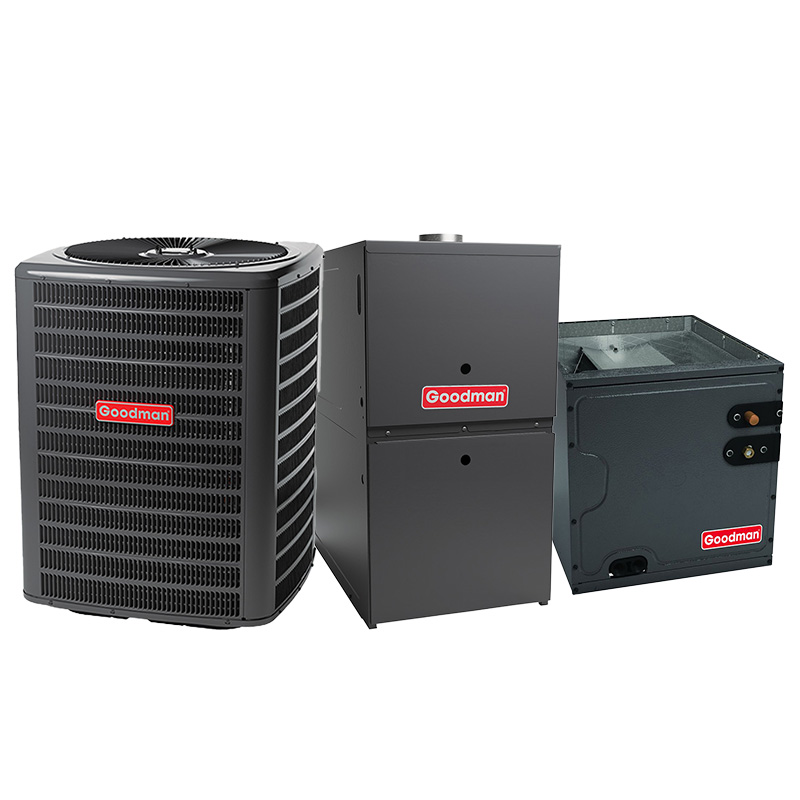
Goodman 2.5 Ton 15.2 SEER2 AC & Gas Furnace System – Two Stage Variable-Speed 80000 BTU Gas Furnace, 80% AFUE, Upflow, R32
View on AC Direct see your lowest price →Check current price on AC Direct →
Key features
- Two-stage compressor reduces short-cycling and improves humidity control versus single-stage units
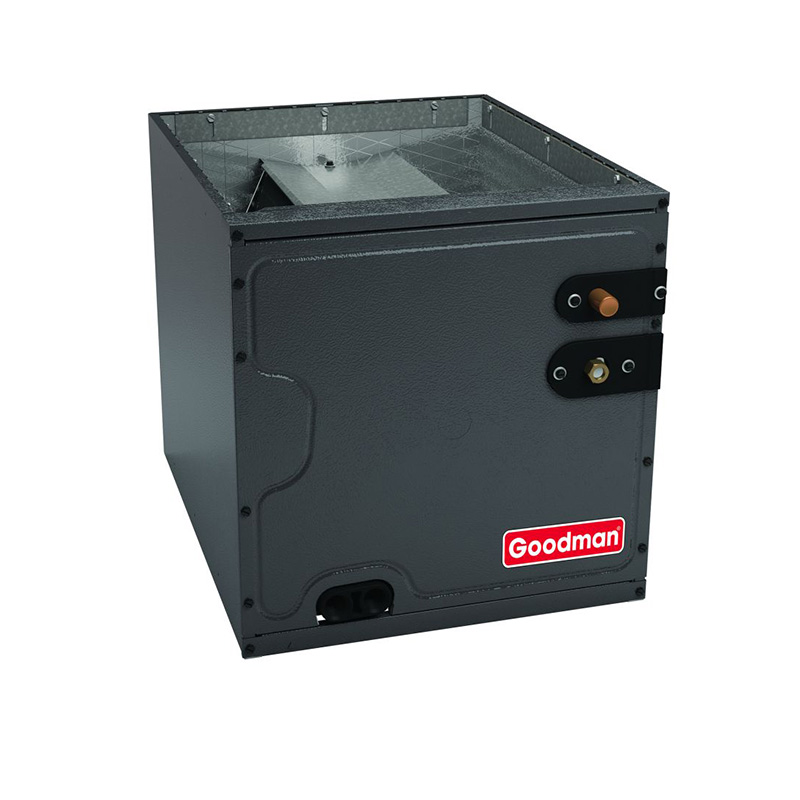
- Variable-speed air handler operates at lower, quieter speeds during typical conditions
- R-32 refrigerant with lower global-warming potential than legacy R-410A systems
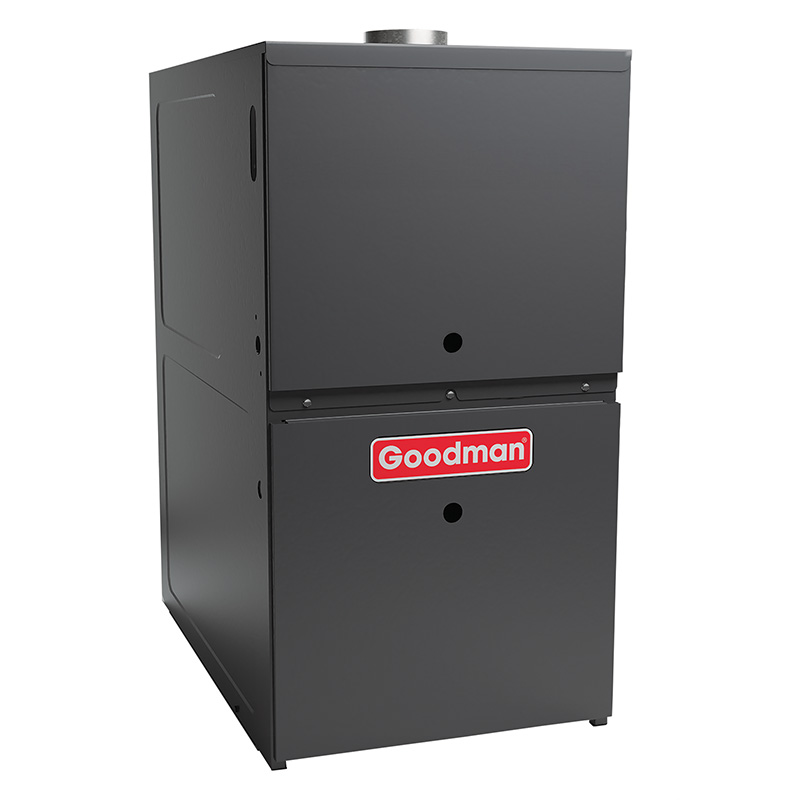
- 80,000 BTU upflow gas furnace rated at 80% AFUE, meeting federal non-condensing minimum
- 15.2 SEER2 cooling efficiency, satisfying current federal regional minimum standards
- Goodman 10-year parts warranty on registered units (labor not included)
About this system
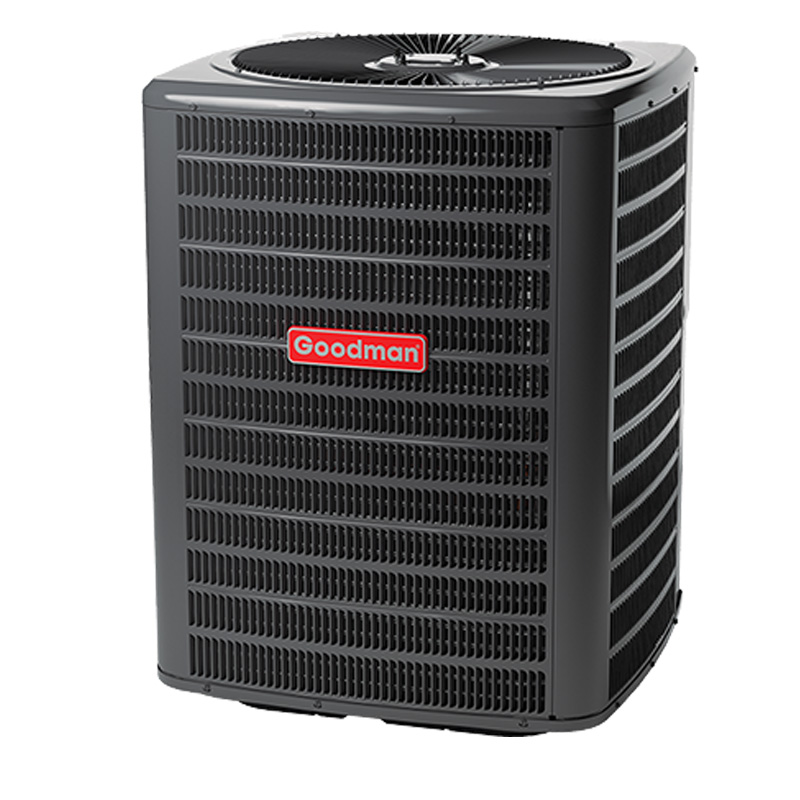
The Goodman 2.5-ton 15.2 SEER2 system pairs a two-stage central air conditioner with an 80,000 BTU, 80% AFUE upflow gas furnace. The two-stage compressor runs at a lower capacity most of the time, stepping up only on the hottest days, which reduces short-cycling and keeps indoor humidity more stable than a single-stage unit. The variable-speed air handler moves air quietly and consistently, and the R-32 refrigerant charge has a lower global-warming potential than the R-410A it replaces across much of the industry.
The 80% AFUE rating means the furnace converts eight out of every ten units of fuel into usable heat, which is the federal minimum for non-condensing furnaces in most northern climate zones and a practical baseline for milder climates where heating loads are modest. Homeowners in colder regions who run the furnace heavily through long winters will see a meaningful difference between 80% and 96% AFUE on annual gas bills, so this furnace is best matched to mild-to-moderate heating climates or situations where upfront cost is the primary constraint. The 15.2 SEER2 rating clears the current federal minimum with a small margin, placing this system in the entry-level efficient tier rather than the high-efficiency tier.
At 2.5 tons, this system is sized for homes roughly in the 1,200 to 1,600 square-foot range, though actual sizing depends heavily on local climate, insulation, window area, and ductwork. A proper Manual J load calculation by the installing contractor is essential; an oversized or undersized unit will underperform regardless of its rated efficiency or stage count.
This system delivers genuinely useful upgrades over a basic single-stage package at a price point that undercuts comparable Carrier, Trane, and Lennox equipment by a meaningful margin. The trade-off is a brand track record that shows real weak points around capacitors, evaporator coils, and compressor longevity, all of which make professional installation quality and a labor warranty from your contractor more important than they would be with a premium brand. Buyers who accept those trade-offs and budget for a service plan or extended warranty will get solid value; buyers who want the lowest long-term cost of ownership and minimal repair risk should look higher up the brand ladder.
Overall score is the average of the five ratings above.
What we like
- Two-stage cooling improves comfort and humidity control over single-stage alternatives at this price
- Variable-speed blower reduces noise and delivers more even temperatures throughout the home
- Priced roughly 15 to 25 percent below comparable Trane, Lennox, and Carrier systems
- R-32 refrigerant is industry-current and has a lower environmental impact than R-410A
- 10-year registered parts warranty provides reasonable coverage for a value-tier brand
Trade-offs
- 80% AFUE is the minimum efficiency tier; heating costs will run notably higher than a 96% condensing furnace in cold climates
- Documented evaporator coil leaks and dual-run capacitor failures after year 7 create above-average service call risk compared to premium brands
- Compressor lifespan averages 10 to 14 years versus 15 to 20 years typical of premium-brand compressors
- A minority of owners have reported refrigerant leaks in the first year, generally traced to installation or initial charge issues rather than a factory defect
What homeowners and pros say about Goodman
On ConsumerAffairs, Goodman scores roughly 2.5 out of 5 stars, a channel that skews toward owners motivated to report problems, and the recurring theme there is repair costs rising after about year seven. Google dealer reviews tell a more balanced story, averaging around 3.8 out of 5 across hundreds of location-level reviews, where the most consistent praise is affordability and the most consistent concern is what happens when something goes wrong after the install team has moved on. Technicians who work on a wide range of brands consistently describe Goodman performance as install-dependent more than most, meaning a well-commissioned Goodman on good ductwork with a careful charge tends to track reasonably close to its rated specs, while a rushed install can create problems within the first year.
The specific failure modes that show up repeatedly in owner reports are worth knowing before you buy. Dual-run capacitors are the most commonly cited weak point and are generally a straightforward, lower-cost repair in the 300 to 600 dollar range when caught before they take out the compressor. Evaporator coil leaks appear in a meaningful share of reviews and can be a more disruptive and expensive repair. Compressor lifespan for Goodman units tends to average 10 to 14 years rather than the 15 to 20 years more common with premium brands, and a small minority of owners have reported refrigerant leaks within the first year, a pattern that points back to installation quality rather than the equipment itself. None of these issues make Goodman a poor choice at its price point, but they do make the choice of contractor and a real labor warranty more consequential than they would be with a Trane or Carrier at the top of the market.
Sources: ConsumerAffairs Goodman owner reviews, AHRI Directory of Certified Product Performance, U.S. DOE appliance and equipment efficiency standards, Goodman product specification sheets.
What it costs to run
At 15.2 SEER2, cooling this 2.5-ton system for a typical 1200-hour cooling season at the U.S. average electricity rate of $0.17/kWh works out to roughly $403 per year in cooling, about $54 less per year than a minimum-efficiency 13.4 SEER2 unit of the same size. Your real cost depends on your climate and local rate.
Method: (30,000 BTU/hr ÷ 15.2 SEER2) × 1200 hours ÷ 1000 × $0.17/kWh. Rate source: U.S. EIA average; cooling hours: moderate-climate estimate.
How it compares
| Brand | Comparable model | SEER2 | Stage | Price position |
|---|---|---|---|---|
| Goodman | GSZ2-030 + GMVC8 / AMVC96 (this system) | 15.2 | Two-stage / Variable-speed | Value pick |
| Carrier | Comfort 15 (24ACC6) with 58MVC gas furnace | 15.2 | Single-stage | Typically 15 to 25 percent more than this Goodman system |
| Trane | XR15 (4TTR5) with S9X1 gas furnace | 15.2 | Single-stage | Typically 15 to 25 percent more than this Goodman system |
| Lennox | Merit 14ACX with ML180 gas furnace | 15.0–15.2 | Single-stage | Typically 15 to 25 percent more than this Goodman system |
Competitor rows are comparable single-stage units at similar efficiency; price is relative position, not a quote.
Questions about this system
Is 80% AFUE good enough, or should I pay more for a 96% furnace?
It depends on your heating climate. In mild regions where the furnace runs a few months a year, the gas savings from a 96% unit rarely recover the price premium quickly. In cold climates with long heating seasons, the 16-point efficiency gap adds up on monthly bills and a condensing furnace usually pays for itself over the system's life. Check local gas rates and your estimated heating degree days before deciding.
What does two-stage cooling actually do for my home compared to single-stage?
A two-stage compressor runs at a lower output most of the time, allowing longer, gentler cycles that remove more humidity from the air and maintain more even temperatures. On the hottest days it steps to full capacity. The result is fewer temperature swings and a less clammy feel, especially in humid climates, without a dramatic jump in purchase price.
Why do some Goodman owners report refrigerant leaks within the first year?
Based on owner reports, early refrigerant leaks in Goodman systems are usually traced to installation issues such as improper flare connections, low-quality line set work, or an incorrect initial charge rather than a factory defect in the unit itself. Choosing a licensed contractor with documented R-32 experience and asking them to pressure-test the system before startup significantly reduces this risk.
What maintenance should I plan for to keep this system running reliably?
Annual professional tune-ups are the baseline. Given that dual-run capacitors are the most commonly reported failure point on Goodman equipment, ask your technician to test the capacitor every visit since a failing capacitor can stress the compressor if left unaddressed. Keeping the coils clean and changing filters on schedule protects against the coil leak issues reported by a share of owners.
Does the 10-year warranty cover labor if something fails?
No. Goodman's 10-year registered parts warranty covers the cost of replacement components but does not include the labor to diagnose and install them, which is often the larger portion of a repair bill. Many dealers offer separate labor warranties or service agreements, and purchasing one is worth considering given the brand's documented service call history after year 7.
Specifications
| Cooling capacity | 2.5 Ton |
| Efficiency | 15.2 SEER2 |
| Furnace output | 80000 BTU |
| Furnace efficiency | 80% AFUE |
| Configuration | Upflow |
| Refrigerant | R-32 |