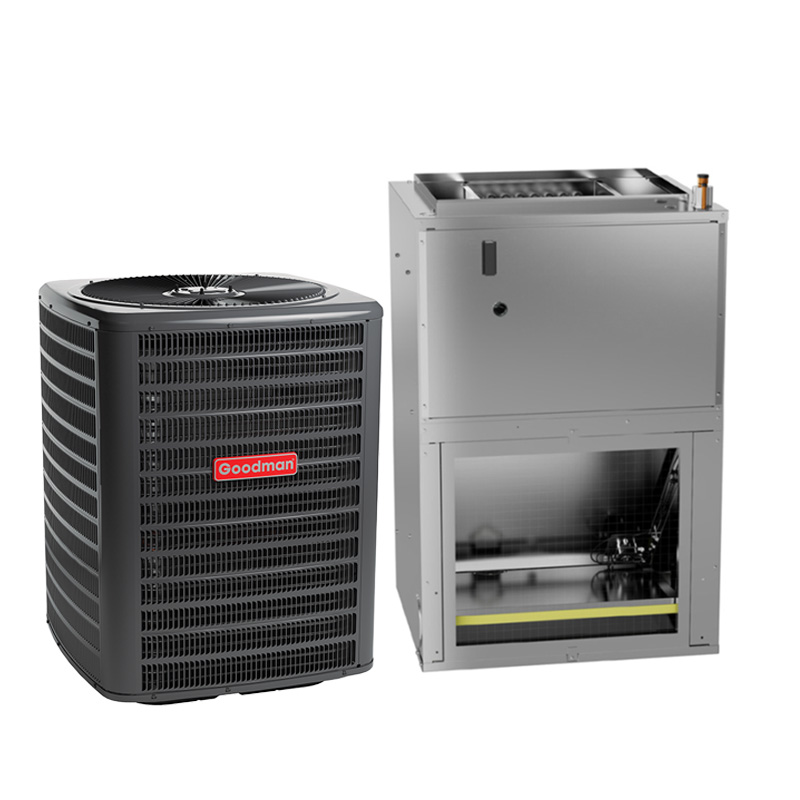
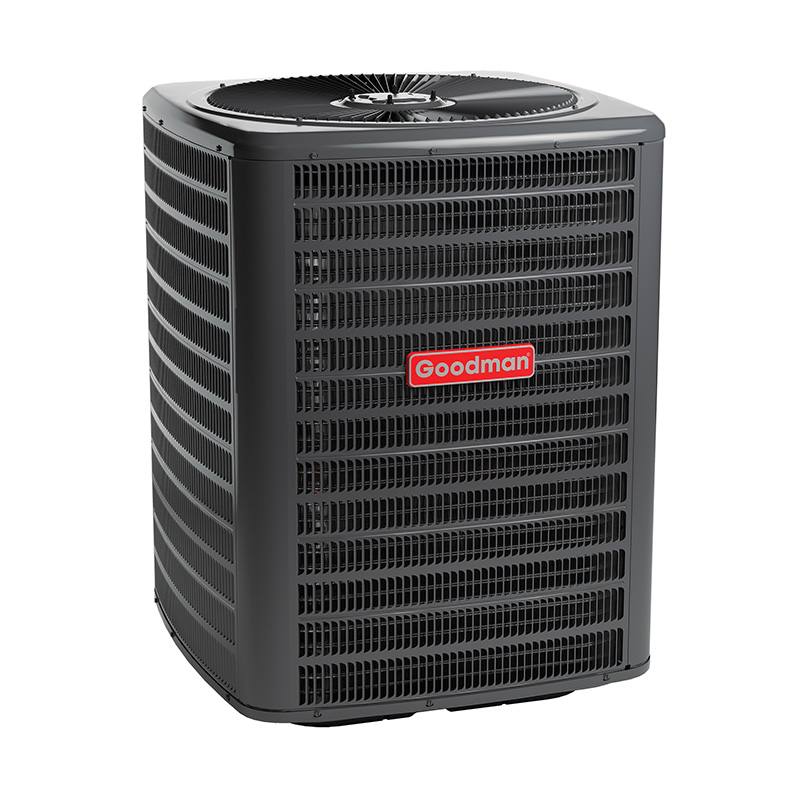
Goodman 2.5 Ton 15.2 SEER2 R32 Air Conditioner Split System With 8kW Heater Built-In Wall-Mounted Air Handler
View on AC Direct see your lowest price →Check current price on AC Direct →
Key features
- 15.2 SEER2 efficiency, meeting federal minimums with moderate operating savings
- R-32 refrigerant with lower global warming potential than R-410A
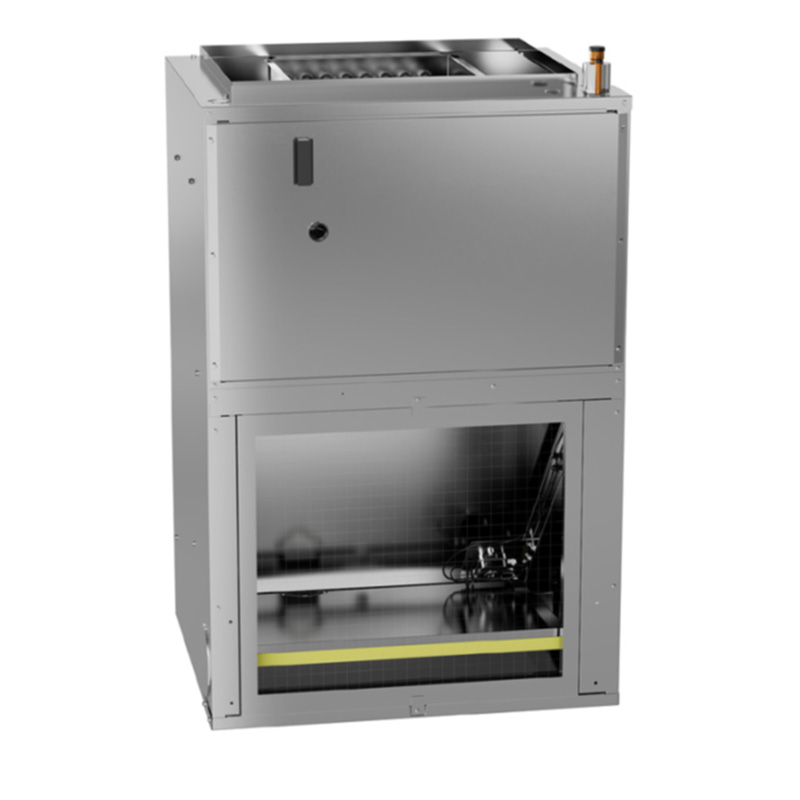
- Wall-mounted air handler for installations where floor or attic space is limited
- Integrated 8 kW electric heater strip for combined heating and cooling without a separate furnace
- 2.5-ton capacity suited to approximately 1,200 to 1,600 sq ft depending on load conditions
- Single-stage compressor operation providing straightforward, proven mechanical simplicity
About this system
The Goodman 2.5 Ton 15.2 SEER2 R-32 split system pairs a wall-mounted air handler with an 8 kW electric heater strip, making it a self-contained heating and cooling solution that skips the need for a separate furnace or heat pump outdoor unit. At 2.5 tons it is sized for conditioned spaces roughly in the 1,200 to 1,600 square foot range, though actual sizing depends on local climate, insulation, and ceiling height. The wall-mounted air handler suits homes or additions where attic or closet space for a conventional indoor unit is limited, and it can be a practical fit for sunrooms, converted garages, or secondary zones in a larger house.
The 15.2 SEER2 rating clears the federal minimum for most U.S. regions and sits in the entry-level efficiency tier. It will run noticeably cheaper than an older 13 SEER system but will not match the operating savings of a 17 or 18 SEER2 variable-speed unit. R-32 refrigerant has a lower global warming potential than R-410A and is increasingly common in new equipment, so sourcing refrigerant for future service should not be a concern as the industry transitions. The 8 kW heater strip is adequate for mild shoulder-season heating or as backup in moderate climates, but in cold-winter regions homeowners should factor in higher electric heating costs compared to a gas furnace or a heat pump.
This Goodman split system delivers reliable entry-level cooling and supplemental heating at a price point well below comparable Carrier, Trane, or Lennox configurations, making it a reasonable pick for budget-conscious buyers in mild climates. The 15.2 SEER2 rating and single-stage operation are honest rather than impressive, and long-term ownership costs depend heavily on installation quality and a willingness to budget for component repairs after year seven. Buyers who want lower utility bills or stronger long-term reliability should look at higher-efficiency or premium-brand alternatives.
Overall score is the average of the five ratings above.
What we like
- Purchase price typically 15 to 25 percent below comparable Carrier, Trane, and Lennox equipment
- R-32 refrigerant is future-friendly as the industry moves away from R-410A
- Wall-mounted air handler opens up installation options in tight or unconventional spaces
- Built-in 8 kW heater strip eliminates the cost of a separate heating appliance in mild climates
- Single-stage mechanical design keeps service diagnostics straightforward and parts widely available
Trade-offs
- Dual-run capacitors are the most commonly reported failure, typically adding $300 to $600 in repair costs, often appearing in years 5 to 9
- Evaporator coil leaks are a documented concern in owner reviews and can be a costly repair outside warranty
- Compressor lifespan averages 10 to 14 years versus 15 to 20 years typical of premium brands
- 15.2 SEER2 is entry-level efficiency; monthly operating costs will be higher than 17-plus SEER2 variable-speed alternatives
What homeowners and pros say about Goodman
Homeowners and HVAC professionals tend to land in the same place on Goodman: it is a workable system at a price that is hard to argue with upfront, but the long-term picture has real caveats. On ConsumerAffairs, Goodman averages roughly 2.5 out of 5, and that channel skews toward people who are frustrated enough to leave a review. The recurring theme there is repair costs that start climbing after about year seven, with dual-run capacitor failures and evaporator coil leaks appearing most often in the complaint threads. Google dealer reviews are more balanced, coming in around 3.8 out of 5 across hundreds of reviews per location, where the most consistent praise is for affordability and the most consistent criticism is for component longevity.
Technicians who work on Goodman regularly tend to point out that the brand’s performance is unusually sensitive to install quality. A properly commissioned, correctly charged unit can run for over a decade without major trouble. A rushed installation with an improper refrigerant charge is one documented cause of refrigerant leaks appearing within the first year on a minority of units. On this specific R-32 wall-mount configuration, installers without wall-mount experience add another variable worth paying attention to. Compressor lifespan averaging 10 to 14 years versus the 15 to 20 years more commonly seen in Trane or Carrier equipment is a real trade-off, not a rumor. For buyers who understand those odds going in and want to keep upfront costs down, Goodman is a legitimate choice rather than a gamble taken blindly.
Sources: ConsumerAffairs Goodman owner reviews, AHRI Directory of Certified Product Performance, U.S. DOE appliance and equipment efficiency standards, Goodman product specification sheets.
What it costs to run
At 15.2 SEER2, cooling this 2.5-ton system for a typical 1200-hour cooling season at the U.S. average electricity rate of $0.17/kWh works out to roughly $403 per year in cooling, about $54 less per year than a minimum-efficiency 13.4 SEER2 unit of the same size. Your real cost depends on your climate and local rate.
Method: (30,000 BTU/hr ÷ 15.2 SEER2) × 1200 hours ÷ 1000 × $0.17/kWh. Rate source: U.S. EIA average; cooling hours: moderate-climate estimate.
How it compares
| Brand | Comparable model | SEER2 | Stage | Price position |
|---|---|---|---|---|
| Goodman | 2.5 Ton 15.2 SEER2 R-32 Wall-Mount Split System with 8 kW Heater | 15.2 | Single-stage | Value pick |
| Carrier | Comfort 24ACC6 Series | 15.2 | Single-stage | Typically 15 to 25 percent more than this Goodman |
| Trane | XR15 Series | 15.0 to 15.6 | Single-stage | Typically 15 to 25 percent more than this Goodman |
| Lennox | Merit ML14XC1 Series | 15.0 to 15.5 | Single-stage | Typically 15 to 25 percent more than this Goodman |
Competitor rows are comparable single-stage units at similar efficiency; price is relative position, not a quote.
Questions about this system
Is the 8 kW heater strip enough to heat my home in winter, or do I need a separate heating system?
An 8 kW strip heater produces roughly 27,000 BTU per hour, which can handle shoulder-season temperatures in mild climates for a space this size. In regions with sustained temperatures below 30 degrees Fahrenheit, electric strip heat becomes expensive to run and may struggle to maintain setpoint on the coldest days, so a supplemental or primary heating source is worth considering.
What does 15.2 SEER2 actually mean for my electric bill compared to my old system?
SEER2 is tested under more realistic duct conditions than the older SEER standard, so a 15.2 SEER2 unit is roughly equivalent to a 16 SEER unit under old testing. If you are replacing a 10 to 13 SEER system, you can expect meaningful savings, but upgrading from a unit already above 14 SEER will yield modest returns at this efficiency tier.
Why does this use R-32 refrigerant, and will it be hard to find a technician who can service it?
R-32 is being adopted industry-wide as a lower-GWP replacement for R-410A, and most HVAC technicians are already trained to handle it or are in the process of certification. Within the next few years it is expected to be the standard refrigerant, so service availability should improve rather than shrink over the life of this unit.
How often do Goodman capacitors fail, and what does that repair cost?
Dual-run capacitors are the most commonly reported failure point on Goodman equipment, with many owners encountering the issue somewhere between years 5 and 9. The repair is typically straightforward and runs in the $300 to $600 range including labor, so it is worth budgeting for rather than treating as a surprise.
Does the wall-mounted air handler installation require anything special that a standard split system would not?
Wall-mounted air handlers require secure structural mounting, proper condensate drainage routing from the wall location, and refrigerant line sets run through or along the wall to the outdoor unit. The configuration is more common in ductless-style installations and not every residential HVAC contractor installs them routinely, so confirming your installer has specific experience with wall-mount air handlers is worthwhile before signing a contract.
Specifications
| Cooling capacity | 2.5 Ton |
| Efficiency | 15.2 SEER2 |
| Refrigerant | R-32 |