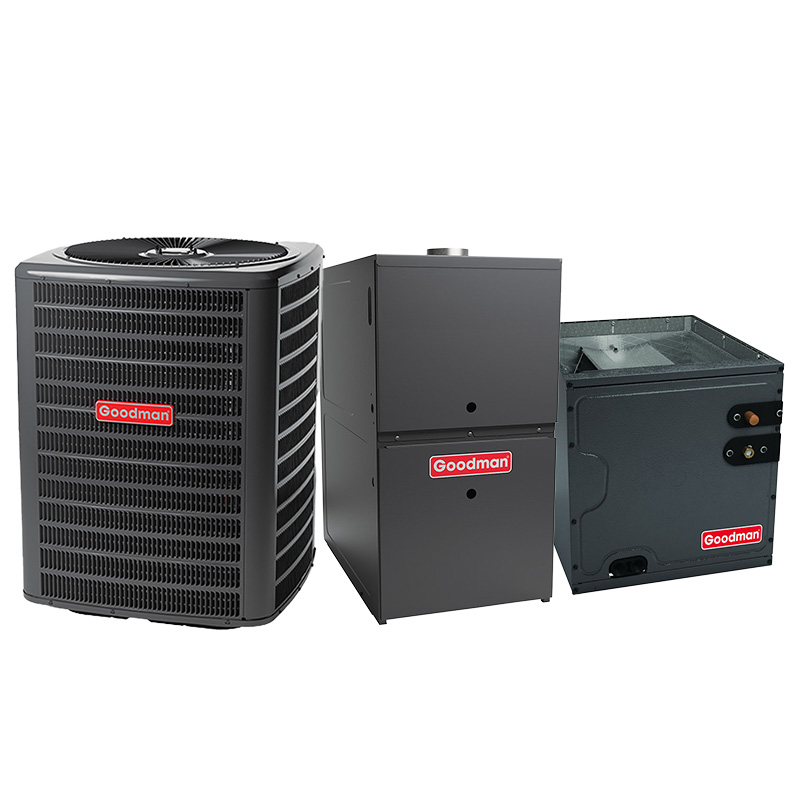
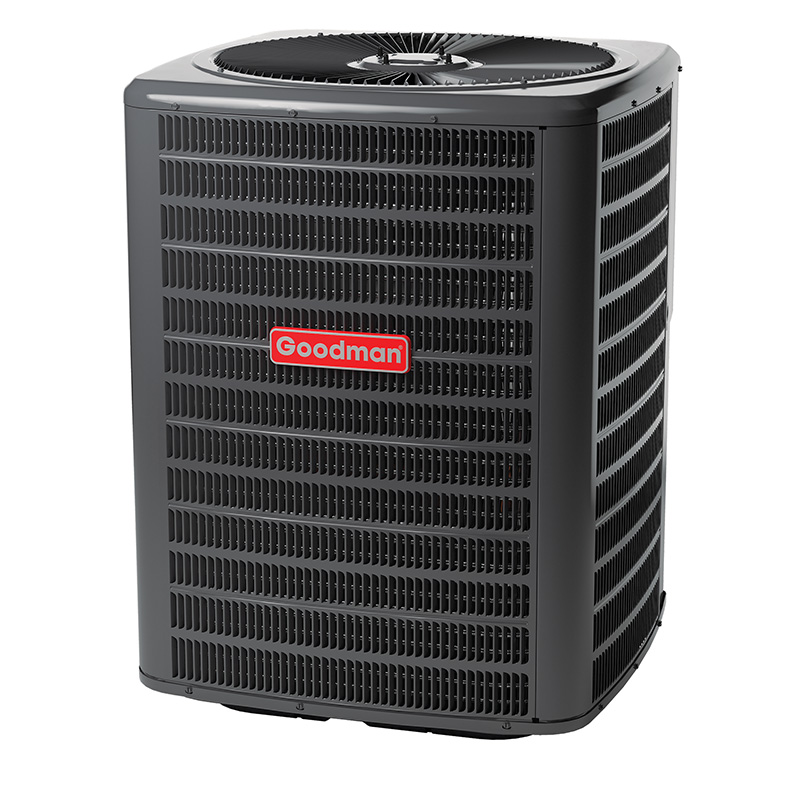
Goodman 2.5 Ton 15.5 SEER2 AC & Gas Furnace System – Two Stage Variable-Speed, 60000 BTU Low NOx Gas Furnace, 80% AFUE, Downflow, R32
View on AC Direct see your lowest price →Check current price on AC Direct →
Key features
- Two-stage compressor reduces short-cycling and improves humidity control versus single-stage units
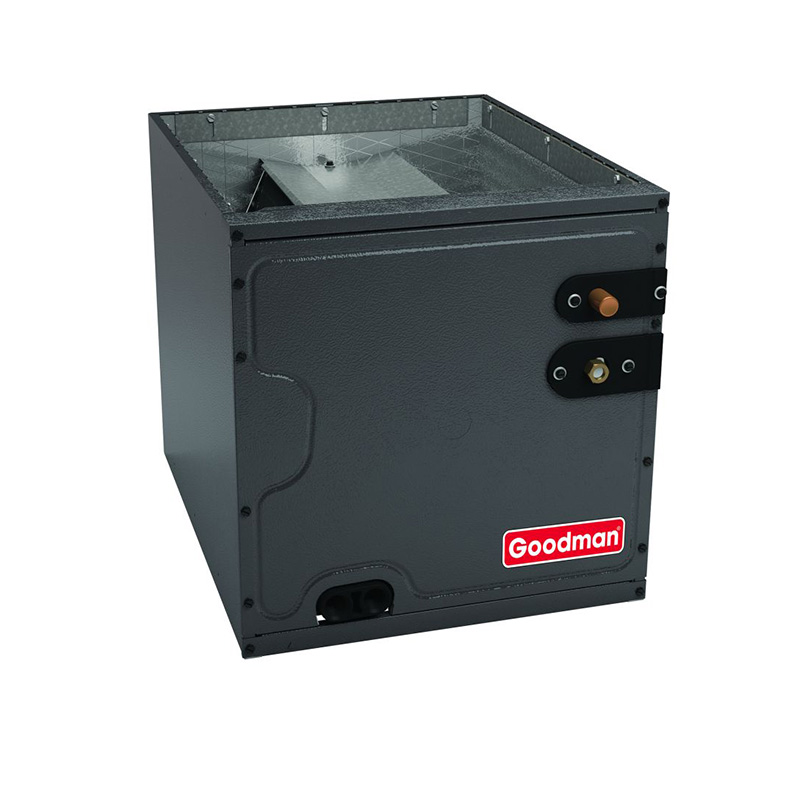
- Variable-speed air handler delivers quieter, more even airflow and better humidity management
- 15.5 SEER2 efficiency rating meets or exceeds current federal minimum standards for most U.S. regions
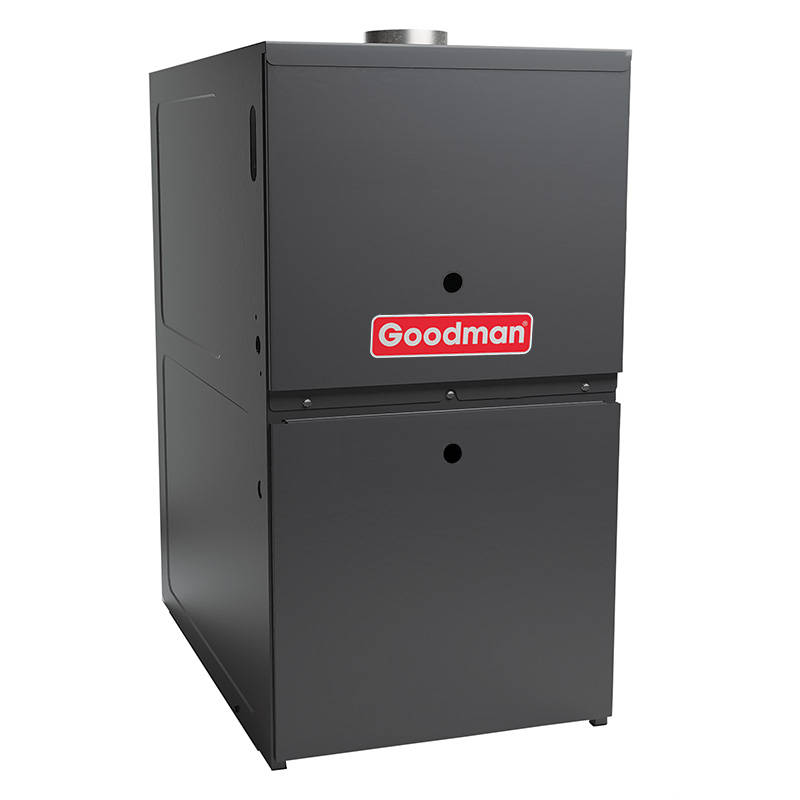
- 60,000 BTU downflow gas furnace rated 80% AFUE, suited for closet or main-floor utility installations
- R-32 refrigerant with lower global-warming potential and smaller required charge than R-410A
- Low NOx combustion design reduces nitrogen oxide emissions to meet stricter air-quality regulations
About this system
The Goodman 2.5-ton 15.5 SEER2 two-stage, variable-speed system pairs a mid-efficiency central air conditioner with a 60,000 BTU downflow gas furnace rated at 80% AFUE. The two-stage compressor runs at a lower capacity on milder days, which cuts short-cycling, steadies indoor temperatures, and trims runtime hours compared with a basic single-stage unit. The variable-speed air handler works with that compressor to move air quietly and maintain more consistent humidity control. R-32 refrigerant carries a lower global-warming potential than the R-410A it is replacing across the industry, and its higher energy density allows the system to use a smaller refrigerant charge overall.
The downflow configuration routes conditioned air downward from the cabinet, which suits homes where the furnace sits in a closet, main-floor utility space, or garage with ductwork running beneath the floor. If your existing ductwork is upflow or horizontal, this configuration is not the right fit without significant modification. The 80% AFUE furnace is a standard-efficiency unit, meaning roughly one-fifth of combustion energy exits through the flue, so homeowners in climates with long, cold heating seasons may want to compare the long-term fuel savings of a 96% AFUE alternative before committing. For mild-to-moderate heating climates, the lower upfront cost of an 80% furnace often makes more financial sense.
This system targets homeowners replacing aging equipment on a defined budget, buyers in mixed climates where cooling dominates the annual load, and anyone whose home already uses a downflow furnace layout. It is not aimed at buyers seeking the longest possible service life or the lowest energy bills at any price point. Performance consistency depends heavily on proper installation, a fact that experienced technicians consistently highlight when discussing this brand.
This Goodman system delivers a genuine step up from single-stage equipment at a price point that undercuts major premium brands by a meaningful margin, making it a practical choice for budget-conscious buyers in moderate climates. The two-stage and variable-speed components add real comfort benefits, but Goodman's documented repair history and shorter average compressor lifespan mean owners should factor in a higher probability of mid-life service costs. It earns its place as a value option, not a set-and-forget premium system.
Overall score is the average of the five ratings above.
What we like
- Priced roughly 15 to 25 percent below comparable Carrier, Trane, and Lennox systems
- Two-stage operation noticeably reduces short-cycling and improves temperature consistency on mild days
- Variable-speed blower lowers noise levels and supports better humidity control versus fixed-speed alternatives
- R-32 refrigerant is more environmentally friendly and uses a smaller charge, which can simplify future service
- Downflow configuration is a direct replacement for many existing forced-air homes with floor-level duct systems
Trade-offs
- 80% AFUE furnace leaves a meaningful efficiency gap compared with condensing 90%+ units, which increases annual fuel costs in cold climates
- Dual-run capacitors are the most frequently reported failure point, with repair bills typically running $300 to $600
- Average compressor lifespan of 10 to 14 years trails premium-brand averages of 15 to 20 years, affecting total cost of ownership
- A minority of owners report refrigerant leaks within the first year, generally traced to installation or initial charge quality rather than a factory defect
What homeowners and pros say about Goodman
Homeowners who post about Goodman online tend to cluster at the extremes. Google dealer reviews average around 3.8 out of 5 across locations, and the most common thread in positive feedback is straightforward: the price made the project possible. Buyers who got strong bids from Carrier or Trane dealers and chose Goodman instead frequently report satisfaction in the first several years of ownership, particularly when a careful installer handled the job. ConsumerAffairs tells a different story, with Goodman sitting at roughly 2.5 out of 5. That platform attracts complaint-driven traffic, so the score is not a random sample, but the pattern in those complaints is consistent enough to take seriously: repair costs that feel manageable at year two or three start climbing after roughly year seven, with capacitor failures being the most commonly named culprit and evaporator coil leaks appearing in a notable share of longer-term owner accounts.
HVAC technicians who work on Goodman equipment regularly tend to hold a pragmatic view. They note that dual-run capacitors are a routine, low-cost fix on these systems, but they also acknowledge that Goodman compressors average 10 to 14 years in the field, meaningfully shorter than the 15 to 20 years more typical of premium-brand compressors. A small but documented share of owners encounter refrigerant leaks within the first year, and pros consistently attribute those to installation or initial charge issues rather than anything coming out of the factory. The takeaway from the trade is consistent: Goodman can deliver solid value, but the installer you hire matters at least as much as the equipment itself, and a maintenance budget for the back half of the system’s life is a reasonable expectation rather than a worst-case scenario.
Sources: ConsumerAffairs Goodman owner reviews, AHRI Directory of Certified Product Performance, U.S. DOE appliance and equipment efficiency standards, Goodman product specification sheets.
What it costs to run
At 15.5 SEER2, cooling this 2.5-ton system for a typical 1200-hour cooling season at the U.S. average electricity rate of $0.17/kWh works out to roughly $395 per year in cooling, about $62 less per year than a minimum-efficiency 13.4 SEER2 unit of the same size. Your real cost depends on your climate and local rate.
Method: (30,000 BTU/hr ÷ 15.5 SEER2) × 1200 hours ÷ 1000 × $0.17/kWh. Rate source: U.S. EIA average; cooling hours: moderate-climate estimate.
How it compares
| Brand | Comparable model | SEER2 | Stage | Price position |
|---|---|---|---|---|
| Goodman | 2.5 Ton 15.5 SEER2 Two-Stage Variable-Speed with 80% AFUE Downflow Furnace | 15.5 | Two-stage | Value pick |
| Carrier | Comfort 15 Series (25HCC / 58SB pairing) | 15.2 | Single-stage | Typically 15 to 25 percent more than this Goodman system |
| Trane | XR15 (4TTR5 / S9V2 pairing) | 15.0 | Single-stage | Typically 15 to 25 percent more than this Goodman system |
| Lennox | Merit 16 Series (14ACX / ML180 pairing) | 15.2 | Single-stage | Typically 15 to 25 percent more than this Goodman system |
Competitor rows are comparable single-stage units at similar efficiency; price is relative position, not a quote.
Questions about this system
Is 80% AFUE good enough, or should I upgrade to a high-efficiency furnace?
For homes in the South, Southwest, or mild coastal climates where heating runs only a few months a year, 80% AFUE is typically sufficient and the lower upfront cost makes sense. In the Midwest or Northeast where the furnace runs for five or more months, the fuel savings from a 96% AFUE condensing unit can recover the price difference within a few years, so it is worth running the numbers for your local gas rates before deciding.
My house has an upflow furnace right now. Can I still use this downflow system?
Not without significant ductwork modification. A downflow unit discharges conditioned air through the bottom of the cabinet into supply ducts below the unit, which is the opposite of an upflow layout. Attempting to force-fit a downflow unit into an upflow application will result in poor airflow and likely void any warranty coverage. Confirm your existing configuration before purchasing.
What is the most common repair this system will need, and what does it cost?
Dual-run capacitors are the most frequently reported failure on Goodman equipment across owner reviews. The part itself is inexpensive, and total repair costs, including labor, typically fall in the $300 to $600 range. The job is straightforward for any licensed HVAC technician and is generally completed in a single service visit.
Does R-32 refrigerant affect how I maintain or service the system?
R-32 requires technicians certified to handle it and specific recovery equipment, so not every HVAC shop will be set up for it yet. As R-32 becomes the industry standard this is changing quickly, but in rural areas you may want to confirm local service availability before purchasing. On the upside, R-32 systems use a smaller refrigerant charge, which can make leak repairs more straightforward.
How much does installation quality really matter on a Goodman system?
It matters more with Goodman than with some premium brands, according to technicians who service both. Proper refrigerant charge, correct airflow setup, and accurate electrical connections directly affect efficiency, comfort, and how long components like the compressor last. The first-year refrigerant leaks that appear in owner reviews are almost always traced to installation errors rather than factory defects, so choosing an experienced, licensed installer is especially important here.
Specifications
| Cooling capacity | 2.5 Ton |
| Efficiency | 15.5 SEER2 |
| Furnace output | 60000 BTU |
| Furnace efficiency | 80% AFUE |
| Configuration | Downflow |
| Refrigerant | R-32 |