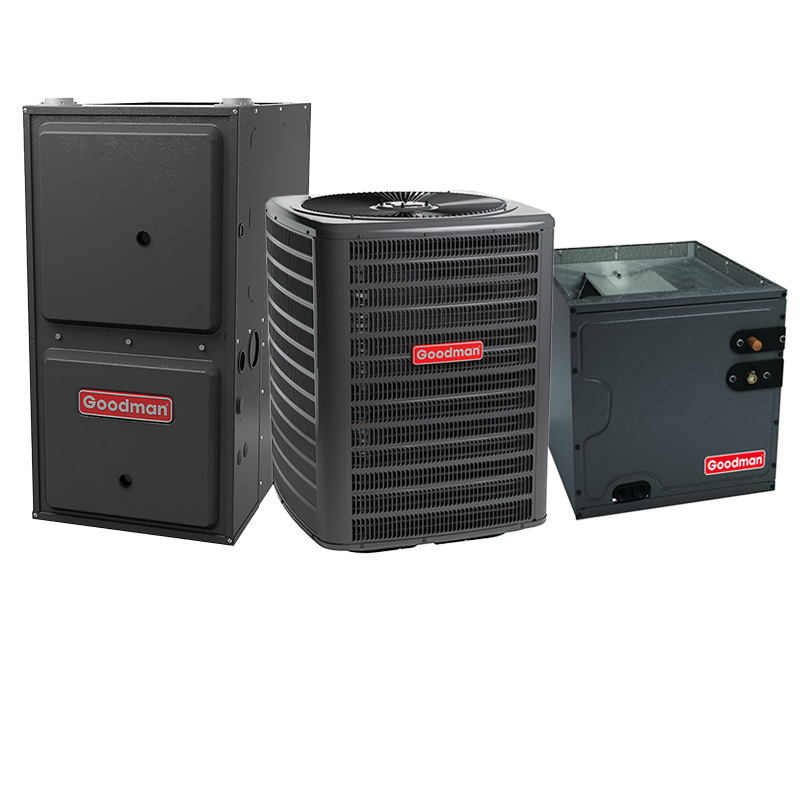
Goodman 2.5 Ton 15 SEER2 R32 AC System with 40,000 BTU 96% AFUE Gas Furnace – California & Colorado Ultra Low NOx, Upflow, Multi-Speed ECM
View on AC Direct see your lowest price →Check current price on AC Direct →
Key features
- R-32 refrigerant with roughly 68% lower GWP than R-410A
- Meets California and Colorado Ultra Low NOx emissions standards
- 96% AFUE two-stage gas furnace reduces heating fuel waste to roughly 4%
- Multi-speed ECM blower motor lowers blower energy use and reduces airflow noise
- 15 SEER2 efficiency rating meets 2023 federal minimum for most northern regions
- Upflow configuration suits homes with basement or ground-level mechanical rooms
About this system
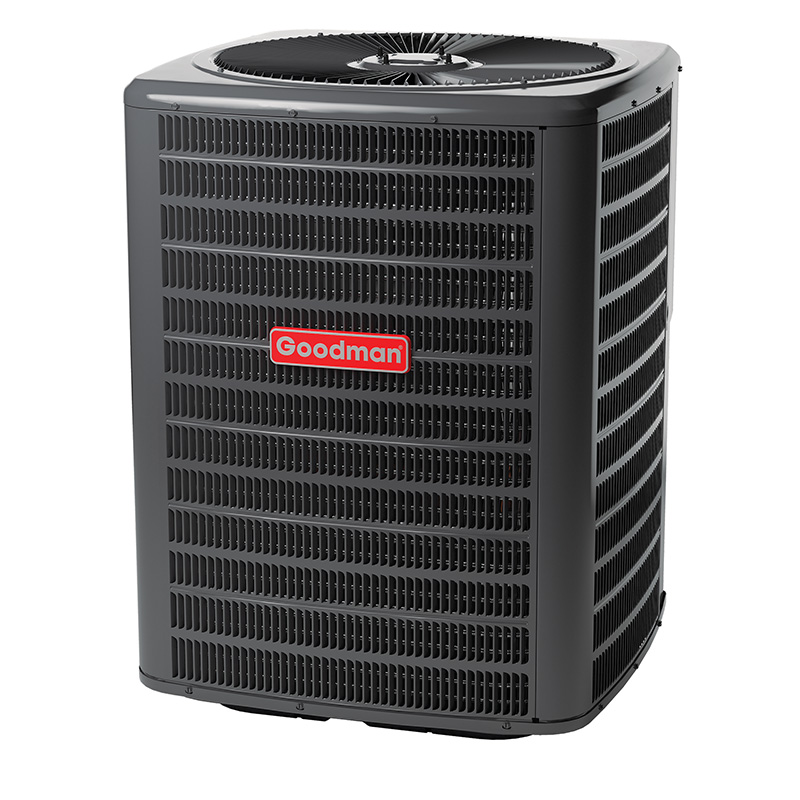
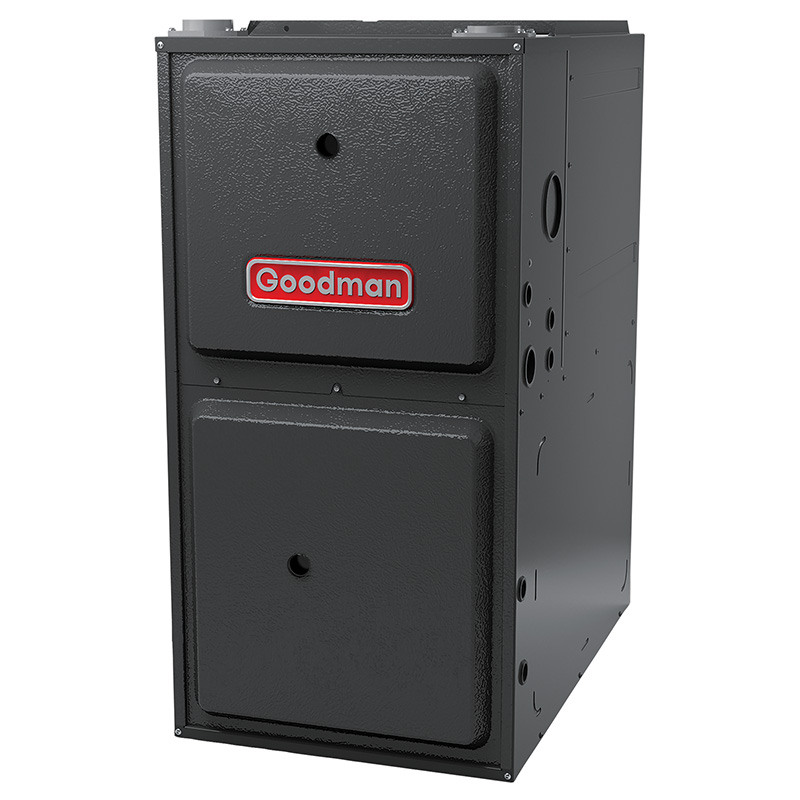
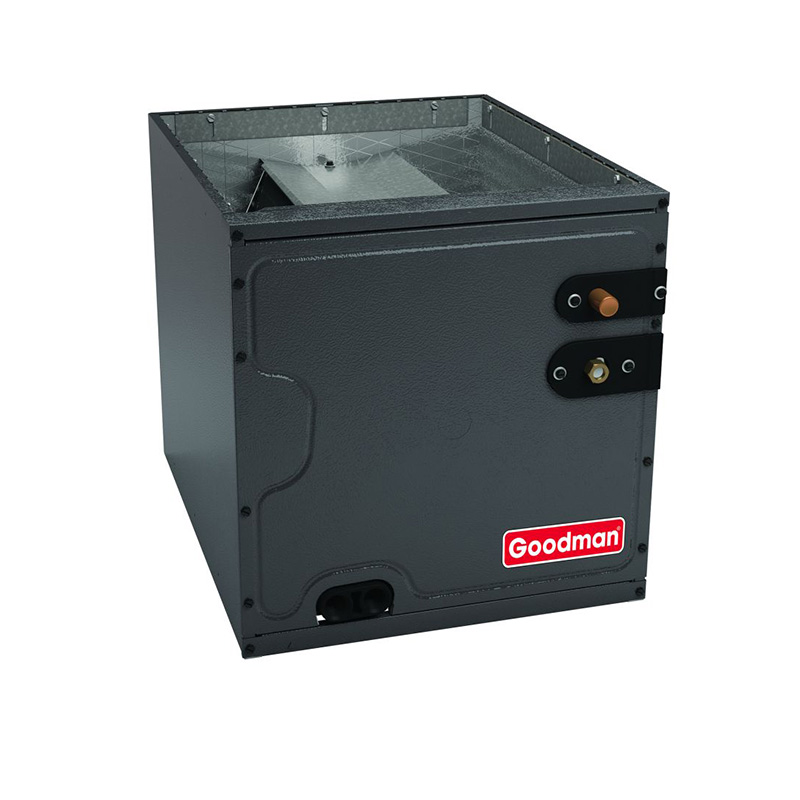
The Goodman GLXS5BA3010 pairs a 2.5-ton, 15 SEER2 single-stage air conditioner with a 40,000 BTU, 96% AFUE multi-speed ECM gas furnace in an upflow configuration. It uses R-32 refrigerant, which carries a significantly lower global warming potential than the R-410A it replaces, and it meets the strict Ultra Low NOx combustion standards required in California and Colorado. That regulatory compliance matters: if you are in those states and buying today, this system is already cleared for installation without any workaround.
At 15 SEER2 and 96% AFUE, this unit sits at the practical entry point for high-efficiency equipment. The 96% furnace will convert 96 cents of every fuel dollar into heat, which is a meaningful real-world improvement over the 80% units still commonly installed in new construction. The multi-speed ECM blower motor modulates airflow more precisely than a standard PSC motor, which tends to reduce temperature swings, lower blower electricity use, and run more quietly at partial loads. This is a well-matched package for a modest-sized home, typically 1,200 to 1,800 square feet depending on climate zone and insulation quality, where the owner wants above-average efficiency without paying premium-brand prices.
This system suits a budget-conscious homeowner replacing aging equipment who wants a code-compliant, efficient combo unit and is comfortable accepting that Goodman’s long-term reliability depends heavily on the quality of the installing contractor. It is not the right fit for someone prioritizing the longest possible compressor life or who wants the peace of mind of a premium brand’s service network.
The Goodman GLXS5BA3010 delivers a genuinely efficient, regulation-compliant HVAC package at a price point 15 to 25 percent below comparable equipment from Trane, Lennox, and Carrier. It is a reasonable buy for homeowners who prioritize upfront cost and choose a reputable installer, but documented failure modes and a compressor lifespan that trails premium brands by several years mean the total cost of ownership advantage shrinks over time. Think of it as a solid workhorse with known maintenance costs, not a set-it-and-forget-it investment.
Overall score is the average of the five ratings above.
What we like
- Price lands 15 to 25 percent below comparable Trane, Lennox, and Carrier systems
- 96% AFUE furnace is a genuine high-efficiency rating, not a mid-grade compromise
- R-32 refrigerant satisfies current and anticipated low-GWP regulations in strict states
- Multi-speed ECM blower improves comfort and reduces fan electricity compared to single-speed motors
- Ultra Low NOx certification means no compliance headaches in California or Colorado
Trade-offs
- Dual-run capacitor failures are the most commonly reported repair, typically costing $300 to $600 around years 5 to 9
- Evaporator coil leaks appear in a meaningful share of owner reviews, a more expensive and disruptive repair
- Compressor lifespan averages 10 to 14 years versus 15 to 20 years for premium-brand compressors
- A minority of owners report refrigerant leaks in year one, generally traced to installation quality rather than the unit itself
What homeowners and pros say about Goodman
Homeowners who review Goodman equipment through aggregator channels tend to cluster at the extremes. On ConsumerAffairs, where the format attracts complaint-driven feedback, Goodman scores around 2.5 out of 5, and the pattern in those reviews is consistent: the first several years are largely uneventful, then repair costs start climbing around year 7, with dual-run capacitor failures cited most often as the first bill, followed in more serious cases by evaporator coil leaks that require refrigerant recovery and coil replacement. On Google reviews tied to specific installing dealers, the picture is more balanced at around 3.8 out of 5, and affordability is consistently the most mentioned reason buyers chose it. That gap between the two scores reflects something real: how the system performs over a decade is closely tied to who installs it and whether the homeowner maintains it.
HVAC technicians tend to view Goodman equipment with pragmatic realism rather than enthusiasm or dismissal. The parts are widely available, the systems are straightforward to work on, and the capacitor issue is well understood and inexpensive to address when caught early. The concern pros raise more often is compressor longevity: Goodman compressors typically average 10 to 14 years in the field, compared to 15 to 20 years that technicians associate with Trane, Lennox, and Carrier at a similar tier. For this specific system, the R-32 refrigerant and Ultra Low NOx furnace add a compliance layer that experienced California and Colorado contractors will recognize as already addressed, which removes one common source of friction in those markets. The honest summary from the field is that a Goodman installed carefully by a competent contractor in a well-maintained home can deliver solid years of service, but the margin for cutting corners on installation or skipping annual tune-ups is thinner than it is with premium-brand equipment.
Sources: ConsumerAffairs Goodman owner reviews, AHRI Directory of Certified Product Performance, U.S. DOE appliance and equipment efficiency standards, Goodman product specification sheets.
What it costs to run
At 15 SEER2, cooling this 2.5-ton system for a typical 1200-hour cooling season at the U.S. average electricity rate of $0.17/kWh works out to roughly $408 per year in cooling, about $49 less per year than a minimum-efficiency 13.4 SEER2 unit of the same size. Your real cost depends on your climate and local rate.
Method: (30,000 BTU/hr ÷ 15 SEER2) × 1200 hours ÷ 1000 × $0.17/kWh. Rate source: U.S. EIA average; cooling hours: moderate-climate estimate.
How it compares
| Brand | Comparable model | SEER2 | Stage | Price position |
|---|---|---|---|---|
| Goodman | GLXS5BA3010 (this system) | 15 | Single-stage | Value pick |
| Carrier | Comfort 24ACC6 series | 15-16 | Single-stage | Typically 15 to 25 percent more than Goodman |
| Trane | XR15 series | 15-16 | Single-stage | Typically 15 to 25 percent more than Goodman |
| Lennox | Merit ML15XC1 series | 15 | Single-stage | Typically 15 to 25 percent more than Goodman |
Competitor rows are comparable single-stage units at similar efficiency; price is relative position, not a quote.
Questions about this system
Does this system actually meet California and Colorado air quality rules right now, or will I need an upgrade later?
Yes. The Ultra Low NOx rating on the furnace satisfies current California Air Resources Board and Colorado requirements for residential gas heating equipment. The R-32 refrigerant also meets current low-GWP mandates in those states. You should still confirm with your installing contractor that local jurisdiction rules have not been updated after your purchase date.
The capacitor failures people mention online — how worried should I be, and what does it actually cost to fix?
Dual-run capacitor failure is the single most commonly reported repair on Goodman air conditioning equipment and typically shows up between years 5 and 9. It is one of the least severe HVAC repairs: a licensed tech can usually diagnose and replace it in under an hour for roughly $300 to $600 depending on your market. Keeping a service agreement that includes annual tune-ups is the most practical way to catch a weakening capacitor before it strands you in a heat wave.
What does 'upflow' mean, and can I install this in a closet or attic?
Upflow means the furnace draws return air in from the bottom and discharges conditioned air out the top, sending it up into the duct system. This configuration is designed for basements, utility rooms, or ground-level mechanical spaces where the duct system runs above the unit. It is not the right configuration for attic or horizontal installations, and using it in an application it was not designed for will cause performance and warranty problems.
How does the 15 SEER2 rating compare to what was sold just a few years ago, and is it worth upgrading to a higher tier?
The 2023 federal efficiency standards moved from SEER to the slightly more stringent SEER2 test procedure, so a 15 SEER2 unit is roughly equivalent to a 16 to 17 SEER unit under the old test. For a 2.5-ton system running in a moderate climate, the energy savings from stepping up to a 17 or 18 SEER2 variable-speed unit are real but can take 8 to 12 years to offset the higher purchase price. If your cooling season is long or electricity rates are high, the math on a higher tier improves.
R-32 is new to me — is it harder to service or more dangerous than R-410A?
R-32 is mildly flammable (classified A2L), which means technicians need specific training and tools to service it safely, but it is not considered a high-hazard refrigerant under normal residential service conditions. Most established HVAC contractors in California and Colorado are already trained and equipped for R-32 work given state-level adoption timelines. You should confirm your service contractor is R-32 certified before scheduling any future refrigerant work.
Specifications
| Cooling capacity | 2.5 Ton |
| Efficiency | 15 SEER2 |
| Furnace output | 40,000 BTU |
| Furnace efficiency | 96% AFUE |
| Configuration | Upflow |
| Refrigerant | R-32 |
| Model | GLXS5BA3010 |