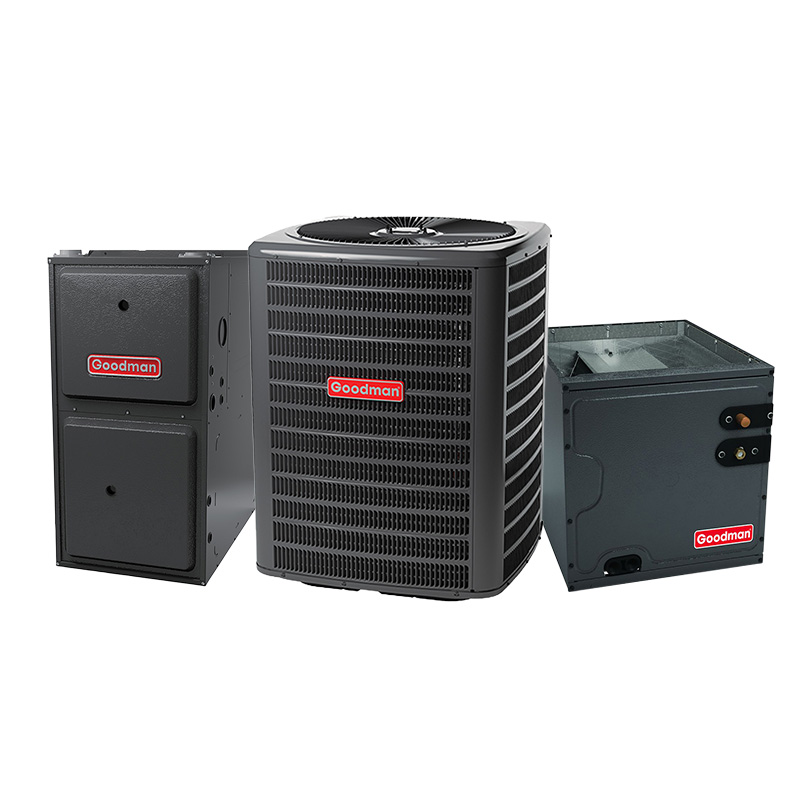
Goodman 2.5 Ton 15 SEER2 Dual Fuel Heat Pump & Gas Furnace Hybrid System – Modulating, Variable-Speed, 80000 BTU Gas Furnace, 97% AFUE, Upflow, R32
View on AC Direct see your lowest price →Check current price on AC Direct →
Key features
- Dual-fuel hybrid design automatically switches between heat pump and 97% AFUE gas furnace based on outdoor temperature and fuel cost efficiency
- Modulating gas furnace stages output across multiple firing levels for steadier indoor temperatures and reduced short-cycling
- Variable-speed ECM blower motor improves dehumidification, airflow distribution, and part-load energy use
- R-32 refrigerant replaces R-410A with a lower global-warming-potential charge that aligns with current and upcoming regulatory direction
- 15 SEER2 cooling efficiency meets or slightly exceeds current federal minimum standards for most U.S. climate regions
- Upflow cabinet orientation designed for basement or ground-floor closet installations with overhead supply ductwork
About this system
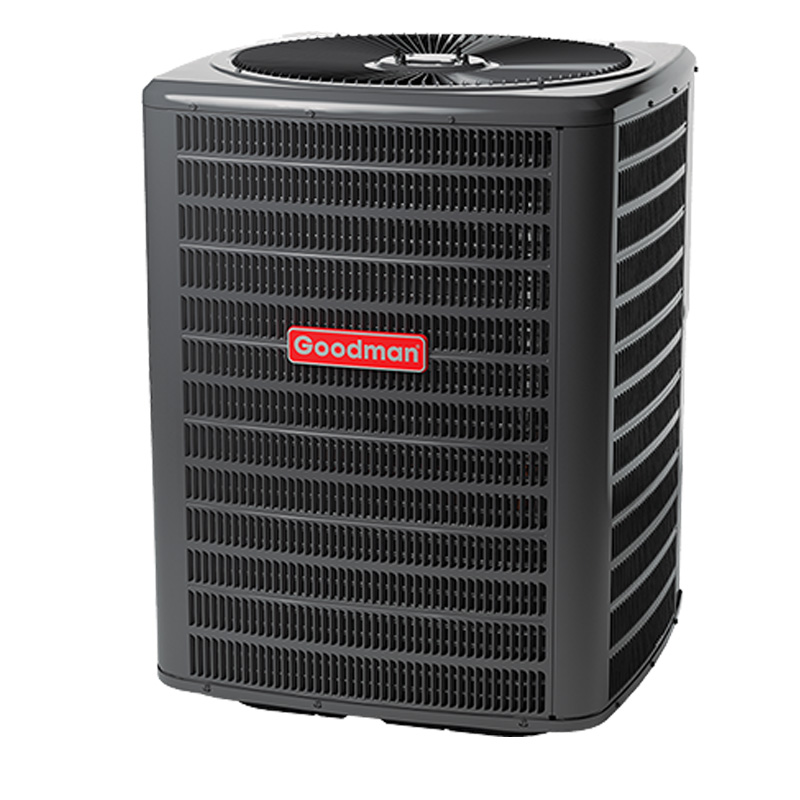
The Goodman GLXS5BA3010D pairs a 2.5-ton, 15 SEER2 heat pump with an 80,000 BTU, 97% AFUE modulating gas furnace to create a hybrid dual-fuel system. In practice, that means the heat pump handles heating when outdoor temperatures are mild and efficient, then the gas furnace takes over automatically once temperatures drop below the crossover point where gas becomes more economical. For homes in climate zones that see genuine winters but not extreme cold, this switching logic can meaningfully reduce both electricity and gas bills compared to running either fuel source alone all season.
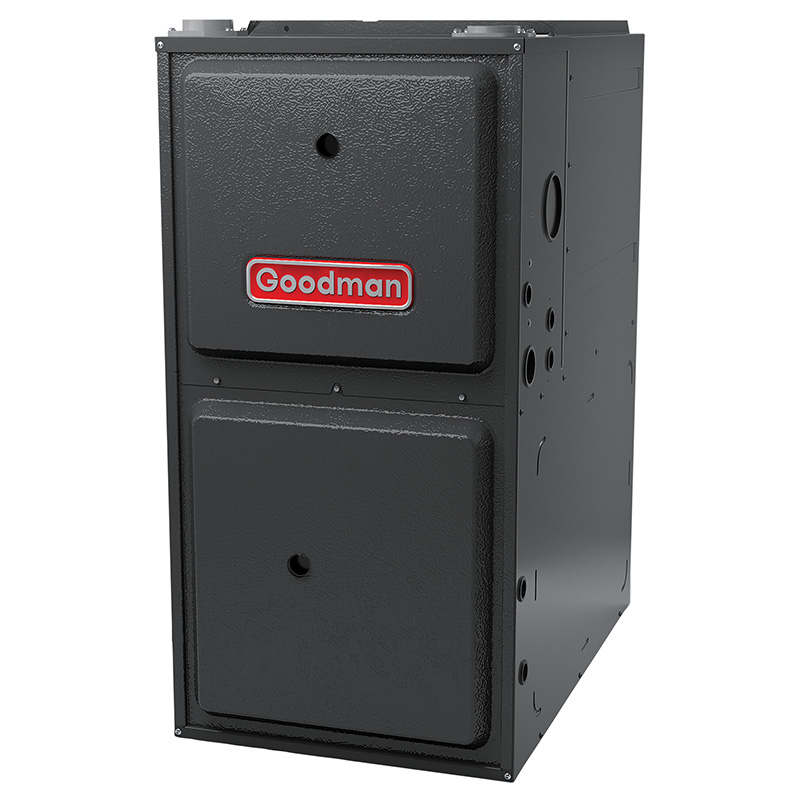
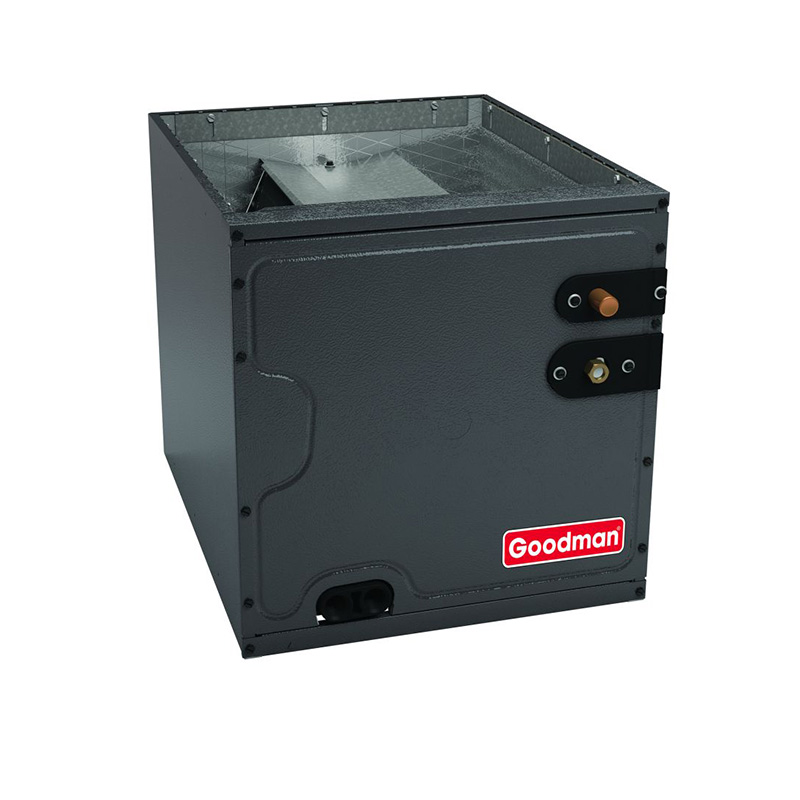
The modulating furnace and variable-speed air handler are the most technically significant specs here. A modulating furnace fires at multiple output levels rather than full blast or nothing, which holds indoor temperatures steadier and reduces the short-cycling that wears components faster. Variable-speed blower motors run at lower speeds for longer periods, improving dehumidification in summer and distributing conditioned air more evenly room to room. The R-32 refrigerant charge is a newer, lower global-warming-potential alternative to R-410A, which matters for long-term service costs as R-410A availability tightens. Upflow configuration means the furnace pulls return air from the bottom and discharges supply air from the top, the standard orientation for a basement or closet installation with ductwork above.
This system fits a 1,200 to 1,800 square foot home reasonably well, assuming moderate insulation and a layout without dramatic room-to-room exposure differences. Buyers choosing this system are typically prioritizing lower upfront cost over the extended component longevity and tighter factory tolerances found in premium brands, a reasonable trade-off if the installation quality is high and the homeowner is comfortable with the documented repair profile that appears after the seven-year mark.
This Goodman hybrid system delivers genuinely capable technology at a price point 15 to 25 percent below comparable Trane, Lennox, and Carrier configurations, and the modulating furnace and variable-speed blower are real comfort upgrades over single-stage equipment. The trade-off is a documented repair frequency that climbs after year seven and compressor longevity that typically runs several years shorter than premium alternatives, so the value calculation depends heavily on installer quality and your tolerance for mid-cycle maintenance costs. For budget-conscious buyers who vet their installer carefully, it is a reasonable choice; for buyers who want to minimize lifetime ownership friction, a premium brand warrants the premium.
Overall score is the average of the five ratings above.
What we like
- Hybrid dual-fuel logic reduces operating costs in climates with real winters by using the lower-cost fuel source based on outdoor conditions
- 97% AFUE modulating furnace is among the most efficient gas heat options available and holds temperatures more evenly than single-stage equipment
- Variable-speed blower measurably improves summer dehumidification and reduces hot and cold spots compared to single-speed systems
- R-32 refrigerant positions the system for better long-term parts availability as R-410A is phased out
- Purchase price typically 15 to 25 percent below equivalent modulating hybrid configurations from Carrier, Trane, or Lennox
Trade-offs
- Compressor lifespan averages 10 to 14 years versus 15 to 20 years for premium brand compressors, raising the realistic replacement timeline
- Dual-run capacitor failures are the most commonly reported repair after several years of use, and evaporator coil leaks appear in a meaningful share of long-term owner accounts
- A minority of owners report refrigerant leaks in year one, most often traced to installation or initial charge quality rather than a factory defect, which puts extra weight on installer selection
- ConsumerAffairs rating sits around 2.5 out of 5, with recurring complaints centered on repair costs climbing in the back half of the equipment's life
What homeowners and pros say about Goodman
Homeowners who post about Goodman equipment online tend to split into two camps, and the divide tracks closely with timing. Those writing in the first five or six years of ownership frequently mention the lower purchase price and note that the system has run without drama, which aligns with Google dealer review scores that average around 3.8 out of 5 and where affordability is the most consistent theme. The picture shifts in longer-term accounts. ConsumerAffairs scores for the brand sit around 2.5 out of 5, a channel where the pattern is clearly weighted toward owners who have experienced something worth complaining about, and the recurring subject is repair costs accumulating in the back half of the system’s life rather than catastrophic early failure.
HVAC technicians who service Goodman equipment regularly tend to describe it as workmanlike rather than exceptional, and most are quick to point out that dual-run capacitor replacement is far and away the most common service call, a repair that typically runs between 300 and 600 dollars and is generally straightforward. Evaporator coil leaks come up as a more consequential documented failure mode, and compressor longevity is widely cited as averaging 10 to 14 years compared to 15 to 20 years for Trane, Carrier, and Lennox compressors. For this specific hybrid system, technicians consistently emphasize that proper installation, correct refrigerant charge, and setting the dual-fuel crossover point accurately are more predictive of long-term performance than the brand name on the cabinet.
Sources: ConsumerAffairs Goodman owner reviews, AHRI Directory of Certified Product Performance, U.S. DOE appliance and equipment efficiency standards, Goodman product specification sheets.
What it costs to run
At 15 SEER2, cooling this 2.5-ton system for a typical 1200-hour cooling season at the U.S. average electricity rate of $0.17/kWh works out to roughly $408 per year in cooling, about $49 less per year than a minimum-efficiency 13.4 SEER2 unit of the same size. Your real cost depends on your climate and local rate.
Method: (30,000 BTU/hr ÷ 15 SEER2) × 1200 hours ÷ 1000 × $0.17/kWh. Rate source: U.S. EIA average; cooling hours: moderate-climate estimate.
How it compares
| Brand | Comparable model | SEER2 | Stage | Price position |
|---|---|---|---|---|
| Goodman | GLXS5BA3010D | 15 | Variable / Modulating | Value pick |
| Carrier | Performance Dual Fuel Series (25HCB / 58CVA pairing) | 15-16 | Two-stage / Variable | Typically 15 to 25 percent more than Goodman |
| Trane | XR15 Heat Pump with S9V2 Gas Furnace | 15 | Two-stage / Variable | Typically 15 to 25 percent more than Goodman |
| Lennox | Merit ML15XP1 Heat Pump with SLP98V Gas Furnace | 15 | Single-stage / Variable | Typically 15 to 25 percent more than Goodman |
Competitor rows are comparable single-stage units at similar efficiency; price is relative position, not a quote.
Questions about this system
At what outdoor temperature does the system switch from the heat pump to the gas furnace?
The crossover setpoint is typically programmed by the installing technician and is usually set somewhere between 35 and 45 degrees Fahrenheit, the range where the gas furnace becomes more economical than running the heat pump. Some thermostats allow the homeowner to adjust this point based on local utility rates, so confirm the crossover logic with your installer before startup.
Is R-32 refrigerant harder to find or more expensive to service than R-410A?
Currently R-32 is widely available through HVAC wholesale distributors and is increasingly common as the industry moves away from R-410A. Certified technicians require specific equipment to handle R-32 because it is mildly flammable under certain conditions, so confirm your service company is R-32 certified before committing to the system.
How concerned should I be about the documented evaporator coil leaks and early refrigerant leaks in Goodman systems?
Evaporator coil leaks are a real pattern in Goodman's owner history and tend to appear after several years of use, while first-year refrigerant leaks are most often installation errors rather than factory defects. Choosing an experienced installer, verifying the system is properly charged at startup, and registering for the extended warranty are the most practical ways to manage this risk.
What warranty comes with this system, and do I need to register it?
Goodman offers a 10-year parts warranty when the system is registered within a specified window after installation, typically 60 days. Without registration, coverage drops to five years on parts. The compressor usually carries its own coverage term within that parts warranty, so read the warranty certificate carefully and register promptly after installation.
Does the upflow configuration work if my furnace closet is on the main floor rather than in a basement?
Yes, upflow systems are common in main-floor utility closets as long as return air can enter from the bottom of the cabinet and supply ducts exit from the top. The key requirement is adequate clearance around the unit for airflow and service access, and the ductwork above must be compatible with the system's static pressure requirements, which your installer can verify during the load calculation.
Specifications
| Cooling capacity | 2.5 Ton |
| Efficiency | 15 SEER2 |
| Furnace output | 80000 BTU |
| Furnace efficiency | 97% AFUE |
| Configuration | Upflow |
| Refrigerant | R-32 |
| Model | GLXS5BA3010D |