Goodman 2.5 Ton Up to 17.2 SEER2 Variable-Speed Inverter AC Side Discharge Condenser, R32 (GXV6SA3010)
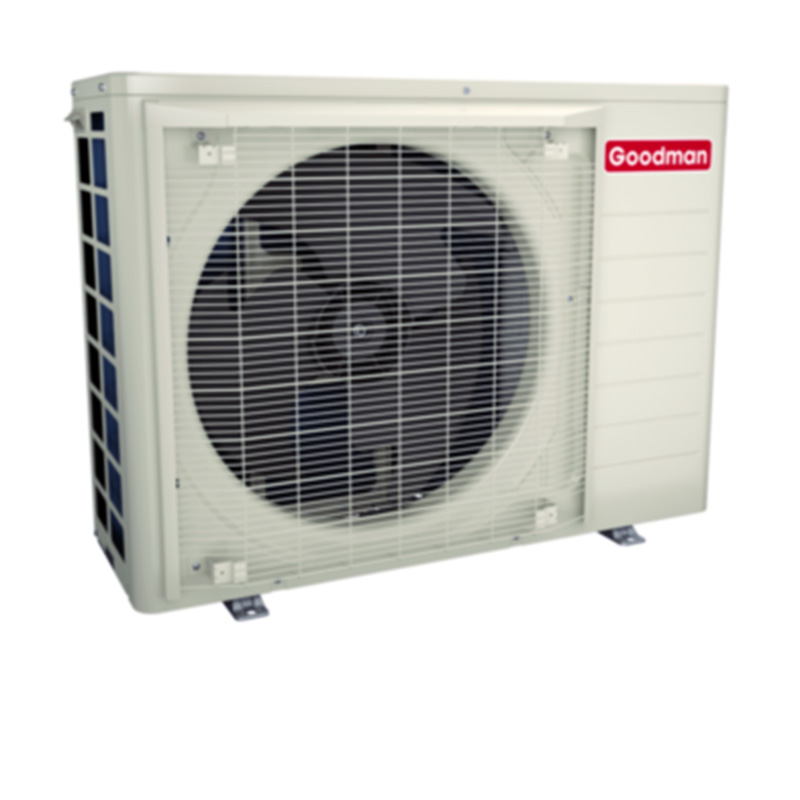
View on AC Direct see your lowest price →Check current price on AC Direct →
Key features
- Variable-speed inverter compressor for precise capacity modulation and improved humidity control
- Up to 17.2 SEER2 efficiency rating, qualifying for federal tax credit eligibility in most zones
- R-32 refrigerant with lower global warming potential than R-410A
- 2.5-ton capacity, suited for approximately 1,200 to 1,800 sq ft depending on load
- Side discharge airflow configuration for installations with limited overhead clearance
- 10-year parts warranty when registered within 60 days of installation
About this system
The Goodman GXV6SA3010 is a 2.5-ton, up to 17.2 SEER2 variable-speed inverter condenser designed for side discharge installations. It runs on R-32 refrigerant, a lower-GWP alternative to R-410A that is increasingly common as the industry moves away from older refrigerants. The variable-speed inverter compressor modulates output continuously rather than cycling on and off, which translates to steadier indoor temperatures, quieter operation at partial load, and better humidity control compared to single-stage or two-stage units. At 17.2 SEER2, this system sits comfortably in the higher mid-tier of efficiency, qualifying it for federal tax credits under current Inflation Reduction Act thresholds in most climate zones.
This condenser is sized for homes in the 1,200 to 1,800 square foot range depending on local climate, insulation quality, and load calculations. It pairs with a compatible Goodman air handler or gas furnace and coil, and the side discharge configuration suits tight equipment yards or installations where overhead clearance is limited. Because it uses R-32, the matched indoor components must also be rated for that refrigerant, so confirm compatibility before purchasing. The GXV6SA3010 is a reasonable fit for budget-conscious homeowners who want variable-speed performance without paying Carrier, Trane, or Lennox prices, provided installation is handled by an experienced contractor.
The GXV6SA3010 delivers variable-speed inverter technology and legitimate 17.2 SEER2 efficiency at a price point well below comparable Carrier, Trane, and Lennox systems. The trade-off is a brand with a documented mixed long-term reliability record and performance that is heavily dependent on installer quality. For buyers who prioritize upfront value and can vet a skilled contractor, it is a credible choice; for those who want premium long-term durability with minimal service calls, the premium brands earn their price premium.
Overall score is the average of the five ratings above.
What we like
- Variable-speed inverter compressor provides better comfort and humidity control than single-stage alternatives
- 17.2 SEER2 rating qualifies for IRA federal tax credits, reducing effective purchase cost
- R-32 refrigerant is more environmentally friendly and easier to service in one-component top-off scenarios
- Typically priced 15 to 25 percent below comparable Carrier, Trane, and Lennox variable-speed units
- 10-year registered parts warranty is competitive and matches what premium brands offer at a higher price
Trade-offs
- Dual-run capacitors are the most frequently reported failure point, typically requiring a 300 to 600 dollar service call
- Evaporator coil leaks appear in a meaningful share of long-term owner reports, a recurring Goodman concern
- Compressor lifespan averages 10 to 14 years versus 15 to 20 years for premium brands under similar conditions
- A minority of first-year owners report refrigerant leaks, most traceable to install or initial charge issues rather than the unit itself
What homeowners and pros say about Goodman
Homeowners who have installed Goodman systems tend to split along a clear fault line: those who had an experienced contractor oversee the job report years of solid, quiet performance and appreciate the lower upfront cost; those who ran into problems often trace issues back to the install itself rather than the hardware. On Google dealer review pages, Goodman units aggregate around 3.8 out of 5, with affordability as the most consistent praise. ConsumerAffairs scores are lower, sitting around 2.5 out of 5, though that channel disproportionately captures owners who sought out a review site to report a problem, making it a complaint-skewed sample rather than a representative one. The recurring theme there is repair costs that become noticeable after roughly year seven.
Among HVAC technicians, Goodman has a familiar reputation: the parts are widely stocked and the failures are predictable. Dual-run capacitor replacements are described as the bread-and-butter Goodman call, a straightforward fix in the 300 to 600 dollar range that does not necessarily signal deeper trouble. Evaporator coil leaks are a more serious documented concern that shows up in a meaningful share of long-term owner accounts. Compressor longevity is the other honest caveat: Goodman compressors average 10 to 14 years of service life in real-world reports, which falls short of the 15 to 20 years technicians associate with Carrier, Trane, and Lennox at similar usage levels. For the GXV6SA3010 specifically, the variable-speed inverter compressor introduces complexity relative to single-stage units, so vetting the installing contractor’s inverter experience is not optional.
Sources: ConsumerAffairs Goodman owner reviews, AHRI Directory of Certified Product Performance, U.S. DOE appliance and equipment efficiency standards, Goodman product specification sheets.
What it costs to run
At 17.2 SEER2, cooling this 2.5-ton system for a typical 1200-hour cooling season at the U.S. average electricity rate of $0.17/kWh works out to roughly $356 per year in cooling, about $101 less per year than a minimum-efficiency 13.4 SEER2 unit of the same size. Your real cost depends on your climate and local rate.
Method: (30,000 BTU/hr ÷ 17.2 SEER2) × 1200 hours ÷ 1000 × $0.17/kWh. Rate source: U.S. EIA average; cooling hours: moderate-climate estimate.
How it compares
| Brand | Comparable model | SEER2 | Stage | Price position |
|---|---|---|---|---|
| Goodman | GXV6SA3010 | 17.2 | Variable-speed inverter | Value pick |
| Carrier | Infinity 26 (24VNA6) | 17.0–20.0+ | Variable-speed inverter | Significantly higher than Goodman |
| Trane | XV18 (4TWV8) | 17.0–18.0+ | Variable-speed inverter | Significantly higher than Goodman |
| Lennox | XC21 | 17.0–18.0+ | Variable-speed inverter | Significantly higher than Goodman |
Competitor rows are comparable single-stage units at similar efficiency; price is relative position, not a quote.
Questions about this system
Does the GXV6SA3010 qualify for the federal tax credit under the Inflation Reduction Act?
Yes. At 17.2 SEER2 with a variable-speed compressor, it meets the efficiency thresholds required for the Section 25C federal tax credit in most U.S. climate zones. You should confirm current IRS guidance and consult a tax professional, as eligibility also depends on the matched indoor equipment and your specific climate zone requirements.
What indoor equipment is compatible with this R-32 condenser?
The GXV6SA3010 requires an R-32-rated air handler or coil. Not all existing Goodman or other brand air handlers are rated for R-32, so you cannot simply drop this unit onto an R-410A indoor coil. Verify the matched system configuration with your dealer before purchasing, and plan for a full matched system replacement if your current indoor equipment is not R-32 compatible.
How important is installer quality with this unit, and why does it matter more for Goodman?
Technicians and independent reviews consistently identify installation quality as the single largest factor in how long any Goodman system lasts. Because Goodman prices leave less margin in the channel, some contractors use lower-cost labor on installs, which can contribute to early refrigerant leaks, improper charge, and reduced efficiency. Choosing a contractor with documented variable-speed inverter experience and verifiable reviews is worth more with Goodman than with premium brands that tolerate modest install variability better.
What is the most common repair this unit is likely to need, and what does it cost?
Dual-run capacitor failure is the most frequently reported service issue across Goodman systems. It is also one of the more affordable repairs, typically running 300 to 600 dollars including parts and labor. Evaporator coil leaks are a more serious documented concern and can cost significantly more to address, which is one reason keeping the unit within its registered warranty period matters.
Why does this unit use R-32 instead of R-410A, and does that affect maintenance?
R-32 has a lower global warming potential than R-410A and requires less refrigerant by weight to achieve the same capacity, which is why manufacturers are transitioning to it ahead of regulatory phase-downs. From a homeowner standpoint, R-32 is a single-component refrigerant rather than a blend, so if a minor leak occurs, it can be topped off without a full reclaim and recharge in some situations. However, your service technician must be certified to handle R-32, and not all technicians carry it yet, so confirm availability in your area.
Specifications
| Cooling capacity | 2.5 Ton |
| Efficiency | 17.2 SEER2 |
| Refrigerant | R-32 |
| Model | GXV6SA3010 |