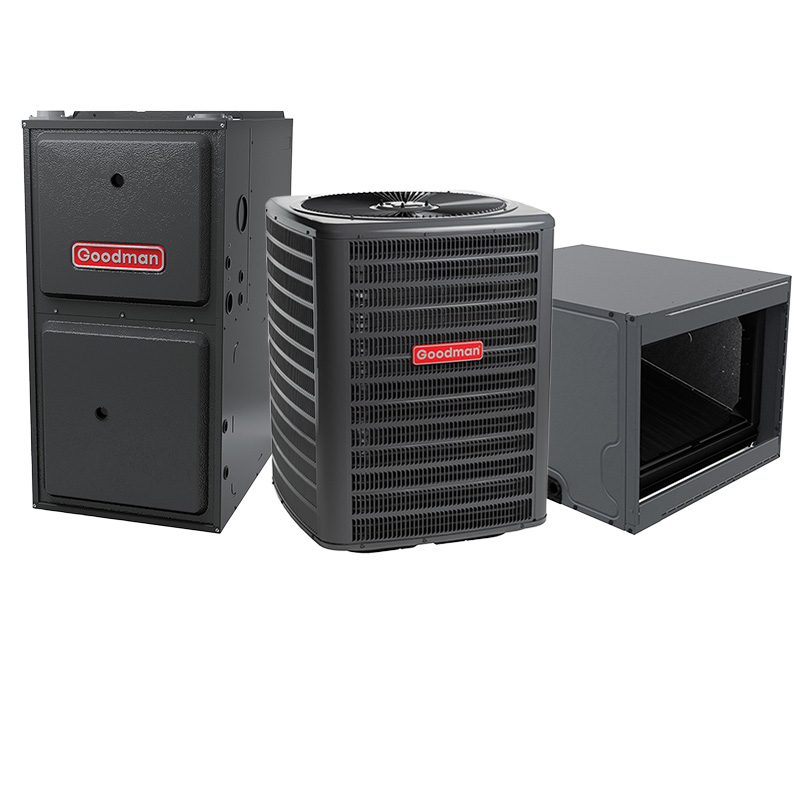
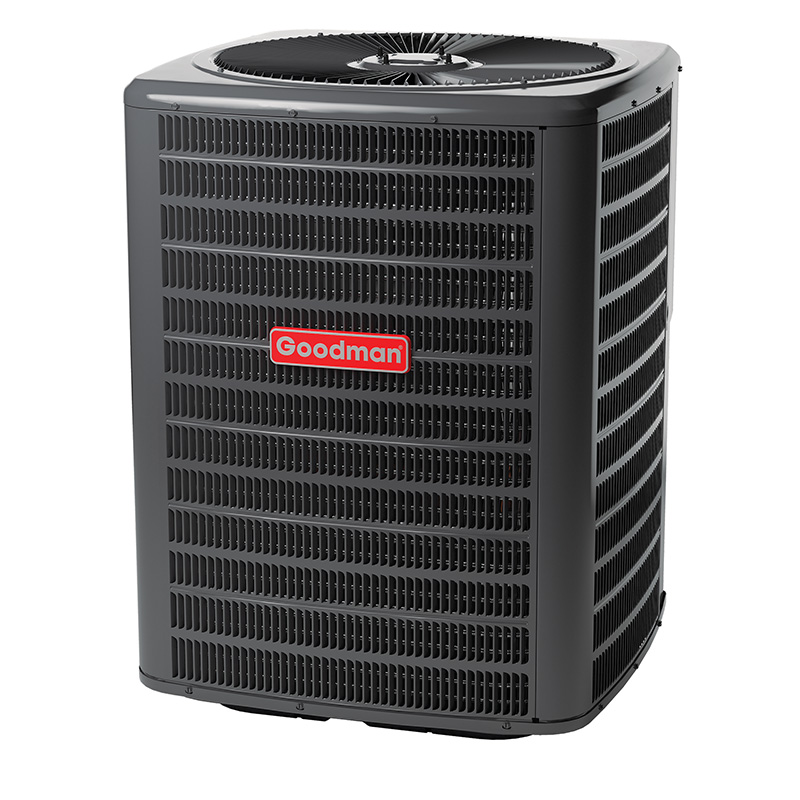
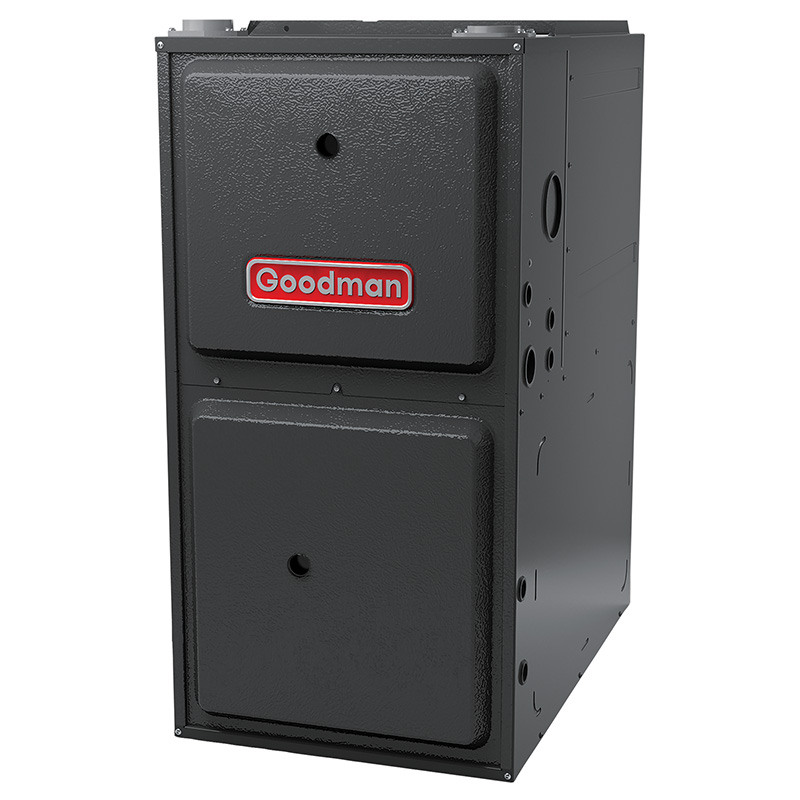
Goodman 2.5 Ton 16 SEER2 R32 AC System with 60,000 BTU 96% AFUE Gas Furnace – California & Colorado Ultra Low NOx, Horizontal, Multi-Speed ECM
View on AC Direct see your lowest price →Check current price on AC Direct →
Key features
- 16 SEER2 cooling efficiency, above federal minimums for northern climate zones
- 96% AFUE gas furnace, converts 96 cents of every fuel dollar into heat
- R-32 refrigerant, compliant with California and Colorado Ultra Low NOx regulations
- Horizontal configuration for attics, crawl spaces, and tight-clearance installations
- Multi-speed ECM blower motor reduces fan electricity use and improves airflow consistency
- 2.5-ton / 60,000 BTU sizing targets homes roughly 1,200 to 1,800 square feet depending on climate and insulation
About this system
The Goodman 2.5 Ton 16 SEER2 R-32 system paired with a 60,000 BTU 96% AFUE gas furnace is built for homes in the 1,200 to 1,800 square foot range that need both summer cooling and efficient gas heat from a single matched setup. The 16 SEER2 rating clears the federal minimum for most northern climate zones and sits a solid step above entry-level efficiency, meaning lower monthly cooling bills without the sticker shock of a premium variable-speed system. The 96% AFUE furnace converts nearly all the gas it burns into usable heat, which matters in Colorado winters and keeps annual fuel costs competitive.
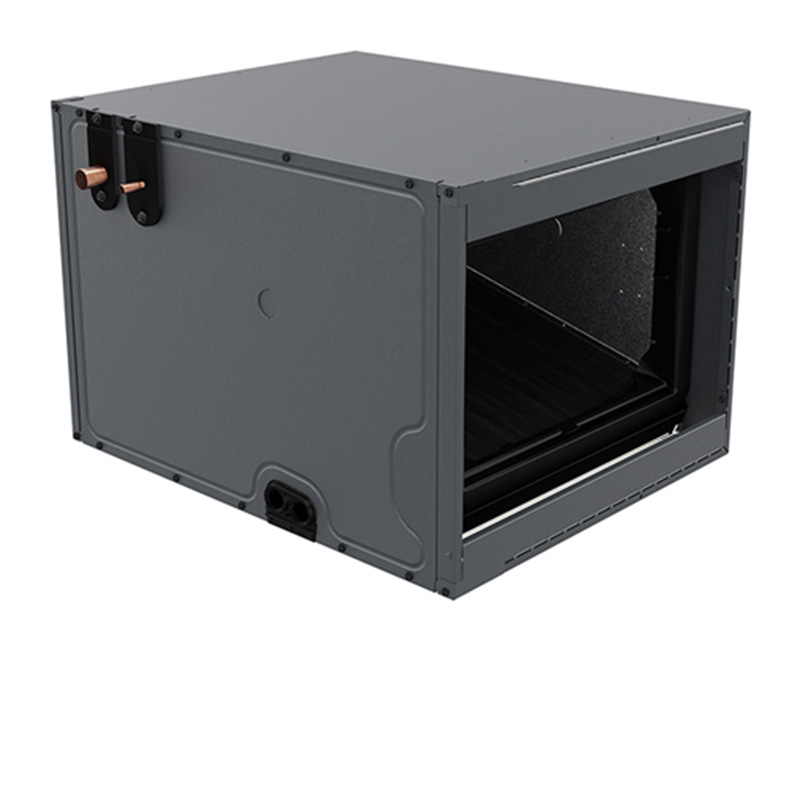
Two details set this configuration apart from a standard split system purchase. First, it is built around R-32 refrigerant, a lower global-warming-potential alternative to R-410A that is now required in California and increasingly favored in Colorado under air quality rules. If you are in either state, this is not optional equipment, it is the compliant path forward. Second, the horizontal orientation means the air handler sits on its side, typically in a crawl space, attic, or closet where vertical clearance is limited. That configuration narrows the installer pool slightly, since horizontal setups require careful condensate management and precise leveling. The multi-speed ECM blower motor adds comfort by ramping fan speed to match load rather than running full blast constantly, which also reduces electricity draw at the air handler.
This Goodman package delivers genuine mid-tier efficiency at a price point that undercuts comparable Carrier, Trane, and Lennox systems by 15 to 25 percent, making it a reasonable fit for budget-conscious buyers who accept that long-term performance leans heavily on installation quality and a willingness to budget for potential component repairs after year seven. The R-32 compliance and horizontal form factor solve real regulatory and spatial problems, but they are not differentiators that improve reliability. Buyers who prioritize the lowest total cost of ownership over a 15-plus-year horizon should price out premium alternatives before committing.
Overall score is the average of the five ratings above.
What we like
- Purchase price typically 15 to 25 percent below Trane, Lennox, and Carrier equivalents at similar efficiency
- 96% AFUE furnace is a genuinely high-efficiency rating that reduces annual gas bills meaningfully versus 80% AFUE units
- R-32 refrigerant is already required in California and increasingly mandated in Colorado, so this system avoids future compliance headaches
- Multi-speed ECM blower improves comfort and lowers fan electricity consumption compared to single-speed PSC motors
- Horizontal orientation solves a real installation constraint for homes without a dedicated vertical mechanical room
Trade-offs
- Dual-run capacitors are the most frequently reported failure point and while repairs typically run $300 to $600, they add up over time
- Evaporator coil leaks appear in a meaningful share of owner reviews, a concern with any R-32 system given the refrigerant's higher pressure
- Compressor lifespan averages 10 to 14 years based on documented patterns, shorter than the 15 to 20 years commonly seen with premium brands
- Horizontal installs add complexity around condensate drainage and leveling, and a poor setup is the leading cause of shortened unit life across all Goodman equipment
What homeowners and pros say about Goodman
Homeowners who look up Goodman online will find a split picture. On ConsumerAffairs, the brand scores around 2.5 out of 5, a channel that skews heavily toward frustrated owners and where the recurring complaint is repair costs that start climbing after roughly year seven. Google dealer reviews tell a more balanced story at around 3.8 out of 5, where affordability is the praise most often mentioned and negative feedback tends to focus on service experiences rather than the equipment itself. The gap between those two numbers reflects something real: buyers who had a smooth install and caught problems early are generally satisfied, while those who got a rushed setup or ran into compressor or coil issues later are far less forgiving.
HVAC technicians who work on Goodman equipment frequently echo the same point: the brand performs well when it is installed correctly and maintained, and underperforms when it is not. The documented failure modes that show up in service calls are consistent enough to plan around. Dual-run capacitors are the most common callout, a relatively quick repair in the $300 to $600 range, but one that some owners face more than once. Evaporator coil leaks appear in a meaningful share of reviews, and compressor lifespan tracking puts Goodman in the 10 to 14 year range on average, noticeably shorter than the 15 to 20 years associated with premium brands. For this specific horizontal R-32 system, pros add one more note: the installation is less forgiving than a standard upflow setup, and getting the condensate drainage right from day one is not optional.
Sources: ConsumerAffairs Goodman owner reviews, AHRI Directory of Certified Product Performance, U.S. DOE appliance and equipment efficiency standards, Goodman product specification sheets.
What it costs to run
At 16 SEER2, cooling this 2.5-ton system for a typical 1200-hour cooling season at the U.S. average electricity rate of $0.17/kWh works out to roughly $382 per year in cooling, about $75 less per year than a minimum-efficiency 13.4 SEER2 unit of the same size. Your real cost depends on your climate and local rate.
Method: (30,000 BTU/hr ÷ 16 SEER2) × 1200 hours ÷ 1000 × $0.17/kWh. Rate source: U.S. EIA average; cooling hours: moderate-climate estimate.
How it compares
| Brand | Comparable model | SEER2 | Stage | Price position |
|---|---|---|---|---|
| Goodman | 2.5 Ton 16 SEER2 R-32 AC + 60K BTU 96% AFUE Horizontal Multi-Speed ECM | 16 | Multi-speed | Value pick |
| Carrier | Comfort 24ACC636 / 58TP (96% AFUE) series | 16 | Single-stage | Typically 15 to 25 percent more than this Goodman package |
| Trane | XR16 / S9X2 (96% AFUE) series | 16 | Single-stage | Typically 15 to 25 percent more than this Goodman package |
| Lennox | Merit ML16XC1 / SL280 (96% AFUE) series | 16 | Single-stage | Typically 15 to 25 percent more than this Goodman package |
Competitor rows are comparable single-stage units at similar efficiency; price is relative position, not a quote.
Questions about this system
Is R-32 refrigerant actually required in California, or can I still get an R-410A system?
California's Air Resources Board regulations have been phasing out higher-GWP refrigerants including R-410A for new residential equipment. R-32 or other lower-GWP alternatives are required for new installations under current California rules, so this system is the compliant choice rather than a premium upgrade. Verify the exact effective date and equipment category with your installer, as enforcement timelines can vary.
What goes wrong most often with Goodman systems and what does it cost to fix?
Dual-run capacitors are the most commonly reported failure, and they are relatively inexpensive to address, typically in the $300 to $600 range for parts and labor. Evaporator coil leaks are documented in a notable share of owner reviews and are more costly and disruptive to repair. Compressors on Goodman units tend to average 10 to 14 years before failure, compared to 15 to 20 years for premium brands, so budgeting for a potential compressor replacement in that window is realistic.
My house has a horizontal furnace position in the attic. Are there any special concerns with this setup?
Horizontal installations require careful attention to condensate drainage, since the drain pan and trap must be correctly sloped and sealed to prevent water damage and mold growth. The unit also needs to be precisely leveled. These are not exotic tasks, but they require an installer with horizontal experience, and a rushed or careless setup is the most common cause of shortened equipment life across all Goodman products.
Does the 2.5-ton size make sense for my home, and how do I know it is not oversized or undersized?
A 2.5-ton system is commonly used for homes in the 1,200 to 1,800 square foot range, but the right size depends on your climate zone, insulation levels, window area, ceiling height, and orientation. Oversizing causes short cycling that increases humidity and wear; undersizing means the system runs constantly without reaching setpoint. Ask your contractor to perform a Manual J load calculation before purchasing, and do not accept a sizing recommendation based on square footage alone.
How does the 96% AFUE furnace affect my gas bill compared to an 80% AFUE unit?
A 96% AFUE furnace converts 96 cents of every gas dollar into heat versus 80 cents for an 80% AFUE unit, meaning roughly 16 percent less gas consumed for the same heat output. In a Colorado climate where the furnace runs hard for five or more months a year, that difference adds up across a heating season. The exact dollar savings depend on your local gas rates and how cold your winters run.
Specifications
| Cooling capacity | 2.5 Ton |
| Efficiency | 16 SEER2 |
| Furnace output | 60,000 BTU |
| Furnace efficiency | 96% AFUE |
| Configuration | Horizontal |
| Refrigerant | R-32 |