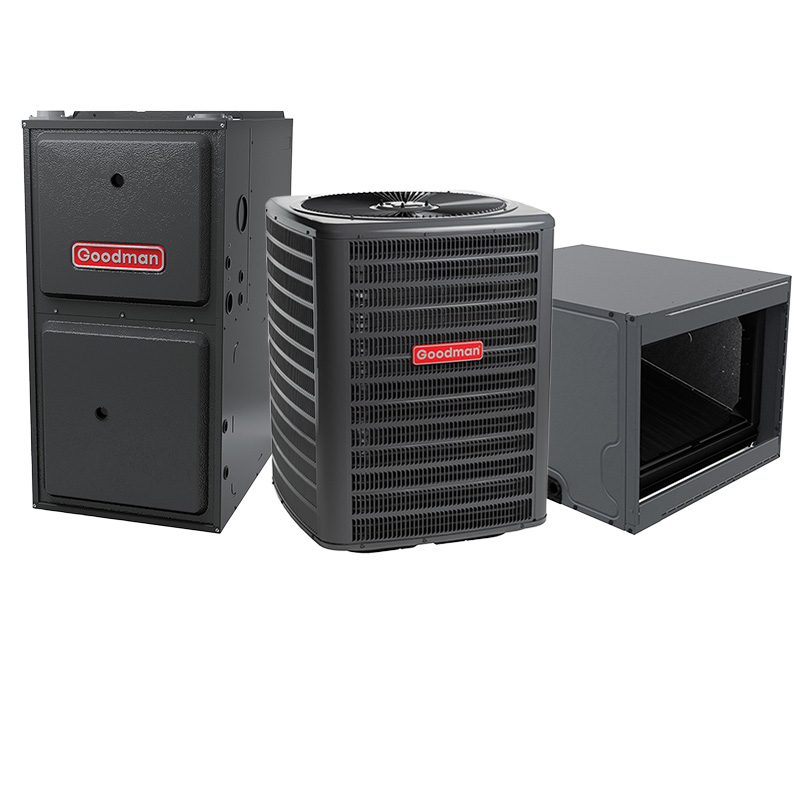
Goodman 2.5 Ton 16 SEER2 R32 AC System with 80,000 BTU 96% AFUE Gas Furnace – California & Colorado Ultra Low NOx, Horizontal, Multi-Speed ECM
View on AC Direct see your lowest price →Check current price on AC Direct →
Key features
- 16 SEER2 efficiency rating, above federal minimums and eligible for IRA tax credit consideration
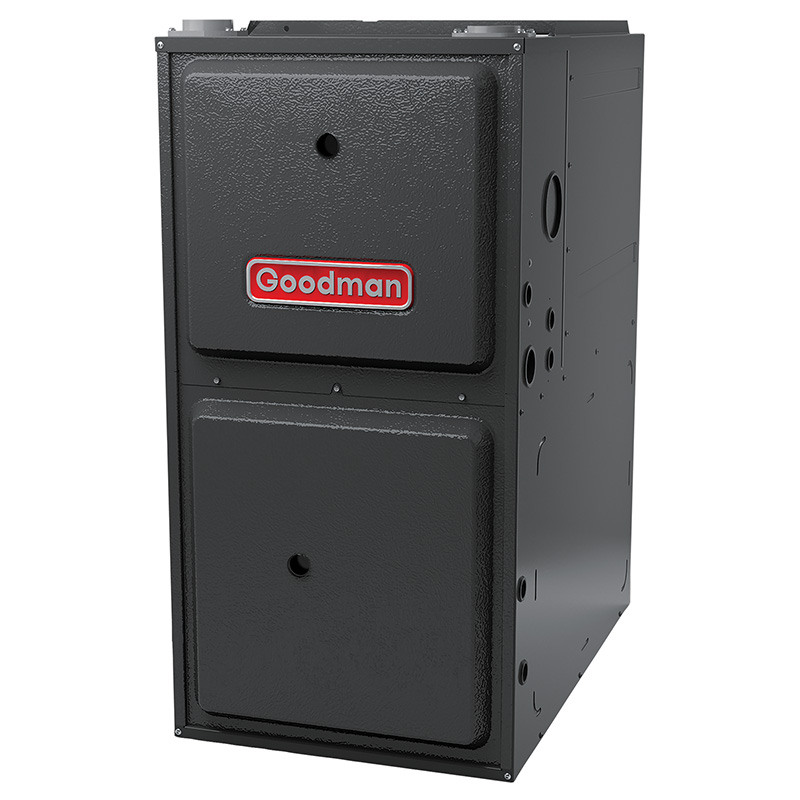
- 96% AFUE gas furnace meets California and Colorado Ultra Low NOx emissions requirements
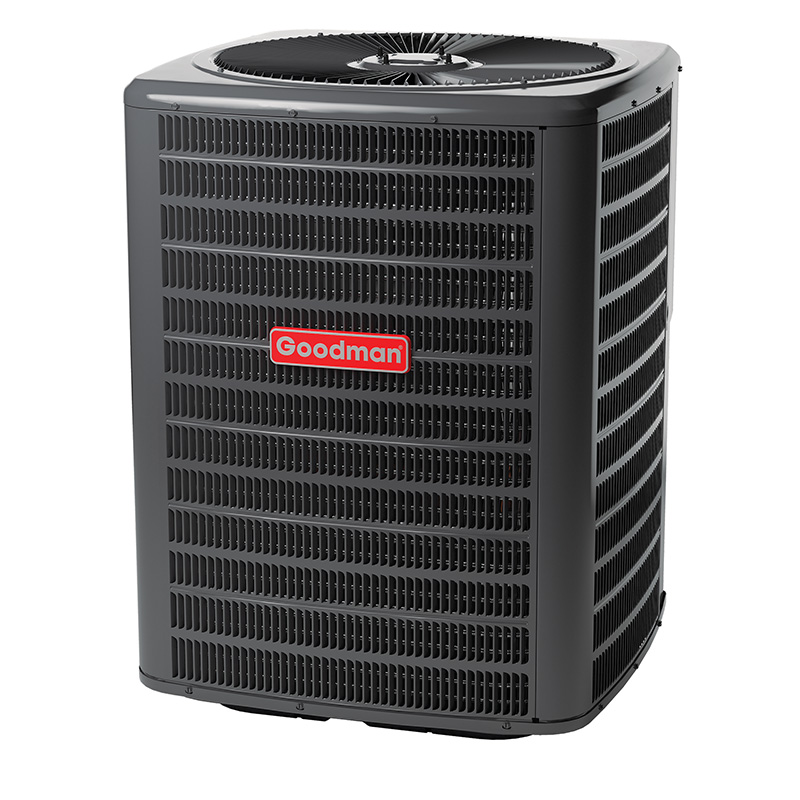
- R-32 refrigerant with lower global warming potential than R-410A, single-component for simpler service
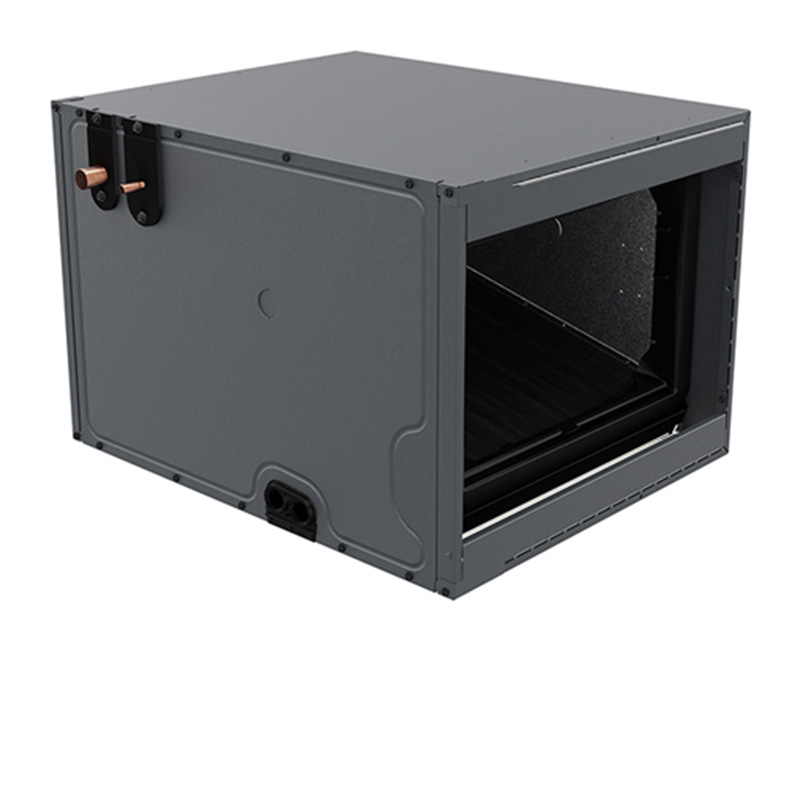
- Horizontal configuration designed for attic or crawl space installations
- Multi-speed ECM blower motor for quieter operation, better humidity control, and lower fan electricity use
- 80,000 BTU heating capacity suited to moderate to larger square footage in the target climate zones
About this system
The Goodman 2.5 Ton 16 SEER2 R-32 AC and 96% AFUE gas furnace bundle is built for homeowners in California and Colorado who need to meet strict Ultra Low NOx emissions standards without moving to all-electric. The horizontal configuration makes this pairing well suited to attic or crawl space installations where a vertical unit simply will not fit. At 2.5 tons, it is sized for conditioned spaces roughly in the 1,200 to 1,600 square foot range, though actual sizing should always be confirmed with a Manual J load calculation before purchase.
The 16 SEER2 rating sits comfortably above the federal minimum efficiency threshold and qualifies for federal tax credits under the Inflation Reduction Act, though buyers should verify current credit amounts with a tax professional. R-32 refrigerant has a significantly lower global warming potential than the R-410A it replaces, and its single-component makeup simplifies recovery and recharge work for certified technicians. The 96% AFUE furnace means 96 cents of every dollar in gas goes toward heat, which is a meaningful operating cost advantage over 80% AFUE units in colder climates. The multi-speed ECM blower motor improves humidity management and reduces operating noise compared to single-speed PSC motors, and it draws less electricity during the long run times that characterize mild weather.
This system is a value-tier offering. Goodman prices its equipment 15 to 25 percent below comparable Trane, Lennox, and Carrier units, and the trade-off is a shorter average compressor lifespan and a more complaint-prone ownership record past year seven. For budget-conscious buyers who are replacing aging equipment, plan to stay in their home for ten years or fewer, or are landlords managing cost per installation, this bundle can make genuine financial sense. Buyers intending a forever-home setup and willing to pay for long-term durability may want to compare premium alternatives before committing.
This Goodman bundle delivers a competitive efficiency package and regulatory compliance at a price well below premium brands, making it a pragmatic choice for cost-focused buyers. The trade-off is a documented history of component failures past year seven and compressor longevity that lags Trane, Carrier, and Lennox by several years on average. Install quality has an outsized effect on how this system performs long-term, so choosing a skilled, licensed contractor is not optional.
Overall score is the average of the five ratings above.
What we like
- Price point 15 to 25 percent below comparable Carrier, Trane, and Lennox systems lowers the upfront barrier significantly
- 96% AFUE furnace cuts gas waste to 4 cents per dollar, a real operating cost advantage in cold winters
- Meets California and Colorado Ultra Low NOx standards without requiring a full switch to electric heating
- R-32 refrigerant is more environmentally responsible and easier to service than the R-410A it replaces
- Multi-speed ECM blower improves comfort and lowers fan operating costs compared to single-speed alternatives
Trade-offs
- Dual-run capacitors are the most frequently reported failure point and tend to surface within the first several years of ownership
- Evaporator coil leaks appear in a notable share of owner reviews, an issue that can be costly to diagnose and repair
- Compressor lifespan averages 10 to 14 years versus 15 to 20 for premium brands, a meaningful gap for long-term owners
- A minority of owners report refrigerant leaks within year one, typically tied to install or initial charge quality rather than the equipment itself
What homeowners and pros say about Goodman
Homeowners who have owned Goodman equipment tend to polarize quickly. Those who land a solid install with a skilled contractor often report years of uneventful service and cite the lower purchase price as a clear win. On ConsumerAffairs, where Goodman scores around 2.5 out of 5, the recurring pattern is not immediate failure but rather repair bills that start accumulating after roughly year seven, with capacitor replacements and evaporator coil leaks cited most often. Google dealer reviews, which skew toward recent installation experiences, land around 3.8 out of 5, and affordability is the most frequently mentioned reason for satisfaction. The gap between those two scores tells most of the story: the system often starts fine and gets harder to own as it ages.
HVAC professionals generally view Goodman as a workable product whose longevity is closely tied to installation quality and maintenance discipline. Technicians consistently point out that dual-run capacitors are the first component to watch and that evaporator coil leaks, while not universal, are disproportionately common compared to premium brands. The compressor lifespan averaging 10 to 14 years versus 15 to 20 for top-tier competitors is a real consideration for long-term homeowners. Pros who install Goodman regularly tend to recommend it to rental property owners and replacement buyers on tight budgets while steering long-term homeowners toward brands with stronger durability track records. For this specific horizontal R-32 system, the installer’s familiarity with both the configuration and the refrigerant type matters more than it would with a simpler package.
Sources: ConsumerAffairs Goodman owner reviews, AHRI Directory of Certified Product Performance, U.S. DOE appliance and equipment efficiency standards, Goodman product specification sheets.
What it costs to run
At 16 SEER2, cooling this 2.5-ton system for a typical 1200-hour cooling season at the U.S. average electricity rate of $0.17/kWh works out to roughly $382 per year in cooling, about $75 less per year than a minimum-efficiency 13.4 SEER2 unit of the same size. Your real cost depends on your climate and local rate.
Method: (30,000 BTU/hr ÷ 16 SEER2) × 1200 hours ÷ 1000 × $0.17/kWh. Rate source: U.S. EIA average; cooling hours: moderate-climate estimate.
How it compares
| Brand | Comparable model | SEER2 | Stage | Price position |
|---|---|---|---|---|
| Goodman | 2.5 Ton 16 SEER2 R-32 AC + 80K BTU 96% AFUE Furnace (this system) | 16 | Multi-speed | Value pick |
| Carrier | Comfort Series (24ACC6) + 96% AFUE 58TP Gas Furnace | 16 | Single-stage | Typically 15 to 25 percent more than this Goodman bundle |
| Trane | XR16 (4TTR6) + S9X2 96% AFUE Gas Furnace | 16 | Single-stage | Typically 15 to 25 percent more than this Goodman bundle |
| Lennox | Merit Series (ML16XC1) + ML296V 96% AFUE Gas Furnace | 16 | Single-stage | Typically 15 to 25 percent more than this Goodman bundle |
Competitor rows are comparable single-stage units at similar efficiency; price is relative position, not a quote.
Questions about this system
Does this system actually qualify for the federal IRA tax credit, and how much can I expect?
The 16 SEER2 rating and 96% AFUE furnace each meet the efficiency thresholds set by the IRA for the 25C tax credit, but the credit amount depends on your individual tax situation and whether both components are installed together as a qualifying system. Consult a tax professional and verify current IRS guidance before assuming a specific dollar amount.
Why is horizontal configuration important, and can this system be installed vertically instead?
Horizontal configuration means the air handler is designed to lie on its side, which is necessary for attic and some crawl space installs where vertical clearance is limited. Using a horizontally configured unit in a vertical application is not appropriate and will affect drainage and performance, so verify your installation orientation matches the unit's design before ordering.
R-32 is new to me. Is it harder to find a technician who can service it, and is it safe?
R-32 is mildly flammable and classified A2L, which requires technicians to have specific training and equipment. It is increasingly common in newer systems, and most established HVAC contractors in California and Colorado are already equipped to handle it, but it is worth confirming with your installer before booking service.
What is the realistic lifespan of this Goodman system, and what components should I budget to replace?
The compressor, which is the most expensive component, averages 10 to 14 years in Goodman equipment versus 15 to 20 years in premium brands. Dual-run capacitors are the most commonly replaced part and typically cost 300 to 600 dollars to repair. Budgeting for a capacitor replacement within the first decade is a reasonable expectation based on documented owner experience.
The 80,000 BTU furnace seems large for a 2.5 ton AC. Will this cause short cycling or comfort problems?
Furnace and cooling sizing are determined separately because they handle different loads, and an 80,000 BTU furnace paired with 2.5 tons of cooling is a common combination in moderate to larger homes or homes with high heat loss. That said, oversizing either component can cause short cycling and comfort issues, which is why a Manual J load calculation by your contractor is critical before installation.
Specifications
| Cooling capacity | 2.5 Ton |
| Efficiency | 16 SEER2 |
| Furnace output | 80,000 BTU |
| Furnace efficiency | 96% AFUE |
| Configuration | Horizontal |
| Refrigerant | R-32 |