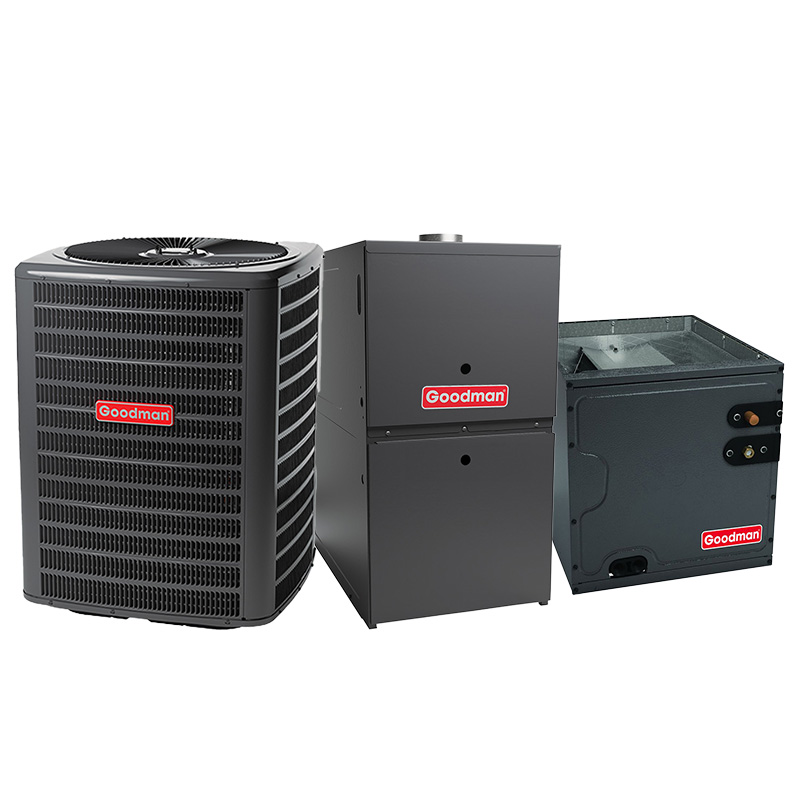
Goodman 2.5 Ton 16 SEER2 AC & Gas Furnace System – Two Stage Variable-Speed, 60000 BTU Gas Furnace, 80% AFUE, Upflow, R32
View on AC Direct see your lowest price →Check current price on AC Direct →
Key features
- Two-stage cooling compressor for better humidity control and quieter part-load operation
- Variable-speed ECM blower motor improves airflow consistency and lowers electricity use during fan-only cycles
- 16 SEER2 cooling efficiency exceeds current federal minimums for most U.S. regions
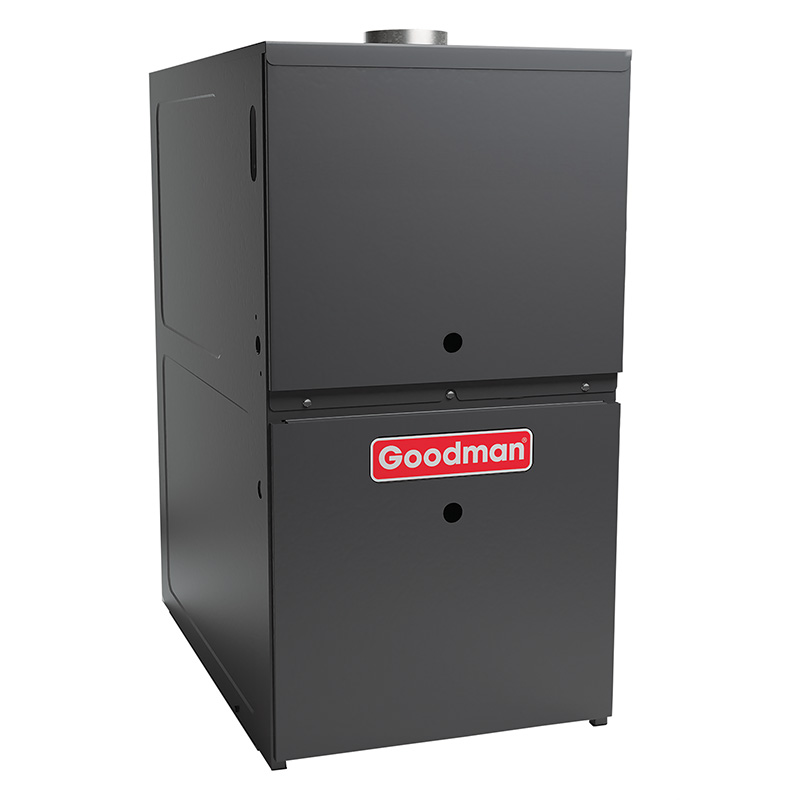
- 80% AFUE gas furnace rated at 60,000 BTU/hr output, upflow configuration
- R-32 refrigerant with lower global warming potential than R-410A
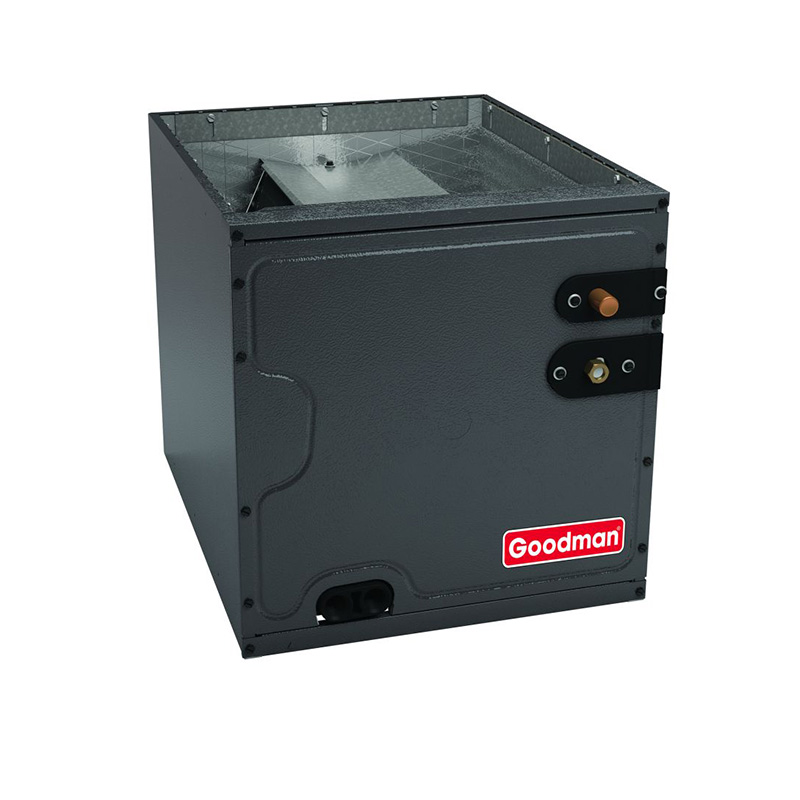
- Factory-matched system designed for simplified coil compatibility and AHJ compliance
About this system
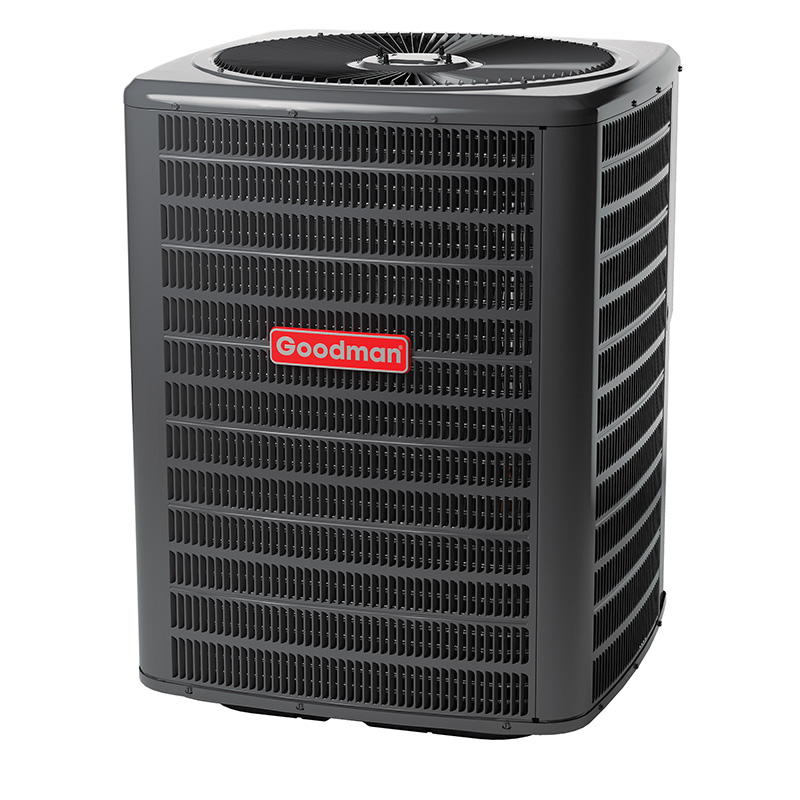
The Goodman 2.5-ton 16 SEER2 two-stage air conditioner paired with a 60,000 BTU, 80% AFUE variable-speed gas furnace is a mid-efficiency combo system aimed at homeowners who want meaningfully better comfort than entry-level single-stage equipment without paying premium-brand prices. The two-stage cooling compressor runs at a lower capacity on mild days, which reduces short-cycling, holds humidity better, and keeps sound levels down compared to single-stage systems. The variable-speed furnace blower adds to that comfort story by ramping airflow up and down gradually rather than blasting on at full speed every cycle.
At 16 SEER2 the cooling efficiency sits comfortably above the federal minimums now in effect across most U.S. climate zones, though it falls short of the high-efficiency 18-plus SEER2 territory where energy savings start to compound meaningfully over time. The 80% AFUE furnace converts eight of every ten units of gas into usable heat, which is adequate for mild-to-moderate heating climates but leaves roughly 20% of fuel cost on the table compared to 96% AFUE condensing alternatives. R-32 refrigerant has a lower global warming potential than R-410A and is increasingly common in new residential equipment. The upflow configuration routes conditioned air upward through floor-level supply ducts, making this system a natural fit for basement or closet installations in single-story and multi-story homes with conventional duct layouts.
This system suits buyers in moderate climates who need reliable two-stage comfort on a budget, are comfortable with the Goodman value proposition, and plan to work with an experienced installer. It is less suited to extreme-cold regions where a higher-AFUE condensing furnace would recover its cost premium quickly, or to buyers who prioritize the longest possible equipment lifespan above all else.
This Goodman combo delivers genuine two-stage comfort and above-minimum efficiency at a price point that undercuts comparable Carrier, Trane, and Lennox systems by roughly 15 to 25 percent. The trade-off is a brand track record that shows real weak points around dual-run capacitors, evaporator coil longevity, and compressor lifespan that tends to run shorter than premium alternatives. For budget-conscious buyers who vet their installer carefully, it represents solid value; for buyers who prioritize minimal long-term maintenance risk, the price gap versus premium brands narrows in the long run.
Overall score is the average of the five ratings above.
What we like
- Two-stage compressor reduces humidity and short-cycling compared to single-stage alternatives at a similar price
- Variable-speed blower improves comfort consistency and cuts fan electricity costs over a conventional PSC motor
- 16 SEER2 rating provides meaningful efficiency above current federal minimums without a high-efficiency price premium
- R-32 refrigerant is more environmentally responsible and becoming easier for technicians to service
- Lower upfront cost than comparable Carrier, Trane, or Lennox systems, freeing budget for a quality install or service plan
Trade-offs
- 80% AFUE furnace loses about 20% of fuel to exhaust, a real cost in colder climates where a condensing furnace pays back faster
- Dual-run capacitors are the most frequently reported failure point, and compressor lifespan of roughly 10 to 14 years trails premium brands by several years
- Evaporator coil leaks appear in a notable share of owner reviews, which can mean refrigerant loss and repair bills mid-system life
- ConsumerAffairs rating of approximately 2.5 out of 5 reflects a pattern of rising repair costs after year seven, a real consideration for buyers planning long ownership
What homeowners and pros say about Goodman
Homeowners who post about Goodman equipment tend to cluster at the extremes. On Google dealer review pages, where the aggregate score sits around 3.8 out of 5, the most consistent praise is straightforward: buyers got the equipment installed and running at a price that competing bids could not match, and many report several years of trouble-free operation. On ConsumerAffairs, where the score drops to roughly 2.5 out of 5, the tone shifts after the system crosses the seven-year mark. The recurring complaints there are not about catastrophic early failures but about a gradual accumulation of repair bills, with dual-run capacitor replacements showing up most often as the first expense, followed in some cases by evaporator coil leaks that require more involved and costly repairs. Compressor longevity is another theme: owners and independent technicians note that Goodman compressors tend to average 10 to 14 years in real-world use, a shorter window than the 15 to 20 years more commonly reported for premium-brand equipment.
HVAC professionals who work on a wide range of brands tend to hold a pragmatic view of Goodman. Many will install it without hesitation for cost-driven customers, while noting clearly that install quality has an outsized effect on how this particular brand performs long-term. A properly sized, carefully commissioned Goodman system with good refrigerant charge and clean electrical connections will outlast a sloppily installed premium brand. The first-year refrigerant leak reports that appear in a minority of owner reviews are generally attributed by technicians to install or charge errors rather than factory defects. The practical advice from pros tends to be consistent: pair a Goodman purchase with a reputable installer, register the warranty promptly to secure the 10-year parts coverage, and budget for at least one or two minor service calls in the back half of the system’s life.
Sources: ConsumerAffairs Goodman owner reviews, AHRI Directory of Certified Product Performance, U.S. DOE appliance and equipment efficiency standards, Goodman product specification sheets.
What it costs to run
At 16 SEER2, cooling this 2.5-ton system for a typical 1200-hour cooling season at the U.S. average electricity rate of $0.17/kWh works out to roughly $382 per year in cooling, about $75 less per year than a minimum-efficiency 13.4 SEER2 unit of the same size. Your real cost depends on your climate and local rate.
Method: (30,000 BTU/hr ÷ 16 SEER2) × 1200 hours ÷ 1000 × $0.17/kWh. Rate source: U.S. EIA average; cooling hours: moderate-climate estimate.
How it compares
| Brand | Comparable model | SEER2 | Stage | Price position |
|---|---|---|---|---|
| Goodman | GSZ2 / GMVC8 Series (this system) | 16 | two-stage | Value pick |
| Carrier | Comfort 16 Series (24ACC6) | 16 | single-stage | Typically 15 to 25 percent more than this Goodman system |
| Trane | XR16 Series (4TTR6) | 16 | single-stage | Typically 15 to 25 percent more than this Goodman system |
| Lennox | Merit 16 Series (ML16XC1) | 16 | single-stage | Typically 15 to 25 percent more than this Goodman system |
Competitor rows are comparable single-stage units at similar efficiency; price is relative position, not a quote.
Questions about this system
Will the 80% AFUE furnace satisfy my local permit and energy code requirements?
In most of the southern and central U.S., 80% AFUE remains code-compliant for new installations, but several northern states and some local jurisdictions now require 90% AFUE or higher. Check with your local building department or HVAC contractor before purchasing to confirm this furnace is approvable in your area.
What does two-stage cooling actually mean for day-to-day comfort compared to the single-stage systems I keep seeing at lower prices?
A two-stage compressor runs at a reduced capacity on mild days, which means longer, quieter run cycles that pull more moisture out of the air before shutting off. Single-stage units run at full blast and short-cycle in mild weather, which can leave humidity higher and create temperature swings. The difference is most noticeable in shoulder seasons and in humid climates.
How serious is the capacitor failure issue I keep reading about with Goodman units?
Dual-run capacitors are the most commonly reported failure point for Goodman equipment, but they are also one of the least expensive HVAC repairs, typically in the $300 to $600 range including a service call. Most homeowners choose to keep a spare capacitor on hand or budget for at least one replacement over the system's life, especially after year five or six.
Does this system use R-32 refrigerant, and will that cause problems finding a technician to service it?
Yes, this unit uses R-32, which is becoming more common in residential equipment but is still less familiar to some technicians than R-410A. Most established HVAC companies in metro and suburban areas can handle R-32, but it is worth confirming with your service contractor before a repair is urgent, particularly in rural areas.
What warranty does Goodman provide on this system, and what do I need to do to keep it valid?
Goodman typically offers a 10-year parts limited warranty when the system is registered online within a specified window after installation, and a lifetime heat exchanger warranty on the furnace for the original registered owner. Failure to register usually drops coverage to five years on parts. The warranty does not cover labor, which is a meaningful out-of-pocket exposure if a coil or compressor fails outside a service agreement.
Specifications
| Cooling capacity | 2.5 Ton |
| Efficiency | 16 SEER2 |
| Furnace output | 60000 BTU |
| Furnace efficiency | 80% AFUE |
| Configuration | Upflow |
| Refrigerant | R-32 |