Goodman 2.5 Ton 16 SEER2 AC & Gas Furnace System – Two Stage Variable-Speed, 80000 BTU Gas Furnace, 80% AFUE, Upflow, R32
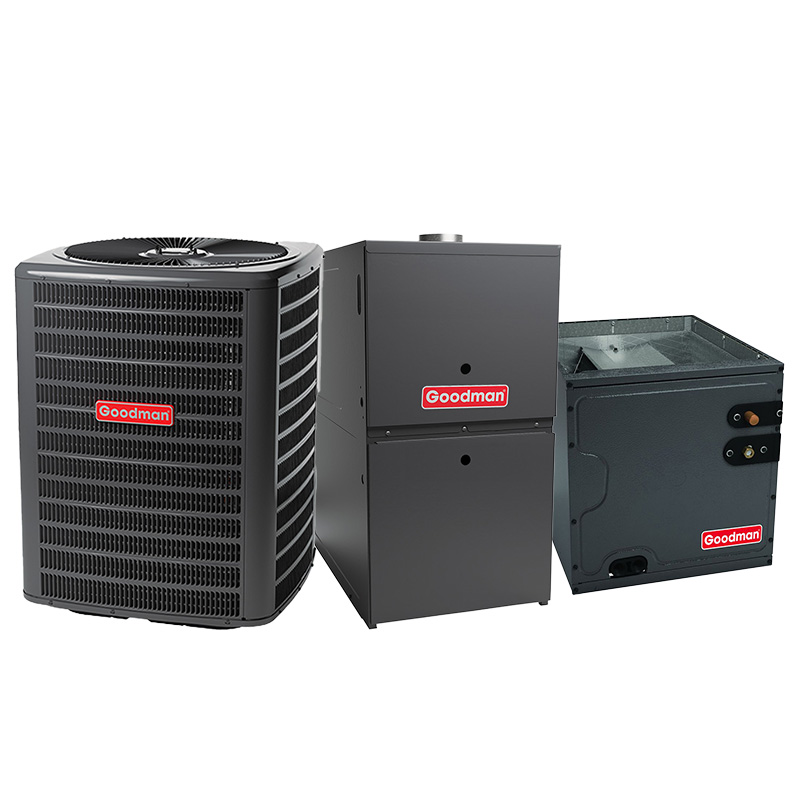
View on AC Direct see your lowest price →Check current price on AC Direct →
Key features
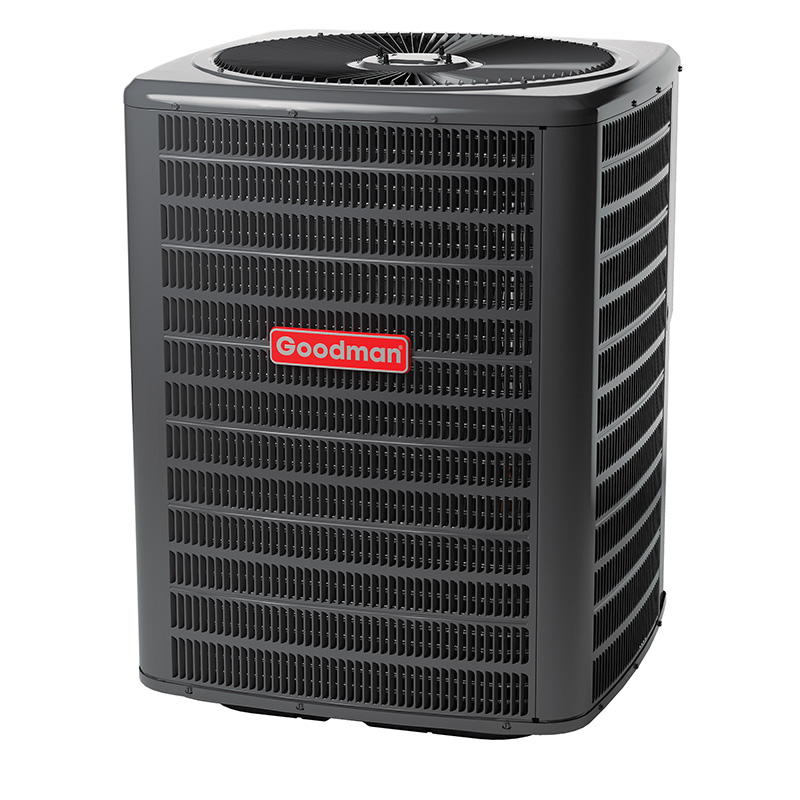
- 2.5-ton two-stage compressor for capacity-matched cooling and better humidity control
- 16 SEER2 efficiency rating, meeting modern federal minimums with meaningful savings over legacy equipment
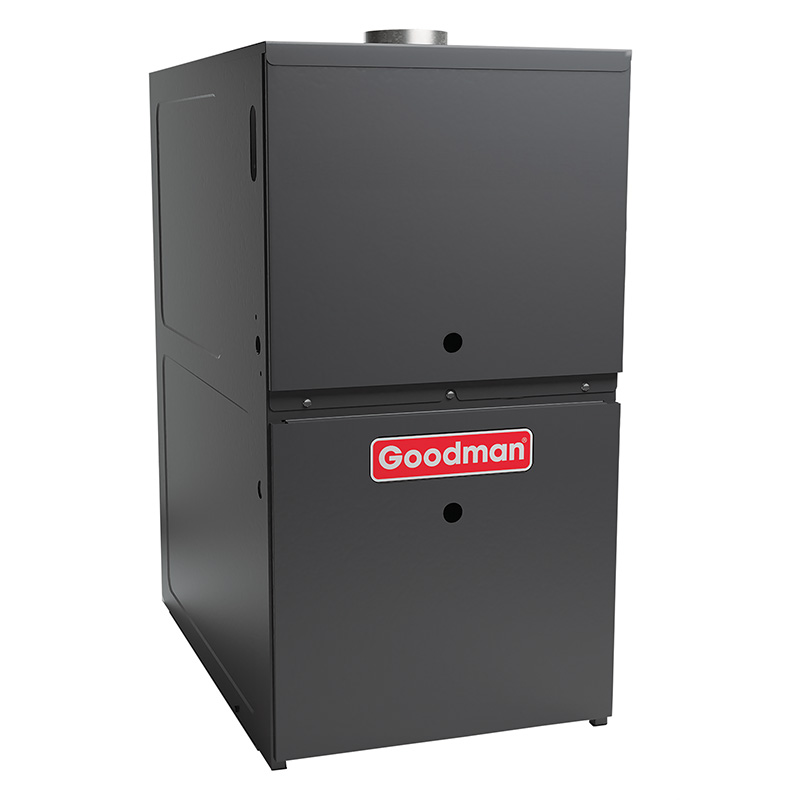
- 80,000 BTU gas furnace at 80% AFUE, upflow configuration for basement or ground-level installs
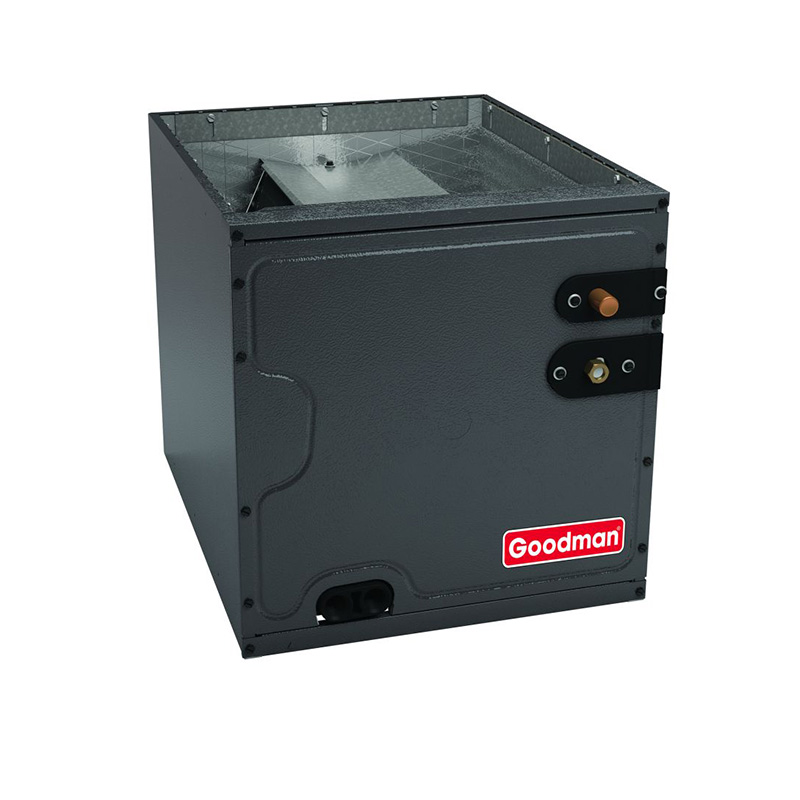
- Variable-speed ECM air handler blower for quieter operation and more even airflow
- R-32 refrigerant charge with lower global-warming potential than R-410A
- Compatible with standard single-stage thermostats, though a two-stage thermostat unlocks full staging benefits
About this system
The Goodman 2.5-ton 16 SEER2 two-stage, variable-speed system pairs a mid-efficiency air conditioner with an 80,000 BTU gas furnace rated at 80% AFUE. The two-stage cooling compressor runs at a lower capacity on mild days and steps up only when demand requires it, which reduces short-cycling, keeps humidity more controlled than a single-stage unit, and takes some stress off components over time. The variable-speed air handler fan adjusts continuously rather than simply switching on and off, improving air distribution and quiet operation throughout the home. R-32 refrigerant is the modern replacement charge: it has a lower global-warming potential than R-410A and is increasingly common as the industry phases out older blends.
At 16 SEER2 and 80% AFUE, this system sits solidly in the mid-efficiency range. It meets or exceeds federal minimum standards across most climate regions and will noticeably outperform older 10 to 13 SEER equipment, but it does not reach the efficiency ceiling that 18 SEER2-plus or 96% AFUE systems can offer. The upflow configuration means the furnace draws air from the bottom and discharges it upward, which suits homes where the furnace sits in a basement or ground-level utility closet with ductwork running overhead. Homeowners in mid-size houses between roughly 1,200 and 1,800 square feet with good insulation and existing compatible ductwork will find this capacity range a practical fit.
This system is best understood as a capable, budget-conscious upgrade rather than a premium long-term investment. Goodman prices typically run 15 to 25 percent below comparable Trane, Lennox, and Carrier equipment, and that savings is real and meaningful at purchase. The honest trade-off is a shorter expected compressor lifespan and a repair cost profile that tends to climb after roughly year seven. For buyers prioritizing upfront cost and willing to budget for possible mid-life maintenance, this system delivers solid core performance.
This Goodman two-stage system offers a genuine step up from entry-level single-stage equipment at a price point well below comparable premium brands. The two-stage compressor and variable-speed blower add real comfort value, but buyers should go in with clear eyes about Goodman's mid-tier reliability record and budget accordingly for potential maintenance after the seventh year.
Overall score is the average of the five ratings above.
What we like
- Two-stage compressor reduces short-cycling and handles humidity better than single-stage alternatives
- Variable-speed ECM blower improves comfort and lowers fan electricity consumption
- R-32 refrigerant is modern and increasingly standard, easing future service access
- Purchase price typically 15 to 25 percent below Trane, Lennox, and Carrier equivalents
- 80,000 BTU furnace output suits a broad range of mid-size home heating loads
Trade-offs
- Compressor lifespan averages 10 to 14 years versus 15 to 20 years for premium-brand compressors
- Dual-run capacitor failures are the most commonly reported repair, typically arriving in years 5 to 9
- Evaporator coil leaks appear in a meaningful share of owner accounts, adding refrigerant and labor costs
- 80% AFUE is the lower efficiency tier for gas furnaces; high-efficiency 90%-plus units cut heating bills further in cold climates
What homeowners and pros say about Goodman
Homeowners who post about Goodman equipment tend to split along a clear fault line: those who got a careful, experienced installer and those who did not. On Google dealer reviews, Goodman systems average around 3.8 out of 5, and the most consistent praise is straightforward affordability paired with adequate day-to-day performance. ConsumerAffairs tells a harder story, with Goodman sitting near 2.5 out of 5 on a platform that skews toward owners who had something go wrong. The recurring theme there is repair costs that start accumulating after roughly year seven, which lines up with the documented failure patterns technicians see in the field.
HVAC professionals are candid about where Goodman equipment tends to fall short. The dual-run capacitor is the most commonly cited early wear item, typically a low-cost fix but one that shows up with some regularity in years five through nine. Evaporator coil leaks appear often enough in owner accounts to be worth knowing about before purchase. Compressor longevity is the bigger long-term concern: Goodman compressors average 10 to 14 years in real-world service, compared to 15 to 20 years seen in premium-brand equipment. A minority of owners also report refrigerant issues in the first year, which technicians generally attribute to installation or initial charge problems rather than factory defects. The consistent professional advice is that this equipment rewards a quality installation more than most, and cutting corners on the install undermines whatever savings the lower purchase price provides.
Sources: ConsumerAffairs Goodman owner reviews, AHRI Directory of Certified Product Performance, U.S. DOE appliance and equipment efficiency standards, Goodman product specification sheets.
What it costs to run
At 16 SEER2, cooling this 2.5-ton system for a typical 1200-hour cooling season at the U.S. average electricity rate of $0.17/kWh works out to roughly $382 per year in cooling, about $75 less per year than a minimum-efficiency 13.4 SEER2 unit of the same size. Your real cost depends on your climate and local rate.
Method: (30,000 BTU/hr ÷ 16 SEER2) × 1200 hours ÷ 1000 × $0.17/kWh. Rate source: U.S. EIA average; cooling hours: moderate-climate estimate.
How it compares
| Brand | Comparable model | SEER2 | Stage | Price position |
|---|---|---|---|---|
| Goodman | GSZ2-2.5 Ton 16 SEER2 / GMSS802 Two-Stage Variable-Speed | 16 | Two-stage | Value pick |
| Carrier | Comfort 16 Series (24ACC6) | 16 | Single-stage | Typically 15 to 25 percent more than Goodman |
| Trane | XR16 Series | 16 | Single-stage | Typically 15 to 25 percent more than Goodman |
| Lennox | Merit 16 Series (ML16XC1) | 16 | Single-stage | Typically 15 to 25 percent more than Goodman |
Competitor rows are comparable single-stage units at similar efficiency; price is relative position, not a quote.
Questions about this system
Will the two-stage compressor actually make a noticeable comfort difference in my home?
Yes, particularly with humidity control and temperature consistency. On mild days the system runs longer at low stage, removing more moisture from the air than a single-stage unit that short-cycles on and off. The difference is most noticeable in shoulder seasons when cooling loads are light.
Do I need a special thermostat to use both stages of the compressor?
A two-stage compatible thermostat is strongly recommended to get the full benefit. A standard single-stage thermostat will run the system, but it will typically lock the compressor into high stage and you lose the efficiency and comfort advantage of the lower stage. Most installers will quote a compatible thermostat alongside this system.
How does R-32 refrigerant affect my service options compared to R-410A?
R-32 is becoming the industry standard replacement for R-410A, so availability is growing and most HVAC technicians can handle it. It requires slightly different handling procedures due to mild flammability, so confirm your service technician is certified for R-32 work before booking any future refrigerant service.
What are the most likely repair costs I should plan for over the life of this system?
The dual-run capacitor is Goodman's most commonly reported failure and typically costs between $300 and $600 to replace, usually appearing after year five. Evaporator coil leaks are a secondary concern and carry higher repair costs depending on whether the coil needs replacement. Setting aside a small annual maintenance reserve after year seven is a practical approach.
Is 80% AFUE adequate, or should I upgrade to a 96% AFUE furnace?
In mild to moderate winter climates, the payback period on a 96% AFUE upgrade can stretch to 10 or more years, making 80% a reasonable choice. In cold climates where the furnace runs heavily from November through March, the 16-percentage-point efficiency gap translates to a more meaningful annual savings and the higher-efficiency unit often pays back faster. Check your local heating degree days and current gas rates to run the numbers for your situation.
Specifications
| Cooling capacity | 2.5 Ton |
| Efficiency | 16 SEER2 |
| Furnace output | 80000 BTU |
| Furnace efficiency | 80% AFUE |
| Configuration | Upflow |
| Refrigerant | R-32 |