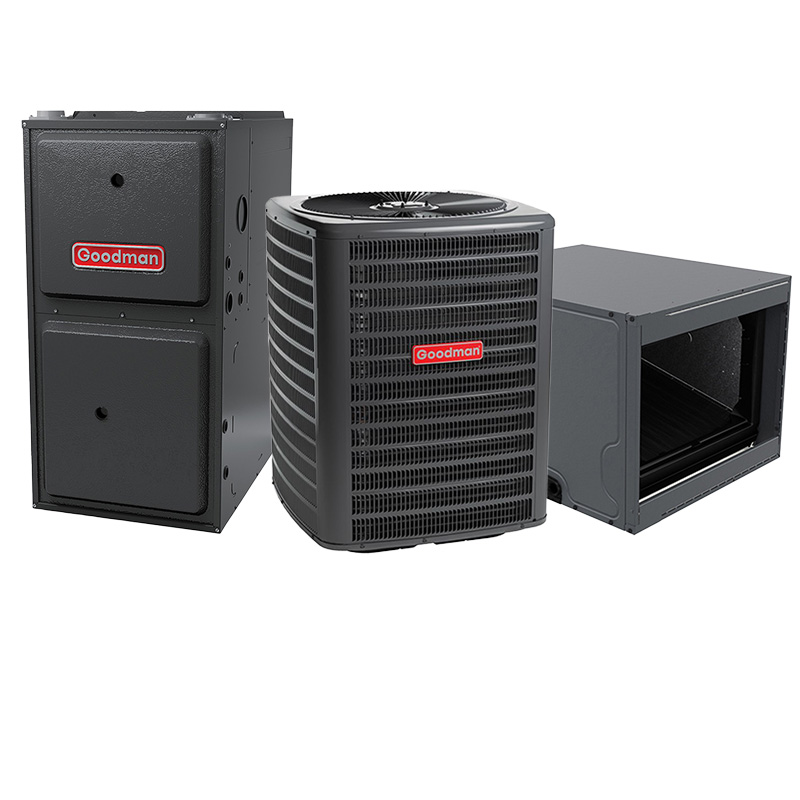
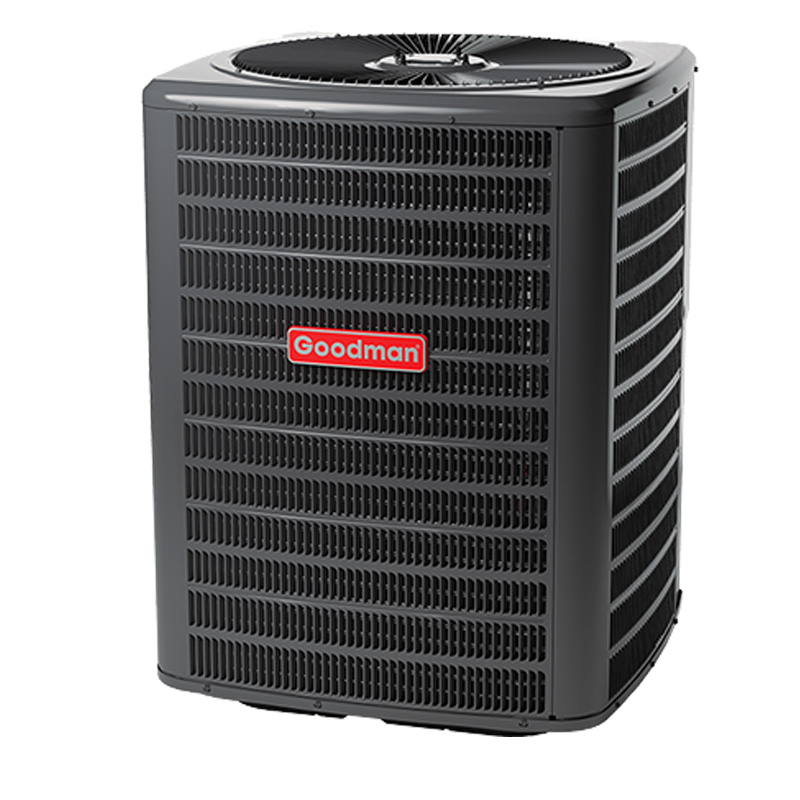
Goodman 2.5 Ton 14.5 SEER2 R32 AC System with 40,000 BTU 96% AFUE Gas Furnace – California & Colorado Ultra Low NOx, Horizontal, Multi-Speed ECM
View on AC Direct see your lowest price →Check current price on AC Direct →
Key features
- 14.5 SEER2 cooling efficiency meets 2023 federal Southwest regional minimums
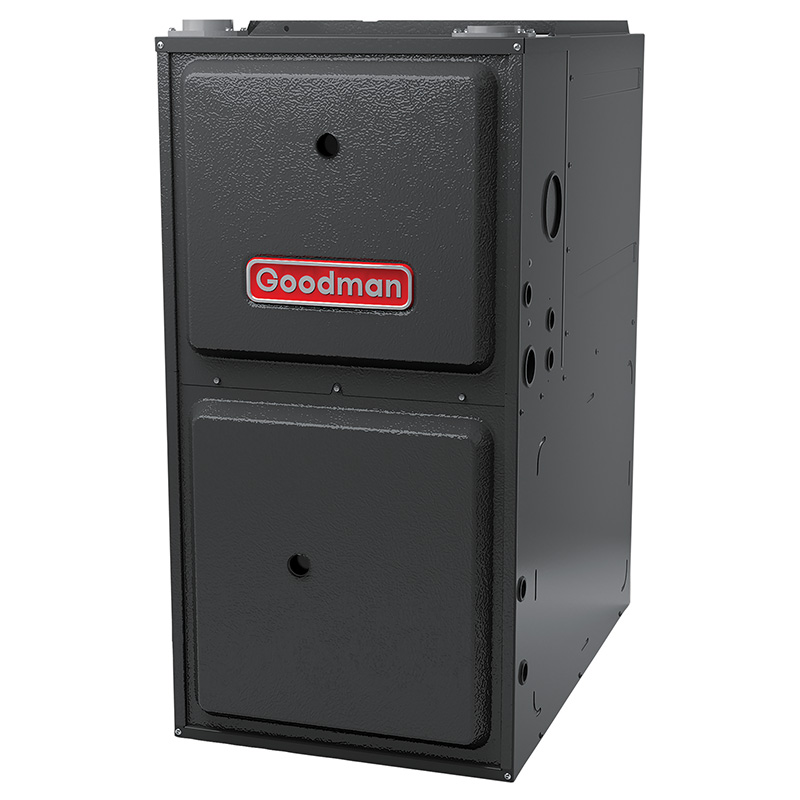
- 96% AFUE multi-speed ECM gas furnace, 40,000 BTU output
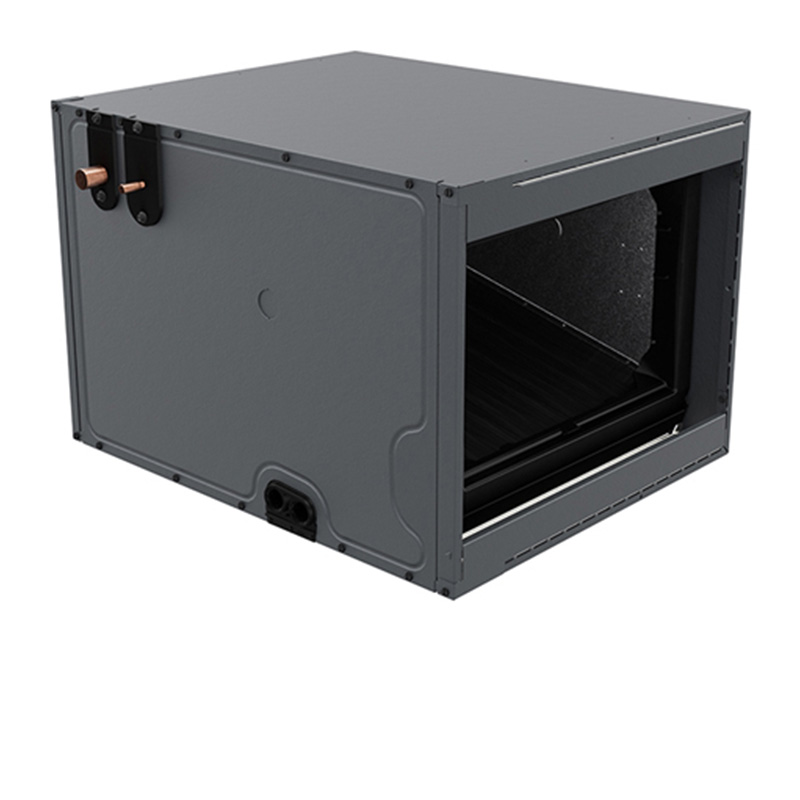
- Horizontal configuration designed for attic and crawlspace applications
- R-32 refrigerant with roughly one-third the global warming potential of R-410A
- California and Colorado Ultra Low NOx certified combustion
- Multi-speed ECM blower improves humidity control and reduces blower energy use
About this system
The Goodman 2.5-ton 14.5 SEER2 R-32 split system pairs a modern, lower-global-warming-potential refrigerant with a 96% AFUE multi-speed ECM gas furnace rated at 40,000 BTU. The horizontal configuration makes it a practical fit for attic or crawlspace installs common in California and Colorado, and the Ultra Low NOx combustion design meets the strict air-quality rules enforced in both states. At 2.5 tons, this system is sized for homes roughly in the 1,200 to 1,600 square-foot range, though actual sizing depends on insulation, window area, and local climate zone.
The 14.5 SEER2 rating sits right at the federal minimum for the Southwest region, so this is a code-compliant baseline system rather than a high-efficiency upgrade. The 96% AFUE furnace is a stronger headline: it recovers nearly all fuel energy and is appropriate for Colorado’s colder winters and even the cooler inland California climates. The multi-speed ECM blower improves humidity control and reduces blower electricity consumption compared to a standard PSC motor, which is a meaningful real-world benefit even at entry-level cooling efficiency. R-32 has roughly one-third the global warming potential of R-410A and is increasingly preferred in California regulatory circles, though it does require technicians with specific R-32 handling certification.
This system delivers a code-compliant, honest-value package for homeowners in California or Colorado who need a horizontal-mount solution and want a high-AFUE furnace without paying premium-brand prices. The 14.5 SEER2 cooling side is nothing more than entry-level, and long-term ownership costs depend heavily on install quality and whether Goodman's documented weak points show up. Buyers who can absorb an occasional repair and prioritize upfront affordability will find it a reasonable fit; those who want minimal maintenance worry over 15-plus years should budget up.
Overall score is the average of the five ratings above.
What we like
- Priced 15 to 25 percent below comparable Carrier, Trane, and Lennox systems
- 96% AFUE furnace recovers nearly all fuel energy, cutting heating bills meaningfully in cold climates
- Ultra Low NOx certification satisfies California AQMD and Colorado air-quality requirements
- R-32 refrigerant reduces environmental impact and is increasingly preferred by state regulators
- Multi-speed ECM blower lowers blower electricity use and improves comfort versus single-speed units
Trade-offs
- 14.5 SEER2 is the regulatory floor, not an efficiency upgrade, so cooling energy savings are modest
- Dual-run capacitors and evaporator coil leaks are documented recurring failure points that add repair costs after year 7
- Compressor lifespan averages 10 to 14 years, shorter than the 15 to 20 years typical of premium brands
- R-32 requires technicians with specific refrigerant handling certification, which can complicate finding service in some rural areas
What homeowners and pros say about Goodman
Homeowners who leave feedback on Goodman equipment tend to split along a familiar line: those who had a clean, professional install often report years of trouble-free operation and emphasize the price savings versus name-brand alternatives, while those who ran into problems point to repair bills that erode the upfront savings faster than expected. Goodman’s ConsumerAffairs rating sits at roughly 2.5 out of 5, though that platform attracts frustrated owners disproportionately, and the recurring complaint thread after about year 7 centers on rising repair costs rather than early failures. Google dealer reviews average around 3.8 out of 5 across locations, where affordability is consistently the most praised attribute.
HVAC technicians are largely consistent in their assessment: Goodman is workable equipment that rewards a careful installation and punishes a rushed one. The dual-run capacitor is cited as the most common service call, described by most techs as a straightforward, low-cost repair in the 300 to 600 dollar range. Evaporator coil leaks surface in enough owner accounts to be worth noting as a real, if not universal, risk. Compressor longevity averaging 10 to 14 years versus the 15 to 20 years more typical of premium brands is the most significant long-term trade-off pros mention, especially for a system in a hot Colorado summer or a humid California valley climate. For this specific horizontal R-32 configuration, technicians also flag that finding a service provider with R-32 certification matters more than it did with R-410A equipment, so vetting local service availability before purchase is practical advice.
Sources: ConsumerAffairs Goodman owner reviews, AHRI Directory of Certified Product Performance, U.S. DOE appliance and equipment efficiency standards, Goodman product specification sheets.
What it costs to run
At 14.5 SEER2, cooling this 2.5-ton system for a typical 1200-hour cooling season at the U.S. average electricity rate of $0.17/kWh works out to roughly $422 per year in cooling, about $35 less per year than a minimum-efficiency 13.4 SEER2 unit of the same size. Your real cost depends on your climate and local rate.
Method: (30,000 BTU/hr ÷ 14.5 SEER2) × 1200 hours ÷ 1000 × $0.17/kWh. Rate source: U.S. EIA average; cooling hours: moderate-climate estimate.
How it compares
| Brand | Comparable model | SEER2 | Stage | Price position |
|---|---|---|---|---|
| Goodman | 2.5 Ton 14.5 SEER2 R-32 with 96% AFUE ECM Furnace (this system) | 14.5 | Single-stage | Value pick |
| Carrier | Comfort 24ACC6 with 59SC5 96% AFUE Furnace | 14.5–15.2 | Single-stage | 15 to 25 percent higher than this system |
| Trane | XR15 with S9X2 96% AFUE Furnace | 15.0 | Single-stage | 20 to 30 percent higher than this system |
| Lennox | Merit ML14XC1 with ML196E 96% AFUE Furnace | 14.3–15.0 | Single-stage | 20 to 25 percent higher than this system |
Competitor rows are comparable single-stage units at similar efficiency; price is relative position, not a quote.
Questions about this system
Is 14.5 SEER2 going to save me money on my electric bill compared to my old system?
If your current system is 10 SEER or older, yes, you will see meaningful cooling-season savings. If you are replacing a 14 or 15 SEER system, the improvement will be small. SEER2 and the older SEER rating use different test conditions, so 14.5 SEER2 is roughly equivalent to about 15 to 15.5 SEER under the old scale.
Why does this system require Ultra Low NOx certification, and does that affect anything for me?
California's South Coast AQMD and several Colorado air districts mandate Ultra Low NOx burners on new gas appliances to reduce smog-forming nitrogen oxide emissions. For you as the homeowner, it means the furnace is legal to install in those jurisdictions; you will not notice a difference in comfort or operating cost compared to a standard furnace.
My attic gets very hot in summer. Will a horizontal install hurt the system?
The unit is designed for horizontal mounting, but attic ambient temperatures above 125 degrees Fahrenheit can stress the furnace control board and reduce efficiency. Proper insulation between the conditioned space and the attic, along with adequate clearance around the unit, is important and is something your installer should address before the equipment goes in.
What are the most likely repairs I should budget for over the first 10 years?
Goodman's most frequently reported failure points are the dual-run capacitor, which typically costs 300 to 600 dollars to replace and is a quick fix, and evaporator coil leaks, which are more involved and more expensive. A small share of owners also report refrigerant leaks in the first year, usually tied to install workmanship rather than equipment defects.
Can any HVAC technician work on an R-32 system, or do I need a specialist?
Technicians need to be EPA 608 certified, which is standard, but they also need specific R-32 handling training and equipment because R-32 is mildly flammable. In larger metro areas this is increasingly common, but if you are in a rural part of Colorado or a smaller California market, confirm that local service companies have R-32 capability before purchasing.
Specifications
| Cooling capacity | 2.5 Ton |
| Efficiency | 14.5 SEER2 |
| Furnace output | 40,000 BTU |
| Furnace efficiency | 96% AFUE |
| Configuration | Horizontal |
| Refrigerant | R-32 |