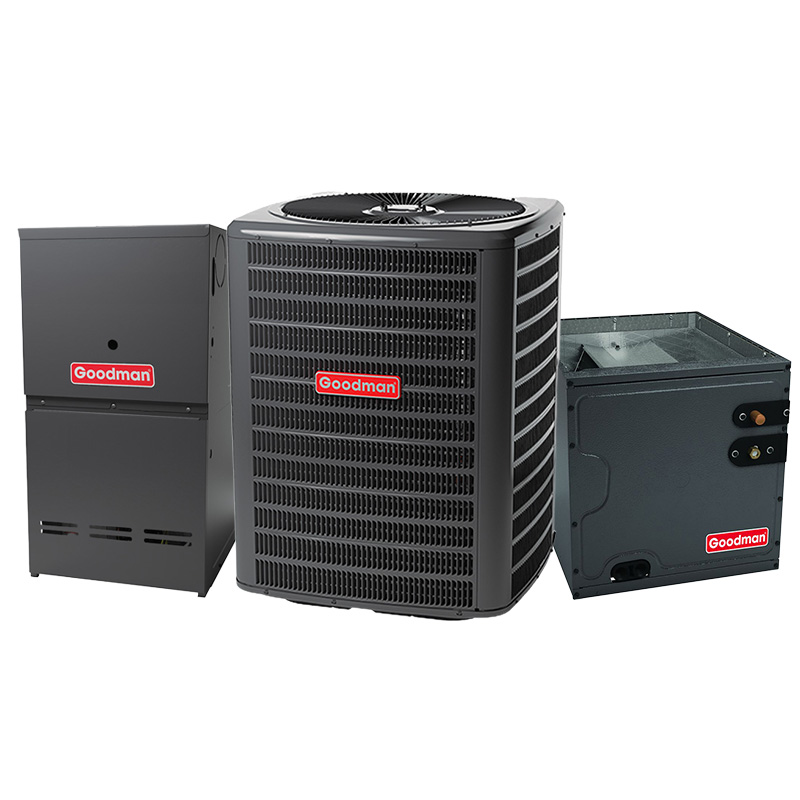
Goodman 2.5 Ton AC And 60000 BTU 80% AFUE Gas Furnace System | 14.5 SEER2 AC | Multi-Speed ECM Low NOx Furnace | Downflow | R32
View on AC Direct see your lowest price →Check current price on AC Direct →
Key features
- 2.5-ton cooling capacity with 14.5 SEER2 efficiency rating
- 60,000 BTU heating output at 80% AFUE
- Multi-speed ECM blower motor for quieter, more even airflow
- Downflow cabinet orientation for attic or upper-closet installations
- R-32 refrigerant, lower global-warming potential than R-410A
- Low NOx burner meets stricter regional air-quality requirements
About this system
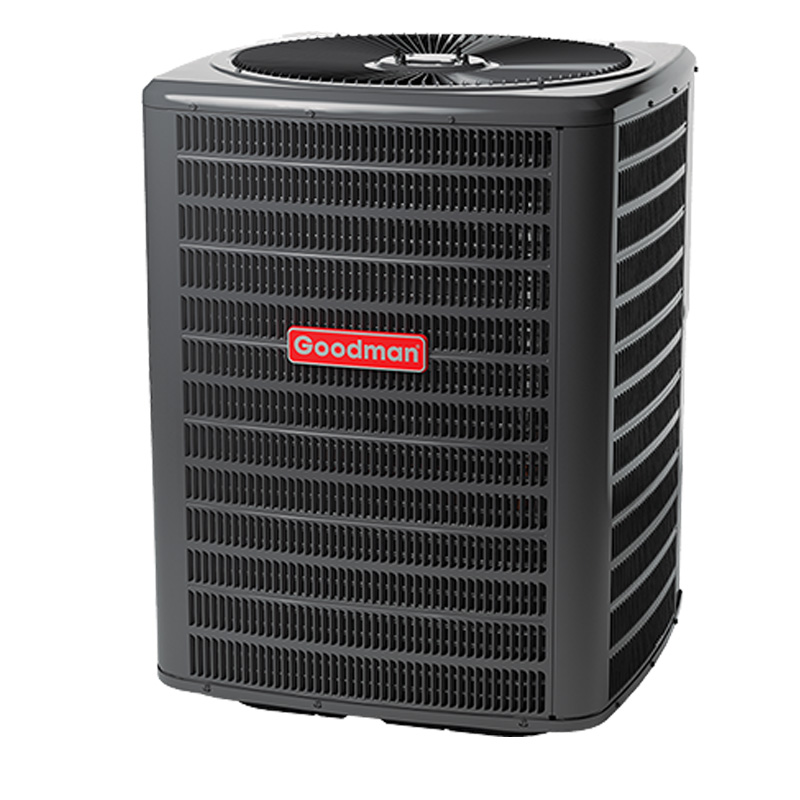
This Goodman bundle pairs a 2.5-ton, 14.5 SEER2 central air conditioner with a 60,000 BTU, 80% AFUE downflow gas furnace into a single-purchase system sized for homes roughly in the 1,200 to 1,800 square-foot range, depending on climate zone, insulation quality, and duct layout. The air conditioner runs on R-32 refrigerant, a lower global-warming-potential option that is becoming more common as the industry moves away from R-410A. At 14.5 SEER2, the cooling efficiency clears the current federal minimum for most U.S. regions but sits at the entry tier rather than the mid- or high-efficiency bracket, so operating costs will be real and visible on summer electric bills, especially in hot climates.
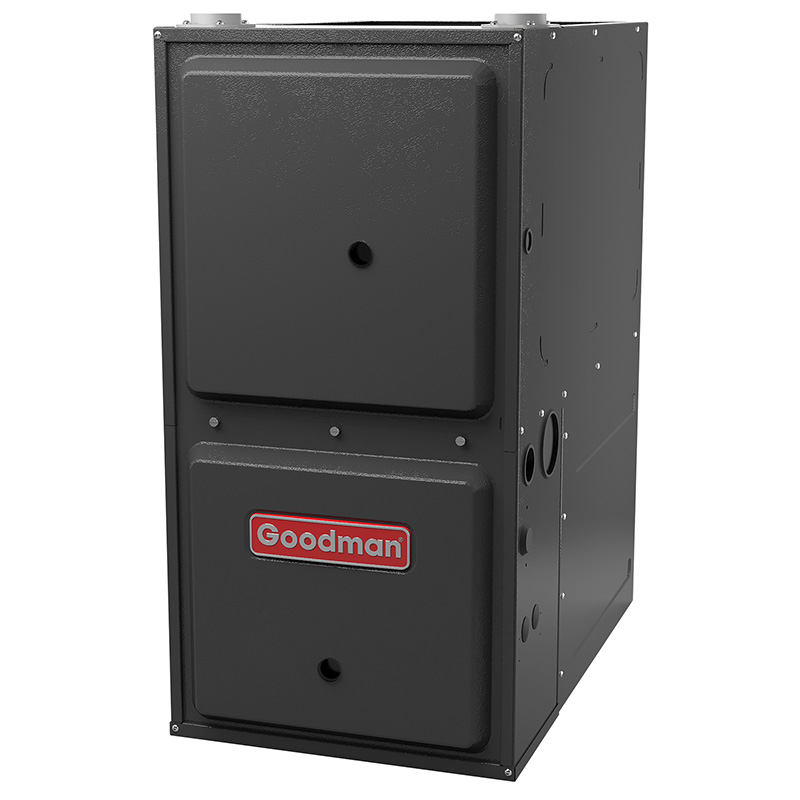
The furnace side brings a multi-speed ECM blower motor, which is a meaningful upgrade over a single-speed unit. ECM motors ramp airflow more gradually, which improves comfort, reduces cold-blast starts, and runs quieter at partial loads. The 80% AFUE rating means one-fifth of combustion heat leaves through the flue, which is acceptable but not outstanding. The downflow configuration directs conditioned air downward through the supply plenum, making this system the right fit for homes where the air handler sits in an upper-floor closet or attic platform with ductwork running below it. The Low NOx burner designation satisfies stricter air-quality rules in regions like California’s South Coast AQMD jurisdiction. Buyers who need an upflow or horizontal configuration should look at other Goodman bundles.
This Goodman system delivers a workable, code-compliant starting point for budget-conscious homeowners who need downflow configuration and do not want to stretch to a premium brand. The ECM blower and R-32 refrigerant are genuine positives, but the 80% AFUE furnace and entry-level SEER2 rating mean the long-term operating cost picture is less favorable than mid-efficiency alternatives. Longevity will depend heavily on the quality of the installing contractor.
Overall score is the average of the five ratings above.
What we like
- Purchase price runs 15 to 25 percent below comparable Carrier, Trane, and Lennox systems
- Multi-speed ECM motor improves comfort and reduces blower noise versus single-speed units
- R-32 refrigerant has a lower environmental impact and is becoming the industry standard
- Low NOx burner satisfies California and other strict-emissions jurisdictions
- Single-source bundle simplifies parts sourcing and system compatibility
Trade-offs
- 80% AFUE leaves meaningful heating efficiency and savings on the table compared to 96%+ condensing furnaces
- 14.5 SEER2 is entry-level cooling efficiency; running costs will show in hot climates
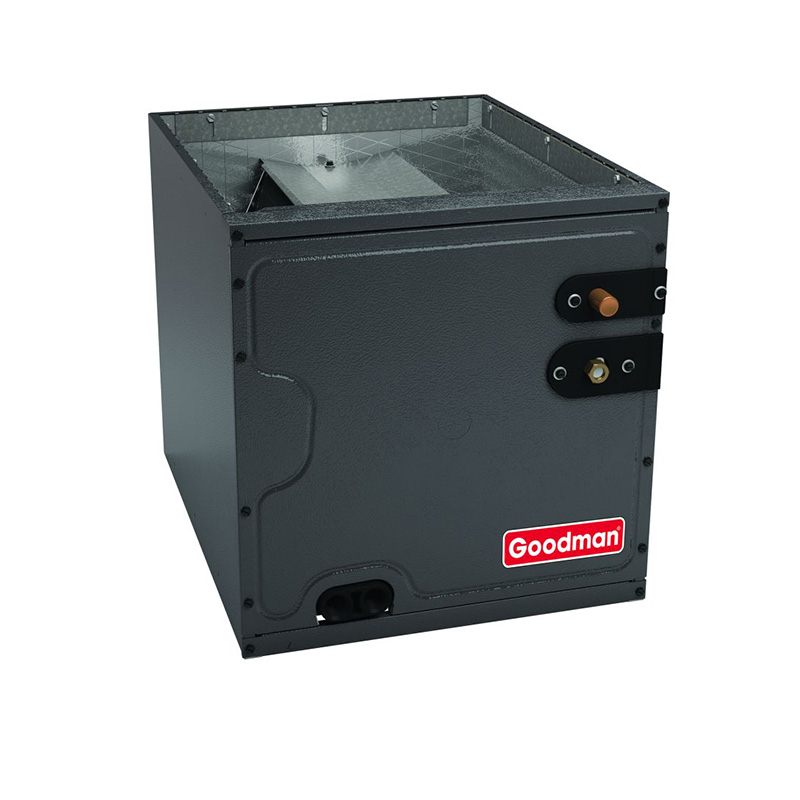
- Documented owner reports of evaporator coil leaks and dual-run capacitor failures after several years of use
- Compressor longevity averages 10 to 14 years versus 15 to 20 years for premium-brand compressors
What homeowners and pros say about Goodman
Homeowners who review Goodman equipment on ConsumerAffairs give it roughly 2.5 out of 5 stars, a score that reflects the platform’s bias toward frustrated owners rather than satisfied ones, but the recurring complaint thread is real: repair costs begin climbing after about year 7, and dual-run capacitor failures, evaporator coil leaks, and compressor issues appear across a meaningful share of those reports. Google dealer reviews paint a somewhat more balanced picture, averaging around 3.8 out of 5, where affordability is the most consistently praised quality. For this specific downflow system, buyers in online HVAC forums tend to note that the ECM blower is a legitimate comfort upgrade and that the R-32 transition is straightforward for any well-equipped technician, but opinions split on whether the 80% AFUE furnace is the right call given how little extra a condensing unit costs over the life of the system.
HVAC technicians who work on Goodman equipment regularly tend to hold a pragmatic view: the hardware is adequate, but the brand’s reputation lives or dies on install quality. A properly sized, correctly charged, and well-commissioned Goodman system can deliver a solid decade of service. One where the refrigerant charge was rushed or the airflow was not balanced may start showing the documented failure modes, particularly the dual-run capacitor and the evaporator coil, well before that. Pros also note that Goodman parts availability is generally good given the brand’s market volume, which keeps repair turnaround time reasonable when something does go wrong. The compressor lifespan question, where Goodman averages 10 to 14 years against 15 to 20 for premium brands, is the concern most often raised when a homeowner asks whether the upfront savings are worth it over a longer ownership horizon.
Sources: ConsumerAffairs Goodman owner reviews, AHRI Directory of Certified Product Performance, U.S. DOE appliance and equipment efficiency standards, Goodman product specification sheets.
What it costs to run
At 14.5 SEER2, cooling this 2.5-ton system for a typical 1200-hour cooling season at the U.S. average electricity rate of $0.17/kWh works out to roughly $422 per year in cooling, about $35 less per year than a minimum-efficiency 13.4 SEER2 unit of the same size. Your real cost depends on your climate and local rate.
Method: (30,000 BTU/hr ÷ 14.5 SEER2) × 1200 hours ÷ 1000 × $0.17/kWh. Rate source: U.S. EIA average; cooling hours: moderate-climate estimate.
How it compares
| Brand | Comparable model | SEER2 | Stage | Price position |
|---|---|---|---|---|
| Goodman | This system (2.5T AC + GMVC8 series 80% furnace, downflow) | 14.5 | Single-stage AC / Multi-speed furnace | Value pick |
| Carrier | Comfort 14 series (24ACC4) with 58MXA 80% furnace | 14.5 | Single-stage | Typically 15 to 25 percent more than this Goodman bundle |
| Trane | XR14c with S8X1 80% furnace | 14.5 | Single-stage | Typically 15 to 25 percent more than this Goodman bundle |
| Lennox | Merit 14ACX with ML180 80% furnace | 14.3 to 14.5 | Single-stage | Typically 15 to 25 percent more than this Goodman bundle |
Competitor rows are comparable single-stage units at similar efficiency; price is relative position, not a quote.
Questions about this system
Is a downflow furnace going to work in my home if my ductwork runs under the floor?
Yes, downflow is the right orientation when supply air needs to move downward out of the unit, which typically means the air handler sits above the duct system in an attic, a second-floor closet, or a raised platform. If your ducts exit at the side or bottom of the unit in a basement or crawl-space setting, confirm the cabinet orientation with your installer before purchasing, because upflow and horizontal variants are different configurations.
What does switching to R-32 refrigerant mean for me as an owner?
R-32 has a lower global-warming potential than R-410A and is increasingly common as the industry phases out older refrigerants. For day-to-day ownership the practical difference is small, but your service technician will need to be certified and equipped to handle R-32, so confirm that capability before hiring a contractor for future maintenance or repairs.
How likely are the documented failure modes, and what do repairs typically cost?
Dual-run capacitor failures are the most frequently reported issue with Goodman equipment and are generally a straightforward low-cost fix in the 300 to 600 dollar range. Evaporator coil leaks appear in a meaningful share of owner reviews and can be more expensive to address. A minority of owners have also reported refrigerant leaks within the first year, which usually points to an installation or charge issue rather than a manufacturing defect, underscoring the importance of choosing an experienced installer.
Why does this system use an 80% AFUE furnace instead of a high-efficiency condensing furnace?
An 80% AFUE furnace vents combustion gases through a standard metal flue, which keeps the installation simpler and less expensive than a condensing furnace that requires PVC venting and a condensate drain. The trade-off is that 20% of your fuel energy exits through the flue rather than heating your home, so if natural gas or propane prices are high in your area, a 96% AFUE unit would pay back the difference faster over time.
Does Goodman's warranty cover both the AC and the furnace in this bundle, and are there any conditions?
Goodman offers a 10-year parts warranty on registered equipment, and the compressor typically carries an additional limited lifetime warranty on registered units. Registration must be completed within a set window after installation, and the warranty generally requires the equipment to be installed by a licensed contractor. Parts coverage does not include labor, so repair bills will still include technician time even when components are covered.
Specifications
| Cooling capacity | 2.5 Ton |
| Efficiency | 14.5 SEER2 |
| Furnace output | 60000 BTU |
| Furnace efficiency | 80% AFUE |
| Configuration | Downflow |
| Refrigerant | R-32 |