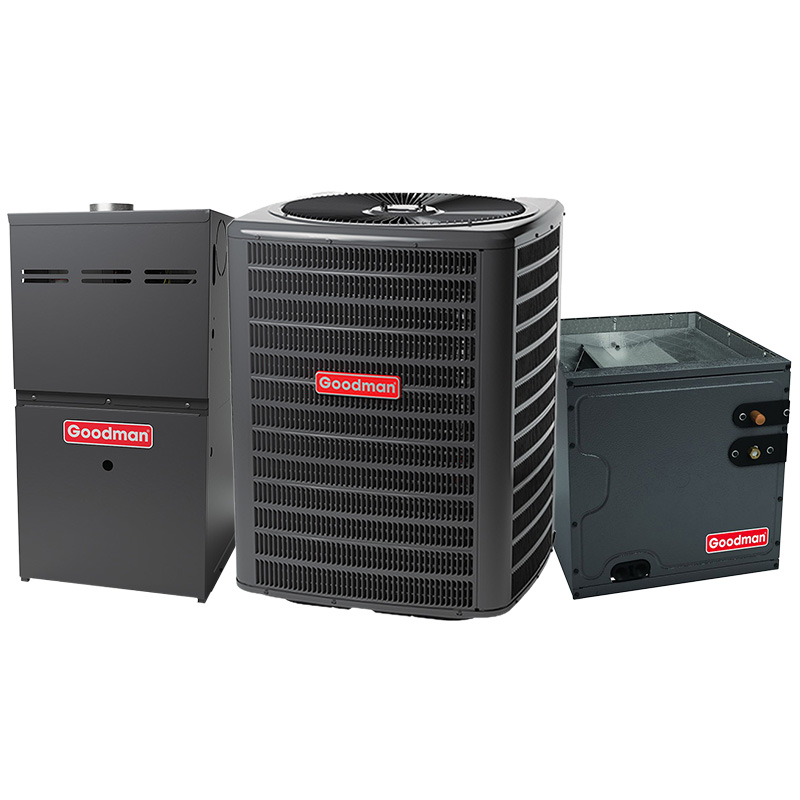
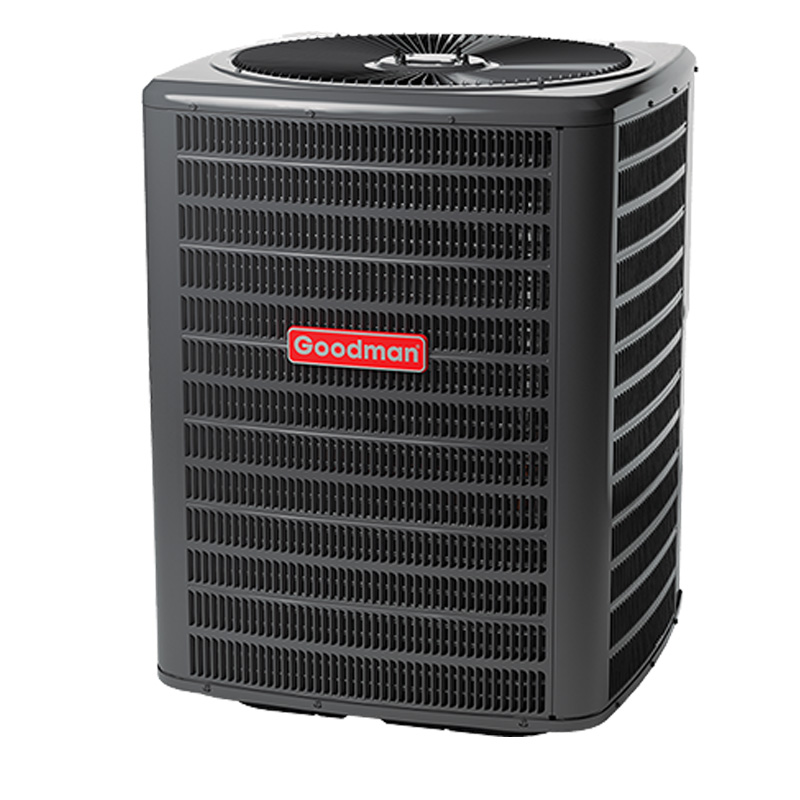
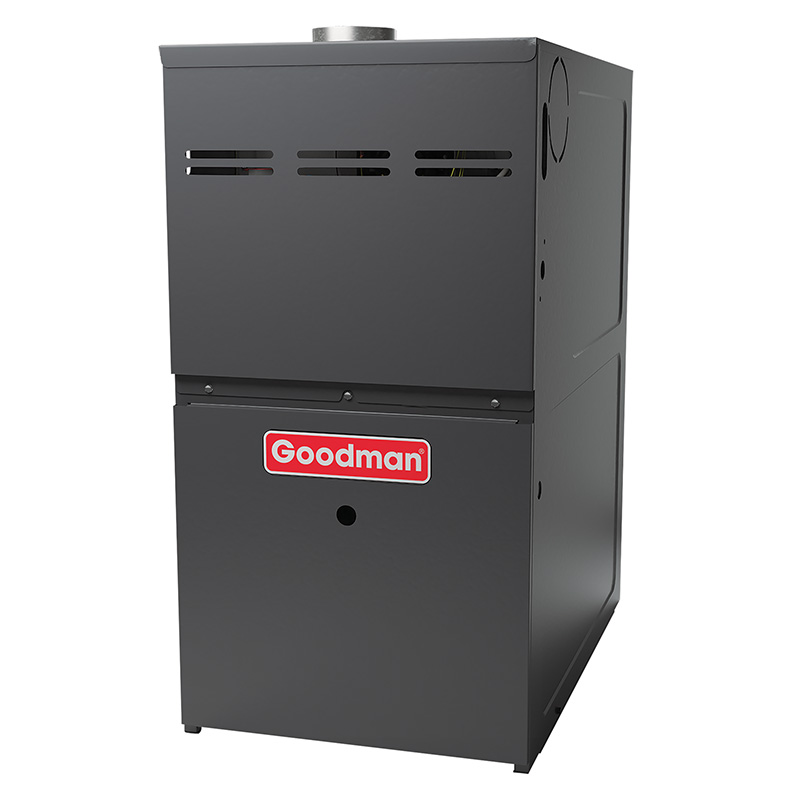
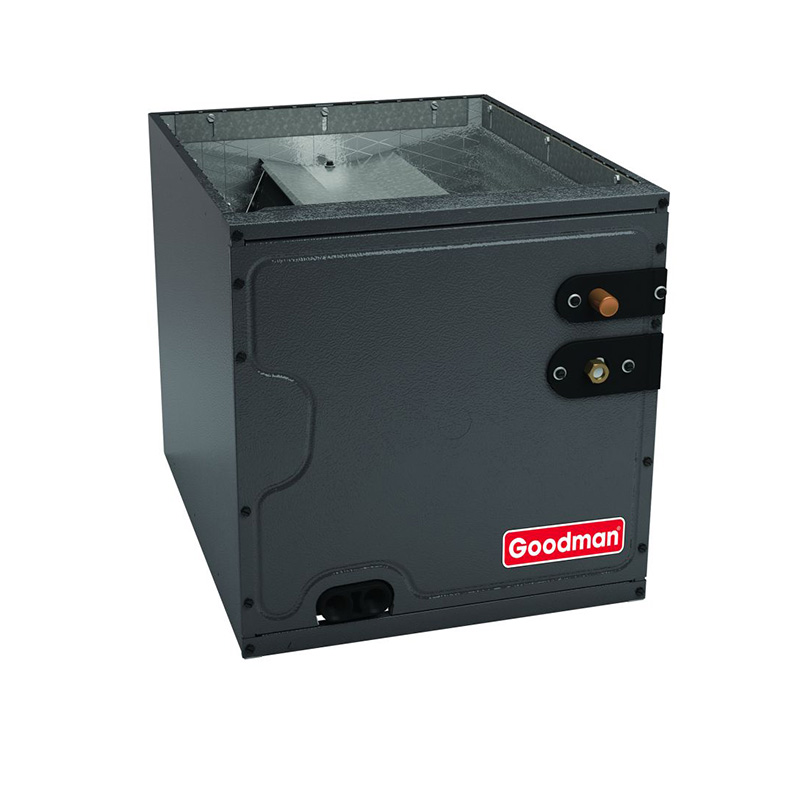
Goodman 2.5 Ton AC And 80000 BTU 80% AFUE Gas Furnace System | 15.2 SEER2 AC | Multi-Speed ECM Low NOx Furnace | Upflow | R32
View on AC Direct see your lowest price →Check current price on AC Direct →
Key features
- 15.2 SEER2 air conditioner sized at 2.5 tons for mid-size homes
- 80,000 BTU gas furnace rated at 80% AFUE with multi-speed ECM blower
- Upflow configuration for installations with ductwork above the air handler
- R-32 refrigerant with lower global warming potential than R-410A
- Low NOx burner design for reduced nitrogen oxide emissions
- Factory-matched system for simplified commissioning and warranty compliance
About this system
This Goodman bundle pairs a 2.5-ton, 15.2 SEER2 air conditioner with an 80,000 BTU, 80% AFUE upflow gas furnace in a single matched system. The 2.5-ton capacity is a common fit for homes in the 1,200 to 1,600 square foot range, though your actual load depends on insulation, ceiling height, climate zone, and window area, so a Manual J calculation from your installer is the right starting point. The 15.2 SEER2 rating lands at the entry tier of current federal efficiency minimums for most regions, meaning you meet the 2023 Department of Energy standards without paying for premium variable-speed efficiency you may not need. The system uses R-32 refrigerant, which has a lower global warming potential than the R-410A it replaces and is the direction the industry is moving.
The furnace side runs an 80% AFUE rating, which means 80 cents of every fuel dollar goes to heat and 20 cents exits through the flue. That is a meaningful step below a 95-plus percent condensing furnace, so in colder climates with long heating seasons the fuel savings from upgrading to a high-efficiency furnace can offset the cost difference over time. Where this system earns its place is in mild-to-moderate heating climates, rental properties, replacement budgets where upfront cost is the primary constraint, or situations where a non-condensing upflow furnace fits an existing venting configuration without added retrofit work. The multi-speed ECM blower motor runs more quietly and efficiently than a single-speed PSC motor and is a genuine step up at this price point.
This Goodman system is a solid budget-conscious choice for homeowners who want a code-compliant, matched AC and furnace package without stretching into premium-brand pricing. The 80% AFUE furnace and 15.2 SEER2 AC are entry-level on efficiency, which is a real trade-off in high-use climates, and long-term reliability leans heavily on how well the system is installed and maintained. If you are prioritizing upfront cost and your climate does not demand peak efficiency, this bundle delivers functional, warranted comfort at a price point that premium brands cannot match.
Overall score is the average of the five ratings above.
What we like
- Priced roughly 15 to 25 percent below comparable Trane, Carrier, and Lennox systems, lowering the upfront barrier significantly
- Multi-speed ECM blower motor improves comfort and reduces energy use compared to single-speed alternatives at this price
- R-32 refrigerant is forward-looking and aligned with industry and regulatory direction
- Factory-matched pairing simplifies warranty claims and reduces commissioning guesswork for installers
- Low NOx burner reduces emissions, meeting stricter air quality standards in regions like California
Trade-offs
- 80% AFUE is the lower tier of available furnace efficiency; homeowners in cold climates will pay meaningfully more in annual gas costs compared to a 95-plus percent condensing unit
- Dual-run capacitor failures are the most commonly documented repair need, typically surfacing after several years of use
- Compressor lifespan averages 10 to 14 years versus 15 to 20 years reported for premium brands, a real long-term cost consideration
- Evaporator coil leaks appear in a notable share of owner reports, and a minority of owners have experienced refrigerant issues within the first year, often tied to installation quality
What homeowners and pros say about Goodman
Homeowners who review Goodman equipment tend to split along a clear line: those who had a careful, experienced installer often report years of trouble-free operation and point to the lower purchase price as a genuine win, while those who ran into problems early frequently cite repair bills that eroded the upfront savings. On ConsumerAffairs, Goodman scores around 2.5 out of 5, a platform that draws a disproportionate share of frustrated owners, where the recurring complaint is repair costs climbing after roughly year 7. Google dealer reviews tell a somewhat different story, averaging around 3.8 out of 5, where affordability is the most frequently mentioned positive. Neither number should be dismissed.
HVAC technicians who work on Goodman equipment regularly flag dual-run capacitor failure as the most predictable service call, a low-cost fix in the 300 to 600 dollar range but one that comes up more often than on premium brands. Evaporator coil leaks appear in a meaningful portion of owner accounts, and compressor lifespan on Goodman units tends to average 10 to 14 years, compared to 15 to 20 years reported for Trane, Carrier, and Lennox compressors. A smaller share of owners report refrigerant issues within the first year, which technicians generally attribute to installation or initial charge quality rather than a defect in the equipment itself. For this 2.5-ton R-32 system specifically, those documented patterns hold, and the most consistent professional advice is that the installer you choose matters as much as the equipment itself.
Sources: ConsumerAffairs Goodman owner reviews, AHRI Directory of Certified Product Performance, U.S. DOE appliance and equipment efficiency standards, Goodman product specification sheets.
What it costs to run
At 15.2 SEER2, cooling this 2.5-ton system for a typical 1200-hour cooling season at the U.S. average electricity rate of $0.17/kWh works out to roughly $403 per year in cooling, about $54 less per year than a minimum-efficiency 13.4 SEER2 unit of the same size. Your real cost depends on your climate and local rate.
Method: (30,000 BTU/hr ÷ 15.2 SEER2) × 1200 hours ÷ 1000 × $0.17/kWh. Rate source: U.S. EIA average; cooling hours: moderate-climate estimate.
How it compares
| Brand | Comparable model | SEER2 | Stage | Price position |
|---|---|---|---|---|
| Goodman | GSX15 / GMVC8 Series (this system) | 15.2 | Single-stage AC / Multi-speed furnace | Value pick |
| Carrier | Comfort 15 Series (CA15 / 59SC80) | 15.2 | Single-stage | Typically 15 to 25 percent more than this Goodman system |
| Trane | XR15 / S8X1 Series | 15.2 | Single-stage | Typically 15 to 25 percent more than this Goodman system |
| Lennox | Merit ML15XC1 / ML195 Series | 15.2 | Single-stage | Typically 15 to 25 percent more than this Goodman system |
Competitor rows are comparable single-stage units at similar efficiency; price is relative position, not a quote.
Questions about this system
Is 80% AFUE going to cost me noticeably more to operate than a high-efficiency furnace?
Yes, in meaningful heating climates the difference adds up. A 96% AFUE furnace converts 16 more cents per fuel dollar into heat, which can translate to real annual savings depending on your gas rates and how many heating degree days your area sees. In mild climates or for buyers replacing a very old furnace, the savings gap narrows, but if you are in the Midwest or Northeast and plan to stay in the home long-term, a condensing furnace often pays back the cost difference.
What does upflow configuration mean and will it work in my house?
Upflow means the furnace draws return air in from the bottom and pushes heated or cooled air upward into the supply ducts above. This is the most common residential configuration and works well when your ductwork runs through the ceiling or upper floors. It is not the right fit for installations where ducts run under a slab or when the unit needs to push air downward, which would require a downflow or horizontal unit.
What is R-32 refrigerant and does it require any special handling?
R-32 is a single-component refrigerant with a global warming potential significantly lower than R-410A, which is being phased down under EPA regulations. It is mildly flammable (classified A2L), which means certified HVAC technicians need to follow updated handling procedures, but for homeowners the day-to-day experience is no different. Most recently trained technicians are already familiar with it.
How often do Goodman capacitors actually fail and what does that repair cost?
Dual-run capacitor failure is the most commonly cited repair issue across Goodman owner reports, and it tends to show up after several years of use. The repair is generally straightforward and runs in the 300 to 600 dollar range when performed by a technician, making it one of the less costly HVAC repairs. Keeping up with annual maintenance visits catches a weakening capacitor before it causes a no-cooling call on a hot day.
Does Goodman's warranty require professional installation and registration?
Yes. Goodman's full parts warranty, typically 10 years on covered components, requires that the system be installed by a licensed HVAC contractor and that the warranty be registered within a set window after installation. Failing to register usually drops coverage to a shorter base period. Confirm the current registration requirements with your installer at the time of purchase since terms can change.
Specifications
| Cooling capacity | 2.5 Ton |
| Efficiency | 15.2 SEER2 |
| Furnace output | 80000 BTU |
| Furnace efficiency | 80% AFUE |
| Configuration | Upflow |
| Refrigerant | R-32 |