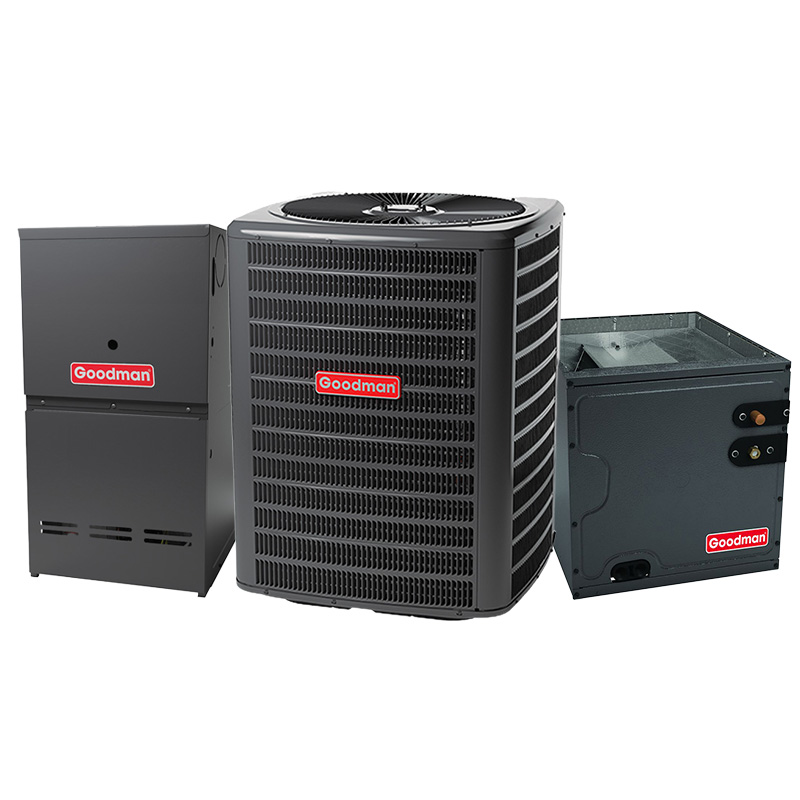
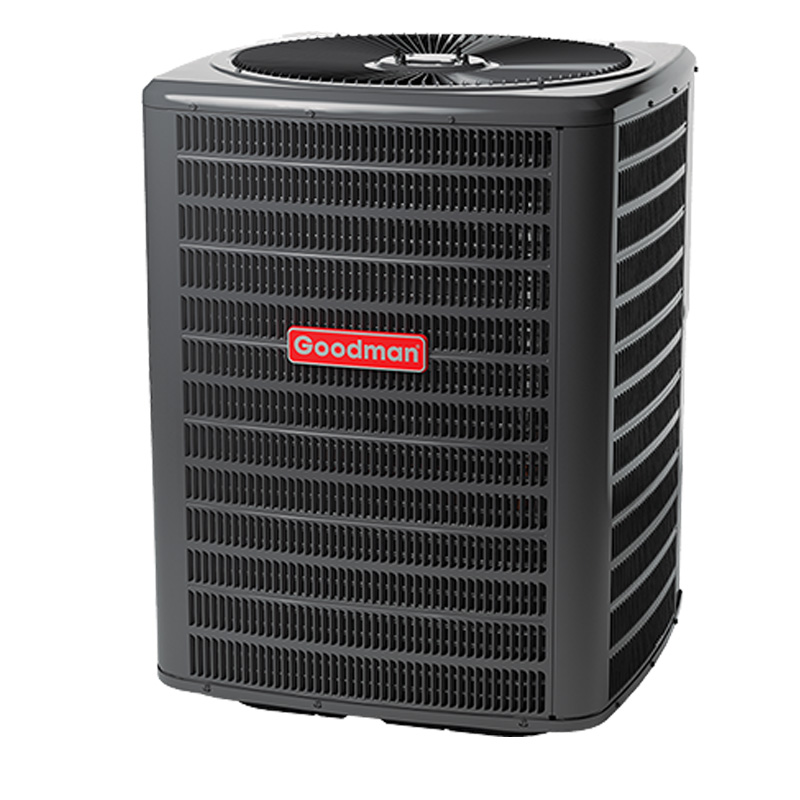
Goodman 2.5 Ton AC And 80000 BTU 80% AFUE Gas Furnace System | 15 SEER2 AC | Multi-Speed ECM Low NOx Furnace | Downflow | R32
View on AC Direct see your lowest price →Check current price on AC Direct →
Key features
- 2.5-ton cooling capacity with 15 SEER2 efficiency rating
- 80,000 BTU output at 80% AFUE single-stage gas heating
- Downflow cabinet orientation for closet or upper-floor installs
- Multi-speed ECM blower motor for quieter, more efficient airflow
- R-32 refrigerant with lower global-warming potential than R-410A
- Low NOx burner design meets California and other state emissions standards
About this system
The Goodman 2.5-ton, 15 SEER2 air conditioner paired with an 80,000 BTU, 80% AFUE downflow gas furnace is a straightforward workhorse bundle aimed at homeowners who want functional, code-compliant comfort without paying premium-brand prices. The 15 SEER2 rating sits at the lower end of today’s efficiency spectrum, meaning operating costs will be higher than a 17 or 18 SEER2 system over the equipment’s lifetime, but the lower upfront price can offset that gap for buyers in moderate climates or those planning a shorter ownership horizon. The R-32 refrigerant is a modern choice with a lower global-warming potential than R-410A and is increasingly the industry standard going forward.
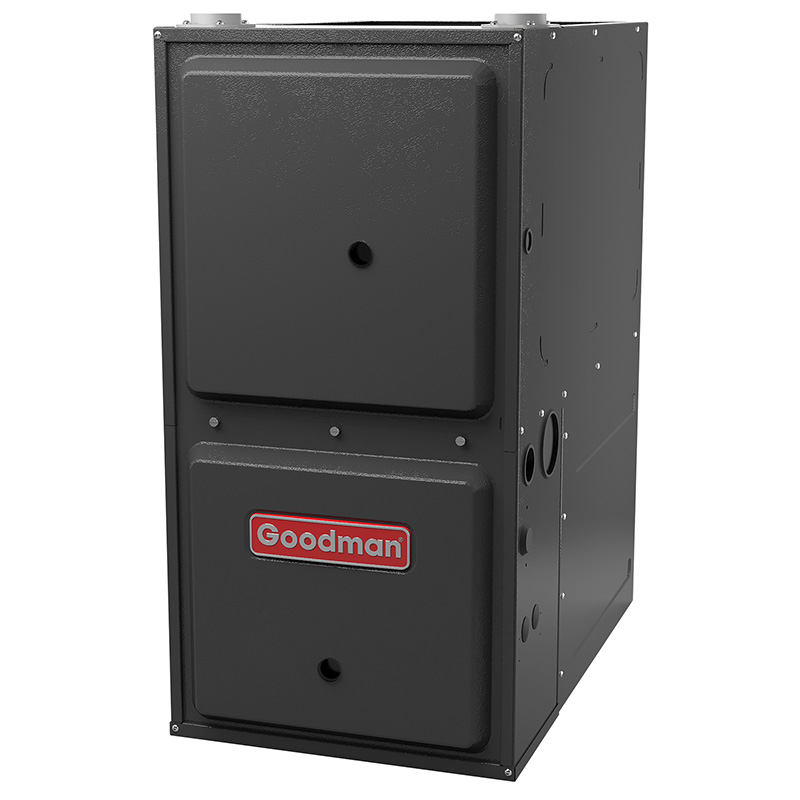
The downflow furnace configuration means conditioned air exits through the bottom of the cabinet and travels down into the ductwork, which suits homes where the furnace sits in a closet above a crawlspace or on an upper floor. The multi-speed ECM blower motor improves humidity control and quieter low-demand operation compared to a single-speed PSC motor, and the Low NOx burner design meets stricter California and other state air-quality requirements. At 80% AFUE, roughly 20 cents of every fuel dollar exits through the flue, so homeowners in cold climates with long heating seasons may want to weigh a 96% AFUE upgrade against the price difference before purchasing.
This system suits mid-sized homes roughly in the 1,200 to 1,600 square foot range depending on local climate and insulation levels, though a Manual J load calculation by your installer is the only reliable way to confirm sizing. It is a particularly practical fit for rental property owners, budget-focused new builds, or replacement projects where the ductwork and home envelope are already well-optimized and the owner wants reliable baseline performance without the cost premium of a variable-speed or two-stage system.
This Goodman bundle delivers functional, code-compliant heating and cooling at a price point that is genuinely hard to match from premium competitors. The trade-off is real: Goodman's documented component reliability and shorter average compressor lifespan mean long-term ownership costs can erode some of the upfront savings. It is a reasonable choice when installed by a skilled technician and maintained consistently, but buyers expecting set-it-and-forget-it durability over 18 to 20 years should temper expectations.
Overall score is the average of the five ratings above.
What we like
- Upfront cost runs 15 to 25 percent below comparable Carrier, Trane, and Lennox systems
- R-32 refrigerant is a forward-looking choice as R-410A is phased out industry-wide
- Multi-speed ECM blower improves humidity control and reduces blower noise on low-demand cycles
- Low NOx burner satisfies emissions requirements in the strictest state markets
- Downflow configuration opens up install locations unavailable to horizontal or upflow-only units
Trade-offs
- 80% AFUE means higher annual fuel costs versus 90% or 96% AFUE alternatives, especially in cold climates
- Dual-run capacitors are the most commonly reported failure point, typically requiring a service call around year 5 to 8
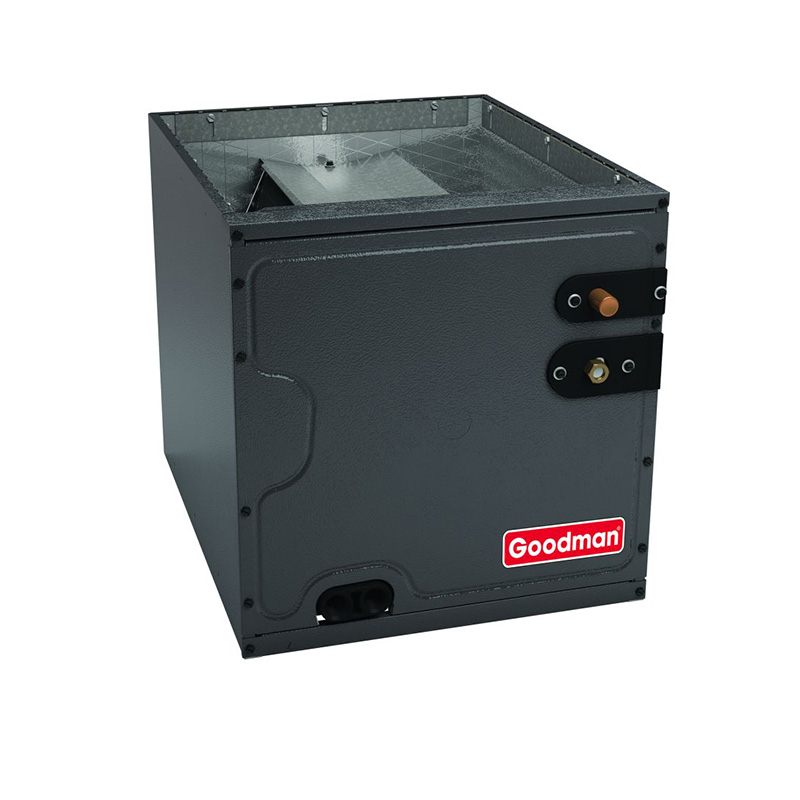
- Evaporator coil leaks appear in a meaningful share of owner reports, a potentially costly repair outside warranty
- Average compressor lifespan of 10 to 14 years trails the 15 to 20 years typically seen from premium brands
What homeowners and pros say about Goodman
Homeowners who chose Goodman equipment tend to split into two camps. Those who had a skilled installer and kept up with annual maintenance often report years of trouble-free operation and consistently highlight the lower upfront cost as the right call for their budget. On the other hand, Goodman carries a ConsumerAffairs rating of roughly 2.5 out of 5, a channel that skews toward frustrated owners, where the most recurring complaint is repair costs climbing after about year seven. Google dealer reviews average around 3.8 out of 5 across hundreds of reviews per location, with affordability cited most often as the reason buyers are satisfied. The picture that emerges is a brand that performs acceptably when conditions are right but leaves less margin for error than a premium competitor.
HVAC technicians are generally candid about Goodman’s specific weak points. Dual-run capacitors are the component they replace most often on these systems, a repair that usually runs 300 to 600 dollars and tends to show up between years five and eight. Evaporator coil leaks are documented in a meaningful share of owner reports and represent a more serious expense when they occur outside the warranty window. Compressor longevity is another honest conversation: Goodman compressors average roughly 10 to 14 years in real-world use, compared to 15 to 20 years that experienced technicians associate with Trane or Carrier equipment. For this specific system, the multi-speed ECM blower and R-32 refrigerant are genuine improvements over older Goodman lineups, but the brand’s overall reliability profile remains in the budget tier, and install quality remains the single biggest variable in how long any of it lasts.
Sources: ConsumerAffairs Goodman owner reviews, AHRI Directory of Certified Product Performance, U.S. DOE appliance and equipment efficiency standards, Goodman product specification sheets.
What it costs to run
At 15 SEER2, cooling this 2.5-ton system for a typical 1200-hour cooling season at the U.S. average electricity rate of $0.17/kWh works out to roughly $408 per year in cooling, about $49 less per year than a minimum-efficiency 13.4 SEER2 unit of the same size. Your real cost depends on your climate and local rate.
Method: (30,000 BTU/hr ÷ 15 SEER2) × 1200 hours ÷ 1000 × $0.17/kWh. Rate source: U.S. EIA average; cooling hours: moderate-climate estimate.
How it compares
| Brand | Comparable model | SEER2 | Stage | Price position |
|---|---|---|---|---|
| Goodman | This system (2.5T 15 SEER2 + 80K BTU 80% AFUE Downflow) | 15 | Single-stage | Value pick |
| Carrier | Comfort 24ACC6 series with 58CVA furnace | 15-16 | Single-stage | Typically 15 to 25 percent more than this Goodman bundle |
| Trane | XR15 series with S8X1 furnace | 15 | Single-stage | Typically 15 to 25 percent more than this Goodman bundle |
| Lennox | Merit ML15XC1 series with ML195 furnace | 15 | Single-stage | Typically 15 to 25 percent more than this Goodman bundle |
Competitor rows are comparable single-stage units at similar efficiency; price is relative position, not a quote.
Questions about this system
Is 15 SEER2 going to cost me significantly more to run than a higher-efficiency system?
Yes, over the life of the equipment the difference adds up, particularly in climates with long, hot summers. A 17 or 18 SEER2 system can cut cooling energy use by 10 to 15 percent annually, so if you run the AC heavily for five or more months a year, a higher-efficiency unit may pay back its price premium within several years. For moderate climates or smaller homes, the gap is smaller.
Why does the furnace use a downflow configuration, and is it right for my home?
A downflow furnace discharges air out the bottom of the cabinet, making it the correct choice when your furnace sits in an upper-floor closet or above a crawlspace with ductwork running beneath. If your ductwork runs above the furnace or through an attic, you likely need an upflow unit instead. Confirm your duct layout with your installer before purchasing.
What is the most common repair I should plan for with this Goodman system?
The dual-run capacitor is the most frequently reported component failure across Goodman AC systems, and the repair typically costs between 300 and 600 dollars including a service call. It is a relatively quick fix, but owners should budget for it somewhere between years five and ten. Evaporator coil leaks are also documented in a meaningful share of owner reviews and are a more expensive repair.
Does R-32 refrigerant change anything about how I service or maintain this system?
R-32 requires technicians who are certified to handle it, and not every HVAC contractor in every market stocks it yet, though availability is growing quickly. It is mildly flammable, which means servicing requires some additional precautions compared to R-410A. For routine maintenance this is largely invisible to the homeowner, but it is worth confirming your service contractor is set up to work with R-32 before signing a maintenance contract.
Should I be worried about refrigerant leaks in the first year?
A minority of Goodman owners report refrigerant leaks within the first year of ownership, and in most cases these trace back to installation issues such as improper line set connections or an incorrect initial charge rather than a factory defect. Hiring an experienced, licensed installer and having refrigerant levels verified at startup reduces this risk substantially. If a leak does occur in year one, it should fall within the warranty period.
Specifications
| Cooling capacity | 2.5 Ton |
| Efficiency | 15 SEER2 |
| Furnace output | 80000 BTU |
| Furnace efficiency | 80% AFUE |
| Configuration | Downflow |
| Refrigerant | R-32 |