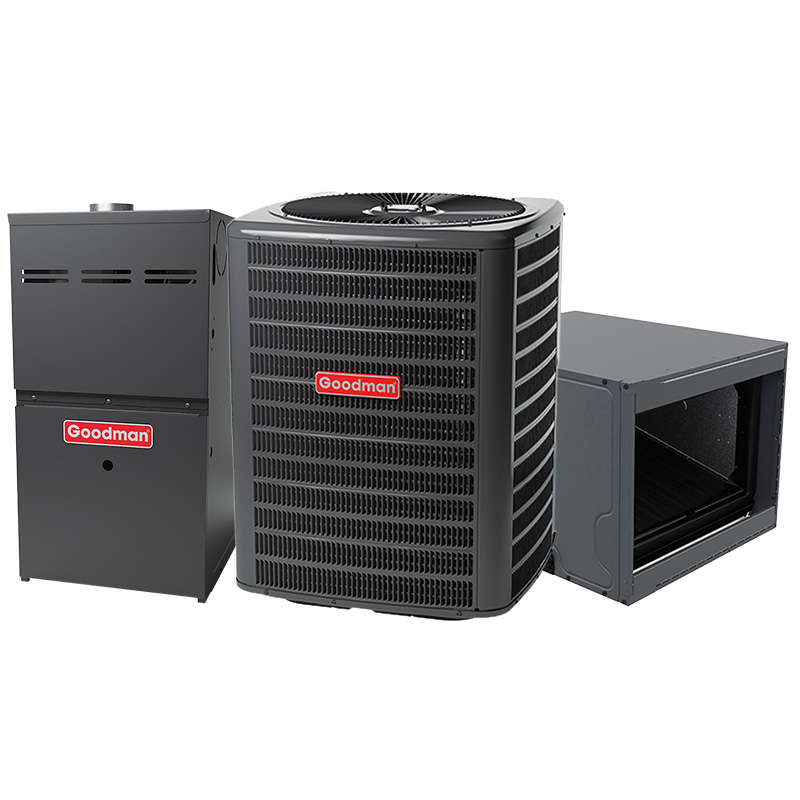
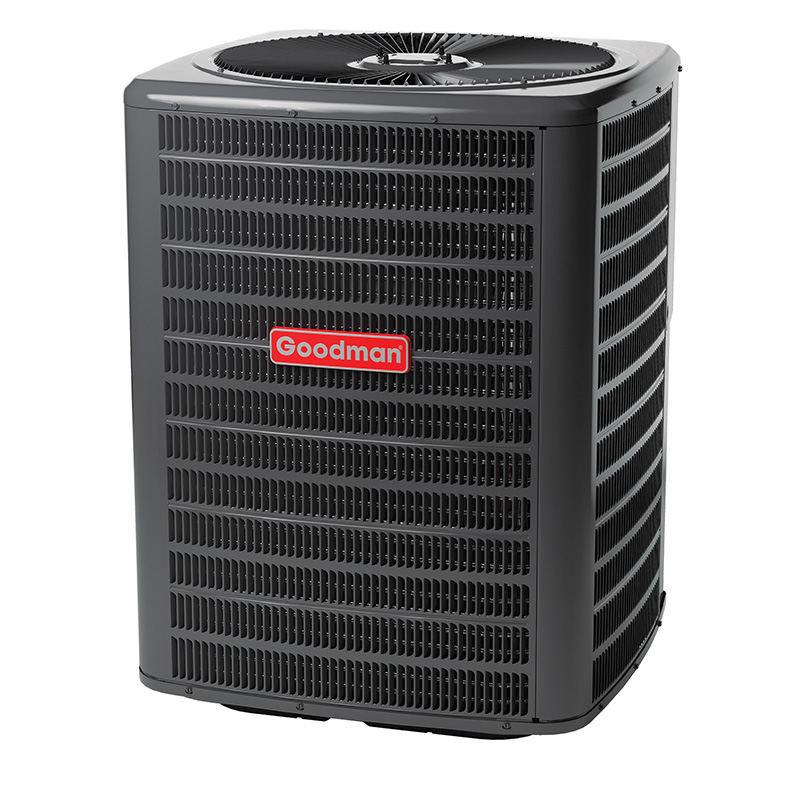
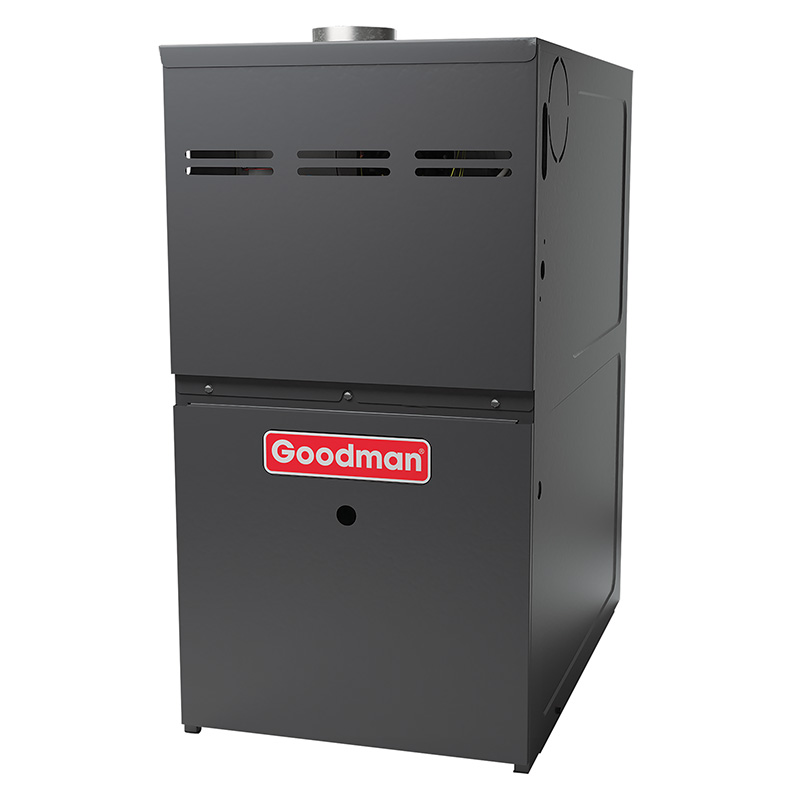
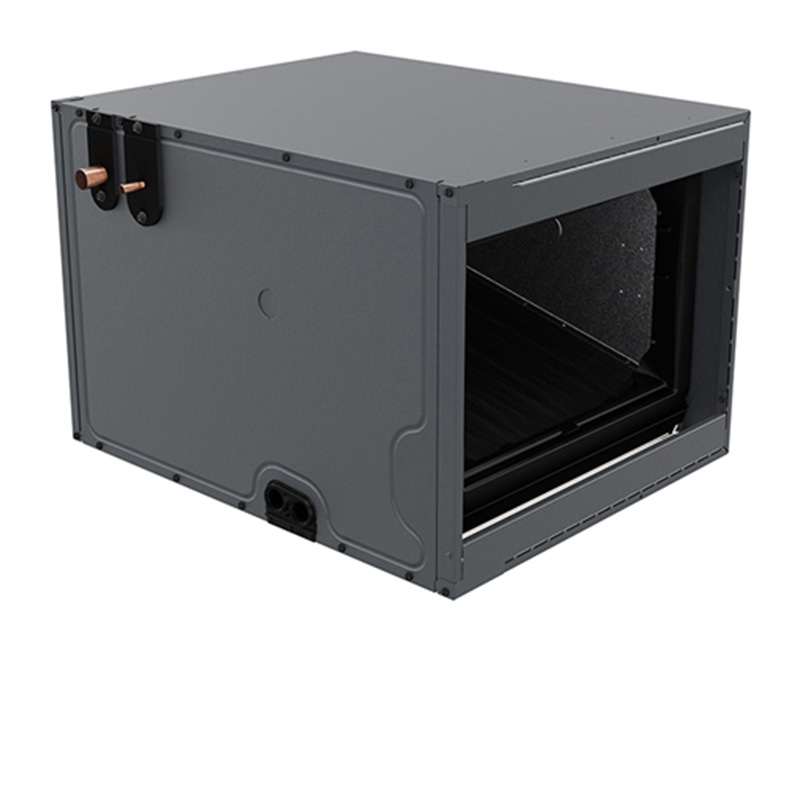
Goodman 2.5 Ton AC And 80000 BTU 80% AFUE Gas Furnace System | 16 SEER2 AC | Multi-Speed ECM Low NOx Furnace | Horizontal | R32
View on AC Direct see your lowest price →Check current price on AC Direct →
Key features
- 16 SEER2 cooling efficiency meets current federal minimum standards for most regions
- 80,000 BTU, 80% AFUE gas furnace with multi-speed ECM blower motor
- Horizontal configuration designed for attic or side-discharge installations
- R-32 refrigerant with lower global warming potential than R-410A
- ECM motor improves part-load dehumidification and air distribution vs. PSC motors
- Value-tier pricing typically 15 to 25 percent below Trane, Lennox, and Carrier equivalents
About this system
The Goodman 2.5-ton, 16 SEER2 air conditioner paired with an 80,000 BTU, 80% AFUE gas furnace is a practical choice for smaller homes, condos, or single-zone spaces in the 1,200 to 1,600 square foot range that need reliable summer cooling and moderate heating efficiency. The horizontal configuration makes this system well suited for attic installations or tight mechanical rooms where a vertical unit simply will not fit, a detail that matters when evaluating whether this bundle works for your specific structure. The R-32 refrigerant charge is a forward-looking element, as R-32 carries a lower global warming potential than the older R-410A it is replacing across the industry.
On the efficiency side, 16 SEER2 sits at the entry point of the current federal minimum tier for most U.S. climate regions, which means it meets code without offering the running-cost savings of higher SEER2 units in the 18 to 22 range. The 80% AFUE furnace converts eight out of every ten units of gas into usable heat, a standard mid-efficiency figure that costs less upfront than a 96% condensing unit but will result in modestly higher gas bills over time, especially in colder climates. The multi-speed ECM blower motor is a genuine upgrade over basic single-speed models, improving dehumidification, air distribution, and long-term motor reliability compared to a PSC motor.
This Goodman system delivers a functional, code-compliant cooling and heating solution at a price point that meaningfully undercuts premium brands, making it a reasonable choice for budget-conscious buyers who are not planning to stay in the home for 20-plus years. The 16 SEER2 and 80% AFUE specs are honest mid-range numbers, not standout performers, and long-term ownership costs depend heavily on install quality and a maintenance routine that catches capacitor and coil issues early. It is not the last system you will ever buy, but it can be a solid one if installed correctly.
Overall score is the average of the five ratings above.
What we like
- Purchase price is typically 15 to 25 percent lower than comparable Carrier, Trane, or Lennox systems
- Horizontal configuration opens up attic and tight-space install options unavailable with vertical units
- ECM multi-speed blower provides better humidity control and quieter low-load operation than single-speed alternatives
- R-32 refrigerant is increasingly standard and has a lower environmental impact than the R-410A it replaces
- Parts are widely stocked across HVAC distributors, making repairs accessible in most markets
Trade-offs
- 80% AFUE is standard efficiency; homeowners in cold climates will pay noticeably more in gas compared to a 95 to 96% condensing furnace
- Dual-run capacitors are the most commonly reported failure point, typically requiring a service call and 300 to 600 dollars within the first decade
- Compressor lifespan averages 10 to 14 years, several years shorter than premium-brand benchmarks of 15 to 20 years
- A minority of owners have reported refrigerant leaks in the first year, generally traced to installation quality rather than the unit itself, underscoring how critical a skilled installer is
What homeowners and pros say about Goodman
Homeowners who chose Goodman most often point to the upfront cost as the deciding factor, and Google dealer reviews averaging around 3.8 out of 5 confirm that when the install goes well, owners are generally satisfied in the early years. The picture shifts on ConsumerAffairs, where Goodman sits at roughly 2.5 out of 5, with the most common complaints centered on repair costs that start climbing after about year seven. The failure modes that show up repeatedly are consistent: dual-run capacitors are the most frequently cited issue, usually an inexpensive fix in the 300 to 600 dollar range, but the visits add up. Evaporator coil leaks appear in a meaningful share of owner accounts, and compressor longevity averaging 10 to 14 years falls short of the 15 to 20 year range owners of premium brands report.
HVAC technicians who work on Goodman equipment regularly tend to hold a pragmatic view of this specific system configuration. The horizontal setup adds a layer of installation care that a rushed or inexperienced tech can shortcut, and those shortcuts tend to be what separates the owners who get 14 solid years from those dealing with a refrigerant leak in year one. The multi-speed ECM blower is a component technicians generally regard positively for both longevity and comfort delivery compared to older PSC motors. The consensus among pros is that Goodman is a workable choice when the installer knows what they are doing and the homeowner commits to annual maintenance, and a frustrating one when either of those conditions is missing.
Sources: ConsumerAffairs Goodman owner reviews, AHRI Directory of Certified Product Performance, U.S. DOE appliance and equipment efficiency standards, Goodman product specification sheets.
What it costs to run
At 16 SEER2, cooling this 2.5-ton system for a typical 1200-hour cooling season at the U.S. average electricity rate of $0.17/kWh works out to roughly $382 per year in cooling, about $75 less per year than a minimum-efficiency 13.4 SEER2 unit of the same size. Your real cost depends on your climate and local rate.
Method: (30,000 BTU/hr ÷ 16 SEER2) × 1200 hours ÷ 1000 × $0.17/kWh. Rate source: U.S. EIA average; cooling hours: moderate-climate estimate.
How it compares
| Brand | Comparable model | SEER2 | Stage | Price position |
|---|---|---|---|---|
| Goodman | GSX16 / GMVC8 Series | 16 | Single-stage / Multi-speed | Value pick |
| Carrier | Performance 16 (24ACC6) | 16 | Single-stage | Typically 15 to 25 percent more than Goodman |
| Trane | XR16 Series | 16 | Single-stage | Typically 15 to 25 percent more than Goodman |
| Lennox | Merit ML16XC1 Series | 16 | Single-stage | Typically 15 to 25 percent more than Goodman |
Competitor rows are comparable single-stage units at similar efficiency; price is relative position, not a quote.
Questions about this system
Is a horizontal-only system harder to find a technician for, and does it cost more to service?
Most experienced HVAC technicians are comfortable with horizontal installations, particularly in attic applications, but access can be more awkward than a vertical closet unit, which may add a small labor premium on service calls. Parts for this Goodman system are widely distributed, so the equipment itself is not the limiting factor. Confirm with your installer that they have worked in your specific attic or mechanical space before committing.
Why does the furnace use 80% AFUE instead of a high-efficiency 95 to 96% model, and should I upgrade?
An 80% AFUE furnace vents exhaust through a standard flue pipe, while 95 to 96% condensing models require a PVC exhaust and a condensate drain, which adds installation complexity and cost. If you are in a mild to moderate heating climate or replacing an existing 80% system with the same venting already in place, 80% AFUE is a reasonable fit. In colder climates where the furnace runs heavily from November through March, the payback on a higher-AFUE unit is faster and worth the added upfront cost.
What does the multi-speed ECM blower actually do differently from a standard motor?
A standard PSC motor typically runs at one or two fixed speeds, cycling fully on and off with each call for heating or cooling. The ECM motor in this furnace adjusts its speed in smaller increments, which means the system can circulate air at a lower, quieter speed during mild conditions, improving humidity removal in summer and distributing heat more evenly in winter. ECM motors also use less electricity than PSC motors at partial loads, which partially offsets the mid-efficiency AFUE rating.
Goodman has some poor reviews online. Should I be concerned about reliability?
Goodman scores around 2.5 out of 5 on ConsumerAffairs, a platform that disproportionately attracts complaints, and roughly 3.8 out of 5 across Google dealer reviews where affordability is the most frequently cited positive. The documented failure pattern shows dual-run capacitors as the most common and cheapest issue, typically a 300 to 600 dollar repair, while evaporator coil leaks and a compressor lifespan averaging 10 to 14 years represent the more significant long-term risks. A strong preventive maintenance plan and a skilled installer reduce but do not eliminate these risks.
Does R-32 refrigerant affect what technicians I can use for service, and is it safe?
R-32 requires EPA Section 608 certification to handle, which any licensed HVAC technician already holds, so it does not meaningfully limit your service options. R-32 is mildly flammable, classified as A2L, which means it requires equipment and handling practices rated for that refrigerant class, and most modern HVAC tools are already compatible. It is not a barrier to service in practice, but confirm your technician has current experience with R-32 systems before scheduling work.
Specifications
| Cooling capacity | 2.5 Ton |
| Efficiency | 16 SEER2 |
| Furnace output | 80000 BTU |
| Furnace efficiency | 80% AFUE |
| Configuration | Horizontal |
| Refrigerant | R-32 |