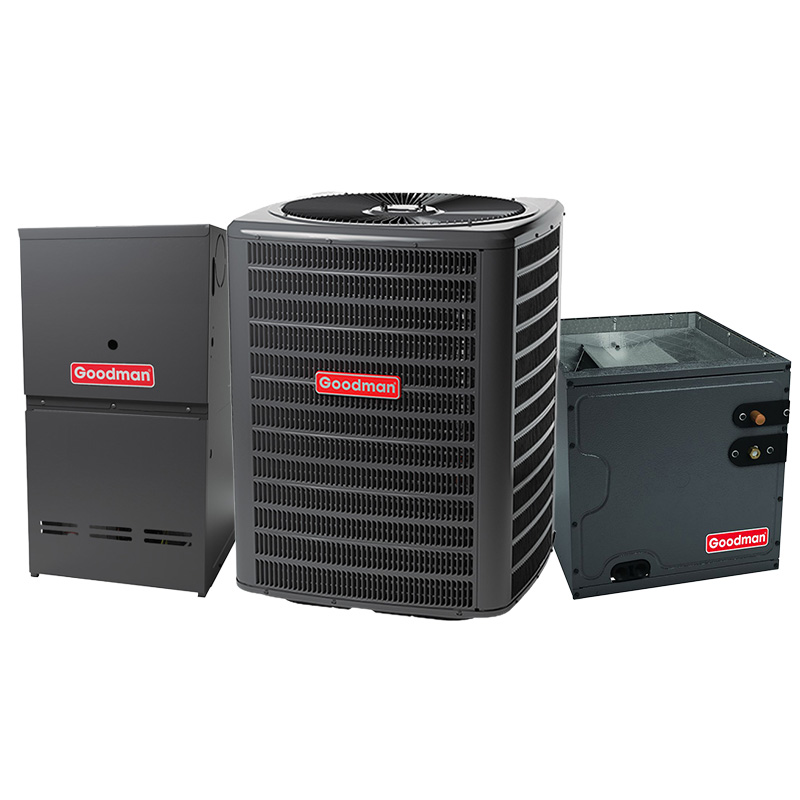
Goodman 2.5 Ton AC And 80000 BTU 80% AFUE Gas Furnace System | 15.2 SEER2 AC | Multi-Speed ECM Low NOx Furnace | Downflow | R32
View on AC Direct see your lowest price →Check current price on AC Direct →
Key features
- 15.2 SEER2 cooling efficiency meets 2023 federal minimum standards for most U.S. regions
- 80,000 BTU output at 80% AFUE; suitable for moderate heating loads in mild to moderate climates
- Multi-speed ECM blower motor reduces blower electricity use and improves comfort over single-speed PSC motors
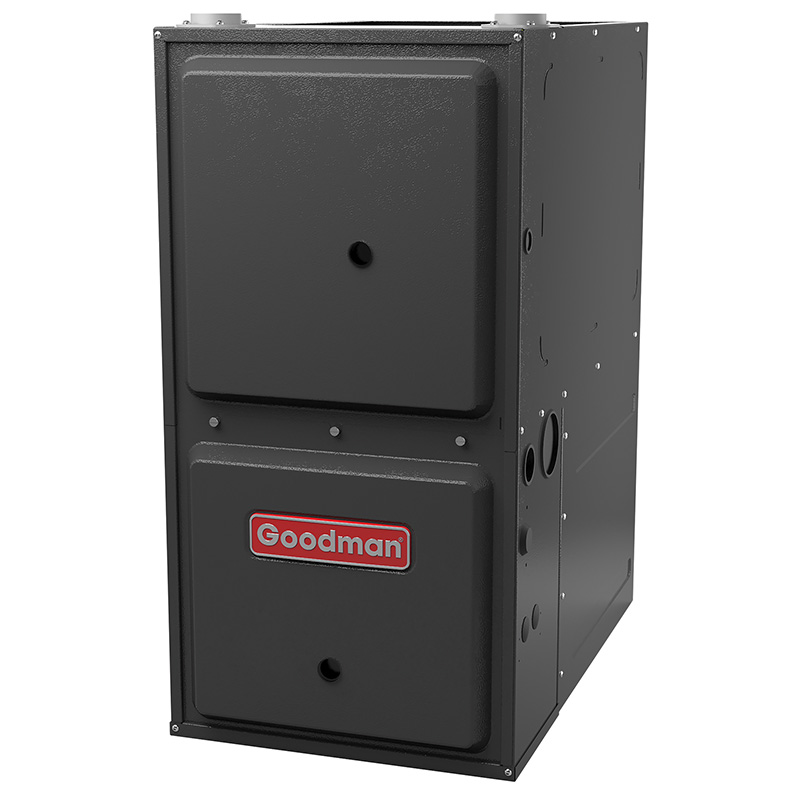
- Downflow configuration designed for installations above conditioned space or in floor-level closets
- R-32 refrigerant with lower global warming potential than outgoing R-410A systems
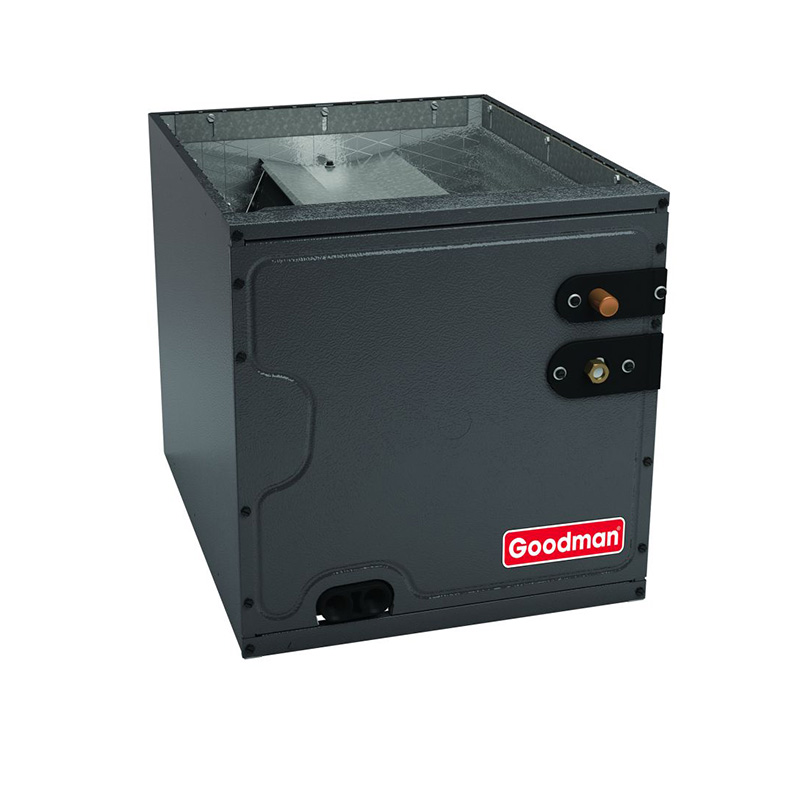
- Factory-matched system; AC and furnace are rated and warrantied as a paired unit
About this system
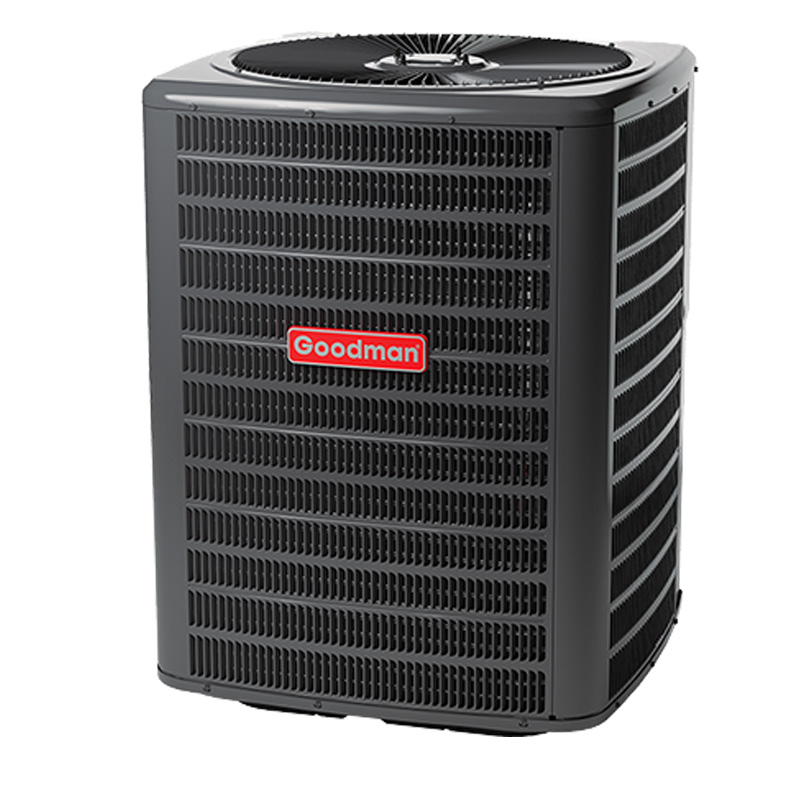
The Goodman 2.5-ton, 15.2 SEER2 AC paired with an 80,000 BTU 80% AFUE downflow gas furnace is a straightforward, no-frills split system aimed at homeowners who want reliable heating and cooling without paying a premium brand surcharge. The 2.5-ton capacity is well-suited to homes roughly in the 1,200 to 1,600 square foot range in moderate climates, though accurate Manual J load calculations should always drive that decision. R-32 refrigerant is a forward-looking choice: it carries a lower global warming potential than the R-410A it replaces, and its higher efficiency characteristics helped Goodman hit the 15.2 SEER2 mark at this price tier.
The furnace side runs an 80% AFUE rating, meaning 80 cents of every dollar spent on gas becomes usable heat. That is the federal minimum efficiency floor for most northern U.S. climates, so buyers in colder regions should weigh whether the step up to a 96% AFUE unit makes economic sense over a 10-plus-year horizon. The multi-speed ECM blower motor is a genuine asset: it ramps airflow to match demand rather than cycling on full blast, which lowers electricity consumption, softens temperature swings, and reduces wear compared to a PSC motor. The downflow configuration means supply air exits the bottom of the unit, which suits installations in closets or platforms above a crawlspace rather than attic-style setups.
This system delivers on its core promise of affordable, code-compliant comfort for budget-conscious buyers who accept that long-term reliability depends heavily on who installs it and how well it is maintained. At 15.2 SEER2 and 80% AFUE, efficiency is adequate rather than impressive, and owners should plan for potential out-of-pocket repair costs after the seven-year mark based on Goodman's documented track record. It is a sensible choice when upfront cost is the primary constraint and a qualified installer is in the picture.
Overall score is the average of the five ratings above.
What we like
- Priced 15 to 25 percent below comparable Trane, Carrier, and Lennox systems, making it accessible for tighter budgets
- R-32 refrigerant is lower-GWP and positions the system ahead of R-410A equipment still on the market
- ECM multi-speed blower improves comfort and operating efficiency over basic single-speed motors
- Factory-matched pairing means efficiency ratings are certified and warranty coverage is unified
- Widely available parts and large contractor network make service calls straightforward in most metro areas
Trade-offs
- 80% AFUE is the regulatory floor in many regions; homeowners in cold climates will pay noticeably higher gas bills than with a 95-plus percent unit
- Dual-run capacitor failures are the most commonly reported issue, and compressor lifespan averages 10 to 14 years versus 15 to 20 for premium brands
- ConsumerAffairs scores average around 2.5 out of 5, with repair costs after year 7 cited repeatedly as a frustration
- A minority of owners report refrigerant leaks within the first year, a signal that charge and install quality are not always consistent
What homeowners and pros say about Goodman
Among homeowners, Goodman earns consistent praise for one thing above all: upfront affordability. Google dealer reviews land around 3.8 out of 5 across hundreds of reviews per location, and the most common thread is that buyers got a functioning, code-compliant system without the sticker shock of a Trane or Lennox quote. That goodwill tends to hold through the early years. Where the picture gets more complicated is around year seven and beyond, which is exactly the pattern captured in Goodman’s ConsumerAffairs score of roughly 2.5 out of 5. Owners who post there frequently describe a working unit that gradually becomes expensive to keep running, with dual-run capacitor failures and evaporator coil leaks appearing as the most commonly cited problems. Capacitor replacements are typically a low-cost fix in the $300 to $600 range, but coil leaks can mean much larger bills. Compressor lifespan is another realistic concern: Goodman compressors tend to average 10 to 14 years, compared to 15 to 20 for equipment from premium brands.
HVAC technicians who work on Goodman equipment regularly tend to hold a pragmatic view. They note that many of the failures they see trace back to improper installation or deferred maintenance rather than inherent manufacturing defects, which is why install quality is treated as the single biggest variable in how long one of these systems lasts. The R-32 refrigerant in this specific unit is a newer element that most experienced technicians are equipped to handle, though it is worth confirming R-32 certification with any service contractor. The multi-speed ECM blower gets quiet approval from pros as a step up over basic motors at this price point. The overall consensus from the field is that Goodman represents a fair exchange: lower first cost in return for a shorter expected service life and a greater dependence on getting the install right the first time.
Sources: ConsumerAffairs Goodman owner reviews, AHRI Directory of Certified Product Performance, U.S. DOE appliance and equipment efficiency standards, Goodman product specification sheets.
What it costs to run
At 15.2 SEER2, cooling this 2.5-ton system for a typical 1200-hour cooling season at the U.S. average electricity rate of $0.17/kWh works out to roughly $403 per year in cooling, about $54 less per year than a minimum-efficiency 13.4 SEER2 unit of the same size. Your real cost depends on your climate and local rate.
Method: (30,000 BTU/hr ÷ 15.2 SEER2) × 1200 hours ÷ 1000 × $0.17/kWh. Rate source: U.S. EIA average; cooling hours: moderate-climate estimate.
How it compares
| Brand | Comparable model | SEER2 | Stage | Price position |
|---|---|---|---|---|
| Goodman | GMVC8 Furnace + GSXH5 Condenser (this system) | 15.2 | Multi-speed | Value pick |
| Carrier | Performance 80 Furnace + 24ACC6 Condenser | 15.2 | Single-stage | Moderately higher than this system |
| Trane | S8B1 Furnace + XR15 Condenser | 15.2 | Single-stage | Noticeably higher than this system |
| Lennox | ML180 Furnace + 14ACX Condenser | 15.0 | Single-stage | Comparable to moderately higher than this system |
Competitor rows are comparable single-stage units at similar efficiency; price is relative position, not a quote.
Questions about this system
Is 80% AFUE enough for my climate, or should I step up to a higher-efficiency furnace?
In mild climates like the Southeast or Southwest, 80% AFUE is generally adequate and the payback on a 96% unit can take many years. In colder regions where heating runs for five or more months, the gas savings from a high-efficiency furnace often justify the higher upfront cost within five to eight years, and some northern states impose stricter minimum efficiency requirements for new installs.
What does the downflow configuration mean, and will it work in my house?
Downflow means the furnace discharges conditioned air out the bottom of the cabinet, so the supply ductwork runs beneath the unit. It is the correct choice for installations in a hallway closet or platform above a crawlspace, but it is not suited to attic installations or situations where supply ducts are above the unit. Confirm your duct layout with your installer before ordering.
The system uses R-32 refrigerant. Will technicians be able to service it?
R-32 is becoming mainstream in the U.S. market, and most certified HVAC technicians can work with it using standard tools. It does require equipment rated for R-32 and proper handling due to its mild flammability classification, so confirm your service contractor has current R-32 certification before scheduling work.
Goodman's ConsumerAffairs score is low. Should I be worried about reliability?
ConsumerAffairs tends to skew toward owners who had a problem, so a 2.5 out of 5 there does not mean most units fail. The recurring pattern in those reviews is repair costs climbing after roughly year seven, particularly capacitor replacements and, less commonly, evaporator coil issues. Budgeting a few hundred dollars per year for maintenance and prompt minor repairs after the warranty period is a realistic ownership plan.
What warranty comes with this system, and are there any conditions I need to know about?
Goodman typically offers a 10-year parts warranty on registered equipment, but registration must be completed within a set window after installation. The warranty generally requires installation by a licensed HVAC contractor and may be voided by improper refrigerant charge or unauthorized modifications. Read the warranty documentation carefully and register the unit promptly after install.
Specifications
| Cooling capacity | 2.5 Ton |
| Efficiency | 15.2 SEER2 |
| Furnace output | 80000 BTU |
| Furnace efficiency | 80% AFUE |
| Configuration | Downflow |
| Refrigerant | R-32 |