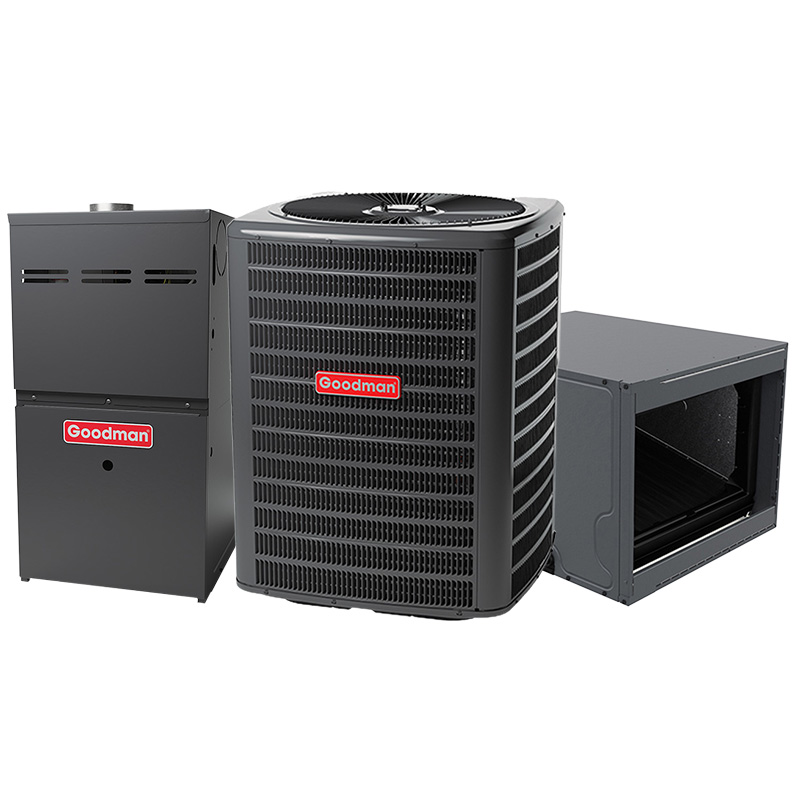
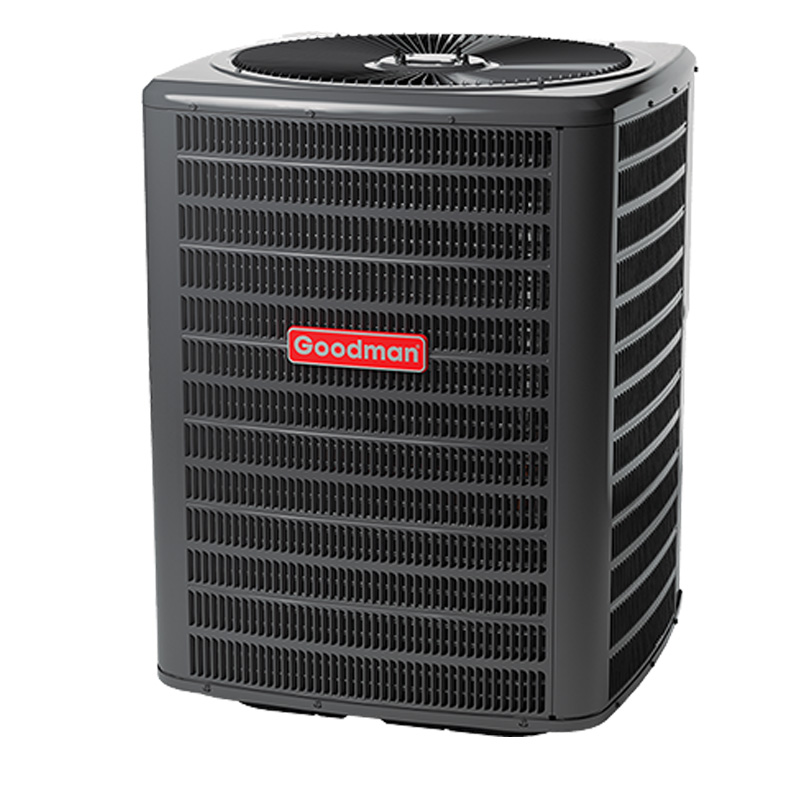
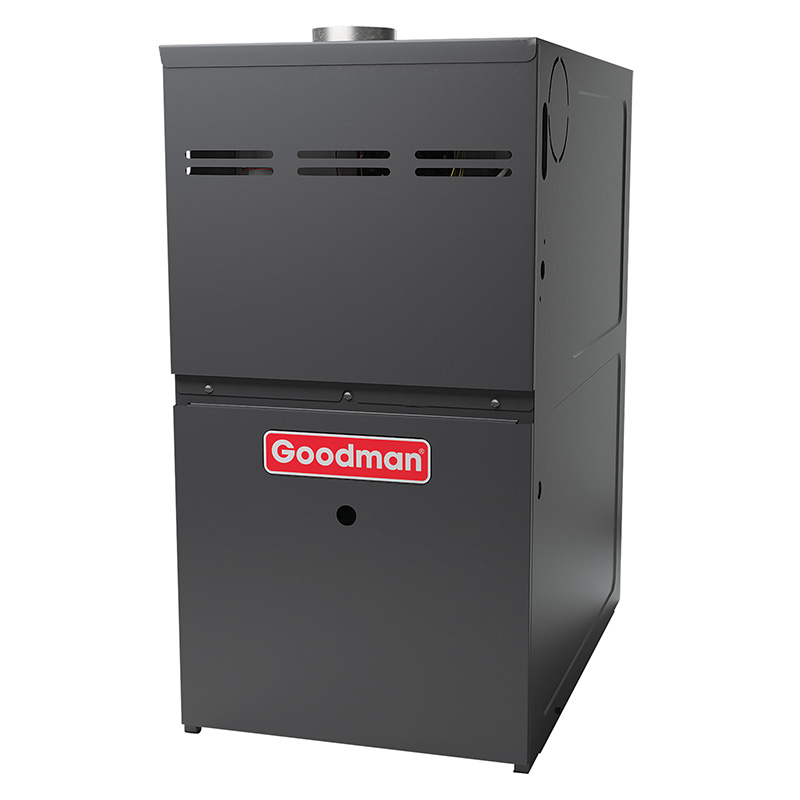
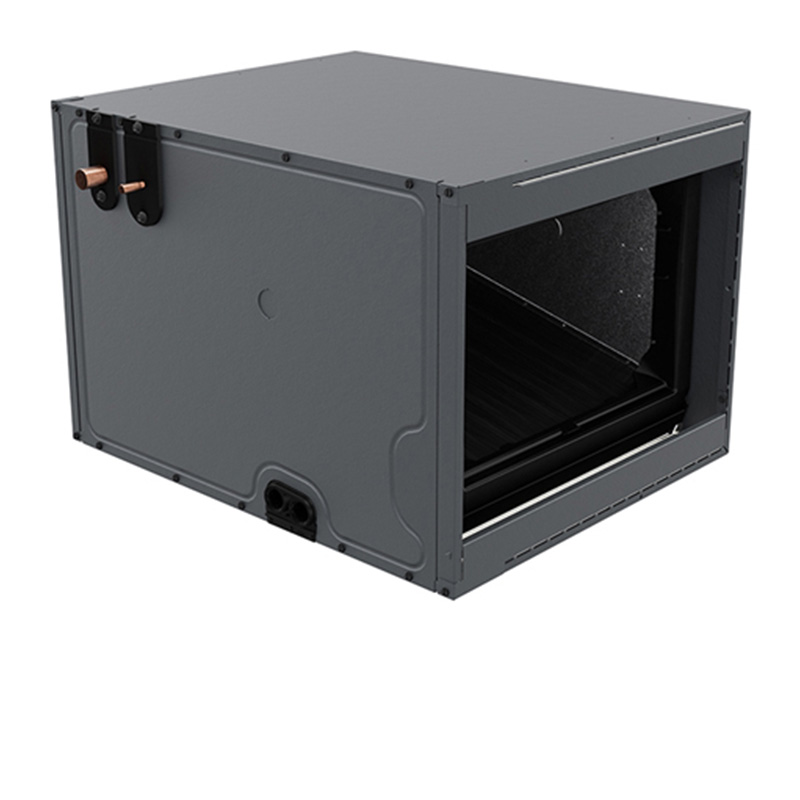
Goodman 2.5 Ton AC And 80000 BTU 80% AFUE Gas Furnace System | 15.2 SEER2 AC | Multi-Speed ECM Low NOx Furnace | Horizontal | R32
View on AC Direct see your lowest price →Check current price on AC Direct →
Key features
- 15.2 SEER2 cooling efficiency, meeting and slightly exceeding current federal minimums
- 80,000 BTU output at 80% AFUE for moderate-climate heating applications
- Horizontal configuration designed for attic, crawlspace, or side-discharge installations
- Multi-speed ECM blower motor for quieter operation and reduced fan energy use
- Low NOx burner design meets California SCAQMD and other strict emissions rules
- R-32 refrigerant with lower global warming potential than the outgoing R-410A standard
About this system
This Goodman bundle pairs a 2.5-ton, 15.2 SEER2 central air conditioner with an 80,000 BTU, 80% AFUE gas furnace in a horizontal configuration, making it a practical choice for homes where equipment sits in a crawlspace, attic, or closet that cannot accept a vertical unit. The 15.2 SEER2 rating lands just above the federal minimum for most U.S. climate zones, so you get a modest step up in cooling efficiency without paying for a premium multi-stage system. The furnace’s multi-speed ECM blower improves airflow consistency and reduces fan energy compared to a standard single-speed motor, and the Low NOx combustion design meets California and other strict air-quality requirements.
R-32 refrigerant is a meaningful forward-looking detail here. It has a lower global warming potential than the R-410A it replaces and is increasingly the industry standard, so finding service technicians and replacement refrigerant in the years ahead should be straightforward. At 80% AFUE the furnace converts four out of every five BTUs of gas into heat, which is acceptable for mild to moderate heating climates but will cost noticeably more to operate in cold regions than a 96% or 97% AFUE modulating unit. Buyers in the Gulf Coast, Southeast, or lower Midwest will find the efficiency trade-off easier to accept than those in Minnesota or New England.
This system suits homeowners who need a code-compliant horizontal installation, want a complete matched system from one manufacturer, and are working within a tight budget. It is not engineered for buyers who prioritize the lowest possible utility bills above all else or who want the 20-plus-year compressor lifespan associated with premium brands.
This Goodman bundle delivers a complete, code-compliant horizontal system at a price point 15 to 25 percent below comparable Trane, Carrier, and Lennox equipment, making it a reasonable choice for budget-focused buyers in mild climates. The efficiency and feature set are honest rather than exceptional, and long-term ownership costs depend heavily on installation quality and a willingness to budget for component repairs after year seven. Buyers who can stretch their budget will find better reliability and efficiency from premium brands, but those who cannot will get a functional system here if the installation is done right.
Overall score is the average of the five ratings above.
What we like
- Priced 15 to 25 percent below comparable Trane, Lennox, and Carrier systems
- Horizontal layout suits attics, crawlspaces, and tight closet installations that vertical units cannot serve
- Multi-speed ECM blower improves comfort and reduces fan energy versus single-speed alternatives
- R-32 refrigerant eases future serviceability as R-410A is phased out industry-wide
- Low NOx combustion meets California SCAQMD and similar regional air-quality standards
Trade-offs
- 80% AFUE means roughly 20% of gas is exhausted unused, a meaningful operating cost penalty in cold climates
- Compressor lifespan averages 10 to 14 years, shorter than the 15 to 20 years typical of premium-brand compressors
- Evaporator coil leaks appear in a notable share of owner reviews, and dual-run capacitor failures are the most common service call after year seven
- Overall performance depends heavily on installer quality, and Goodman's ConsumerAffairs score of around 2.5 out of 5 reflects complaints that often trace back to poor installs or deferred maintenance
What homeowners and pros say about Goodman
Homeowners who research Goodman online encounter a split picture. On ConsumerAffairs, Goodman scores around 2.5 out of 5, a platform where dissatisfied owners are overrepresented and the recurring thread is repair bills that start climbing around year seven. Capacitor failures are the most frequently mentioned culprit, typically a 300 to 600 dollar fix, but evaporator coil leaks and refrigerant escaping in the first year also appear often enough to warrant attention. Google dealer reviews paint a more balanced picture at around 3.8 out of 5, where the most consistent praise is straightforward: the systems are affordable and the dealers who install them are accessible.
HVAC technicians tend to frame Goodman candidly. The brand’s hardware is serviceable, but they consistently point to installation quality as the single biggest variable in how long a Goodman system holds up. A rushed or cut-rate install amplifies every weakness the equipment already has, while a careful installation by an experienced contractor narrows the gap with premium brands considerably. The compressor lifespan averaging 10 to 14 years versus the 15 to 20 years more common in Trane or Carrier units is a real difference, not a marketing talking point, and buyers of this horizontal system should factor a potential compressor replacement into their long-term cost expectations. For buyers who vet their contractor carefully and schedule annual maintenance, Goodman can deliver its stated functionality at a price that leaves room in the budget for those eventual repairs.
Sources: ConsumerAffairs Goodman owner reviews, AHRI Directory of Certified Product Performance, U.S. DOE appliance and equipment efficiency standards, Goodman product specification sheets.
What it costs to run
At 15.2 SEER2, cooling this 2.5-ton system for a typical 1200-hour cooling season at the U.S. average electricity rate of $0.17/kWh works out to roughly $403 per year in cooling, about $54 less per year than a minimum-efficiency 13.4 SEER2 unit of the same size. Your real cost depends on your climate and local rate.
Method: (30,000 BTU/hr ÷ 15.2 SEER2) × 1200 hours ÷ 1000 × $0.17/kWh. Rate source: U.S. EIA average; cooling hours: moderate-climate estimate.
How it compares
| Brand | Comparable model | SEER2 | Stage | Price position |
|---|---|---|---|---|
| Goodman | GMEC8 / GSXH5 Series (this system) | 15.2 | Single-stage | Value pick |
| Carrier | Performance 13 / 58TN Series | 15.2 | Single-stage | Roughly 15 to 20 percent more than this Goodman system |
| Trane | XR15 / S8X1 Series | 15.2 | Single-stage | Roughly 20 to 25 percent more than this Goodman system |
| Lennox | Merit 14ACX / ML180 Series | 15.0–15.2 | Single-stage | Roughly 20 to 25 percent more than this Goodman system |
Competitor rows are comparable single-stage units at similar efficiency; price is relative position, not a quote.
Questions about this system
Is 80% AFUE good enough, or should I upgrade to a 96% furnace?
For homeowners in the Southeast, Gulf Coast, or other regions where winters are short and mild, 80% AFUE is generally acceptable and the payback period on a higher-efficiency furnace can stretch to 10 or more years. In colder climates like the upper Midwest or Northeast, a 95% or higher AFUE unit typically pays back its price premium in under five years through lower gas bills, so the upgrade is worth considering.
What does the horizontal configuration actually mean, and does my home qualify?
Horizontal means the air handler and furnace are oriented on their side, with supply and return air flowing in a roughly sideways path rather than up or down. This configuration is common in attics with limited headroom, crawlspaces, and certain closet installations. A qualified HVAC technician should confirm your space meets the manufacturer's clearance and access requirements before purchase.
How does R-32 refrigerant affect service costs compared to R-410A?
R-32 is being adopted broadly across the industry as R-410A is phased out, so availability is increasing and pricing is expected to remain competitive. R-32 operates at similar pressures to R-410A and does not require entirely new tools, though technicians must be certified to handle it. In practical terms, service costs for a routine refrigerant top-off or recharge should be comparable to what you would have paid for R-410A work.
What are the most likely repair costs I should budget for over 10 years?
The dual-run capacitor is the most commonly reported failure point on Goodman AC units, and replacement typically runs 300 to 600 dollars including labor. Evaporator coil leaks are the next most common owner complaint and can cost considerably more depending on whether the coil is repaired or replaced. Setting aside a modest annual maintenance budget and scheduling a yearly tune-up is the most reliable way to catch these issues before they become expensive emergencies.
Does this system come with a warranty, and what does it actually cover?
Goodman typically offers a 10-year parts limited warranty on registered systems, covering major components including the compressor, heat exchanger, and coils. Registration must be completed within a set window after installation, and coverage generally does not include labor costs. Read the warranty certificate that ships with your specific unit, because coverage terms can vary by model and registration status.
Specifications
| Cooling capacity | 2.5 Ton |
| Efficiency | 15.2 SEER2 |
| Furnace output | 80000 BTU |
| Furnace efficiency | 80% AFUE |
| Configuration | Horizontal |
| Refrigerant | R-32 |