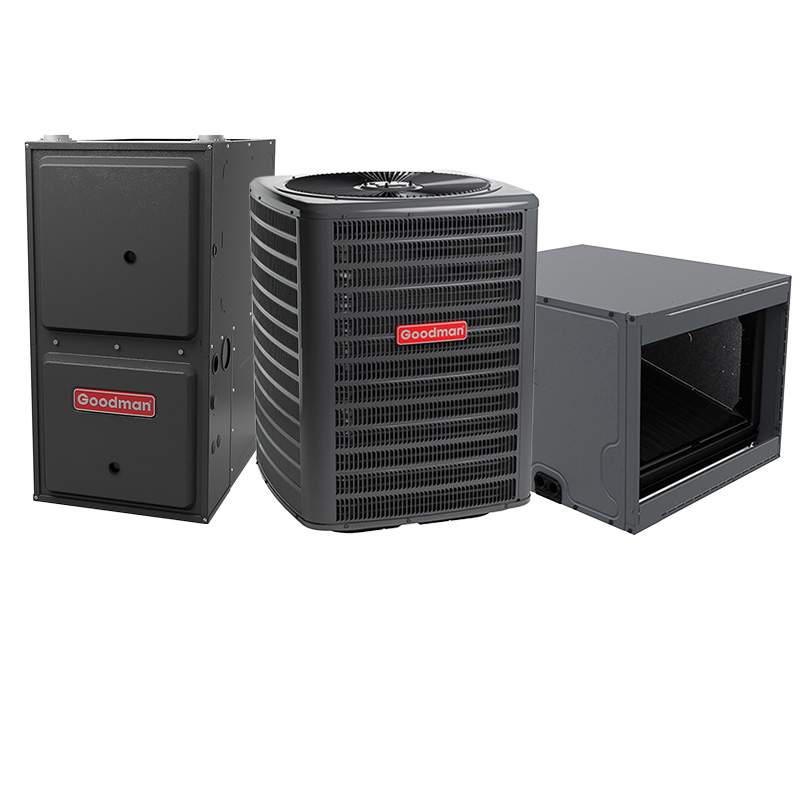
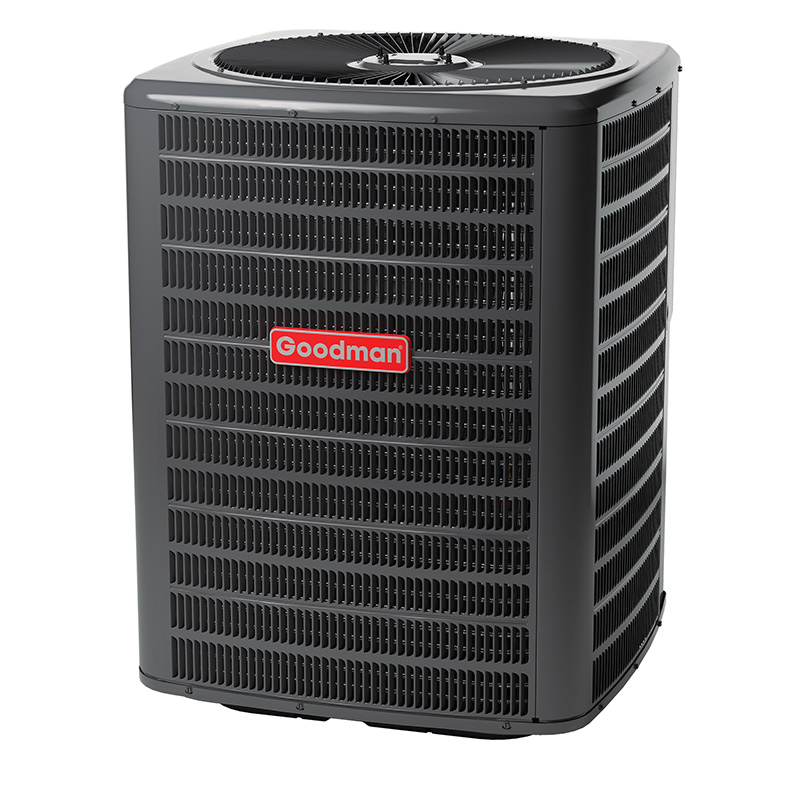
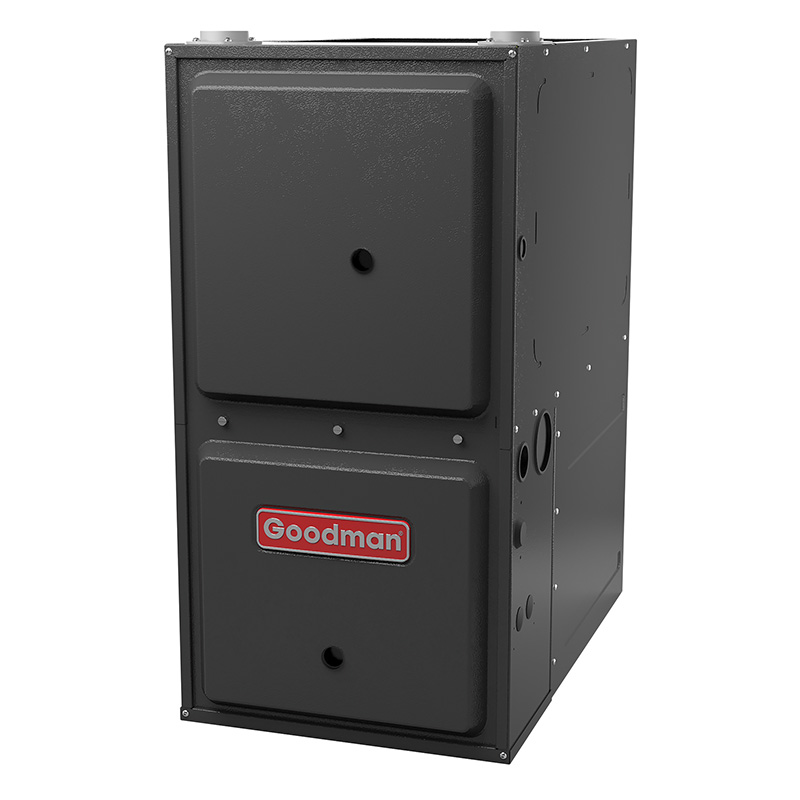
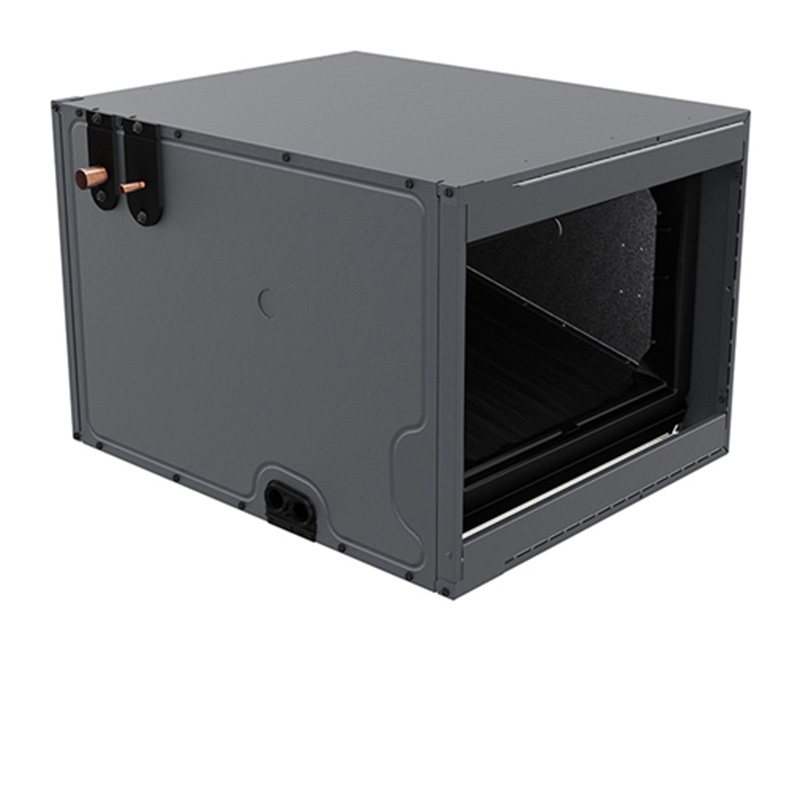
Goodman 2.5 Ton 15.2 SEER2 R32 AC System with 60,000 BTU 80% AFUE Gas Furnace – California & Colorado Ultra Low NOx, Horizontal, Multi-Speed ECM
View on AC Direct see your lowest price →Check current price on AC Direct →
Key features
- 15.2 SEER2 cooling efficiency meets current federal minimums with room for moderate energy savings
- 60,000 BTU 80% AFUE gas furnace with Ultra Low NOx certification for California and Colorado compliance
- Horizontal configuration designed for attic, crawl space, or side-discharge installations
- Multi-speed ECM blower motor reduces fan energy use and improves humidity management over PSC motors
- R-32 refrigerant with lower global warming potential than R-410A for longer-term serviceability
- 2.5-ton capacity suited to homes approximately 1,200 to 1,600 sq ft depending on load calculation
About this system
The Goodman 2.5 Ton 15.2 SEER2 R-32 AC system paired with a 60,000 BTU 80% AFUE gas furnace is built for homeowners in California and Colorado who need to meet strict Ultra Low NOx emissions requirements without overspending on premium brand markup. The horizontal configuration makes it a practical fit for attic installs, crawl spaces, or side-discharge applications where a standard upflow or downflow orientation simply will not work. At 2.5 tons, this system is sized for homes roughly in the 1,200 to 1,600 square foot range, though actual sizing depends on local climate, insulation, and Manual J load calculation results.
The 15.2 SEER2 efficiency rating clears the federal minimum for most regions and lands in the entry-to-mid efficiency tier. It will reduce operating costs compared to older 13 or 14 SEER equipment, but it falls well short of the savings you would see from a two-stage or variable-speed system at 17 SEER2 or higher. The multi-speed ECM blower motor is a genuine upgrade over a standard PSC motor, improving airflow consistency, lowering blower electricity draw, and helping with humidity control on mild days. R-32 refrigerant has a lower global warming potential than R-410A, which matters for long-term service availability as the industry continues phasing away from older refrigerants. The 80% AFUE furnace is code-compliant in most areas but leaves about 20 cents of every heating dollar going up the flue, so homeowners in colder Colorado climates may want to weigh a 96% AFUE option before committing.
This Goodman system delivers a code-compliant, Ultra Low NOx-ready package at a price point that undercuts Carrier, Trane, and Lennox by a meaningful margin, making it a sensible choice for budget-conscious buyers who are comfortable with the brand's known reliability trade-offs. The ECM blower and R-32 refrigerant add real value at this price tier, but the 80% AFUE furnace and single-stage cooling mean operating costs will be higher over time than a more efficient system. Long-term satisfaction will hinge heavily on installation quality and how quickly any capacitor or coil issues get addressed under warranty.
Overall score is the average of the five ratings above.
What we like
- Priced 15 to 25 percent below comparable Carrier, Trane, and Lennox systems at this efficiency tier
- Ultra Low NOx certification satisfies California and Colorado regulatory requirements out of the box
- Multi-speed ECM motor meaningfully outperforms basic PSC blowers on comfort and fan energy draw
- R-32 refrigerant positions the system well for parts and service availability as R-410A is phased out
- Horizontal orientation opens installation options that most standard upflow systems cannot accommodate
Trade-offs
- 80% AFUE furnace wastes roughly 20% of fuel, which adds up in colder Colorado heating seasons
- Dual-run capacitors are the most frequently reported failure point, typically needing replacement in the 300 to 600 dollar range
- Compressor lifespan averages 10 to 14 years versus 15 to 20 years for premium brand compressors
- A minority of owners report refrigerant leaks within the first year, most often linked to installation or initial charge issues
What homeowners and pros say about Goodman
Homeowners who leave reviews of Goodman equipment tend to split along a clear line: those who had a skilled installer and smooth early years rate the brand around 3.8 out of 5 on Google dealer review aggregates, with affordability cited most often as the reason they would recommend it. The picture on ConsumerAffairs is less flattering, sitting around 2.5 out of 5, though that platform skews heavily toward frustrated owners who sought out a place to vent, and the recurring pattern there is repair costs escalating after roughly year 7. For this specific system, the combination of a horizontal configuration and R-32 refrigerant means the installer’s competence matters even more than usual: a mishandled line set pitch or an incorrect refrigerant charge are among the documented causes of early refrigerant leaks that a small but real share of Goodman owners report in the first year.
HVAC technicians who work on Goodman equipment regularly will tell you two things. First, dual-run capacitor failures are almost a scheduled maintenance item on these units, a known weak point that typically surfaces as a 300 to 600 dollar repair call and is rarely catastrophic if caught quickly. Second, evaporator coil leaks show up in owner reviews with enough frequency to be worth discussing before purchase, particularly if the system will spend years in a humid attic space. Compressor longevity averages 10 to 14 years in field experience, which is a real gap compared to the 15 to 20 years more commonly reported for Trane and Carrier compressors. None of this makes Goodman a bad choice at this price point, but it does mean budgeting for a service contract or setting aside a repair fund is a more honest approach than expecting trouble-free operation for two decades.
Sources: ConsumerAffairs Goodman owner reviews, AHRI Directory of Certified Product Performance, U.S. DOE appliance and equipment efficiency standards, Goodman product specification sheets.
What it costs to run
At 15.2 SEER2, cooling this 2.5-ton system for a typical 1200-hour cooling season at the U.S. average electricity rate of $0.17/kWh works out to roughly $403 per year in cooling, about $54 less per year than a minimum-efficiency 13.4 SEER2 unit of the same size. Your real cost depends on your climate and local rate.
Method: (30,000 BTU/hr ÷ 15.2 SEER2) × 1200 hours ÷ 1000 × $0.17/kWh. Rate source: U.S. EIA average; cooling hours: moderate-climate estimate.
How it compares
| Brand | Comparable model | SEER2 | Stage | Price position |
|---|---|---|---|---|
| Goodman | GSX/GMVC 2.5T 15.2 SEER2 R-32 with 80% AFUE Horizontal ULN | 15.2 | Single-stage | Value pick |
| Carrier | Comfort 24ACC6 / 58SB0 Series | 15.2 | Single-stage | Typically 15 to 25 percent more than this Goodman system |
| Trane | XR15 / S8X1 Series | 15.2 | Single-stage | Typically 15 to 25 percent more than this Goodman system |
| Lennox | Merit 14ACX / ML180 Series | 15.2 | Single-stage | Typically 15 to 25 percent more than this Goodman system |
Competitor rows are comparable single-stage units at similar efficiency; price is relative position, not a quote.
Questions about this system
Does this system actually meet California's Ultra Low NOx requirements, or do I need a separate NOx kit?
This furnace is factory-certified as Ultra Low NOx and meets the 14 ng/J threshold required by California's Air Quality Management Districts as well as Colorado's equivalent rules. No additional kit or modification is required, but you should confirm the certification documentation is included in the paperwork your installer pulls for the permit.
Why is a horizontal system harder to install than a standard upflow, and does it affect my warranty?
Horizontal installs require proper pitch for condensate drainage, careful duct sealing in confined spaces, and correct refrigerant line routing, all of which are more error-prone than a straightforward upflow closet install. Goodman's warranty is not voided by horizontal installation, but it does require the system to be installed by a licensed HVAC contractor following manufacturer specifications, and any issues traced to improper installation will not be covered.
How likely am I to need a capacitor replacement, and what will it cost?
Dual-run capacitor failure is the most commonly reported repair on Goodman AC units, and it tends to show up in the 5 to 10 year range. The repair itself is typically 300 to 600 dollars through a licensed technician and is generally covered under the parts warranty if it occurs within the warranty period, so registering the equipment promptly after installation matters.
Is 80% AFUE good enough for a Colorado climate, or should I upgrade the furnace?
80% AFUE is code-legal in most Colorado locations, but it means one-fifth of your gas is exhausted unused. In areas with 6,000 or more heating degree days, the annual fuel cost difference between 80% and 96% AFUE can offset the price gap on a higher-efficiency furnace within 5 to 8 years. If your heating bills are a primary concern, it is worth pricing out the 96% AFUE version of this system before purchasing.
What does R-32 refrigerant mean for future service and recharging costs compared to R-410A?
R-32 has a lower global warming potential than R-410A and is widely expected to remain available longer as the HVAC industry moves away from R-410A under EPA phasedown rules. Technician familiarity is still growing, so you should confirm your service technician is certified to handle R-32 before any future refrigerant work. Pricing for R-32 service calls is currently comparable to R-410A.
Specifications
| Cooling capacity | 2.5 Ton |
| Efficiency | 15.2 SEER2 |
| Furnace output | 60,000 BTU |
| Furnace efficiency | 80% AFUE |
| Configuration | Horizontal |
| Refrigerant | R-32 |