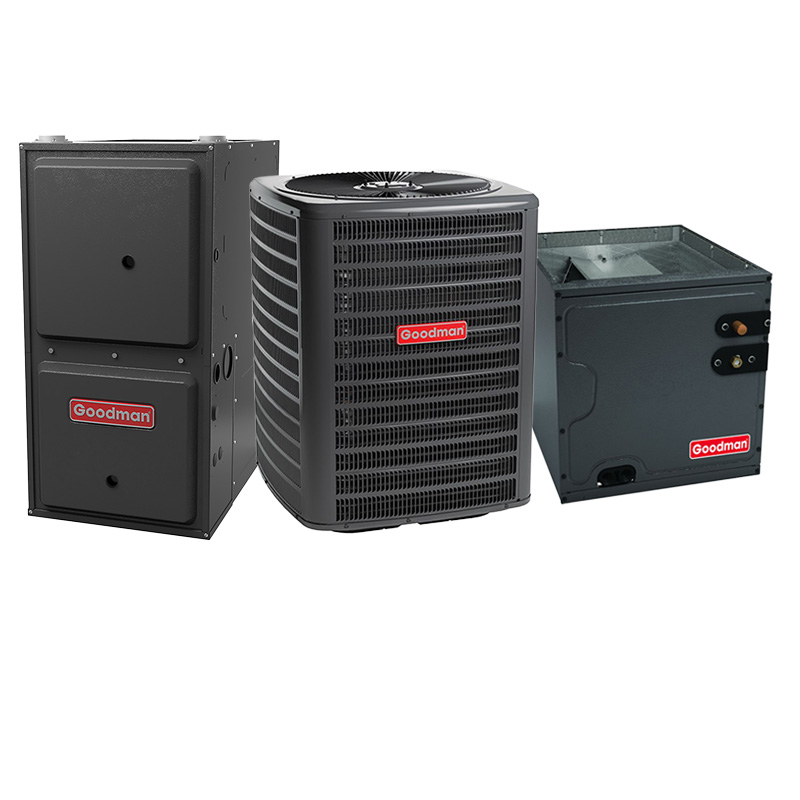
Goodman 2.5 Ton 15.2 SEER2 R32 AC System with 60,000 BTU 80% AFUE Gas Furnace – California & Colorado Ultra Low NOx, Upflow, Multi-Speed ECM
View on AC Direct see your lowest price →Check current price on AC Direct →
Key features
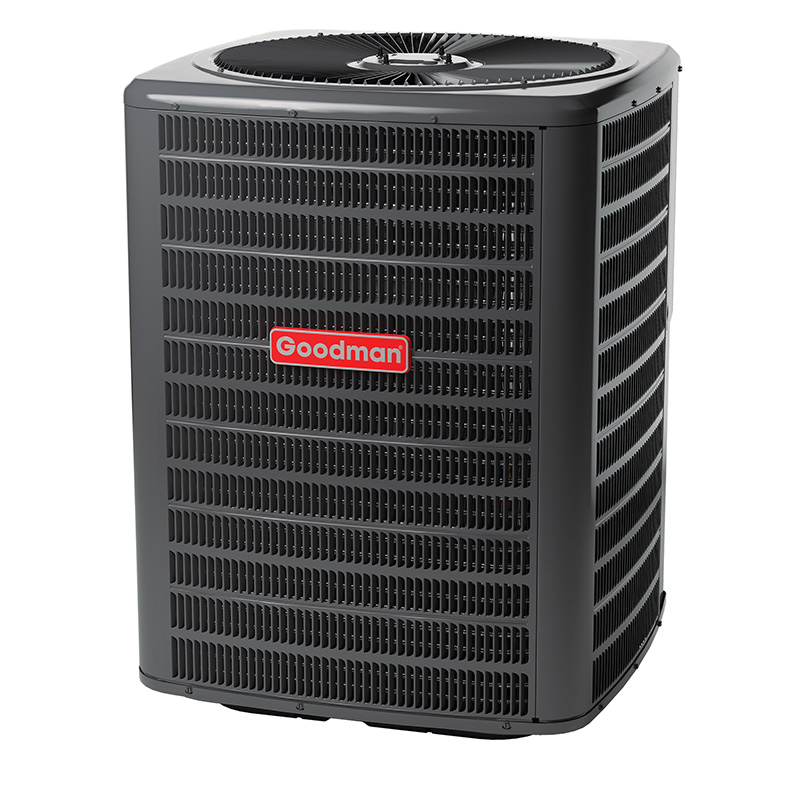
- 15.2 SEER2 R-32 air conditioner sized at 2.5 tons for homes roughly 1,200 to 1,800 sq ft
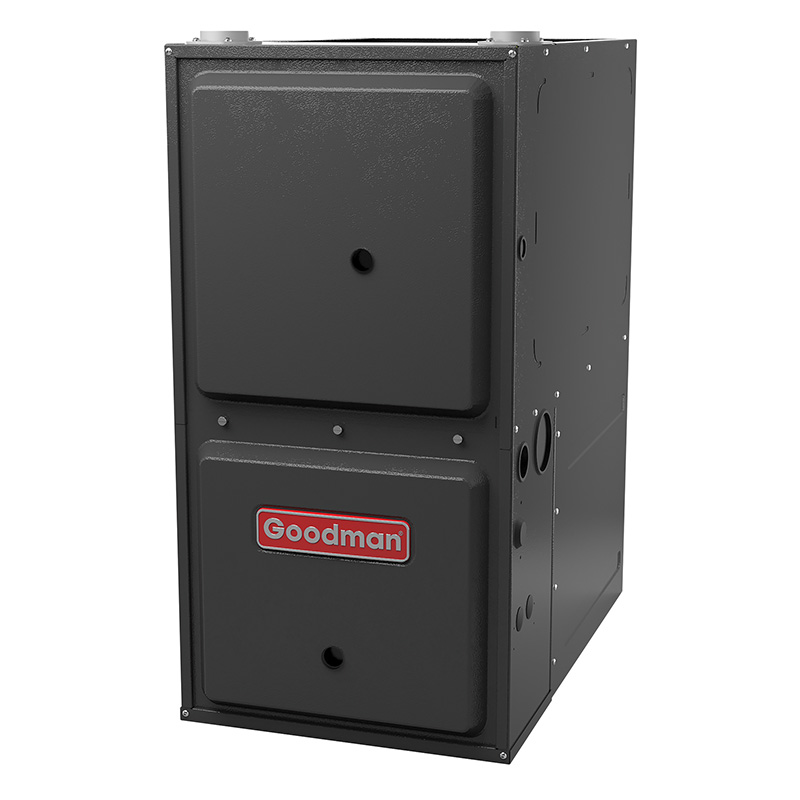
- 60,000 BTU 80% AFUE gas furnace in upflow configuration
- California and Colorado Ultra Low NOx certified for permitting in those states
- Multi-speed ECM blower motor for quieter operation and improved humidity control
- R-32 refrigerant with lower global warming potential than R-410A
- Priced approximately 15 to 25 percent below comparable Carrier, Trane, and Lennox systems
About this system
The Goodman 2.5-ton 15.2 SEER2 system pairs an R-32 central air conditioner with a 60,000 BTU 80% AFUE gas furnace in an upflow configuration, making it a practical fit for smaller to mid-size homes in the 1,200 to 1,800 square foot range that need a full split system replacement without a premium-brand price tag. The R-32 refrigerant is a notable spec here: it carries a lower global warming potential than the R-410A it replaces and is increasingly standard on new residential equipment, so this system meets California and Colorado Ultra Low NOx emissions requirements out of the box, an important detail for buyers in those states where older equipment may no longer qualify for permits.
At 15.2 SEER2 the cooling efficiency clears the current federal minimum for most U.S. climate zones and lands in the entry-level tier of efficiency rather than the mid or high tier. That means lower upfront cost but meaningfully higher operating costs over time compared to a 17 or 18 SEER2 system, especially in climates with long cooling seasons. The 80% AFUE furnace tells a similar story on the heating side: one-fifth of every dollar of gas goes up the flue, which is acceptable for mild-winter climates but leaves money on the table for homeowners in colder regions who run the furnace heavily. The multi-speed ECM blower motor is a genuine comfort upgrade over a standard PSC motor, improving humidity control, reducing noise, and cutting blower electricity use, so this is not a bare-bones system despite the entry-level efficiency ratings.
This Goodman system is a workable, code-compliant replacement option for cost-conscious homeowners in California and Colorado who need an Ultra Low NOx-certified system and want to keep upfront costs low. The ECM motor and R-32 refrigerant are genuine positives, but the 80% AFUE furnace and entry-level SEER2 rating mean higher long-term operating costs, and Goodman's documented reliability record means installation quality and a solid service plan matter more here than with premium brands.
Overall score is the average of the five ratings above.
What we like
- Priced 15 to 25 percent below Trane, Carrier, and Lennox at similar specs, reducing initial outlay
- Ultra Low NOx certification satisfies California and Colorado permitting requirements
- Multi-speed ECM blower motor improves comfort and lowers blower electricity consumption versus a PSC motor
- R-32 refrigerant is lower-GWP and increasingly well-supported by HVAC technicians
- Upflow configuration fits the most common duct layout in U.S. homes, simplifying replacement installs
Trade-offs
- 80% AFUE furnace wastes 20 cents of every gas dollar, a real cost penalty in colder climates with heavy heating loads
- 15.2 SEER2 is entry-level efficiency; homeowners in hot climates will see noticeably higher cooling bills than with a 17-plus SEER2 system
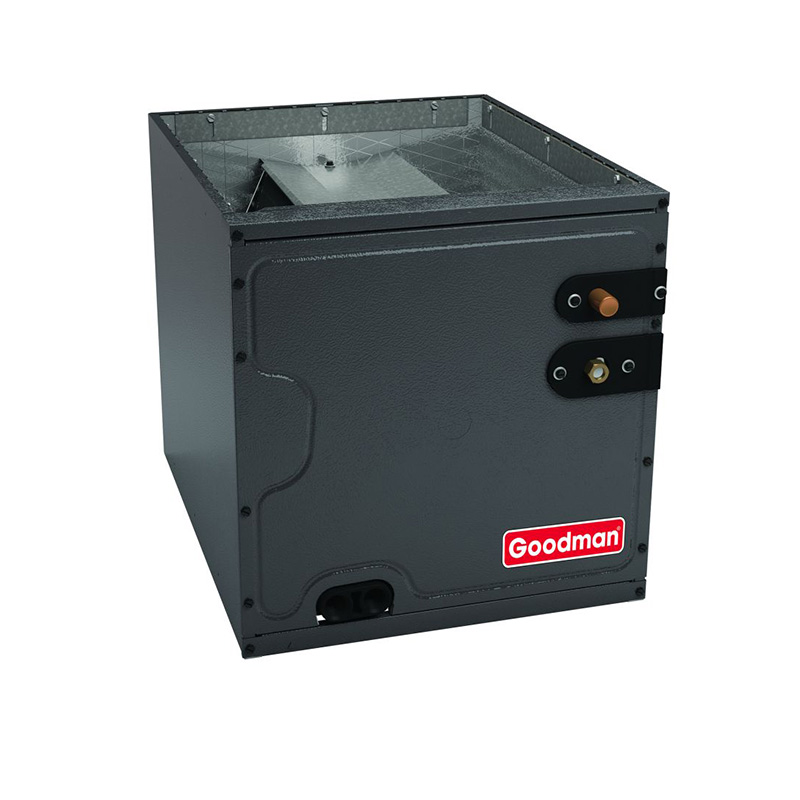
- Dual-run capacitors and evaporator coil leaks are the most commonly reported failure points, and compressor lifespan averages 10 to 14 years versus 15 to 20 for premium brands
- Goodman's ConsumerAffairs rating of about 2.5 out of 5 reflects a pattern of rising repair costs after year 7, suggesting a longer warranty or service contract is worth budgeting for
What homeowners and pros say about Goodman
Homeowners who have lived with Goodman equipment tend to land in two camps. Those who had a careful, experienced installer and kept up with annual maintenance often describe years of uneventful operation and point to the lower purchase price as real savings. Those who ran into problems more frequently describe repair bills that start showing up around year seven or eight, which aligns with what Goodman’s ConsumerAffairs score of roughly 2.5 out of 5 reflects. That platform skews toward complaints, but the pattern it reveals, rising maintenance costs in the back half of the system’s life, is consistent enough to take seriously. Google dealer reviews, where customers rate local HVAC contractors who sell and install Goodman, average around 3.8 out of 5, and the most common praise there is straightforward: the equipment cost less and the installer made it work.
HVAC technicians are generally pragmatic about Goodman. They flag dual-run capacitor failure as the most predictable service call on these units, a fix that is usually quick and costs in the $300 to $600 range, but one that seems to come up more often than on premium brands. Evaporator coil leaks draw more serious concern in tech forums and owner reviews because the fix is more involved. On compressor longevity, technicians often note that Goodman compressors average 10 to 14 years in real-world use compared to 15 to 20 years on Trane, Carrier, or Lennox equipment, which factors into how they advise clients weighing the upfront savings against lifetime cost. For this specific package, the Ultra Low NOx furnace and R-32 refrigerant are technically current, and the ECM blower is a legitimate comfort feature, but technicians consistently say that a clean, properly charged install is what separates a Goodman that lasts from one that does not.
Sources: ConsumerAffairs Goodman owner reviews, AHRI Directory of Certified Product Performance, U.S. DOE appliance and equipment efficiency standards, Goodman product specification sheets.
What it costs to run
At 15.2 SEER2, cooling this 2.5-ton system for a typical 1200-hour cooling season at the U.S. average electricity rate of $0.17/kWh works out to roughly $403 per year in cooling, about $54 less per year than a minimum-efficiency 13.4 SEER2 unit of the same size. Your real cost depends on your climate and local rate.
Method: (30,000 BTU/hr ÷ 15.2 SEER2) × 1200 hours ÷ 1000 × $0.17/kWh. Rate source: U.S. EIA average; cooling hours: moderate-climate estimate.
How it compares
| Brand | Comparable model | SEER2 | Stage | Price position |
|---|---|---|---|---|
| Goodman | 2.5 Ton 15.2 SEER2 R-32 AC + 60K BTU 80% AFUE Gas Furnace (this system) | 15.2 | Single-stage | Value pick |
| Carrier | Comfort 15 Series (24ACC6) | 15.2 | Single-stage | Typically 15 to 25 percent more than this Goodman package |
| Trane | XR15 Series | 15.2 | Single-stage | Typically 15 to 25 percent more than this Goodman package |
| Lennox | Merit 14ACX / ML180 Series | 15.2 | Single-stage | Typically 15 to 25 percent more than this Goodman package |
Competitor rows are comparable single-stage units at similar efficiency; price is relative position, not a quote.
Questions about this system
Does this system actually meet California and Colorado Ultra Low NOx permit requirements?
Yes. The furnace in this package is specifically rated for Ultra Low NOx emissions, which is a hard permit requirement in California's South Coast and San Joaquin Valley districts and in Colorado's Front Range air quality zones. Confirm the NOx rating on the unit label with your installer before submitting permits, as local inspectors may require documentation.
Is R-32 refrigerant harder to service than R-410A?
R-32 requires technicians to use equipment rated for mildly flammable refrigerants (A2L classification), so not every service van will be fully equipped for it today. That said, the HVAC industry is broadly transitioning to R-32 and A2L alternatives, and the availability of trained technicians is improving steadily. It is worth confirming your local service providers are already handling R-32 before you buy.
Should I upgrade to a 96% AFUE furnace instead of going with this 80% AFUE unit?
For climates with mild winters and short heating seasons, the payback period on a higher-efficiency furnace can stretch beyond ten years, making 80% AFUE a reasonable choice. In colder regions where the furnace runs three to five months a year, a 96% AFUE furnace can pay back the cost difference in four to seven years through lower gas bills, so it deserves a closer look before you commit.
What are the most common repairs I should budget for with a Goodman system?
Dual-run capacitor failure is the most frequently reported issue and is typically a quick repair in the $300 to $600 range. Evaporator coil leaks show up in a meaningful share of owner reviews and are more costly to address. Compressors on Goodman equipment tend to average 10 to 14 years, so budgeting for a service contract or extended warranty after the base coverage period is a practical step.
Does the multi-speed ECM blower motor make a real difference compared to a standard motor?
Yes, in a few measurable ways. An ECM motor uses significantly less electricity than a PSC motor when running at lower speeds, it ramps up gradually rather than switching on at full blast, and it runs longer at lower airflow to remove more humidity from the air. For homes in humid climates, the humidity control benefit alone is often noticeable.
Specifications
| Cooling capacity | 2.5 Ton |
| Efficiency | 15.2 SEER2 |
| Furnace output | 60,000 BTU |
| Furnace efficiency | 80% AFUE |
| Configuration | Upflow |
| Refrigerant | R-32 |