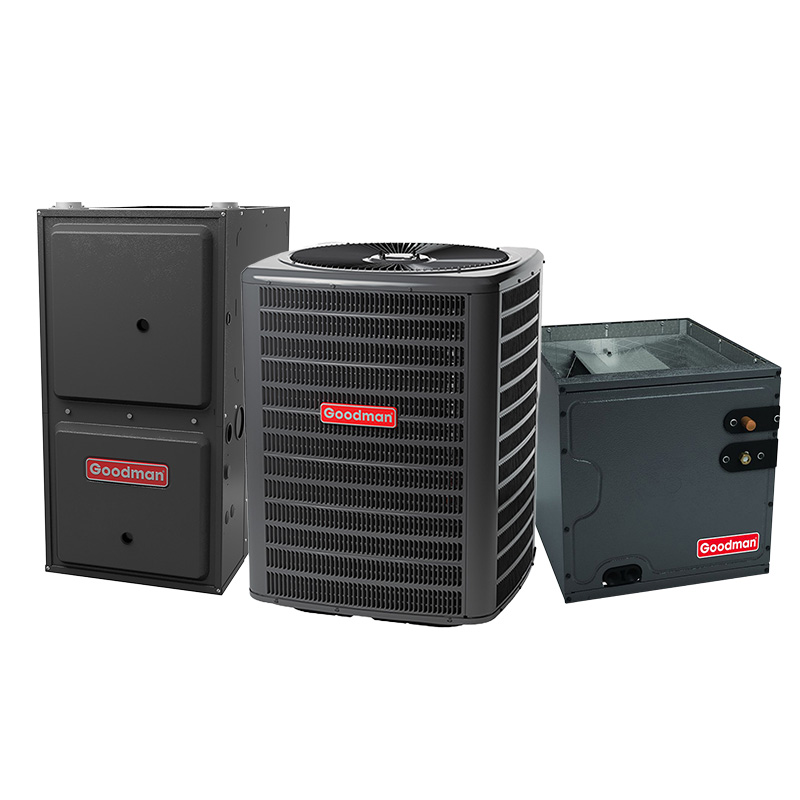
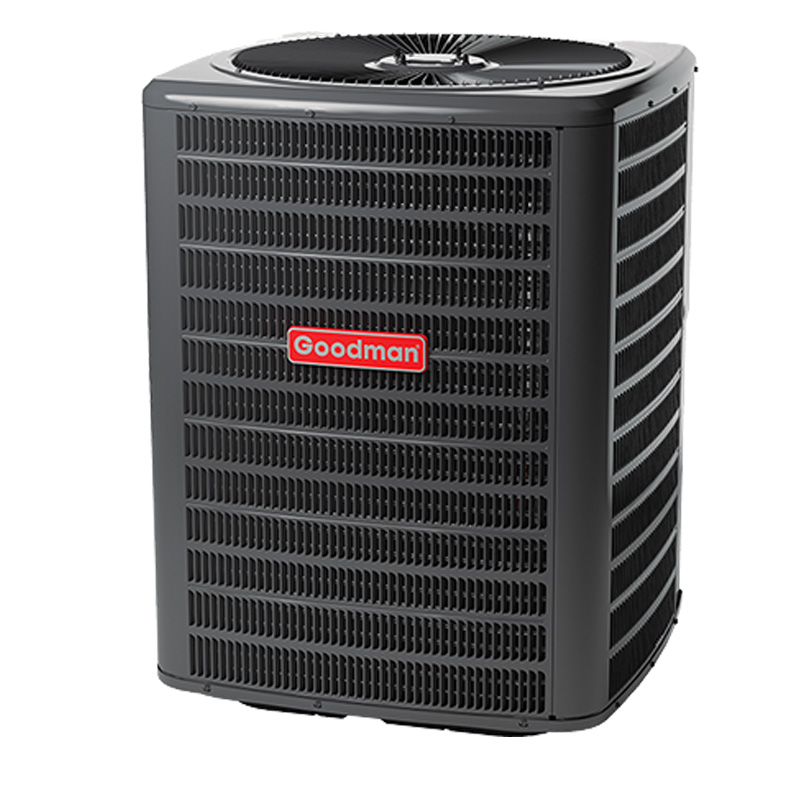
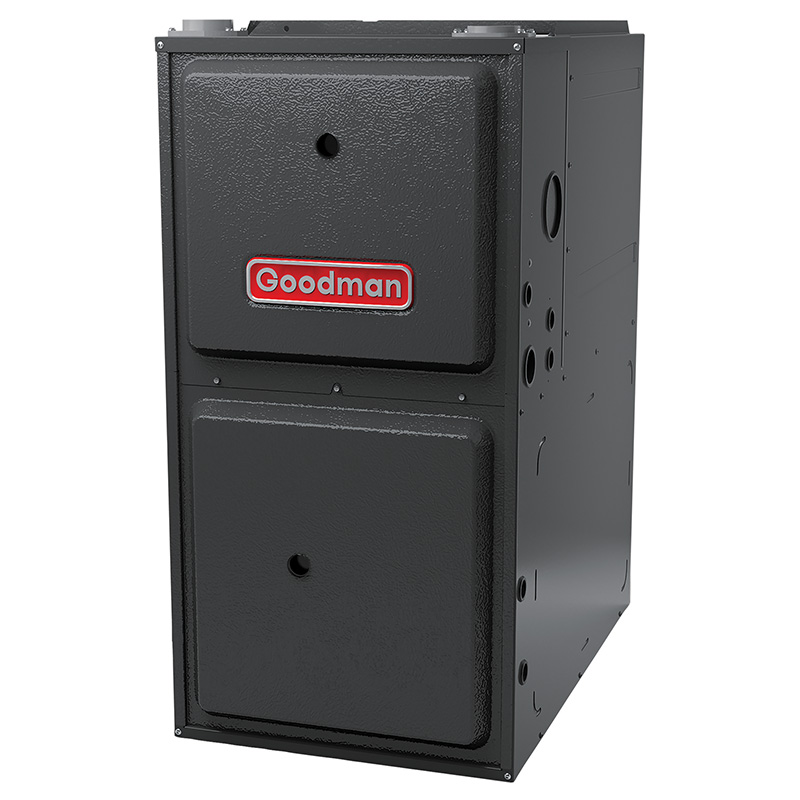
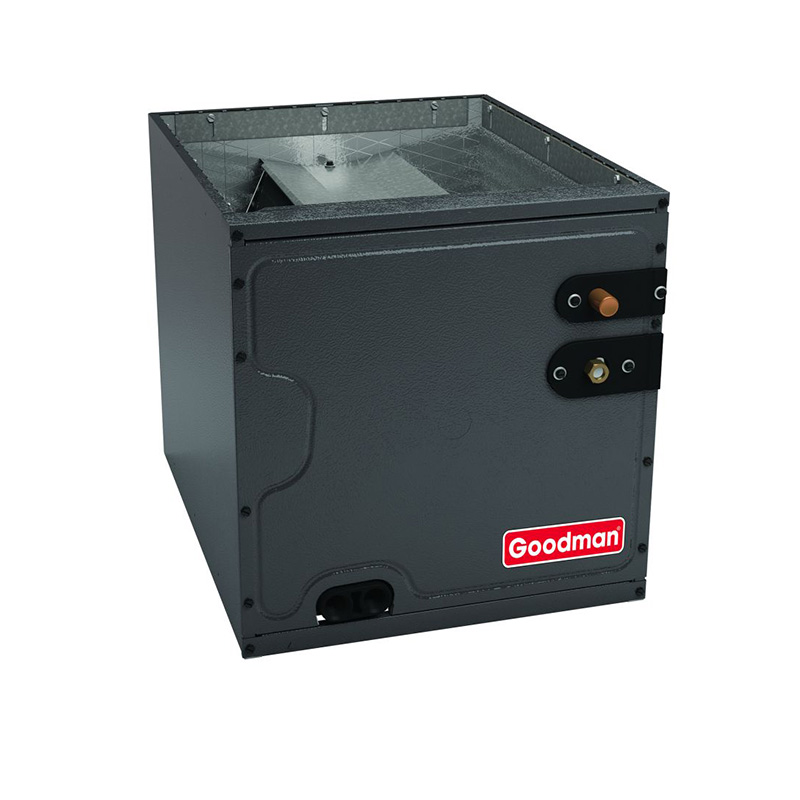
Goodman 2.5 Ton Dual Fuel Hybrid Heat Pump System – 40000 BTU California Ultra-Low NOx Single Stage Gas Furnace, 96% AFUE, Upflow, 14.3 SEER2, R32
View on AC Direct see your lowest price →Check current price on AC Direct →
Key features
- 14.3 SEER2-rated heat pump for baseline federal efficiency compliance and moderate energy savings
- 96% AFUE single-stage gas furnace rated at 40,000 BTU for supplemental heat in cold snaps
- Dual fuel hybrid control automatically switches between heat pump and gas heat based on outdoor temperature
- R-32 refrigerant with lower global warming potential than R-410A, aligned with current industry direction
- Upflow configuration designed for basement or closet installs where supply air is delivered upward
- California Ultra-Low NOx certified, meeting strict California air quality emissions standards
About this system
The Goodman 2.5 Ton Dual Fuel Hybrid Heat Pump System pairs a 14.3 SEER2 heat pump with a 96% AFUE, 40,000 BTU single-stage gas furnace in an upflow configuration, making it a practical choice for homeowners in mixed climates who want the cost efficiency of electric heat pump operation during mild weather and the reliable warmth of gas when temperatures drop sharply. The dual fuel setup lets the system switch automatically between electric and gas heat based on outdoor conditions, which is particularly useful in regions where gas is cheaper than electricity on the coldest days. R-32 refrigerant is the system’s forward-looking element: it carries a lower global warming potential than older R-410A and is increasingly favored as the industry moves away from higher-GWP refrigerants.
At 2.5 tons and 40,000 BTU of gas heat output, this system is sized for homes roughly in the 1,200 to 1,600 square foot range depending on insulation, ceiling height, and local climate, though a proper Manual J load calculation by your installer is the only reliable way to confirm fit. The single-stage operation means the system runs at full capacity or not at all, which is straightforward and less expensive to service than variable-speed or two-stage systems, but it will cycle on and off more frequently and won’t match the humidity control or quiet operation of higher-stage alternatives. The upflow furnace orientation suits homes with a basement or utility closet installation where conditioned air rises into the living space above.
This Goodman dual fuel system delivers a capable hybrid heating solution at a price point meaningfully below comparable systems from Trane, Carrier, or Lennox, making it accessible for budget-conscious homeowners in mixed climates. The 96% AFUE furnace and 14.3 SEER2 heat pump meet current efficiency standards without reaching the upper tier, and real-world performance will depend heavily on installation quality. Buyers who accept some long-term reliability risk in exchange for upfront savings and can access competent local service will find this a reasonable fit.
Overall score is the average of the five ratings above.
What we like
- Priced roughly 15 to 25 percent below comparable Trane, Carrier, and Lennox dual fuel systems, reducing upfront cost
- 96% AFUE furnace captures nearly all available heat from combustion, keeping gas bills in check on the coldest days
- Dual fuel hybrid operation lets the system optimize between electric and gas heat, potentially lowering annual energy costs in variable climates
- R-32 refrigerant positions the system ahead of the ongoing industry phase-out of R-410A
- California Ultra-Low NOx certification opens this system to buyers in strict-emissions states where many alternatives are not approved
Trade-offs
- Single-stage operation cycles at full capacity only, producing less precise temperature and humidity control than two-stage or variable-speed systems
- Compressor lifespan averages 10 to 14 years in documented owner experience, shorter than the 15 to 20 years commonly seen with premium brands
- Evaporator coil leaks are a recurring complaint in owner reviews, and a minority of owners report refrigerant leaks within the first year that typically trace back to installation or charge issues
- Dual capacitor failures are the most frequently reported service call, and while the repair cost is usually modest at roughly 300 to 600 dollars, the pattern of complaints climbing after year 7 on ConsumerAffairs suggests ongoing maintenance costs should be budgeted
What homeowners and pros say about Goodman
Homeowners who research Goodman before buying generally encounter two camps. The value-focused buyers who hired a knowledgeable contractor and had the system properly commissioned report reasonable satisfaction, which aligns with Goodman’s Google dealer review average of around 3.8 out of 5. Those reviews most often cite affordability and the availability of local service. The less favorable picture emerges on ConsumerAffairs, where Goodman sits at roughly 2.5 out of 5 on a channel that disproportionately captures frustrated owners. The recurring theme there is repair costs that begin climbing after approximately year 7, with capacitor failures being the single most reported service call and a common pattern of evaporator coil leaks adding to costs over time.
HVAC technicians who work on Goodman equipment regularly tend to have a pragmatic view: the equipment is serviceable and parts are widely available, but they are quick to note that installation quality is the biggest variable in how long any Goodman system lasts. Refrigerant leaks showing up in the first year are almost always traced back to improper charge or fitting issues at installation rather than a product defect. Technicians also flag that Goodman compressors typically run 10 to 14 years before needing replacement, a shorter window than the 15 to 20 years seen on premium brands, which is a real consideration on a dual fuel system where the compressor handles both heating and cooling loads year-round. For buyers whose primary goal is keeping upfront cost down and who are willing to budget for eventual maintenance, the dual fuel Goodman is a workable choice with clear eyes open.
Sources: ConsumerAffairs Goodman owner reviews, AHRI Directory of Certified Product Performance, U.S. DOE appliance and equipment efficiency standards, Goodman product specification sheets.
What it costs to run
At 14.3 SEER2, cooling this 2.5-ton system for a typical 1200-hour cooling season at the U.S. average electricity rate of $0.17/kWh works out to roughly $428 per year in cooling, about $29 less per year than a minimum-efficiency 13.4 SEER2 unit of the same size. Your real cost depends on your climate and local rate.
Method: (30,000 BTU/hr ÷ 14.3 SEER2) × 1200 hours ÷ 1000 × $0.17/kWh. Rate source: U.S. EIA average; cooling hours: moderate-climate estimate.
How it compares
| Brand | Comparable model | SEER2 | Stage | Price position |
|---|---|---|---|---|
| Goodman | 2.5 Ton Dual Fuel Hybrid – 96% AFUE / 14.3 SEER2 R-32 | 14.3 | Single-stage | Value pick |
| Carrier | Performance Series Dual Fuel (25HCB / 59SC pairing) | 15.0 | Single-stage | Typically 15 to 25 percent more than this Goodman system |
| Trane | XR15 Dual Fuel (XR15 heat pump / S9X1 furnace pairing) | 15.0 | Single-stage | Typically 15 to 25 percent more than this Goodman system |
| Lennox | Merit Series Dual Fuel (14HPX / ML96V pairing) | 15.1 | Single-stage | Typically 15 to 25 percent more than this Goodman system |
Competitor rows are comparable single-stage units at similar efficiency; price is relative position, not a quote.
Questions about this system
How does the dual fuel system decide when to run the heat pump versus the gas furnace?
The system uses an outdoor thermostat or the thermostat's balance point setting to switch between the two heat sources. When outdoor temperatures are above the balance point, typically around 35 to 40 degrees Fahrenheit, the heat pump handles heating. When temperatures fall below that point, the gas furnace takes over because running a heat pump in very cold air becomes less efficient than burning gas directly. Your installer should set the balance point based on your local gas and electric utility rates.
Is R-32 refrigerant safe to work with, and will technicians in my area be able to service it?
R-32 is classified as mildly flammable, which requires technicians to follow specific handling procedures, but it is widely used in residential equipment and most EPA 608-certified technicians can work with it legally. Availability is growing as more equipment ships with R-32, though in some rural markets you may want to confirm your local service companies stock it before purchasing.
What is covered under Goodman's warranty for this system, and are there conditions I need to meet?
Goodman typically offers a 10-year parts warranty when the equipment is registered within 60 days of installation by a licensed contractor. Without registration, coverage usually drops to 5 years. Warranty claims require documented professional installation, so a DIY install or an unlicensed technician voids coverage. Always confirm the current warranty terms directly with Goodman at time of purchase, as terms can change.
What are the most common repairs I should budget for over the first 10 years?
Dual-run capacitor replacement is the most frequently reported service call on Goodman heat pump systems, typically costing 300 to 600 dollars including labor. Evaporator coil leaks appear in a meaningful share of owner reviews and can be a larger expense depending on whether repair or replacement is needed. Setting aside a few hundred dollars per year in a maintenance reserve is a reasonable approach for any mid-tier system.
Does the upflow configuration mean the furnace has to be in a basement, or can it be installed in a utility closet on the main floor?
Upflow means heated air exits from the top of the furnace cabinet and feeds into ductwork running above or through the ceiling, so the furnace needs to be positioned below the supply duct runs. A basement install is the most common setup, but a first-floor utility closet with supply ducts running through the ceiling is also workable. Your installer will need to confirm that the closet provides adequate combustion air and clearances per local code.
Specifications
| Cooling capacity | 2.5 Ton |
| Efficiency | 14.3 SEER2 |
| Furnace output | 40000 BTU |
| Furnace efficiency | 96% AFUE |
| Configuration | Upflow |
| Refrigerant | R-32 |