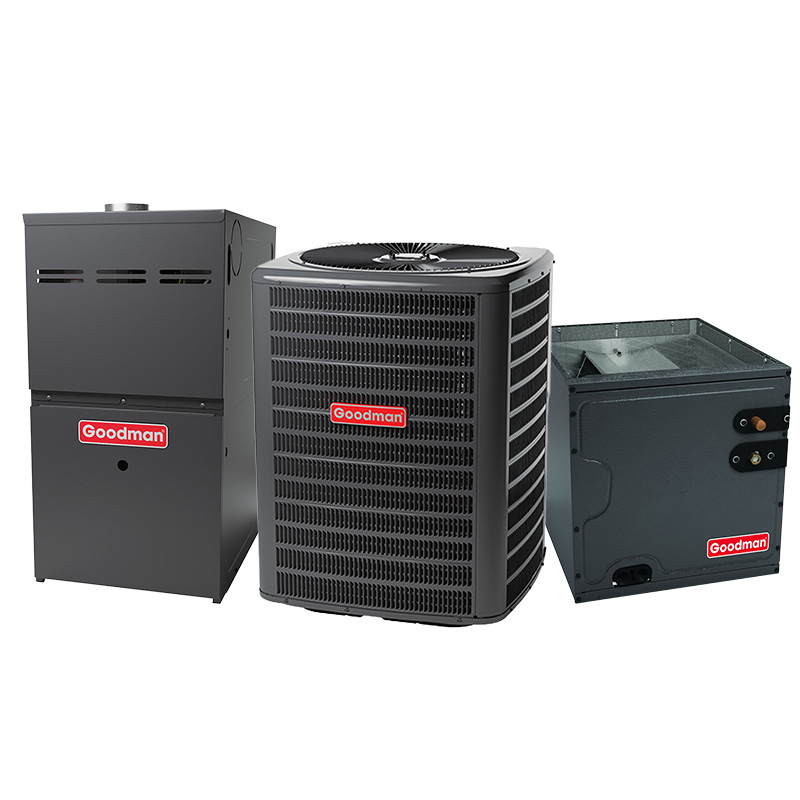
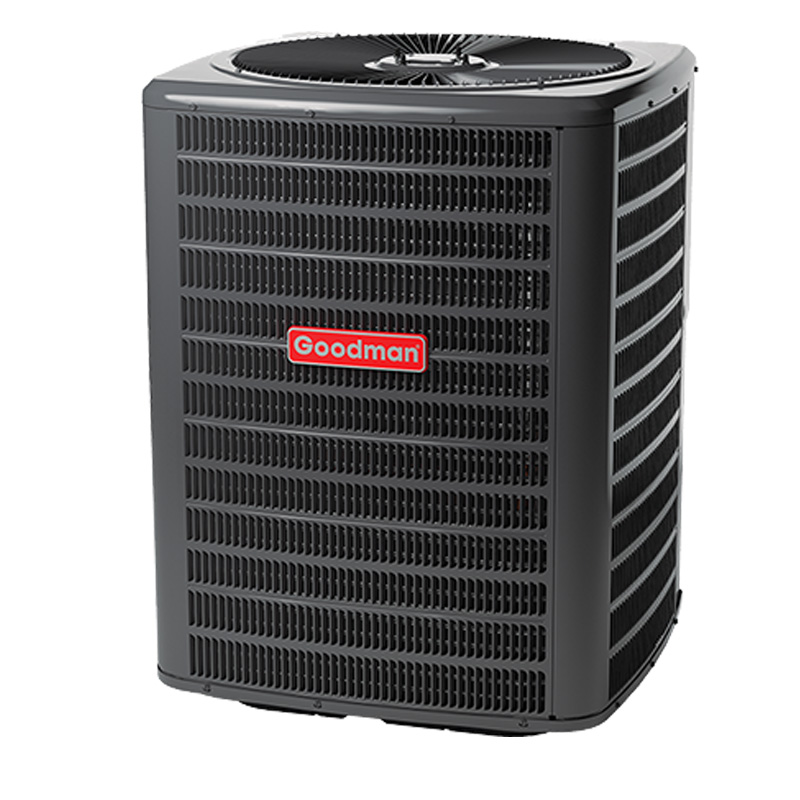
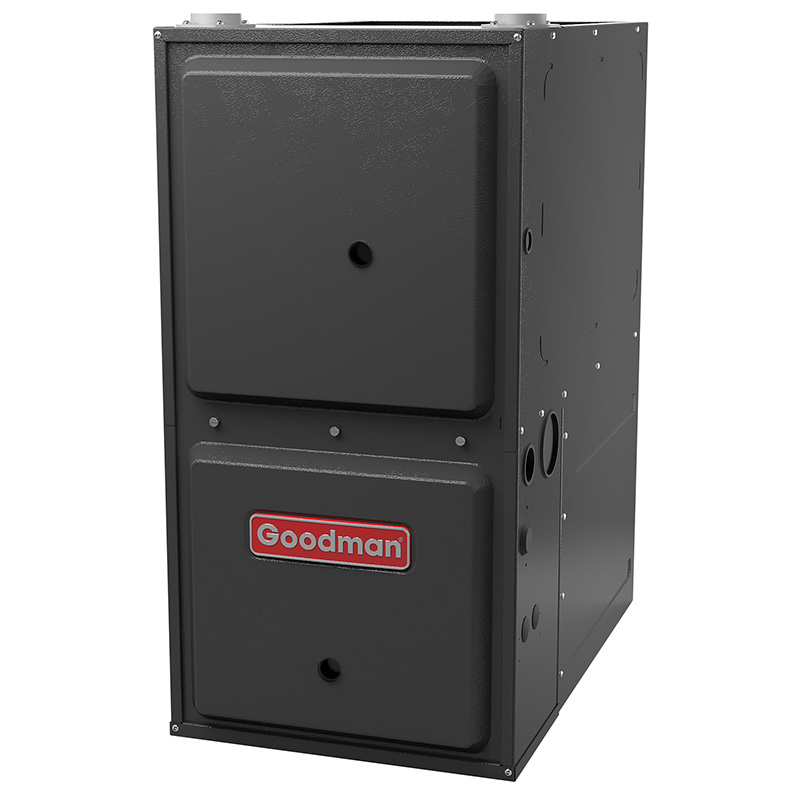
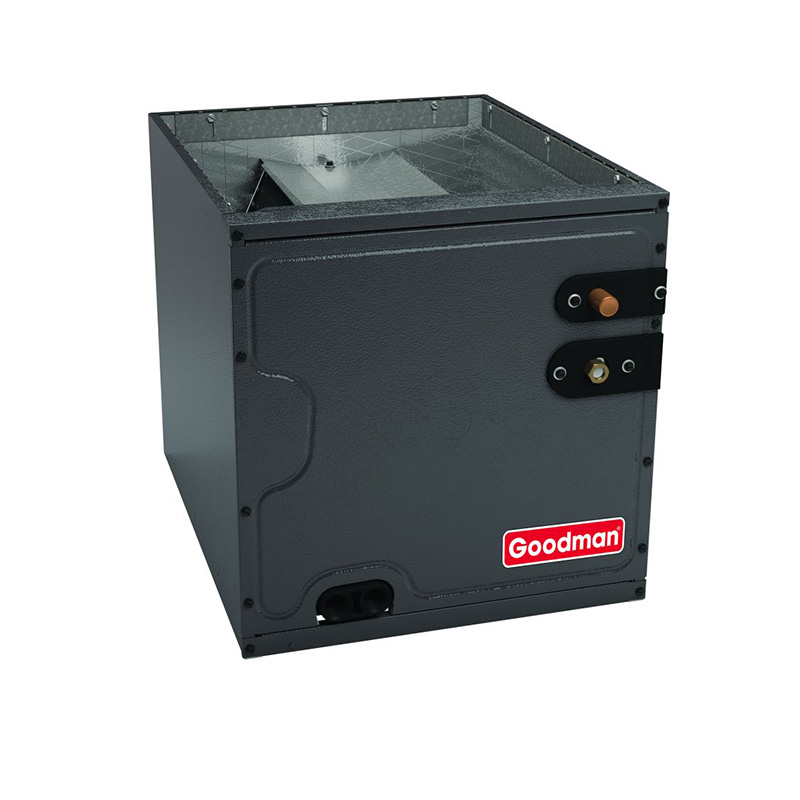
Goodman 2.5 Ton Dual Fuel Hybrid Heat Pump System – 60000 BTU Gas Furnace, 80% AFUE, 14.5 SEER2, Upflow, R32
View on AC Direct see your lowest price →Check current price on AC Direct →
Key features
- Dual fuel hybrid operation: heat pump for mild weather, 60,000 BTU gas furnace for cold snaps
- 14.5 SEER2 cooling efficiency, meeting current federal minimum standards
- 80% AFUE heating on the gas side, meaning 20 cents of every dollar in gas does not heat your home
- R-32 refrigerant, lower global-warming potential than R-410A
- Upflow configuration for basement, utility closet, and main-level installations
- Goodman price point typically 15 to 25 percent below Carrier, Trane, and Lennox equivalents
About this system
The Goodman 2.5-ton dual fuel hybrid heat pump system pairs a 14.5 SEER2 heat pump with a 60,000 BTU, 80% AFUE upflow gas furnace, giving you two heating sources that switch automatically based on outdoor temperature and fuel costs. In mild weather the heat pump carries the load efficiently; when temperatures fall below the heat pump’s economic balance point, the furnace takes over. That handoff is the core appeal of any hybrid system, and it makes this configuration well-suited to mixed climates where winters get cold enough to stress a heat pump alone but not brutally cold enough to justify a full-size furnace running all season.
At 14.5 SEER2 and 80% AFUE, this system sits at the regulatory baseline for efficiency rather than at the top of any tier. The R-32 refrigerant is a meaningful upgrade over older R-410A, carrying a lower global-warming potential, and it is increasingly the industry standard going forward. The upflow configuration means the air handler or furnace sits below the coil and discharges upward, which fits the most common basement or closet installations but rules out attic or crawlspace setups where downflow or horizontal units are needed. Buyers who already run natural gas and want a hedge against high electricity prices during cold snaps will get the most out of this hybrid setup.
This system delivers a practical hybrid setup at a price that undercuts most name-brand alternatives by a meaningful margin, but both its efficiency tiers are entry-level rather than standout, and Goodman's real-world reliability record shows compressors that average 10 to 14 years versus 15 to 20 for premium brands. It is a reasonable buy when installed by an experienced technician and serviced regularly, but buyers who want long-term peace of mind may find the savings eroded by earlier component replacement.
Overall score is the average of the five ratings above.
What we like
- Hybrid operation reduces gas consumption in shoulder seasons without sacrificing cold-weather capacity
- R-32 refrigerant is lower-impact and increasingly standard, easing future serviceability
- Upfront cost is substantially lower than comparable Carrier, Trane, or Lennox dual fuel systems
- Automatic fuel-source switching removes the need for manual setpoint management
- Widely available parts and a large installer network keep service calls accessible
Trade-offs
- 80% AFUE is the regulatory floor for gas heat, not an efficiency achievement; 96% AFUE units cost modestly more and save noticeably on gas over time
- 14.5 SEER2 cooling is entry-level; higher-SEER2 models cut summer electricity bills more meaningfully in hot climates
- Compressor lifespan averages 10 to 14 years based on documented owner experience, shorter than the 15 to 20 years typical of premium-brand compressors
- Dual-run capacitor failures and evaporator coil leaks are the most commonly reported issues, and out-of-warranty repair costs have been a recurring complaint theme for owners past year seven
What homeowners and pros say about Goodman
Homeowners who have lived with Goodman equipment give it a divided report card. On ConsumerAffairs the brand sits at roughly 2.5 out of 5, a score shaped in part by the fact that dissatisfied buyers are more likely to leave reviews on that platform, but the recurring complaint is real and specific: repair costs that climb steadily after year seven, driven largely by dual-run capacitor failures and evaporator coil leaks. On Google dealer reviews the picture is more balanced, averaging around 3.8 out of 5 across hundreds of reviews per location, where the most common praise is straightforward affordability. The honest read is that Goodman owners who get a clean installation, change filters religiously, and schedule annual tune-ups report reasonable satisfaction; those who skip maintenance or had a rushed install are the ones writing the one-star posts.
HVAC technicians who work on Goodman equipment regularly tend to say the same thing: the brand performs adequately when it is installed correctly, and that condition does most of the work. They flag the dual-run capacitor as the component most likely to need swapping in years four through eight, call it a cheap and quick repair, and note that evaporator coil leaks are the more frustrating scenario because they are harder to catch early. Compressor longevity is the longer-term concern: the documented range of 10 to 14 years for Goodman compressors compares unfavorably with the 15 to 20 years technicians report from Trane and Carrier equipment, which matters most if you plan to stay in the home for the full system lifecycle. For a dual fuel hybrid specifically, they emphasize that the balance point setup at commissioning is not optional extra work; a poorly configured handoff temperature erases the efficiency benefit the hybrid design is meant to deliver.
Sources: ConsumerAffairs Goodman owner reviews, AHRI Directory of Certified Product Performance, U.S. DOE appliance and equipment efficiency standards, Goodman product specification sheets.
What it costs to run
At 14.5 SEER2, cooling this 2.5-ton system for a typical 1200-hour cooling season at the U.S. average electricity rate of $0.17/kWh works out to roughly $422 per year in cooling, about $35 less per year than a minimum-efficiency 13.4 SEER2 unit of the same size. Your real cost depends on your climate and local rate.
Method: (30,000 BTU/hr ÷ 14.5 SEER2) × 1200 hours ÷ 1000 × $0.17/kWh. Rate source: U.S. EIA average; cooling hours: moderate-climate estimate.
How it compares
| Brand | Comparable model | SEER2 | Stage | Price position |
|---|---|---|---|---|
| Goodman | Dual Fuel Hybrid 2.5T / 60K BTU 80% AFUE Upflow | 14.5 | Single-stage | Value pick |
| Carrier | Performance Series Dual Fuel (24PAA / 59SP5) | 15.0 | Single-stage | Typically 15 to 25 percent more than Goodman |
| Trane | XR15 Dual Fuel (4TWR / S8X1) | 15.0 | Single-stage | Typically 15 to 25 percent more than Goodman |
| Lennox | Merit Series Dual Fuel (14HPX / ML180) | 15.2 | Single-stage | Typically 15 to 25 percent more than Goodman |
Competitor rows are comparable single-stage units at similar efficiency; price is relative position, not a quote.
Questions about this system
How does the system decide when to run the heat pump versus the gas furnace?
A dual fuel control board monitors outdoor temperature and compares the cost of electric heat pump operation against gas furnace operation. You or your installer sets a balance point temperature, typically somewhere between 30 and 40 degrees Fahrenheit, below which the furnace takes over. Above that point the heat pump runs because it is usually cheaper to move heat than to burn gas to create it.
Is 80% AFUE going to cost me noticeably more to run than a higher-efficiency furnace?
Yes, over a full heating season 80% AFUE means roughly 20% of your gas spend leaves through the flue as exhaust heat. A 96% AFUE furnace wastes only about 4%. If you run the gas side heavily, that gap adds up over years. In a hybrid system the gas furnace runs less than it would in a straight-gas system, which narrows the real-world dollar difference, but a higher-AFUE furnace is still the better long-term choice if budget allows.
What is the most likely repair I will face, and what will it cost?
Based on documented owner experience, dual-run capacitor failure is the most frequently reported issue on Goodman equipment and is generally a straightforward repair in the 300 to 600 dollar range. Evaporator coil leaks are the next most common complaint and are more expensive to address. A minority of owners report refrigerant leaks in the first year, which usually points to an installation or charge problem rather than a product defect.
Does R-32 refrigerant change how I find service technicians?
R-32 requires EPA 608 certification to handle, just like R-410A, so any licensed HVAC technician can work on it. Some older recovery machines need an adapter for R-32, and technicians unfamiliar with its slightly higher operating pressures should review manufacturer guidelines before servicing the unit. Availability of R-32 is growing quickly, so sourcing it for a top-off or recharge is not typically a problem in most metro areas.
Will this system work with my existing ductwork if I am replacing a 2.5-ton system?
In most cases a like-for-like replacement of a 2.5-ton system uses the same duct layout, but your installer should verify that the existing duct sizing, static pressure, and return air capacity match the airflow requirements of this specific air handler and furnace combination. Undersized returns are a common problem that stresses equipment regardless of brand, and upflow configuration must match the physical installation space.
Specifications
| Cooling capacity | 2.5 Ton |
| Efficiency | 14.5 SEER2 |
| Furnace output | 60000 BTU |
| Furnace efficiency | 80% AFUE |
| Configuration | Upflow |
| Refrigerant | R-32 |