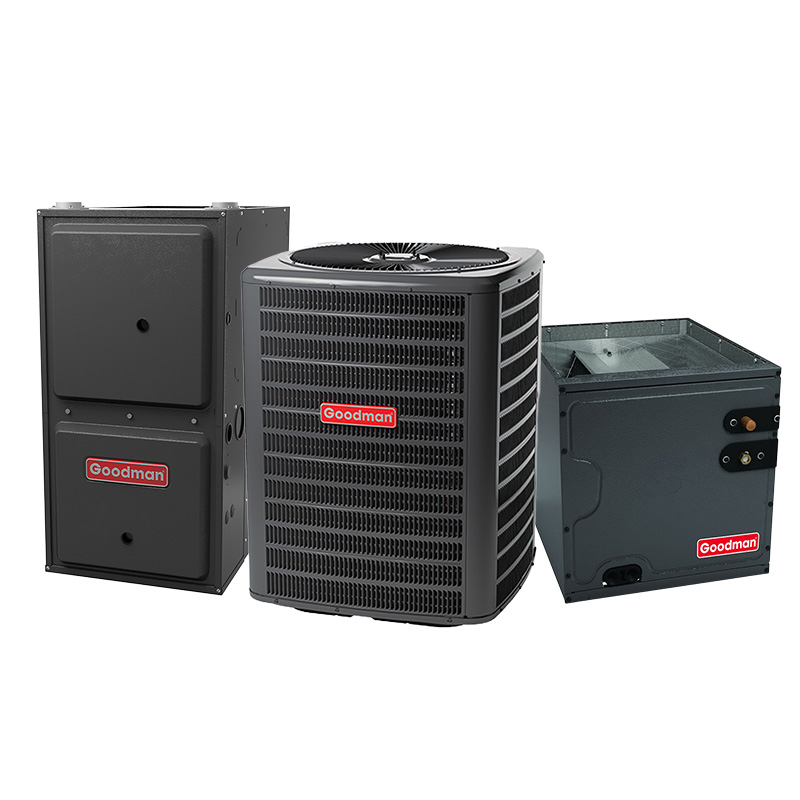
Goodman 2.5 Ton Dual Fuel Hybrid Heat Pump System – 60000 BTU Gas Furnace, 96% AFUE, 14.3 SEER2, Downflow, R32
View on AC Direct see your lowest price →Check current price on AC Direct →
Key features
- 2.5-ton hybrid dual fuel system pairs 14.3 SEER2 heat pump with 96% AFUE gas furnace
- Automatic fuel switching selects heat pump or gas heat based on outdoor temperature efficiency crossover
- Downflow configuration for installations where supply air discharges downward from the air handler
- R-32 refrigerant with lower global warming potential than the R-410A it replaces
- 60,000 BTU furnace output suitable for homes in the roughly 1,200 to 2,000 sq ft range depending on climate and insulation
- Goodman value-tier pricing typically runs 15 to 25 percent below comparable Carrier, Trane, and Lennox systems
About this system
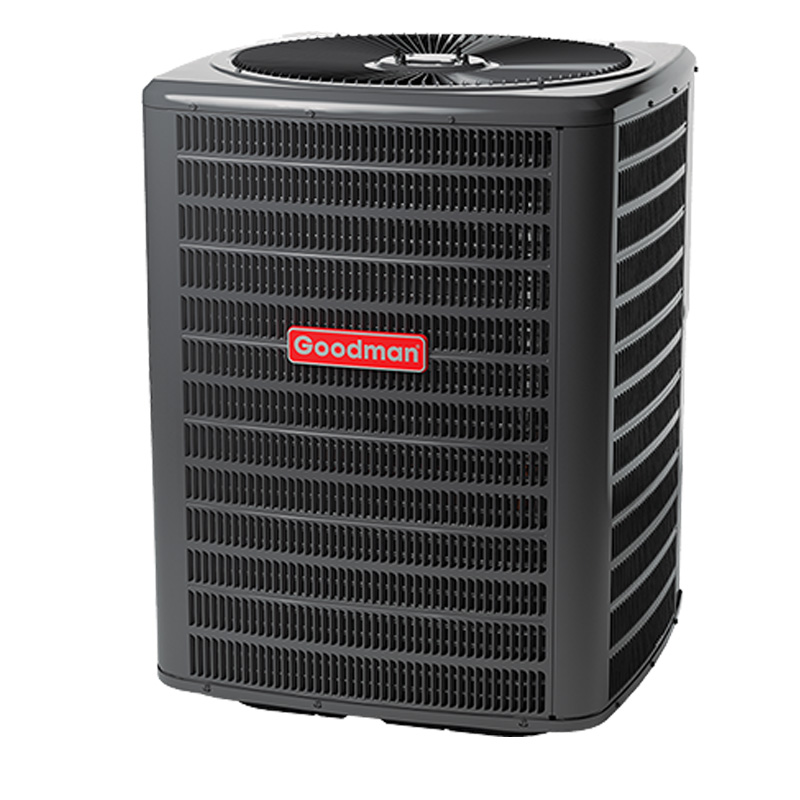
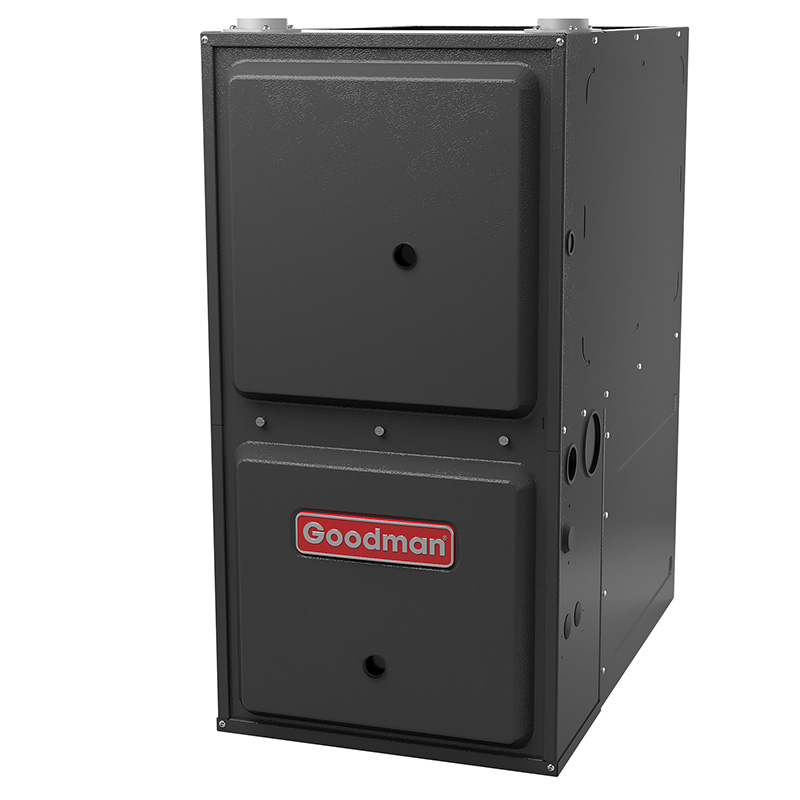
The Goodman 2.5 Ton Dual Fuel Hybrid Heat Pump System pairs a 14.3 SEER2 heat pump with a 60,000 BTU, 96% AFUE gas furnace in a downflow configuration. The hybrid setup is the headline attraction: on mild days the heat pump handles heating efficiently, and when outdoor temperatures drop to where a heat pump loses its efficiency edge, the system automatically switches over to the high-efficiency gas furnace. That automatic fuel-switching is the central value proposition, and for homeowners in mixed climates with moderate winters, it can meaningfully cut annual energy costs compared to a straight gas system or a heat pump running alone in cold weather.
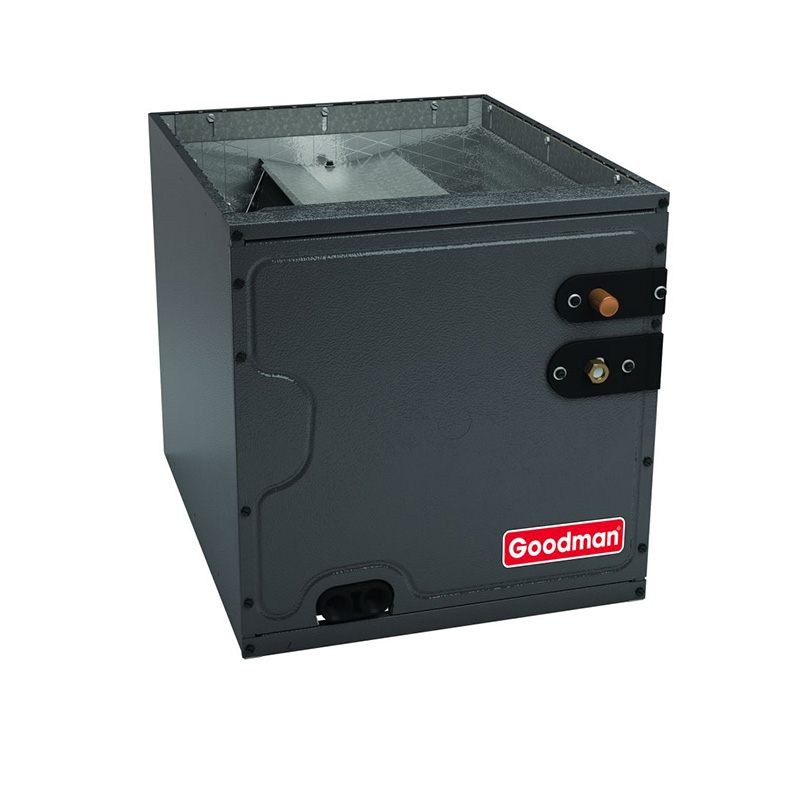
The 14.3 SEER2 rating clears the current federal minimum with a small margin but sits at the entry level of the efficiency spectrum. Paired with the 96% AFUE furnace, overall heating performance is genuinely strong in cold snaps, though buyers expecting mid-tier or premium efficiency numbers from the cooling side will want to look at higher SEER2 options. The downflow configuration means the air handler sits above the living space and blows conditioned air downward, a common setup for homes where the furnace is in a closet on an upper floor or in a platform above a crawl space. The system uses R-32 refrigerant, which has a lower global warming potential than R-410A and is increasingly standard in new residential equipment.
This system suits homeowners in climate zones 4 through 6 who already have a natural gas line, want lower installation costs than a premium brand, and are comfortable with the understanding that long-term reliability will depend heavily on who installs it and how well routine maintenance is kept up. It is not the right fit for buyers who want set-it-and-forget-it peace of mind over a 20-year horizon without budgeting for mid-life repairs.
The Goodman 2.5 Ton Dual Fuel Hybrid system offers a functional, real-world energy strategy for mixed-climate homeowners at a price point that undercuts premium brands by a meaningful margin. The trade-off is a compressor lifespan and reliability track record that fall short of premium competitors, and an overall outcome that hinges more on installer quality than on anything that comes in the box. Buyers who prioritize upfront cost savings and are willing to stay current on maintenance will find the value case reasonable; buyers who want the lowest lifetime cost of ownership may find the gap narrows when mid-cycle repairs are factored in.
Overall score is the average of the five ratings above.
What we like
- Hybrid dual fuel design reduces heating costs by automatically using the more efficient energy source for the conditions
- 96% AFUE furnace means very little heat energy is wasted during gas heating operation
- R-32 refrigerant is more environmentally responsible and increasingly well-supported by technicians
- Downflow configuration is purpose-built for the installation layouts that require it, avoiding workaround adaptations
- Upfront price runs 15 to 25 percent below comparable Carrier, Trane, and Lennox equipment, leaving room in the budget for a quality installer
Trade-offs
- 14.3 SEER2 is at the lower end of the current efficiency range, so cooling-season energy bills will be higher than with a 17 or 18 SEER2 system
- Dual-run capacitor failures are the most commonly documented issue and, while inexpensive to fix at $300 to $600, can recur and add up over time
- Compressor lifespan averages 10 to 14 years versus 15 to 20 for premium-brand compressors, meaning a mid-life compressor replacement is a realistic scenario
- A minority of owners have reported refrigerant leaks within the first year, typically traced to install or initial charge issues rather than factory defects
What homeowners and pros say about Goodman
Homeowners who buy Goodman equipment and post about it online tend to land in one of two camps. Early in ownership, the most common note is relief at the upfront savings, and that tracks with the Google dealer review average of around 3.8 out of 5, where affordability is the praise that comes up most consistently. The more critical side of the ledger shows up on complaint-weighted platforms like ConsumerAffairs, where Goodman sits at roughly 2.5 out of 5, and the recurring story is a system that performs acceptably for the first several years before repair costs start compounding, with owners frequently citing bills that feel out of proportion to a unit’s age.
HVAC technicians tend to have a pragmatic view of Goodman dual fuel systems specifically. They will generally install them without hesitation if the budget is the constraint, but they are consistent about one point: the install itself matters more with Goodman than with Trane, Carrier, or Lennox, because the margin for error in manufacturing tolerances and component quality is thinner. The documented failure modes they flag most often are dual-run capacitors, which are a low-cost fix but can recur; evaporator coil leaks, which are a more significant repair; and compressor lifespan that tends to run out in the 10 to 14 year range rather than the 15 to 20 years a premium-brand compressor might offer. First-year refrigerant leaks, when they occur, are almost always attributed to the install rather than the factory. The consensus is that this system can deliver solid value over 10 to 12 years with a skilled installer and attentive maintenance, but it rewards owners who treat it as a managed asset rather than a passive one.
Sources: ConsumerAffairs Goodman owner reviews, AHRI Directory of Certified Product Performance, U.S. DOE appliance and equipment efficiency standards, Goodman product specification sheets.
What it costs to run
At 14.3 SEER2, cooling this 2.5-ton system for a typical 1200-hour cooling season at the U.S. average electricity rate of $0.17/kWh works out to roughly $428 per year in cooling, about $29 less per year than a minimum-efficiency 13.4 SEER2 unit of the same size. Your real cost depends on your climate and local rate.
Method: (30,000 BTU/hr ÷ 14.3 SEER2) × 1200 hours ÷ 1000 × $0.17/kWh. Rate source: U.S. EIA average; cooling hours: moderate-climate estimate.
How it compares
| Brand | Comparable model | SEER2 | Stage | Price position |
|---|---|---|---|---|
| Goodman | 2.5 Ton Dual Fuel Hybrid (this system) | 14.3 | Single-stage | Value pick |
| Carrier | Performance Series Dual Fuel (25HCB / 58TP pairing) | 15.0 | Single-stage | Typically 15 to 25 percent more than this Goodman system |
| Trane | XR15 Dual Fuel (XR15 heat pump / S9X1 furnace pairing) | 15.0 | Single-stage | Typically 15 to 25 percent more than this Goodman system |
| Lennox | Merit Series Dual Fuel (14ACX / ML196 pairing) | 14.3 | Single-stage | Typically 15 to 25 percent more than this Goodman system |
Competitor rows are comparable single-stage units at similar efficiency; price is relative position, not a quote.
Questions about this system
What outdoor temperature does the system switch from heat pump to gas furnace, and can I adjust that crossover point?
The switchover temperature, often called the balance point, is typically set during installation by the technician based on your local climate and the relative cost of electricity versus gas in your area. Most installs default to somewhere between 35 and 40 degrees Fahrenheit, but a qualified technician can adjust the thermostat or control settings to optimize the crossover for your specific utility rates and comfort preferences.
Is a downflow configuration common, and will most HVAC installers know how to set this up correctly?
Downflow is less common than upflow or horizontal configurations, so it is worth confirming that the installer you hire has specific experience with downflow setups. Improper configuration of the airflow direction is one of the install errors that can reduce efficiency and longevity, and Goodman systems in particular are noted by technicians as being more sensitive to install quality than premium-brand equipment.
How does R-32 refrigerant affect service costs compared to the older R-410A?
R-32 is becoming increasingly standard, and most certified HVAC technicians already have the equipment to handle it. Refrigerant costs for R-32 are generally comparable to R-410A at current market prices, though R-410A is being phased out, which may make R-32 service easier to source in future years. The main practical note is that R-32 is mildly flammable, which requires technicians to follow specific handling protocols.
What repairs should I budget for over a 10-year ownership period with this system?
Based on documented Goodman failure patterns, the most likely repair is a dual-run capacitor replacement, typically in the $300 to $600 range, which can happen more than once over the life of the system. Evaporator coil leaks appear in a meaningful share of owner histories and carry a higher repair cost. Compressors on Goodman systems average 10 to 14 years, so a compressor replacement or full outdoor unit swap is a realistic planning scenario near the end of that window.
Does Goodman include a parts and labor warranty, or just a parts warranty?
Goodman's standard registered warranty covers parts for 10 years on the compressor and covered components, but it is a parts-only warranty. Labor costs are not covered, which means any service call after the install warranty expires comes out of pocket. Some installers offer extended labor coverage as an add-on, and it is worth asking about that at the time of purchase given Goodman's documented repair history.
Specifications
| Cooling capacity | 2.5 Ton |
| Efficiency | 14.3 SEER2 |
| Furnace output | 60000 BTU |
| Furnace efficiency | 96% AFUE |
| Configuration | Downflow |
| Refrigerant | R-32 |