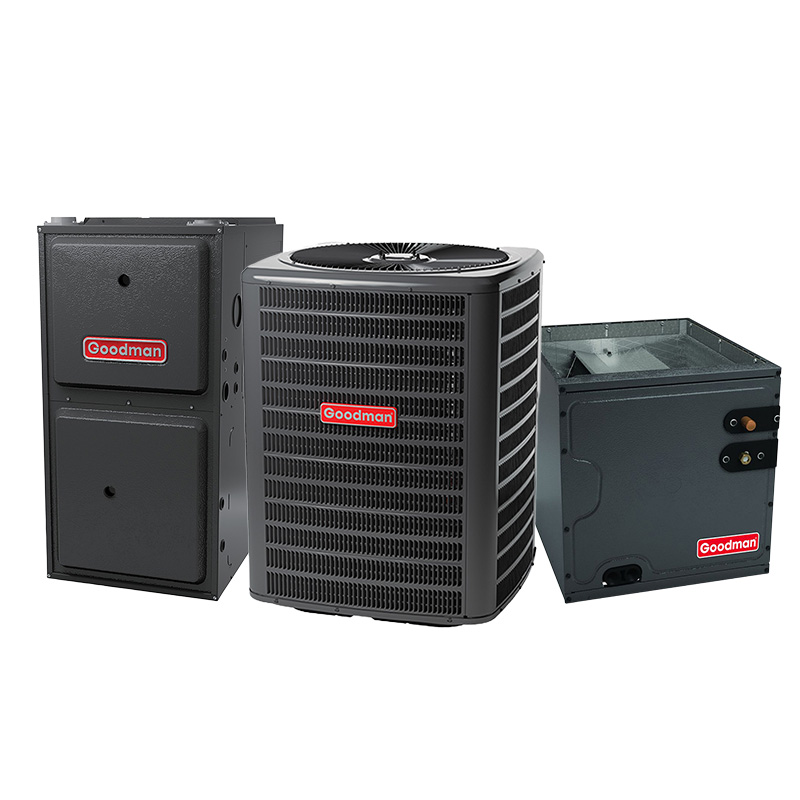
Goodman 2.5 Ton Dual Fuel Hybrid Heat Pump System – 60000 BTU Gas Furnace, Two Stage, 96% AFUE, Upflow, 14.3 SEER2, R32
View on AC Direct see your lowest price →Check current price on AC Direct →
Key features
- Dual fuel hybrid operation: heat pump runs in mild weather, gas furnace takes over in deep cold
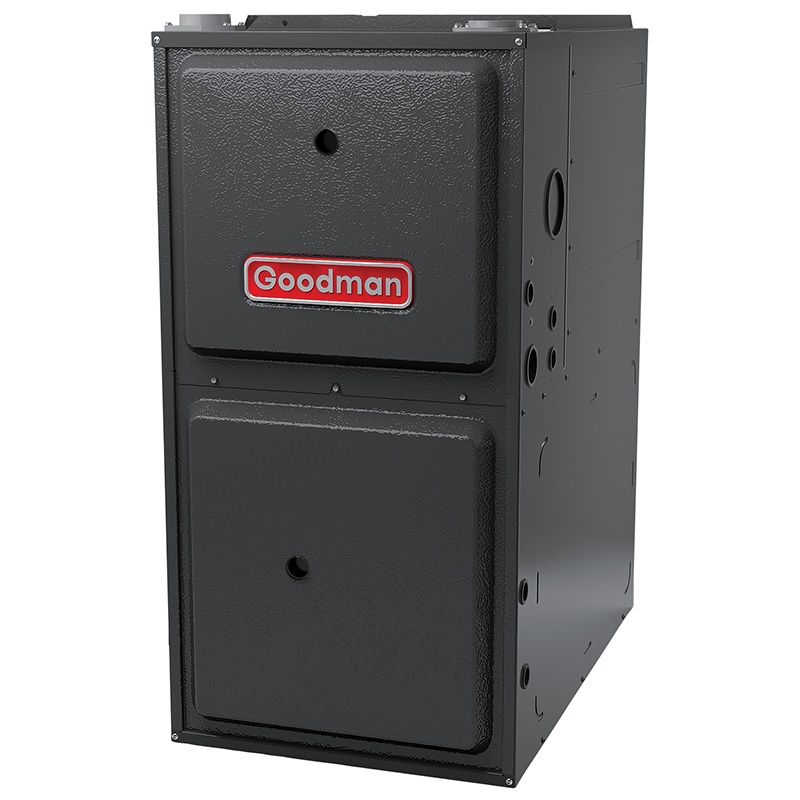
- 96% AFUE two-stage gas furnace for high efficiency and steadier indoor temperatures
- 14.3 SEER2 heat pump rating meets current federal minimum efficiency standards
- R-32 refrigerant with lower global warming potential than outgoing R-410A
- Upflow configuration suits basements and utility closets with overhead ductwork
- Two-stage furnace operation reduces short-cycling and temperature swings
About this system
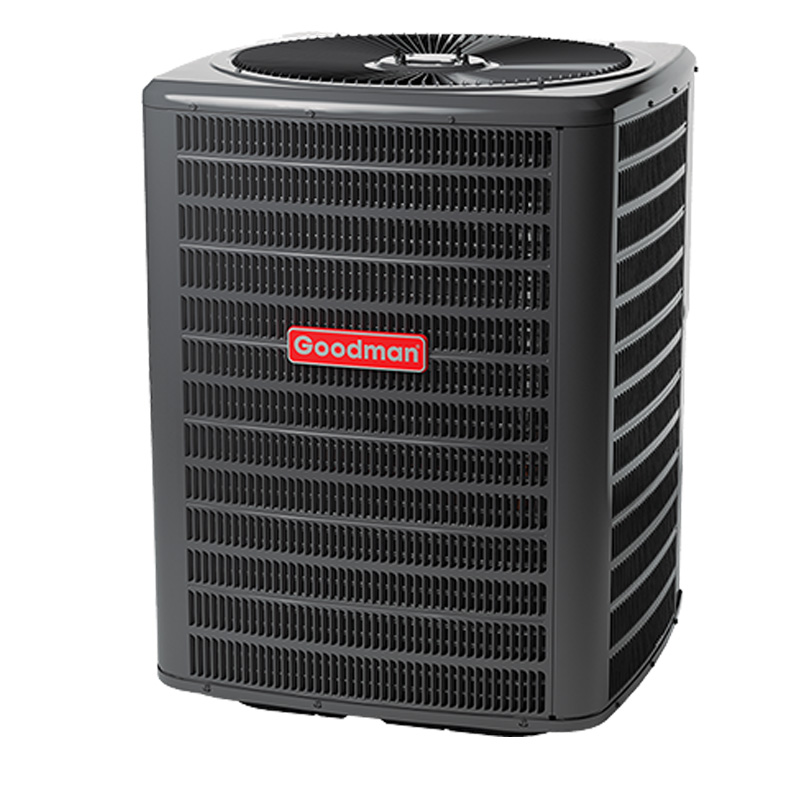
The Goodman 2.5-ton dual fuel hybrid heat pump system pairs a 14.3 SEER2 outdoor heat pump with a 60,000 BTU, 96% AFUE two-stage gas furnace in an upflow configuration. A dual fuel setup is purpose-built for climates that swing between mild shoulder seasons and genuinely cold winters: the heat pump handles the bulk of heating and cooling when outdoor temps are moderate, then hands off to the gas furnace once temperatures drop below the heat pump’s efficient operating threshold, typically somewhere in the low-to-mid 30s Fahrenheit. The result is lower utility bills across most of the year without sacrificing comfort on the coldest nights.
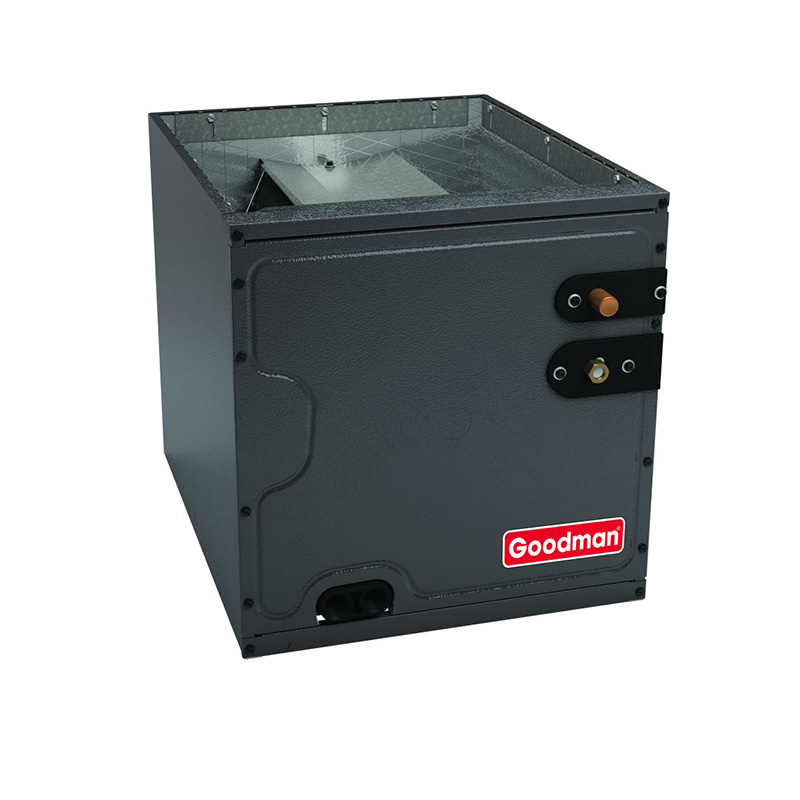
The 96% AFUE rating means 96 cents of every dollar spent on gas goes toward heat, which sits at the top of the non-condensing and condensing furnace efficiency tiers. Two-stage operation on the furnace means it runs at a reduced capacity most of the time, cycling less aggressively and maintaining more consistent indoor temperatures than a single-stage unit would. R-32 refrigerant, used in the outdoor heat pump section, carries a lower global warming potential than the R-410A it replaces and is becoming the industry standard in newer residential equipment. The upflow air handler configuration suits homes where the furnace sits in a basement or utility closet with ductwork running up through the living space, which covers a large share of homes in heating-dominated climates where a dual fuel system makes the most sense.
This system is best suited to homeowners in the middle third of the country, the mid-Atlantic, Midwest, and mountain West, who already have a gas line and want the efficiency of a heat pump without giving up reliable cold-weather heating. It is a value-positioned choice, typically priced 15 to 25 percent below comparable Carrier, Trane, or Lennox dual fuel packages, which makes it attractive when budget matters and the savings can be put toward a strong installation by a qualified contractor.
This Goodman dual fuel system delivers genuinely good efficiency specs at a price point that undercuts the major premium brands by a meaningful margin, making it a reasonable choice for cost-conscious buyers in cold-climate regions who already have natural gas service. The trade-off is that Goodman's real-world reliability record is uneven, and the system's longevity depends heavily on installation quality and early maintenance. Buyers who invest in a thorough, contractor-verified installation and budget for routine upkeep can get solid performance; those expecting trouble-free ownership comparable to a premium brand may be disappointed over a 10-plus-year horizon.
Overall score is the average of the five ratings above.
What we like
- Dual fuel logic delivers year-round efficiency by automatically selecting the cheaper energy source for conditions
- 96% AFUE furnace is near the top of available efficiency tiers, reducing gas consumption on cold days
- Two-stage furnace operation improves comfort and reduces temperature swings compared to single-stage units
- R-32 refrigerant is lower-impact than R-410A and positions the system well as regulations tighten
- Purchase price typically 15 to 25 percent below comparable Carrier, Trane, or Lennox dual fuel systems
Trade-offs
- Dual-run capacitors are the most commonly reported failure point and, while usually an inexpensive fix, add to long-term maintenance costs
- Evaporator coil leaks appear in a meaningful share of owner reviews, which can mean refrigerant loss and costly repairs
- Compressor lifespan averages 10 to 14 years against 15 to 20 years typical of premium-brand compressors
- A minority of owners report refrigerant leaks within the first year, most often traced to installation or initial charge issues rather than equipment defects
What homeowners and pros say about Goodman
Homeowners who share feedback on Goodman equipment tend to land in two distinct camps. Those who had a careful, experienced installer and scheduled regular maintenance often report years of uneventful operation and point to the lower purchase price as money well spent. Those who ran into problems tend to describe repair costs climbing after the seven-year mark, a pattern consistent with Goodman’s ConsumerAffairs rating of roughly 2.5 out of 5, a channel that skews toward complaints but still reflects a real subset of ownership experiences. On Google dealer reviews, where the full customer base is more represented, Goodman-equipped systems average around 3.8 out of 5 across hundreds of reviews per location, with affordability consistently cited as the primary reason buyers chose the brand.
HVAC technicians who service Goodman equipment regularly point to dual-run capacitor failures as the most common call they receive on these units, a repair that is generally quick and falls in the 300 to 600 dollar range. More serious documented failure modes include evaporator coil leaks, which appear in a meaningful share of owner accounts, and compressor longevity that averages 10 to 14 years rather than the 15 to 20 years technicians associate with premium brands. A smaller number of owners in the first year report refrigerant leaks, which pros generally attribute to installation or initial charge issues rather than factory defects. For a dual fuel hybrid system specifically, where two major components and a control interface must all work together correctly, installation quality carries even more weight than it does for a standard split system. The honest industry consensus is that Goodman can deliver good value, but the margin for a mediocre installation is thinner than it would be with a premium brand.
Sources: ConsumerAffairs Goodman owner reviews, AHRI Directory of Certified Product Performance, U.S. DOE appliance and equipment efficiency standards, Goodman product specification sheets.
What it costs to run
At 14.3 SEER2, cooling this 2.5-ton system for a typical 1200-hour cooling season at the U.S. average electricity rate of $0.17/kWh works out to roughly $428 per year in cooling, about $29 less per year than a minimum-efficiency 13.4 SEER2 unit of the same size. Your real cost depends on your climate and local rate.
Method: (30,000 BTU/hr ÷ 14.3 SEER2) × 1200 hours ÷ 1000 × $0.17/kWh. Rate source: U.S. EIA average; cooling hours: moderate-climate estimate.
How it compares
| Brand | Comparable model | SEER2 | Stage | Price position |
|---|---|---|---|---|
| Goodman | 2.5 Ton Dual Fuel Hybrid System, 96% AFUE Two-Stage Furnace | 14.3 | Two-stage | Value pick |
| Carrier | Performance Series Dual Fuel System (25HCB / 59TP6) | 15.0–16.0 | Two-stage | Typically 15 to 25 percent more than Goodman |
| Trane | XR15 Heat Pump with S9V2 Gas Furnace Dual Fuel Package | 15.0 | Two-stage | Typically 15 to 25 percent more than Goodman |
| Lennox | Merit Series ML14XP1 Heat Pump with ML196E Gas Furnace Dual Fuel Package | 14.3–15.0 | Two-stage | Typically 15 to 25 percent more than Goodman |
Competitor rows are comparable single-stage units at similar efficiency; price is relative position, not a quote.
Questions about this system
At what outdoor temperature does this system switch from heat pump to gas furnace, and can that threshold be adjusted?
The switchover temperature, often called the balance point, is typically set by the thermostat or a dual fuel control board during installation. Many installers default to somewhere between 35 and 40 degrees Fahrenheit, but a qualified technician can adjust it based on your local utility rates and climate. Setting it correctly is important for maximizing efficiency, so ask your installer to document the setpoint.
Does the 96% AFUE rating apply in dual fuel mode, or only when the furnace runs on gas?
The 96% AFUE rating applies specifically to the gas furnace portion of the system and describes how efficiently it converts gas to heat. When the heat pump is running, efficiency is measured differently, as SEER2 for cooling and heating seasonal performance factor for heating. In dual fuel operation, the system uses whichever source is more economical for current conditions, so overall seasonal efficiency depends on how often each mode runs in your climate.
Is R-32 refrigerant harder or more expensive to service than R-410A in this system?
R-32 requires technicians to have the appropriate equipment and training, but it is not dramatically harder to service than R-410A. As R-32 becomes more common in residential equipment, availability is improving. The main practical point for owners is to confirm your service contractor is equipped to handle R-32 before scheduling any refrigerant-related work.
What are the most likely repair costs to budget for over the first 10 years with a Goodman dual fuel system?
Dual-run capacitor failures are the most commonly reported issue and usually run in the 300 to 600 dollar range including labor. Evaporator coil leaks and refrigerant recharges are more expensive and less predictable. A small share of owners also report refrigerant leaks in the first year, which are most often tied to installation quality. Setting aside a few hundred dollars per year in a home repair fund is a reasonable approach.
My home has ductwork that runs down from a main floor closet, not up from a basement. Will this upflow system work?
No. An upflow furnace is designed so that return air enters at the bottom and conditioned air exits at the top, pushing airflow upward into overhead ductwork. If your ductwork runs downward from the unit, you would need a downflow or counterflow configuration instead. Installing an upflow unit in a downflow application requires modification and is generally not recommended.
Specifications
| Cooling capacity | 2.5 Ton |
| Efficiency | 14.3 SEER2 |
| Furnace output | 60000 BTU |
| Furnace efficiency | 96% AFUE |
| Configuration | Upflow |
| Refrigerant | R-32 |