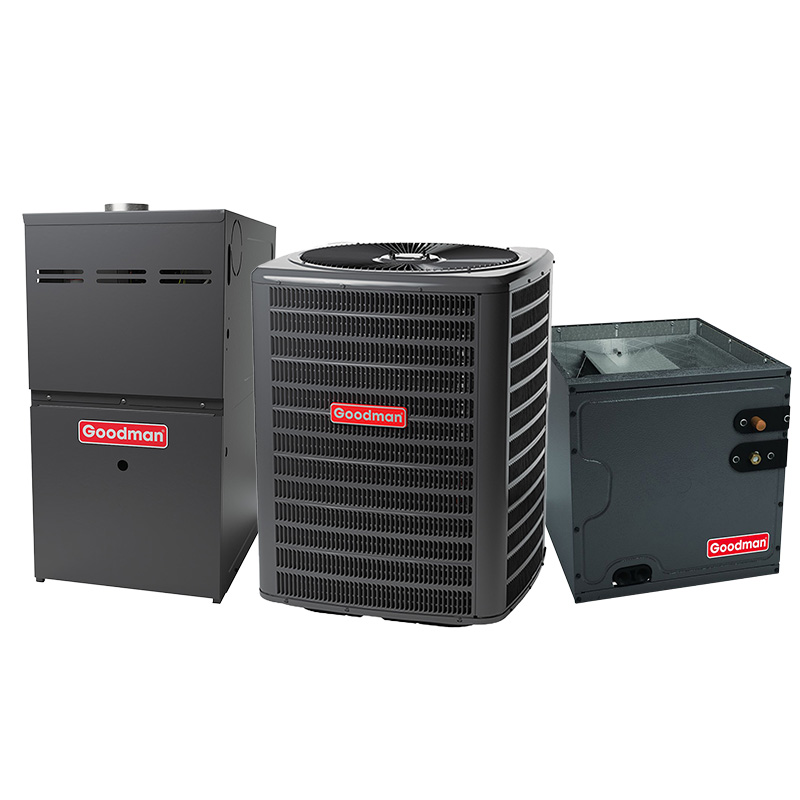
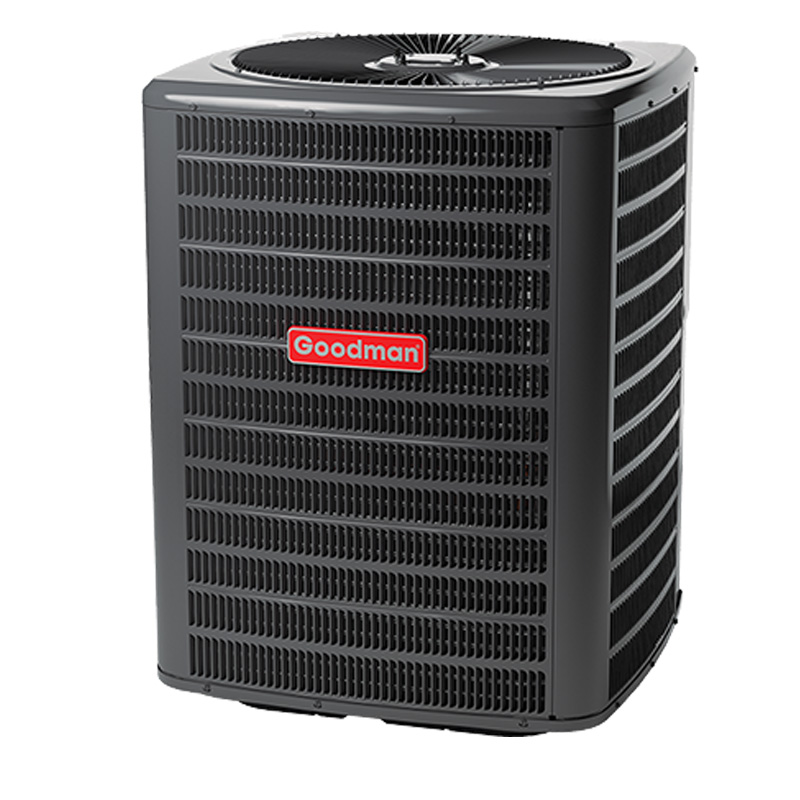
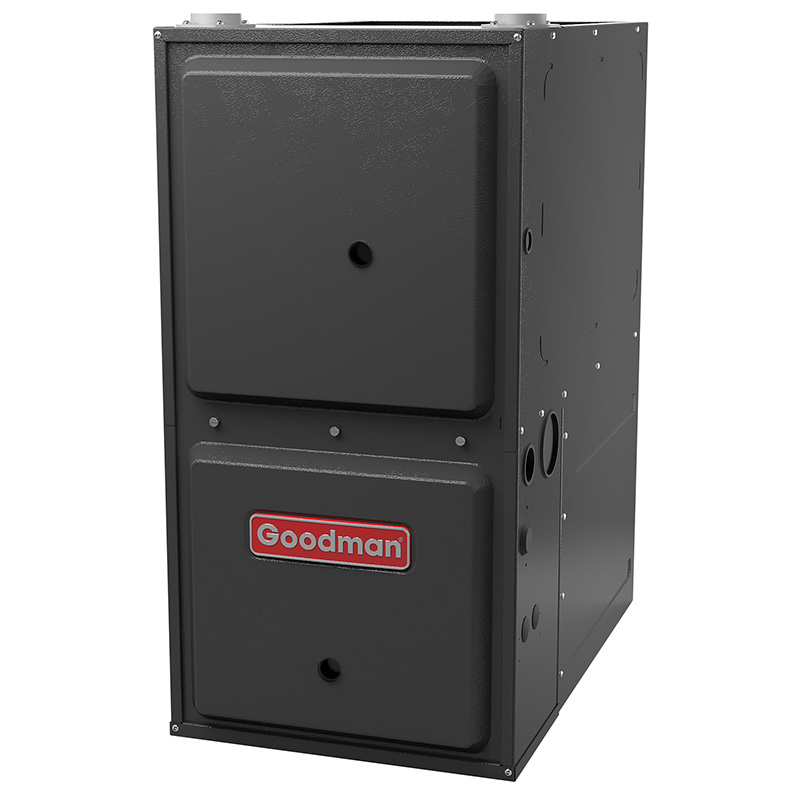
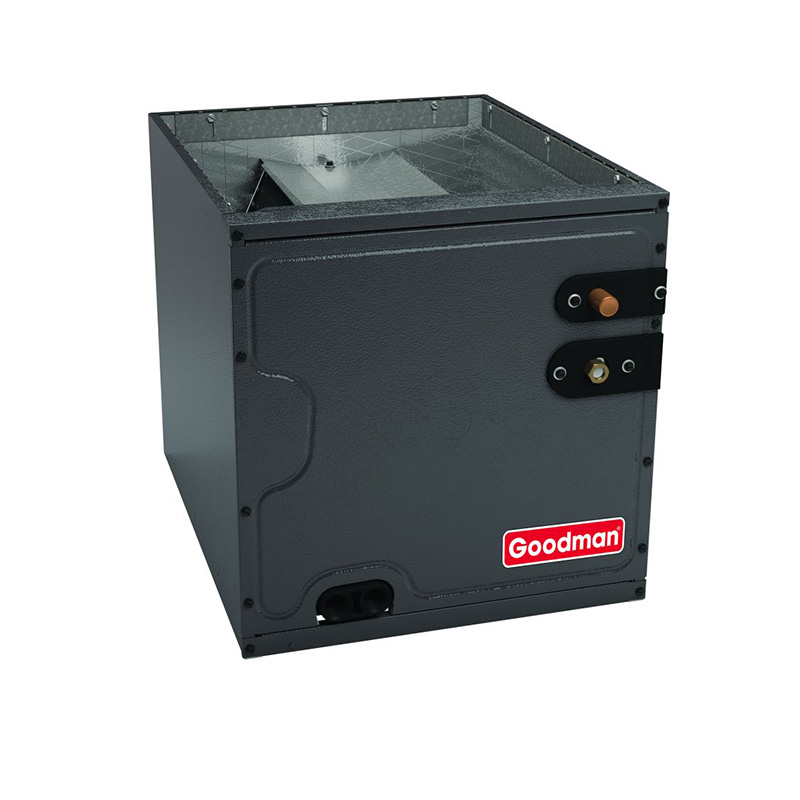
Goodman 2.5 Ton Dual Fuel Hybrid Heat Pump System – 80000 BTU California Low NOx Gas Furnace, 80% AFUE, 15.2 SEER2, Upflow, R32
View on AC Direct see your lowest price →Check current price on AC Direct →
Key features
- Dual fuel hybrid operation: heat pump runs in mild weather, gas furnace switches in on cold days
- 15.2 SEER2 cooling efficiency meets 2023 federal minimums with a small margin
- 80,000 BTU gas furnace rated at 80% AFUE, suitable for existing B-vent flue systems
- R-32 refrigerant with lower global warming potential than outgoing R-410A
- Upflow air handler configuration for basement or main-level utility room installs
- Goodman factory warranty: 10-year parts on registered systems (compressor and heat exchanger included)
About this system
The Goodman 2.5-ton dual fuel hybrid system pairs a 15.2 SEER2 heat pump with an 80,000 BTU, 80% AFUE upflow gas furnace in a single matched package. The hybrid setup is the key selling point here: the heat pump handles heating and cooling during mild weather, and the furnace takes over when outdoor temperatures drop to the point where a heat pump loses efficiency, typically in the low 30s Fahrenheit. That automatic switchover can trim heating bills compared to running a furnace alone through the whole winter, while keeping you warm during the coldest nights when a heat pump alone would struggle.
The R-32 refrigerant charge is worth noting for buyers with an eye on long-term ownership. R-32 has a lower global warming potential than the R-410A it replaces, and it is increasingly the standard for new residential equipment as the HVAC industry phases down older refrigerants. The upflow configuration means the air handler sits in a basement or utility closet and pushes conditioned air upward through the duct system, which suits the majority of single-family homes in cold-to-mixed climates where this type of hybrid system makes the most economic sense. At 80% AFUE the furnace is a standard-efficiency unit, meaning combustion gases vent through a conventional flue rather than a PVC condensing pipe, which simplifies installation in homes that already have a metal flue.
This system fits homeowners in climates with genuine winters who want lower utility bills than a straight gas furnace delivers but are not ready to commit to the higher upfront cost of a premium all-electric cold-climate heat pump. It is not a top-tier efficiency build, and buyers should understand that Goodman’s value pricing comes with real trade-offs in component longevity compared to Trane, Lennox, or Carrier equipment at similar efficiency ratings.
This Goodman dual fuel system delivers a legitimate hybrid heating solution at a price point that is noticeably lower than comparable Carrier, Trane, or Lennox packages. The 15.2 SEER2 and 80% AFUE specs are respectable without being standout, and the long-term picture depends heavily on how well the system is installed and whether minor component failures get addressed promptly. Buyers who want maximum peace of mind over a 15-plus-year horizon should weigh the cost savings against Goodman's documented shorter compressor lifespan.
Overall score is the average of the five ratings above.
What we like
- Hybrid operation reduces gas consumption during mild winters without sacrificing capacity on cold nights
- R-32 refrigerant is future-friendly and already compliant with tightening refrigerant regulations
- Upflow design installs cleanly in homes with existing conventional flue systems, keeping retrofit costs down
- Priced 15 to 25 percent below comparable premium-brand dual fuel systems, lowering the upfront barrier
- 10-year registered parts warranty provides reasonable coverage for a value-tier system
Trade-offs
- 80% AFUE is the lowest efficiency tier available; a 96% condensing furnace would cut gas bills further, though it requires a new PVC vent run
- Dual-run capacitors are the most frequently reported failure on Goodman equipment, typically needing replacement within the first decade
- Compressor lifespan averages 10 to 14 years versus 15 to 20 years on premium brands, meaning a mid-system replacement is more likely
- A minority of owners have reported refrigerant leaks in the first year, pointing to sensitivity to installer charge accuracy with R-32
What homeowners and pros say about Goodman
Owner feedback on Goodman equipment across review channels is genuinely mixed, and that split matters for anyone buying this dual fuel system. On ConsumerAffairs, Goodman sits at roughly 2.5 out of 5 stars, a score that reflects the platform’s complaint-heavy audience but still points to a recurring pattern: repair costs that start to climb after about year seven, with coil leaks and compressor issues showing up more often than owners expected. Google dealer reviews paint a more balanced picture, averaging around 3.8 out of 5 stars across locations, where the most consistent praise is affordability and the most consistent frustration is variability in how the equipment performs depending on who installed it. Technicians are consistent on this point: Goodman’s longevity is more install-dependent than most brands, meaning a careful contractor makes a real difference.
The specific failure modes worth knowing before you buy this system are the dual-run capacitor, which is the most frequently cited repair on Goodman units but is also a fast and relatively inexpensive fix when caught early; evaporator coil leaks, which appear in a meaningful share of owner accounts and tend to be more disruptive repairs; and compressor lifespan that averages 10 to 14 years rather than the 15 to 20 years owners of Carrier or Trane equipment more often report. A small number of owners have also noted refrigerant leaks in the first year, typically traced back to installation rather than a manufacturing defect, which underscores why the choice of installer matters as much as the choice of equipment. For buyers who go in with clear expectations, budget for periodic maintenance, and choose their contractor carefully, this dual fuel system delivers genuine value for its price tier.
Sources: ConsumerAffairs Goodman owner reviews, AHRI Directory of Certified Product Performance, U.S. DOE appliance and equipment efficiency standards, Goodman product specification sheets.
What it costs to run
At 15.2 SEER2, cooling this 2.5-ton system for a typical 1200-hour cooling season at the U.S. average electricity rate of $0.17/kWh works out to roughly $403 per year in cooling, about $54 less per year than a minimum-efficiency 13.4 SEER2 unit of the same size. Your real cost depends on your climate and local rate.
Method: (30,000 BTU/hr ÷ 15.2 SEER2) × 1200 hours ÷ 1000 × $0.17/kWh. Rate source: U.S. EIA average; cooling hours: moderate-climate estimate.
How it compares
| Brand | Comparable model | SEER2 | Stage | Price position |
|---|---|---|---|---|
| Goodman | 2.5-Ton Dual Fuel Hybrid (this system) | 15.2 | Single-stage | Value pick |
| Carrier | Performance Series Dual Fuel (25HCB3 heat pump with 58SB gas furnace) | 15.2 | Single-stage | Typically 15 to 25 percent more than this Goodman package |
| Trane | XR15 Dual Fuel System (XR15 heat pump with S8X1 80% gas furnace) | 15.0 | Single-stage | Typically 15 to 25 percent more than this Goodman package |
| Lennox | Merit Series Dual Fuel (ML15XP1 heat pump with ML180 80% gas furnace) | 15.1 | Single-stage | Typically 15 to 25 percent more than this Goodman package |
Competitor rows are comparable single-stage units at similar efficiency; price is relative position, not a quote.
Questions about this system
At what outdoor temperature does the system switch from the heat pump to the gas furnace?
The crossover point, called the balance point, is typically set by the installing technician and often falls between 35 and 40 degrees Fahrenheit for most climates. Below that temperature the gas furnace takes over because it heats more cost-effectively than the heat pump in cold air. Your installer should set this based on your local climate and current gas and electricity rates.
Is the R-32 refrigerant harder or more expensive to service than the R-410A I have in my current system?
R-32 requires technicians to use compatible equipment and follow slightly different handling procedures because it is mildly flammable, but it is not dramatically more expensive or difficult to service for a qualified technician. The bigger practical point is that R-410A is being phased down industrywide, so R-32 service availability is only expected to improve over time.
The specs say 80% AFUE. Is there a reason not to get the higher-efficiency 96% condensing furnace version instead?
A 96% AFUE condensing furnace would save more on gas bills over time, but it requires a PVC condensate drain and a new PVC exhaust vent run rather than using an existing metal flue. If your home already has a conventional B-vent flue in good condition, the 80% unit can reuse it, which can offset some of the efficiency gap through lower installation cost. If you are doing a full new install with no existing flue, the condensing version is worth pricing out.
How worried should I be about the capacitor failure issue mentioned in Goodman reviews?
Dual-run capacitor failures are the most commonly cited repair on Goodman equipment, but they are also one of the cheapest and fastest HVAC fixes, typically in the 300 to 600 dollar range and resolved in a single service call. Keeping up with annual maintenance visits, where a technician checks capacitor readings before they fail, is the simplest way to stay ahead of this.
Does Goodman's 10-year warranty require anything on my end to stay valid?
Yes. The full 10-year parts warranty requires you to register the product with Goodman within a set window after installation, typically 60 days. Without registration most Goodman systems fall back to a shorter 5-year parts warranty. Registration is done online and takes only a few minutes, but it is easy to forget, so it is worth doing the same week the system is commissioned.
Specifications
| Cooling capacity | 2.5 Ton |
| Efficiency | 15.2 SEER2 |
| Furnace output | 80000 BTU |
| Furnace efficiency | 80% AFUE |
| Configuration | Upflow |
| Refrigerant | R-32 |