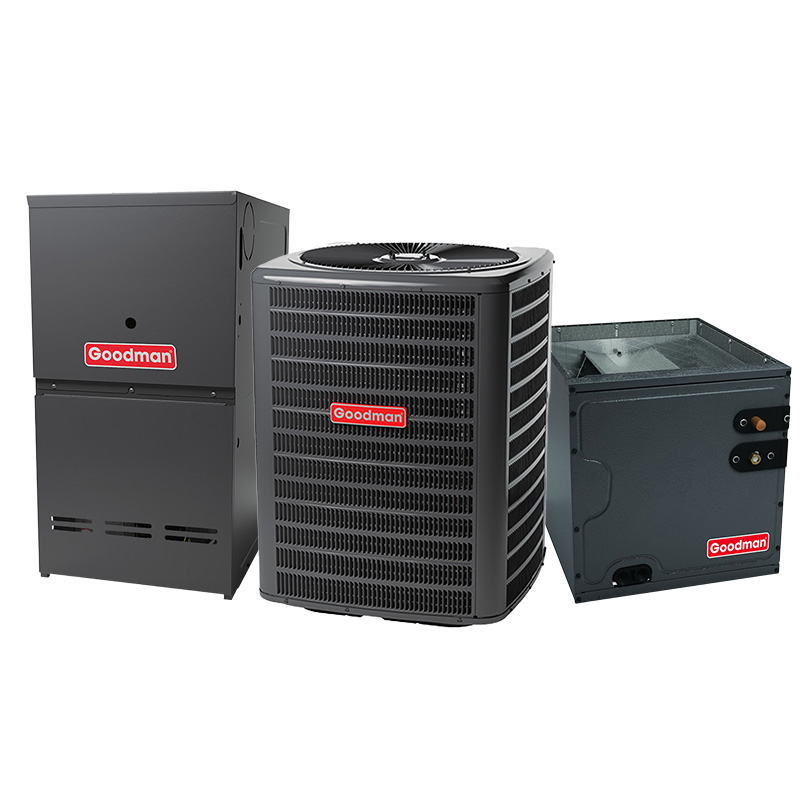
Goodman 2.5 Ton Dual Fuel Hybrid Heat Pump System – 80000 BTU California Low NOx Two Stage Gas Furnace, 80% AFUE, Downflow, 14.5 SEER2, R32
View on AC Direct see your lowest price →Check current price on AC Direct →
Key features
- Dual fuel hybrid operation: heat pump runs in mild weather, two-stage gas furnace kicks in when temps drop
- 14.5 SEER2 heat pump efficiency rating, meeting current federal minimum standards
- 80,000 BTU two-stage gas furnace at 80% AFUE for downflow duct configurations
- R-32 refrigerant with lower global warming potential than R-410A
- California Low NOx certified for compliance in strict air quality districts
- Two-stage gas valve reduces short-cycling and indoor temperature swings versus single-stage
About this system
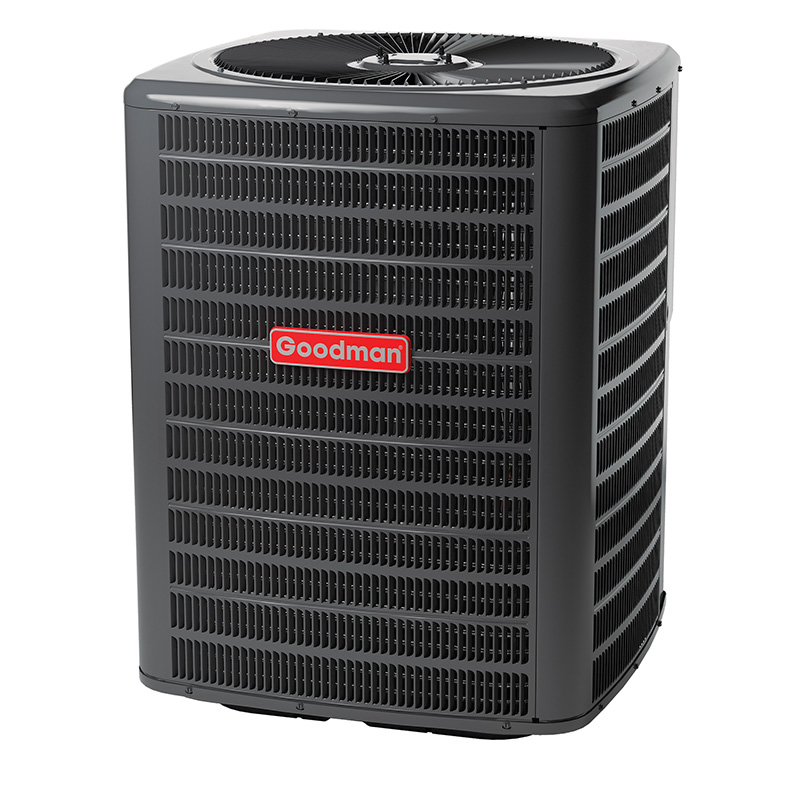
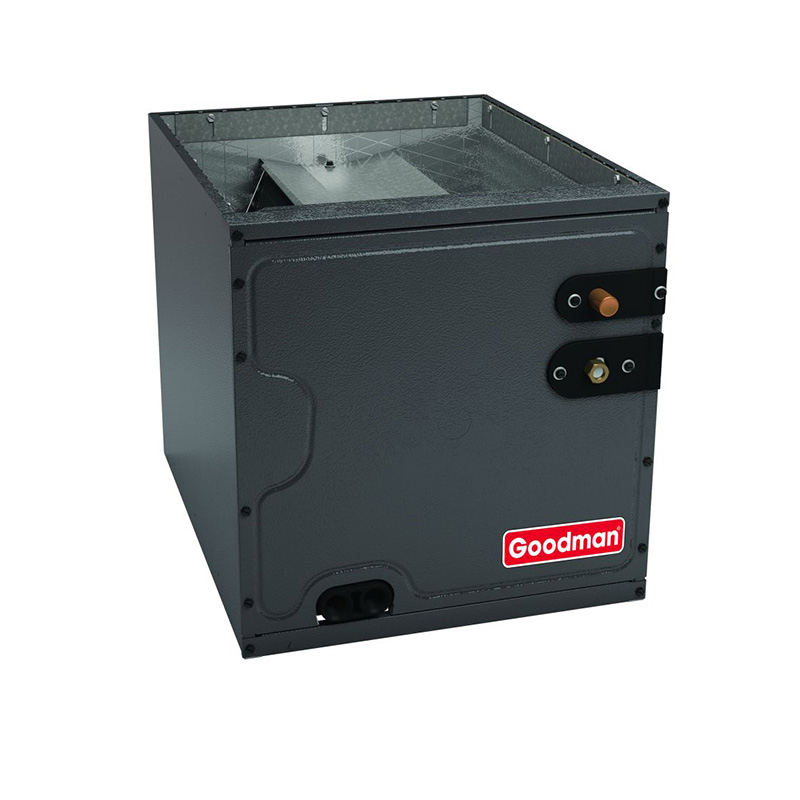
The Goodman 2.5-ton dual fuel hybrid system pairs a 14.5 SEER2 heat pump with an 80,000 BTU, 80% AFUE two-stage gas furnace in a downflow configuration, making it a practical option for moderate climates where winters occasionally dip cold enough to make an all-electric heat pump struggle. The hybrid setup lets the system run on the more efficient heat pump cycle when outdoor temperatures are mild, then automatically switch to gas heat when temps fall below the balance point, trimming annual fuel bills without requiring a full variable-speed upgrade. R-32 refrigerant, which carries a lower global warming potential than the older R-410A it replaces, is now standard across Goodman’s newer lineups and will also be easier to service as the industry shifts away from R-410A entirely.
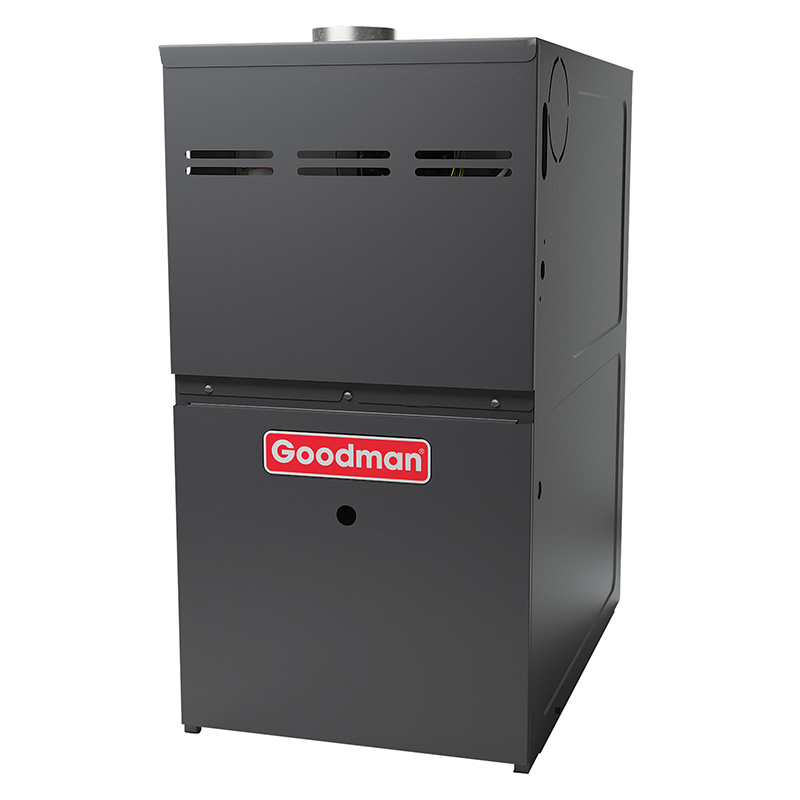
The downflow furnace orientation means warm air exits at the bottom of the cabinet and flows down into the supply plenum, which suits installations in closets, utility rooms, or above crawl spaces where ductwork runs beneath the living area. The two-stage gas valve gives the furnace a lower-output first stage for milder cold days and a full 80,000 BTU second stage for peak demand, which reduces temperature swings and short-cycling compared to a single-stage unit. At 80% AFUE, roughly 20 cents of every dollar of gas is lost as exhaust, so homeowners in very cold climates who run the furnace heavily for months at a time may find the long-term math tilts toward a higher-efficiency 95% or 96% AFUE system, even if the upfront price is higher.
This system sits squarely in Goodman’s value tier and will appeal most to budget-conscious buyers in mixed climates, landlords managing rental properties, or homeowners replacing aging equipment who want a competent, code-compliant system without the premium that brands like Trane or Carrier command. The California Low NOx certification means it meets the stricter nitrogen oxide emission limits required in California air quality districts, but that rating is also relevant in other states that follow California emissions standards.
This Goodman dual fuel hybrid system delivers a functional, code-compliant package at a price noticeably below comparable Carrier, Trane, and Lennox setups, and the two-stage furnace plus hybrid logic is a genuine feature set, not a stripped-down entry. The trade-off is a brand track record that shows more repair activity after year seven and compressor lifespans that tend to fall short of premium competitors, so the long-term value calculation depends heavily on how long you plan to own the home and how good your installer is.
Overall score is the average of the five ratings above.
What we like
- Priced roughly 15 to 25 percent below comparable Trane, Lennox, and Carrier dual fuel systems
- Hybrid operation can lower annual energy costs in mixed climates by using the heat pump during moderate weather
- Two-stage gas furnace improves comfort and reduces on-off cycling compared to single-stage alternatives
- R-32 refrigerant is better positioned for long-term serviceability as R-410A is phased out
- California Low NOx certification broadens eligibility across strict-emissions jurisdictions
Trade-offs
- 80% AFUE furnace loses more heat to exhaust than 95-plus percent condensing models, which matters in cold climates with long heating seasons
- Compressors average 10 to 14 years in practice versus 15 to 20 years documented for premium brands, a real gap over a full ownership window
- Dual-run capacitor failures and evaporator coil leaks are the two most reported repair issues, and coil leaks in particular can be costly to address
- ConsumerAffairs scores average around 2.5 out of 5, with recurring complaints about repair costs climbing after roughly year seven
What homeowners and pros say about Goodman
Homeowners who chose Goodman equipment tend to split into two camps when they talk about it. Those who had a careful, experienced installer often report years of unremarkable, reliable service and appreciate that the upfront savings left room in the budget for a service contract or a repair fund. Those who ran into trouble most often point to repairs surfacing after the six or seven year mark, a pattern consistent with the roughly 2.5 out of 5 average on ConsumerAffairs, which skews toward people motivated enough by frustration to write a review. Google dealer reviews land higher, around 3.8 out of 5, where affordability comes up repeatedly as the reason buyers chose Goodman in the first place.
HVAC technicians who work on Goodman equipment regularly cite the dual-run capacitor as the part they replace most often on these systems, a repair that is quick and typically costs between 300 and 600 dollars, so not catastrophic. Evaporator coil leaks show up enough in owner accounts to be worth noting as a real risk rather than an edge case. Compressor longevity is the more consequential concern: field experience and owner reports suggest Goodman compressors average 10 to 14 years, compared to 15 to 20 years more commonly seen in Trane, Carrier, and Lennox equipment. For this specific dual fuel system, which adds hybrid control logic and R-32 refrigerant handling to the picture, technicians consistently say that commissioning quality, including correct balance point setup and a verified refrigerant charge, is the single factor most likely to determine whether the system performs well or becomes a recurring repair call.
Sources: ConsumerAffairs Goodman owner reviews, AHRI Directory of Certified Product Performance, U.S. DOE appliance and equipment efficiency standards, Goodman product specification sheets.
What it costs to run
At 14.5 SEER2, cooling this 2.5-ton system for a typical 1200-hour cooling season at the U.S. average electricity rate of $0.17/kWh works out to roughly $422 per year in cooling, about $35 less per year than a minimum-efficiency 13.4 SEER2 unit of the same size. Your real cost depends on your climate and local rate.
Method: (30,000 BTU/hr ÷ 14.5 SEER2) × 1200 hours ÷ 1000 × $0.17/kWh. Rate source: U.S. EIA average; cooling hours: moderate-climate estimate.
How it compares
| Brand | Comparable model | SEER2 | Stage | Price position |
|---|---|---|---|---|
| Goodman | Dual Fuel Hybrid Heat Pump System with GMVC8 Downflow Furnace | 14.5 | Two-stage | Value pick |
| Carrier | Performance Series Dual Fuel (25HCB / 59TP6) | 15.0 | Two-stage | Typically 15 to 25 percent more than Goodman |
| Trane | XR15 Dual Fuel with S9V2 Furnace | 15.0 | Two-stage | Typically 15 to 25 percent more than Goodman |
| Lennox | Merit Series ML14XP1 Dual Fuel with ML180 Furnace | 14.3 | Single-stage | Typically 15 to 25 percent more than Goodman |
Competitor rows are comparable single-stage units at similar efficiency; price is relative position, not a quote.
Questions about this system
What outdoor temperature causes the system to switch from heat pump to gas furnace?
The switchover point, called the balance point, is typically set during installation based on your climate and equipment specs, often somewhere between 30 and 40 degrees Fahrenheit. Your installer programs or sets this threshold so the system runs the more efficient heat pump above that temperature and fires the gas furnace below it. Getting that balance point dialed in correctly is one of the most important parts of a dual fuel commissioning job.
Does the downflow configuration limit where this furnace can be installed?
Yes. Downflow furnaces are designed so air enters at the top and discharges at the bottom, meaning the supply ductwork must be below the unit. They work well in closet installs, utility rooms with under-floor ducts, or above crawl spaces, but they are not interchangeable with upflow or horizontal units without significant duct work changes.
Is R-32 refrigerant harder or more expensive to service than R-410A?
Not significantly today, and the outlook is actually better long-term. R-32 is already widely used in equipment sold in Europe and Asia, and as domestic supply chains adjust to the R-410A phasedown, R-32 availability is expected to improve. One practical note is that R-32 is mildly flammable, so technicians need to follow A2L refrigerant handling procedures, which most certified HVAC technicians are now trained for.
What does the California Low NOx rating mean, and does it matter if I'm not in California?
California Air Resources Board Low NOx certification means the furnace produces nitrogen oxide emissions at or below a stricter threshold than the federal standard. Several states and local air quality management districts outside California have adopted similar or identical standards, so this certification may be required in those areas. If you are outside a regulated district it does not change how the system operates, but it does not hurt anything either.
What are the most common repairs on Goodman dual fuel systems, and what do they typically cost?
Dual-run capacitor failure is the most frequently reported issue across Goodman equipment generally and is usually a straightforward repair in the 300 to 600 dollar range. Evaporator coil leaks appear in a meaningful share of owner reports and can be more expensive depending on whether the coil needs replacement. A smaller minority of owners report refrigerant leaks in the first year, which usually points to an installation or initial charge problem rather than a product defect, reinforcing why installer selection matters so much with this brand.
Specifications
| Cooling capacity | 2.5 Ton |
| Efficiency | 14.5 SEER2 |
| Furnace output | 80000 BTU |
| Furnace efficiency | 80% AFUE |
| Configuration | Downflow |
| Refrigerant | R-32 |