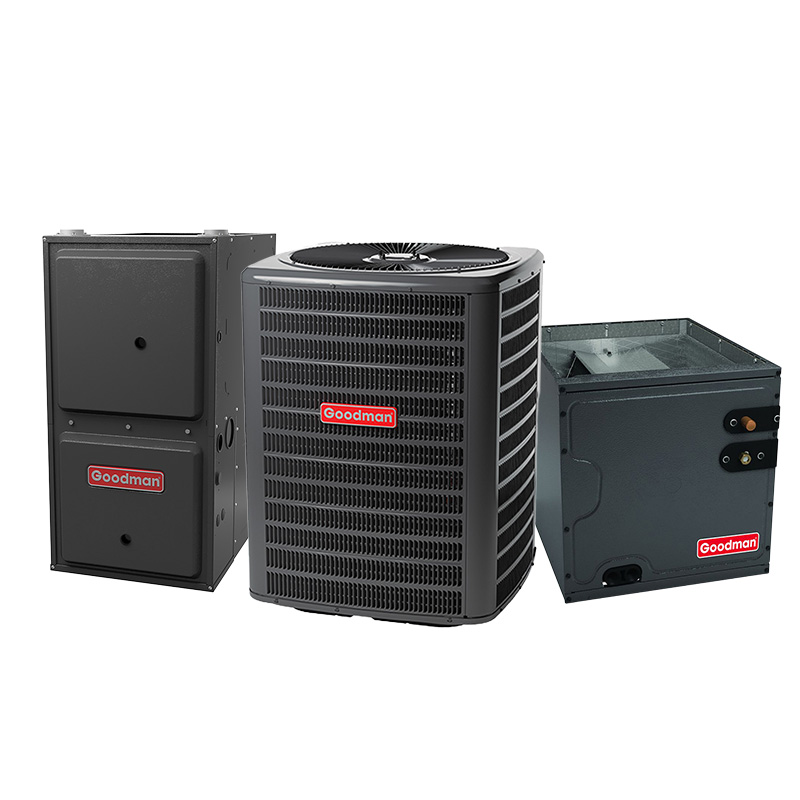
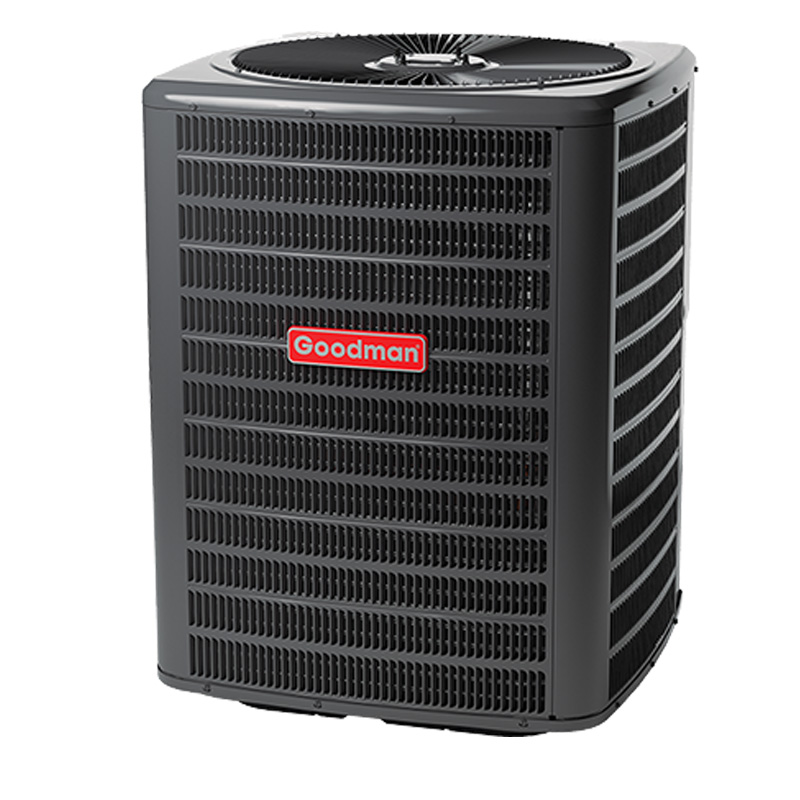
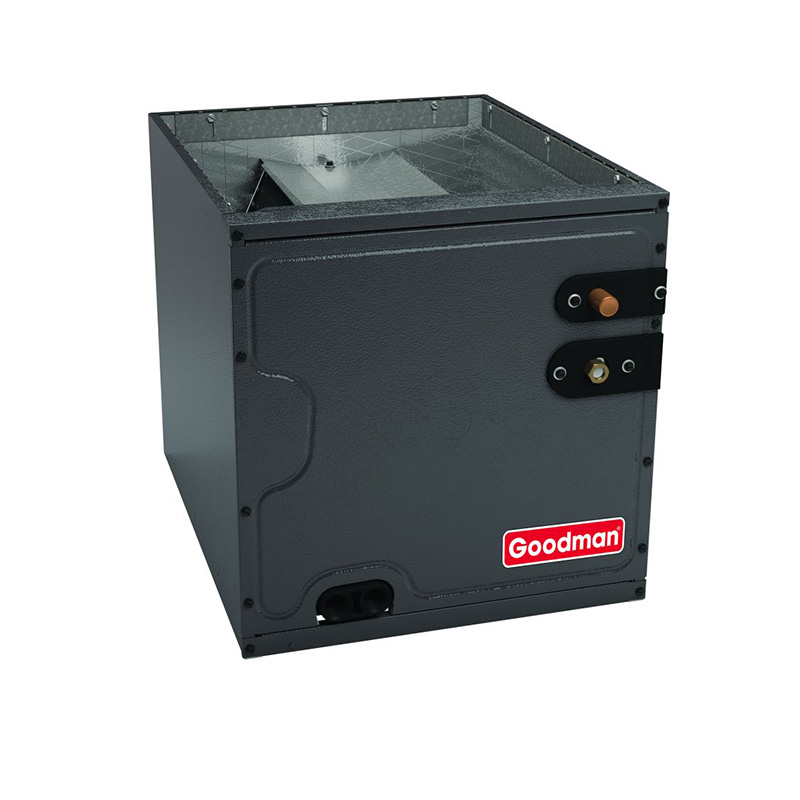
Goodman 2.5 Ton Dual Fuel Hybrid Heat Pump System – 80000 BTU California Ultra-Low NOx Gas Furnace, 80% AFUE, 14.5 SEER2, Upflow, R32
View on AC Direct see your lowest price →Check current price on AC Direct →
Key features
- 14.5 SEER2 heat pump with dual fuel hybrid operation for climate flexibility
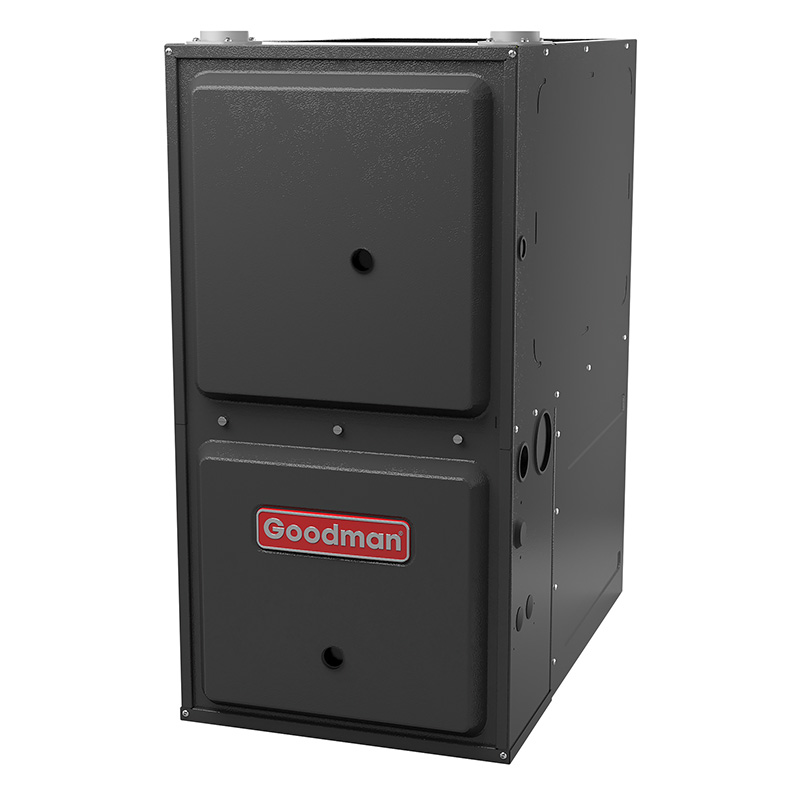
- 80,000 BTU upflow gas furnace rated at 80% AFUE for mid-efficiency gas heating
- R-32 refrigerant with significantly lower global warming potential than R-410A
- California Ultra-Low NOx certified furnace for SCAQMD and similar district compliance
- Upflow configuration suits homes with basement or closet installations and overhead ductwork
- 2.5-ton capacity sized for approximately 1,200 to 1,800 square feet depending on insulation and climate
About this system
The Goodman 2.5 Ton Dual Fuel Hybrid Heat Pump System pairs a 14.5 SEER2 heat pump with an 80,000 BTU, 80% AFUE upflow gas furnace, giving you a system that can shift between electric heat pump operation and gas backup depending on outdoor temperatures and energy costs. That hybrid approach is genuinely useful in climates with cold winters where a heat pump alone loses efficiency and a gas furnace alone misses out on shoulder-season savings. At 2.5 tons, this unit fits the sweet spot for homes in the 1,200 to 1,800 square foot range, though a proper Manual J load calculation should always drive the final sizing decision.
The R-32 refrigerant is a meaningful upgrade over older R-410A systems: it carries a global warming potential roughly 68 percent lower, which positions this unit better for long-term regulatory compliance and aligns with California Air Resources Board direction. California buyers also get the Ultra-Low NOx furnace rating baked in, a requirement for installation across much of the state. The 80% AFUE furnace is a mid-efficiency gas unit, meaning roughly 20 cents of every dollar in gas goes out the flue rather than into your living space. That is adequate for mixed climates but leaves room on the table compared to 96% AFUE condensing furnaces if your winters are long or gas prices are high in your area.
This Goodman hybrid system delivers a functional and California-compliant dual fuel setup at a price point that undercuts comparable Carrier, Trane, and Lennox configurations by a meaningful margin. The trade-off is a mid-tier efficiency furnace, a brand track record that shows reliability declining noticeably after the seven-year mark, and performance that is heavily dependent on how carefully your installer sets up the system. It is a reasonable choice for budget-conscious buyers who understand what they are getting, not a premium long-term investment.
Overall score is the average of the five ratings above.
What we like
- Priced 15 to 25 percent below comparable Trane, Lennox, and Carrier dual fuel systems
- R-32 refrigerant reduces environmental impact and improves regulatory shelf life
- California Ultra-Low NOx certification removes a common installation hurdle in restricted air districts
- Hybrid logic allows the system to favor whichever fuel source is cheaper or more efficient at a given outdoor temperature
- Upflow configuration is widely compatible with existing ductwork in homes with basements or utility closets
Trade-offs
- 80% AFUE furnace wastes more heat up the flue compared to 90-plus percent condensing alternatives
- Dual-run capacitors are the most commonly reported failure, typically arriving before year seven and costing $300 to $600 to fix
- Evaporator coil leaks appear in a meaningful share of owner reports, and compressor lifespan averages 10 to 14 years versus 15 to 20 for premium brands
- ConsumerAffairs reviews average about 2.5 out of 5, with recurring complaints about repair costs climbing after roughly year seven
What homeowners and pros say about Goodman
Homeowners shopping for this specific Goodman hybrid system tend to land in two camps. Those who had it installed by an experienced contractor and set realistic expectations generally report satisfaction with the lower upfront cost and the comfort benefit of having both electric and gas heating available. On Google dealer reviews, Goodman systems average around 3.8 out of 5 across multiple locations, and the most consistent praise centers on price and the straightforward installation process for contractors who know the brand. The dual fuel concept earns particular appreciation in areas where electricity rates spike in winter, since the system can fall back on gas when it makes economic sense.
The more cautious side of the picture comes from ConsumerAffairs, where Goodman averages about 2.5 out of 5, a channel that skews toward people motivated to post after a problem. The recurring story there is repair costs climbing after roughly year seven, which aligns with the documented failure modes: dual-run capacitor failures are the most commonly cited breakdown and while they are usually a $300 to $600 fix, they can feel like a surprise if you were not expecting them. Evaporator coil leaks also show up in a meaningful number of owner accounts, and HVAC technicians consistently note that Goodman compressors tend to average 10 to 14 years compared to 15 to 20 years for Trane, Lennox, or Carrier compressors. A minority of first-year owners have also reported refrigerant leaks, which technicians generally attribute to installation or charge issues rather than a factory defect. The professional consensus is clear: Goodman is a workable product in skilled hands, and a risky one when cut-rate installation is part of the package.
Sources: ConsumerAffairs Goodman owner reviews, AHRI Directory of Certified Product Performance, U.S. DOE appliance and equipment efficiency standards, Goodman product specification sheets.
What it costs to run
At 14.5 SEER2, cooling this 2.5-ton system for a typical 1200-hour cooling season at the U.S. average electricity rate of $0.17/kWh works out to roughly $422 per year in cooling, about $35 less per year than a minimum-efficiency 13.4 SEER2 unit of the same size. Your real cost depends on your climate and local rate.
Method: (30,000 BTU/hr ÷ 14.5 SEER2) × 1200 hours ÷ 1000 × $0.17/kWh. Rate source: U.S. EIA average; cooling hours: moderate-climate estimate.
How it compares
| Brand | Comparable model | SEER2 | Stage | Price position |
|---|---|---|---|---|
| Goodman | Dual Fuel Hybrid Heat Pump System with 80% AFUE Upflow Furnace | 14.5 | Single-stage | Value pick |
| Carrier | Performance Series Dual Fuel (25HCB / 58CVA pairing) | 15.0 | Single-stage | Typically 15 to 25 percent more than this Goodman system |
| Trane | XR15 Dual Fuel System (XR15 heat pump / S8X1 furnace pairing) | 15.0 | Single-stage | Typically 15 to 25 percent more than this Goodman system |
| Lennox | Merit Series Dual Fuel (14ACX / ML180 furnace pairing) | 14.3 | Single-stage | Typically 15 to 25 percent more than this Goodman system |
Competitor rows are comparable single-stage units at similar efficiency; price is relative position, not a quote.
Questions about this system
Why does this system use R-32 instead of R-410A, and does that affect service costs?
R-32 has a much lower global warming potential than R-410A and is part of the industry shift toward lower-impact refrigerants driven by EPA and California regulations. On the service side, R-32 requires technicians with the same EPA 608 certification, but not all service trucks stock it yet, so confirm your area has technicians familiar with it before purchasing. As availability grows, pricing should remain competitive.
What outdoor temperature should I set the system to switch from heat pump to gas furnace?
The crossover point, often called the balance point, is typically set between 35 and 45 degrees Fahrenheit, but the right setting depends on your local gas and electricity rates and your home's insulation level. Your installing technician should program this during commissioning based on a cost-of-operation comparison for your utility rates, not just a default setting.
Is an 80% AFUE furnace good enough for California winters or is a higher efficiency furnace worth it?
In coastal and mild inland California climates where the gas furnace runs relatively few hours per year, 80% AFUE is often sufficient and the payback period for a 96% AFUE unit can stretch beyond ten years. In mountain foothills or high-desert areas with longer heating seasons, a higher AFUE furnace will save more meaningfully on gas bills over time and deserves a closer look.
What is the most likely repair I should budget for in the first ten years with this Goodman system?
Dual-run capacitor failure is the most commonly documented issue with Goodman equipment and typically runs $300 to $600 to replace, including labor. Evaporator coil leaks are also reported by a meaningful share of owners. Signing up for an annual maintenance contract that includes capacitor inspection is a low-cost way to catch the most common failure before it leaves you without cooling or heating.
Does the upflow configuration mean I need a specific duct layout, and can this system be installed in a garage or attic?
Upflow means conditioned air exits the top of the air handler and feeds overhead supply ducts, which suits homes with basement or main-floor utility closet installations where ductwork runs through the ceiling or upper floors. Garage or attic installations almost always call for a horizontal or downflow configuration instead. Installing an upflow unit in the wrong orientation voids the warranty and creates serious performance and safety problems.
Specifications
| Cooling capacity | 2.5 Ton |
| Efficiency | 14.5 SEER2 |
| Furnace output | 80000 BTU |
| Furnace efficiency | 80% AFUE |
| Configuration | Upflow |
| Refrigerant | R-32 |