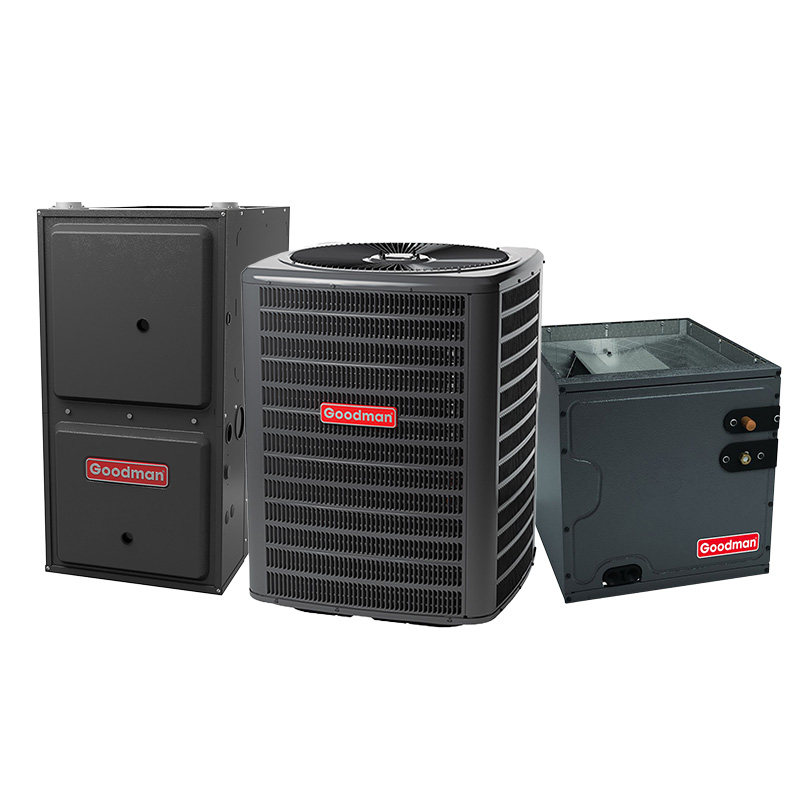
Goodman 2.5 Ton Dual Fuel Hybrid Heat Pump System – 80000 BTU Gas Furnace, 96% AFUE, 15.2 SEER2, Downflow, R32
View on AC Direct see your lowest price →Check current price on AC Direct →
Key features
- 15.2 SEER2 heat pump with automatic switchover to 96% AFUE gas furnace when outdoor temps drop
- R-32 refrigerant with significantly lower global warming potential than legacy R-410A systems
- 80,000 BTU furnace output sized for medium to large single-story or two-story homes up to roughly 2,000 sq ft depending on climate
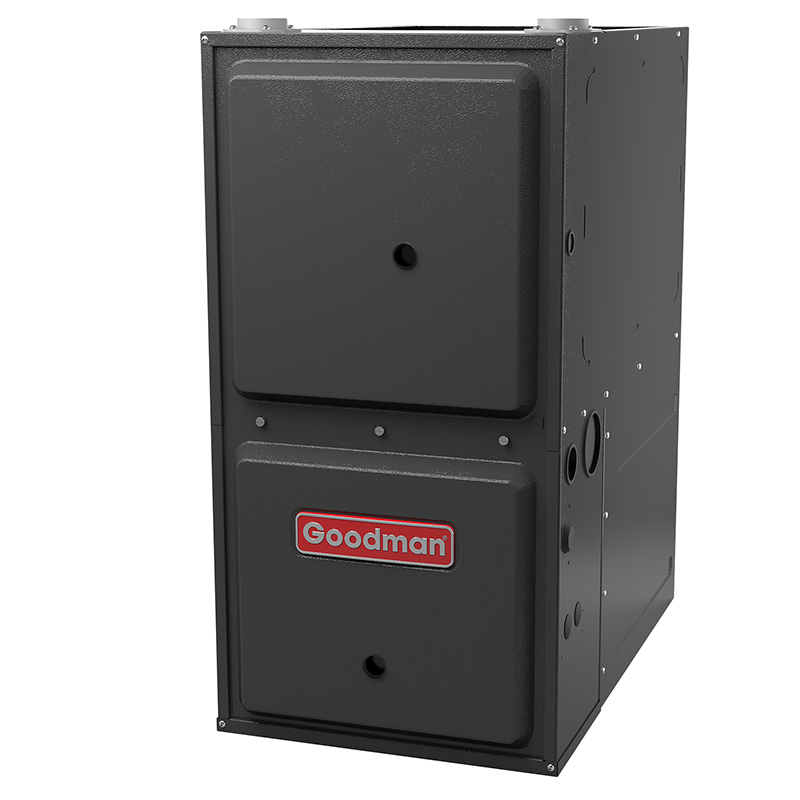
- Downflow air delivery configuration designed for under-floor duct systems and platform installations
- 96% AFUE furnace rating means only 4% of combustion heat escapes through the flue, qualifying for some utility rebates
- Goodman factory warranty covers compressor and parts; registration required for extended coverage terms
About this system
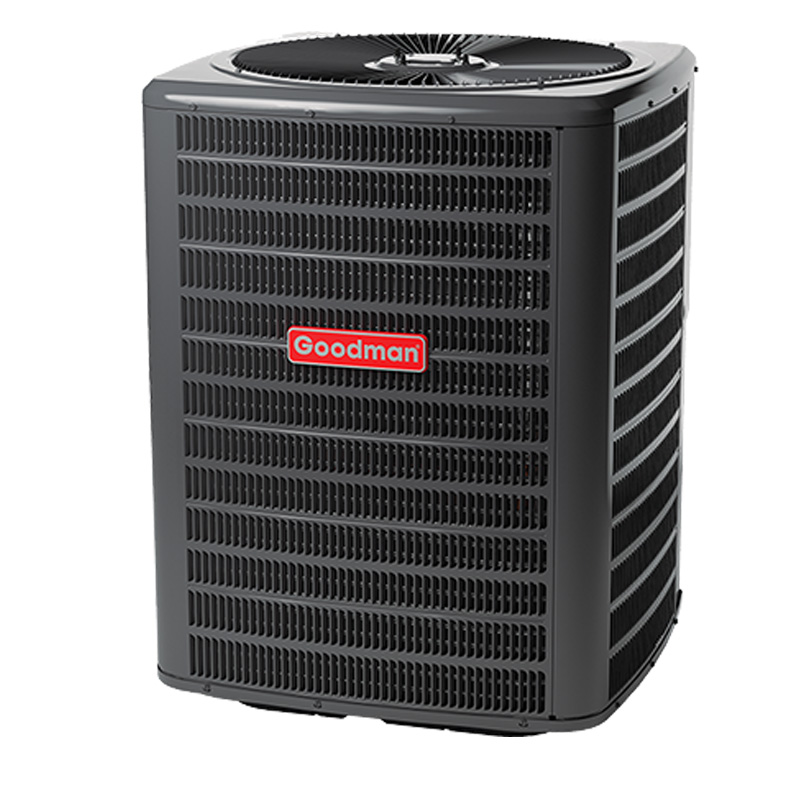
The Goodman 2.5-ton dual fuel hybrid system pairs a 15.2 SEER2 heat pump with an 80,000 BTU, 96% AFUE downflow gas furnace, giving you two heat sources that work together automatically. On mild days the heat pump handles heating at a fraction of the cost of burning gas; when outdoor temps drop to the point where the heat pump loses efficiency, the furnace takes over. That switchover logic is what makes a dual fuel setup genuinely useful rather than just a marketing concept, and it works best in climates where winters are cold but not consistently brutal, think the mid-Atlantic, lower Midwest, or transitional zones in the Southeast.
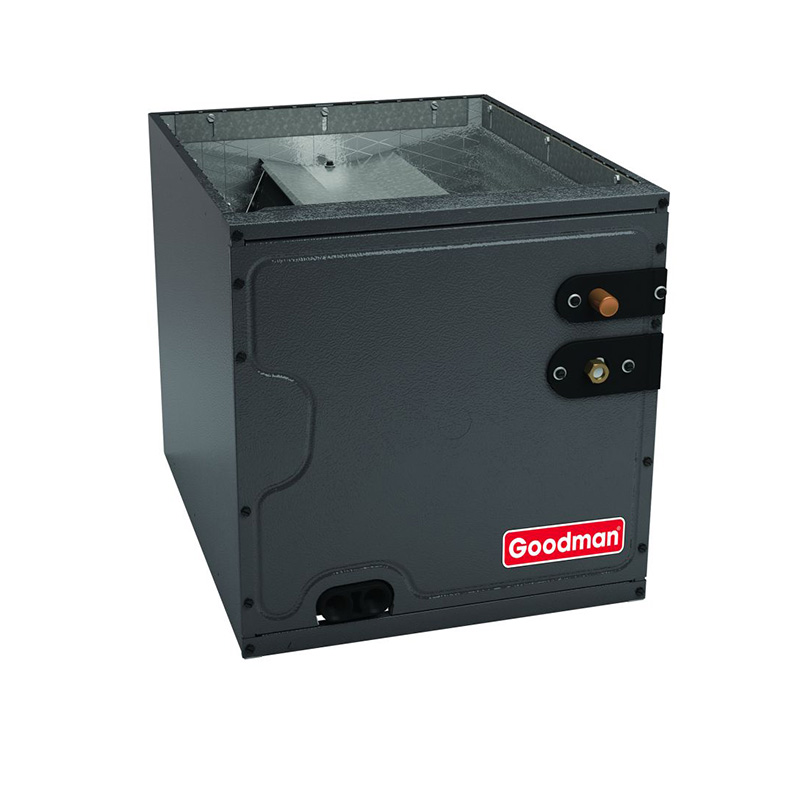
The downflow configuration means supply air exits from the bottom of the air handler or furnace, a layout common in homes with under-floor ductwork or platforms, and less common in attic-based systems. R-32 refrigerant is a step forward environmentally, carrying a global warming potential roughly 68 percent lower than the R-410A it replaces, and it also tends to be more energy-dense, which can contribute to efficiency gains. At 15.2 SEER2, this system clears the federal minimum in most regions and sits in the mid-tier efficiency band, enough to deliver real monthly savings over an older 13 SEER system without the premium price of a 17-plus SEER2 variable-speed unit. Buyers who can live without variable-speed staging and who want the dual fuel flexibility without paying Carrier or Trane prices will find this package worth a close look.
This Goodman dual fuel system delivers a genuinely useful hybrid heating setup at a price point that undercuts comparable Carrier, Trane, and Lennox equipment by 15 to 25 percent. The efficiency numbers are solid without being class-leading, and the real-world performance will depend heavily on who installs it and how well the gas-to-heat-pump switchover point is configured. It is a reasonable choice for budget-conscious buyers in transitional climates, but anyone planning to stay in the home long-term should factor in Goodman's documented compressor longevity gap versus premium brands.
Overall score is the average of the five ratings above.
What we like
- Dual fuel logic cuts monthly gas bills during mild weather while keeping the furnace available for deep cold snaps
- 96% AFUE is a high-efficiency furnace rating that may qualify for utility rebates or federal tax credits
- R-32 refrigerant is more environmentally responsible and increasingly supported by service technicians
- Price comes in meaningfully below comparable Carrier, Trane, and Lennox dual fuel systems
- 15.2 SEER2 exceeds federal minimums and delivers genuine operating cost savings over older low-efficiency equipment
Trade-offs
- Dual-run capacitors are Goodman's most commonly reported failure point and while the repair cost is modest, it signals a component quality gap versus premium brands
- Evaporator coil leaks appear in a meaningful share of owner reports, an issue that is expensive and disruptive to fix
- Compressor lifespan averages 10 to 14 years compared to 15 to 20 years for premium brand compressors, a real long-term cost consideration
- A minority of owners report refrigerant leaks in year one, usually tied to install or charge quality rather than the equipment itself, which means installer selection is critical
What homeowners and pros say about Goodman
Homeowners who research Goodman online encounter a split picture. On ConsumerAffairs, the brand scores around 2.5 out of 5, a channel where unhappy owners are far more likely to post than satisfied ones, and the recurring complaint thread involves repair costs that start accumulating after roughly year 7. On Google dealer reviews, the score climbs to around 3.8 out of 5 across locations with a few hundred reviews each, and the most common positive comment is straightforwardly about price. For this dual fuel system specifically, the financial calculus is real: you get hybrid heating capability and a 96% AFUE furnace at a starting cost well below what Carrier, Trane, or Lennox charge for comparable configurations.
HVAC technicians tend to be candid about Goodman in a way that is neither dismissive nor enthusiastic. The brand’s dual-run capacitors are the component they replace most often, typically a low-drama repair in the 300 to 600 dollar range but one that recurs often enough to be a known cost of ownership. More serious are the evaporator coil leak reports that show up across owner forums, and the documented compressor lifespan of 10 to 14 years, which is meaningfully shorter than the 15 to 20 years technicians associate with premium brands. A small percentage of owners also report refrigerant leaks in the first year, which technicians almost universally attribute to install quality rather than factory defects. That last point matters especially for a dual fuel system, where the refrigerant charge and switchover calibration both have to be set correctly at startup. Choose your installer as carefully as you choose the equipment.
Sources: ConsumerAffairs Goodman owner reviews, AHRI Directory of Certified Product Performance, U.S. DOE appliance and equipment efficiency standards, Goodman product specification sheets.
What it costs to run
At 15.2 SEER2, cooling this 2.5-ton system for a typical 1200-hour cooling season at the U.S. average electricity rate of $0.17/kWh works out to roughly $403 per year in cooling, about $54 less per year than a minimum-efficiency 13.4 SEER2 unit of the same size. Your real cost depends on your climate and local rate.
Method: (30,000 BTU/hr ÷ 15.2 SEER2) × 1200 hours ÷ 1000 × $0.17/kWh. Rate source: U.S. EIA average; cooling hours: moderate-climate estimate.
How it compares
| Brand | Comparable model | SEER2 | Stage | Price position |
|---|---|---|---|---|
| Goodman | 2.5 Ton Dual Fuel Hybrid System (80K BTU / 96% AFUE / 15.2 SEER2 Downflow R-32) | 15.2 | Single-stage | Value pick |
| Carrier | Performance Series Dual Fuel (25HCB / 58TP pairing) | 15.0-16.0 | Single-stage | Typically 15 to 25 percent more than Goodman |
| Trane | XR15 Heat Pump with S8X2 Gas Furnace dual fuel pairing | 15.0-16.0 | Single-stage | Typically 15 to 25 percent more than Goodman |
| Lennox | Merit Series ML14XC1 Heat Pump with ML196E Furnace dual fuel pairing | 15.0-16.0 | Single-stage | Typically 15 to 25 percent more than Goodman |
Competitor rows are comparable single-stage units at similar efficiency; price is relative position, not a quote.
Questions about this system
At what outdoor temperature does the system switch from the heat pump to the gas furnace?
The switchover point, sometimes called the balance point, is typically set by your installer in the thermostat or control board and commonly falls between 35 and 40 degrees Fahrenheit. Getting this number right for your specific climate is one of the most important parts of a dual fuel install and is worth discussing with your technician before commissioning.
Is the downflow configuration a problem if my ductwork is in the attic?
Yes, downflow means supply air exits from the bottom of the unit, which is the wrong orientation for attic-based duct systems that expect upflow delivery. If your ducts run through the attic or ceiling, you need an upflow or horizontal unit rather than this model.
Does R-32 refrigerant require any special handling by my HVAC technician?
R-32 is mildly flammable, which means technicians need specific training and tools to work with it safely. Most licensed HVAC technicians in areas where R-32 equipment is now being installed are equipped for it, but it is worth confirming before scheduling service.
What warranty does Goodman provide on this system and do I need to register it?
Goodman's standard warranty is 5 years on parts without registration, but registering the system within a set window after installation extends coverage significantly, including a 10-year parts warranty. Registration is not automatic and missing the window means you fall back to the shorter coverage, so register as soon as the system is commissioned.
How often do Goodman dual-run capacitors fail and is it a big deal when they do?
Capacitor failure is Goodman's most commonly documented failure mode and tends to show up after several years of use. The part itself is inexpensive and a qualified technician can typically replace it for somewhere in the 300 to 600 dollar range including the service call, so it is not catastrophic, but it is an added ownership cost worth budgeting for.
Specifications
| Cooling capacity | 2.5 Ton |
| Efficiency | 15.2 SEER2 |
| Furnace output | 80000 BTU |
| Furnace efficiency | 96% AFUE |
| Configuration | Downflow |
| Refrigerant | R-32 |