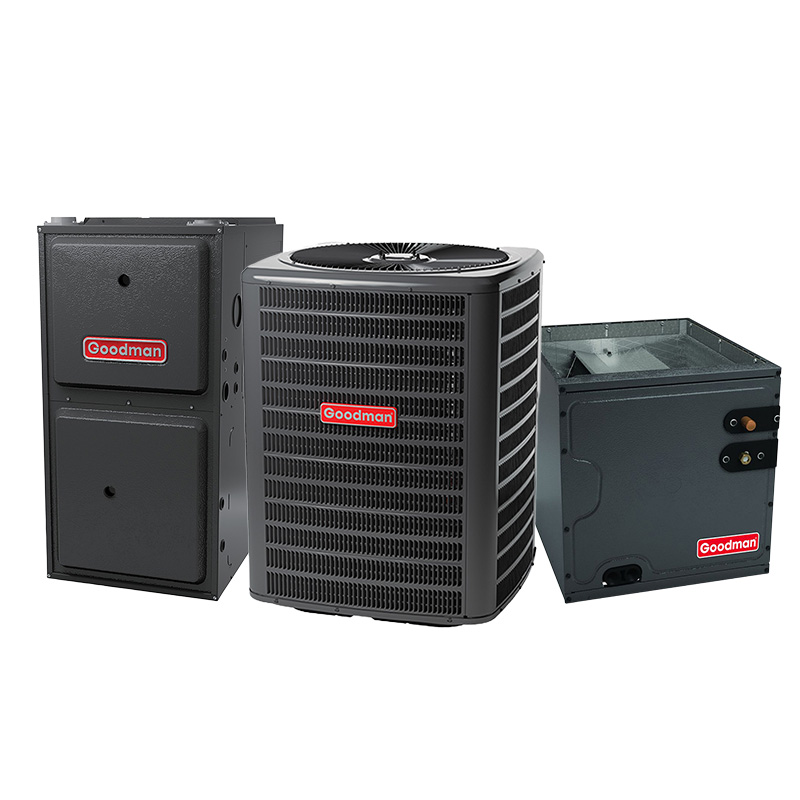
Goodman 2.5 Ton Dual Fuel Hybrid Heat Pump System – 80000 BTU Gas Furnace, Two Stage, 96% AFUE, Upflow, 14.3 SEER2, R32
View on AC Direct see your lowest price →Check current price on AC Direct →
Key features
- Dual fuel hybrid operation automatically switches between heat pump and 96% AFUE gas furnace based on outdoor conditions
- 14.3 SEER2 cooling efficiency meets 2023 federal minimums with moderate above-baseline performance
- Two-stage furnace reduces temperature swings and lowers run noise compared to single-stage units
- R-32 refrigerant offers lower global warming potential than R-410A and aligns with industry phase-out direction
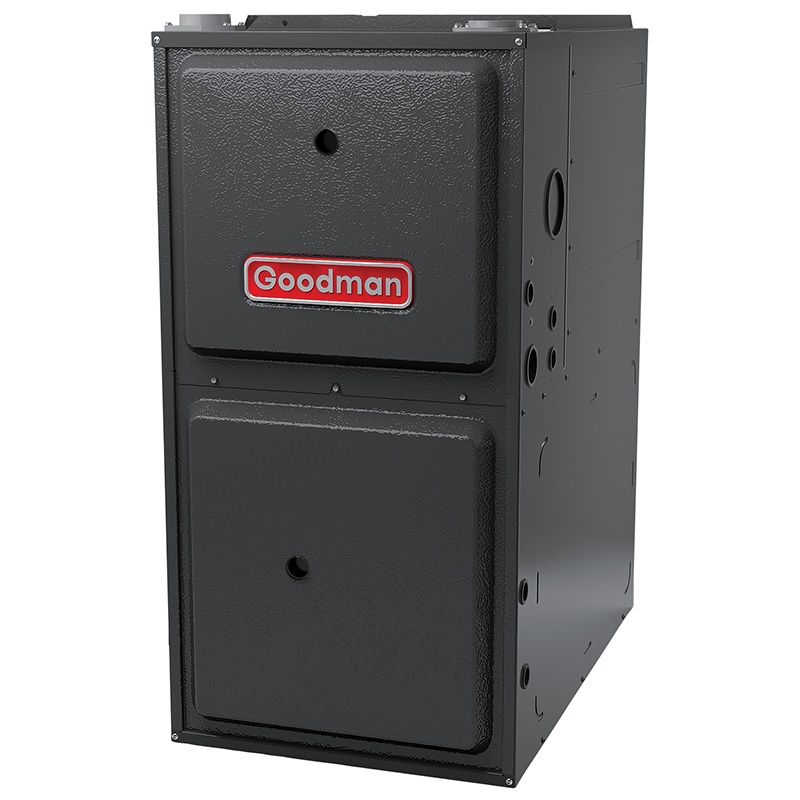
- 80,000 BTU upflow furnace suited for basement or utility-closet installations with ceiling ductwork
- Goodman factory warranty covers compressor, coil, and parts when registered within 60 days of install
About this system
The Goodman 2.5-ton dual fuel hybrid system pairs a 14.3 SEER2 heat pump with an 80,000 BTU, 96% AFUE two-stage gas furnace in an upflow configuration. Dual fuel means the system automatically switches between electric heat pump operation and gas heat depending on outdoor temperature, letting it run on whichever energy source is cheaper or more efficient at any given moment. That balance is especially useful in climates where winters dip cold enough to strain a heat pump but natural gas rates are competitive.
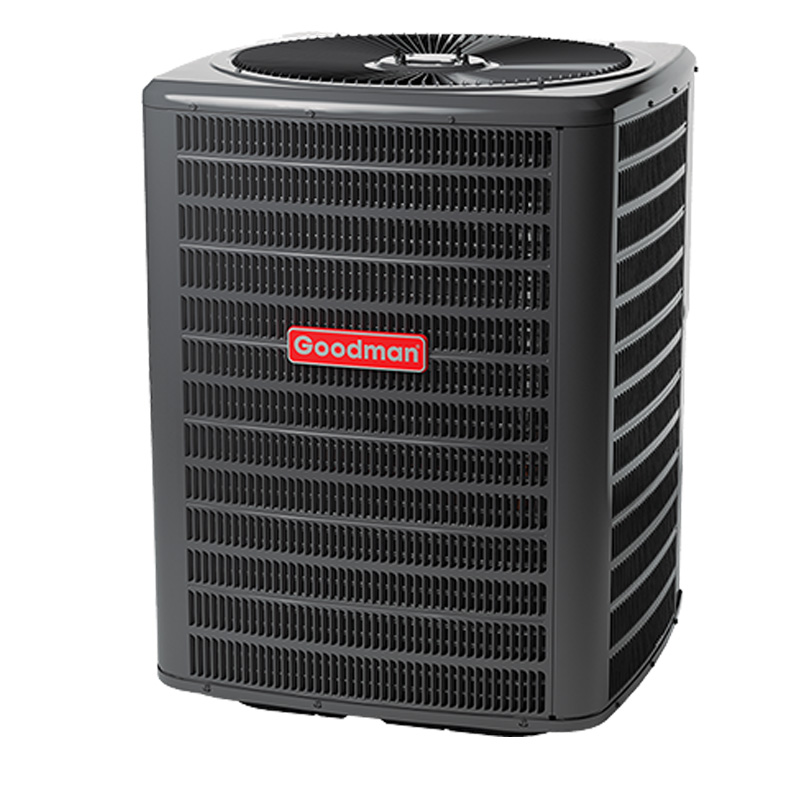
The 96% AFUE rating puts the furnace in the high-efficiency tier, meaning only about four cents of every dollar spent on gas escapes as waste heat. Two-stage operation on the furnace side lets it run at a lower capacity most of the time, improving comfort, reducing temperature swings, and lowering sound levels compared to a single-stage unit. The R-32 refrigerant used in the outdoor heat pump unit carries a lower global warming potential than the older R-410A it replaces, which also matters for long-term serviceability as the industry phases out higher-GWP refrigerants.
At 2.5 tons, this system is sized for homes roughly in the 1,200 to 1,800 square foot range, though actual sizing depends on insulation, climate zone, window area, and a proper Manual J load calculation. The upflow configuration suits homes where the air handler or furnace sits in a basement or utility closet and ductwork runs upward through the ceiling. Buyers who want strong energy savings on both the cooling and heating sides without paying premium-brand prices will find the spec sheet competitive; those who want a worry-free long-run track record may want to weigh the trade-offs discussed below.
This system delivers a genuinely capable spec sheet at a price point 15 to 25 percent below comparable Trane, Lennox, and Carrier setups, making dual fuel technology accessible to budget-conscious buyers. The two-stage furnace and 96% AFUE are real comfort and efficiency wins, but Goodman's documented history of capacitor failures, evaporator coil leaks, and compressor lifespans shorter than premium brands means long-term ownership costs can erode the upfront savings. Installation quality matters more with this brand than most, so contractor selection is as important as the equipment choice itself.
Overall score is the average of the five ratings above.
What we like
- 96% AFUE furnace ranks in the high-efficiency tier and cuts heating waste to roughly 4 percent
- Two-stage furnace operation improves comfort and reduces on/off cycling noise
- Dual fuel logic automatically optimizes between electric and gas heat, lowering energy bills in variable climates
- R-32 refrigerant is lower-GWP and positions the system well as the industry moves away from R-410A
- Purchase price is typically 15 to 25 percent below equivalent Carrier, Trane, or Lennox systems
Trade-offs
- Dual-run capacitors are the most frequently reported failure, usually requiring a 300 to 600 dollar service call within the first several years
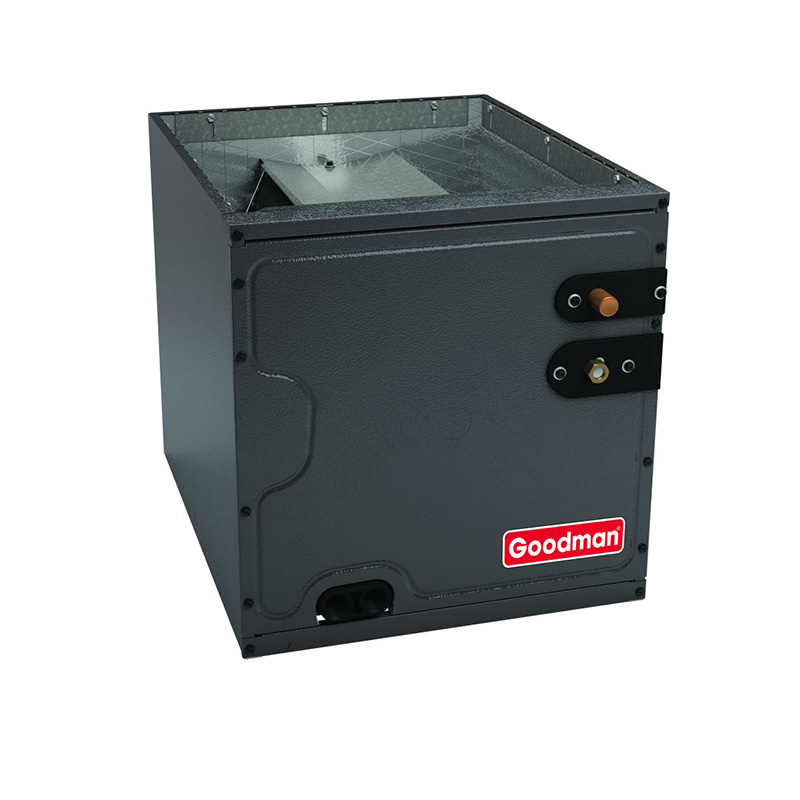
- Evaporator coil leaks appear in a meaningful share of owner reports, a potential repair cost beyond the warranty window
- Compressor lifespan averages 10 to 14 years versus 15 to 20 years for premium-brand compressors, affecting total cost of ownership
- A minority of owners report refrigerant leaks in the first year, typically traced to installation or initial charge issues rather than the equipment itself
What homeowners and pros say about Goodman
Homeowners who research Goodman online encounter a split picture. On ConsumerAffairs, the brand scores around 2.5 out of 5, but that platform draws a disproportionate share of frustrated owners, and the recurring complaint is not early failure but rather repair costs that start climbing after roughly year seven. On Google dealer reviews, where the sample includes satisfied customers too, scores average around 3.8 out of 5 across several hundred reviews per location, and the most consistent praise is straightforward: the price made the system accessible when a premium brand was not in the budget. For this dual fuel system specifically, buyers tend to be satisfied with the comfort logic and the heating efficiency in the early years, but the ownership curve matters when evaluating the full picture.
HVAC technicians who service Goodman equipment frequently flag two patterns worth knowing before you buy this system. First, dual-run capacitors are the most commonly reported failure point across the Goodman lineup, and while the repair is usually quick and costs between 300 and 600 dollars, it happens often enough that experienced techs recommend budgeting for it. Evaporator coil leaks also show up in a meaningful share of owner accounts, and those are a more expensive fix outside the warranty window. Compressor lifespan, measured honestly, tends to fall in the 10 to 14 year range for Goodman versus 15 to 20 years documented for premium brands. A small number of owners report refrigerant leaks in the first year, which technicians consistently attribute to installation or initial charge problems rather than factory defects. That last point reinforces what the brand’s own reputation makes clear: who installs this system shapes the outcome as much as what is in the box.
Sources: ConsumerAffairs Goodman owner reviews, AHRI Directory of Certified Product Performance, U.S. DOE appliance and equipment efficiency standards, Goodman product specification sheets.
What it costs to run
At 14.3 SEER2, cooling this 2.5-ton system for a typical 1200-hour cooling season at the U.S. average electricity rate of $0.17/kWh works out to roughly $428 per year in cooling, about $29 less per year than a minimum-efficiency 13.4 SEER2 unit of the same size. Your real cost depends on your climate and local rate.
Method: (30,000 BTU/hr ÷ 14.3 SEER2) × 1200 hours ÷ 1000 × $0.17/kWh. Rate source: U.S. EIA average; cooling hours: moderate-climate estimate.
How it compares
| Brand | Comparable model | SEER2 | Stage | Price position |
|---|---|---|---|---|
| Goodman | Dual Fuel Hybrid System (this unit) – 2.5 Ton, 80K BTU, 96% AFUE | 14.3 | Two-stage | Value pick |
| Carrier | Performance Series Dual Fuel (25HCB3 / 59SP5) | 15.0 | Two-stage | Typically 15 to 25 percent more than this Goodman system |
| Trane | XR15 Dual Fuel (XR15 heat pump / S9X2 furnace) | 15.0 | Two-stage | Typically 15 to 25 percent more than this Goodman system |
| Lennox | Merit Series Dual Fuel (14HPX / ML96V furnace) | 14.3 | Two-stage | Typically 15 to 25 percent more than this Goodman system |
Competitor rows are comparable single-stage units at similar efficiency; price is relative position, not a quote.
Questions about this system
What outdoor temperature does the system switch from heat pump to gas furnace?
The crossover point, often called the balance point, is typically set between 35 and 40 degrees Fahrenheit but can be programmed by your installer based on local gas rates and your heat pump's rated heating capacity. Setting it correctly during commissioning is one of the more important steps in a dual fuel install and directly affects your operating costs.
Does the R-32 refrigerant affect who can service this unit?
R-32 requires technicians to hold an EPA Section 608 certification, which most licensed HVAC contractors already carry. However, R-32 is mildly flammable, so some shops may require updated tools or procedures; confirm your servicing contractor is comfortable with A2L refrigerants before committing to a maintenance agreement.
How important is contractor selection for a Goodman system?
Critically important. Goodman's own documented performance leans heavily on install quality, and the first-year refrigerant leaks reported by some owners are almost always traced to improper charging or line set connections rather than factory defects. An experienced installer who performs a Manual J load calculation and follows startup procedures will significantly affect how long the system lasts and how efficiently it runs.
What does the Goodman warranty cover on this dual fuel system, and are there conditions?
Goodman offers a 10-year parts limited warranty when the system is registered online within 60 days of installation; the compressor typically carries its own extended coverage under that registration. If registration is missed, coverage often drops to five years. Warranty claims generally require a licensed contractor to document the failure, and labor costs are not covered, which is worth budgeting for.
Is 2.5 tons the right size for my home, or should I go up to 3 tons?
Tonnage should be determined by a Manual J load calculation, not square footage rules of thumb alone. An oversized system short-cycles, which reduces dehumidification, increases wear, and can cause the very comfort problems a two-stage furnace is designed to avoid. Ask your contractor to show you their load calculation before finalizing equipment size.
Specifications
| Cooling capacity | 2.5 Ton |
| Efficiency | 14.3 SEER2 |
| Furnace output | 80000 BTU |
| Furnace efficiency | 96% AFUE |
| Configuration | Upflow |
| Refrigerant | R-32 |