Goodman 2.5 Ton Package Unit Air Conditioning Cooling Only With Electric Heating | 13.4 SEER2 | Horizontal | R32
View on AC Direct see your lowest price →Check current price on AC Direct →
Key features
- 2.5-ton cooling capacity in a single horizontal-discharge package cabinet
- 13.4 SEER2 efficiency rating meeting current federal minimum standards
- R-32 refrigerant with lower global warming potential than legacy R-410A
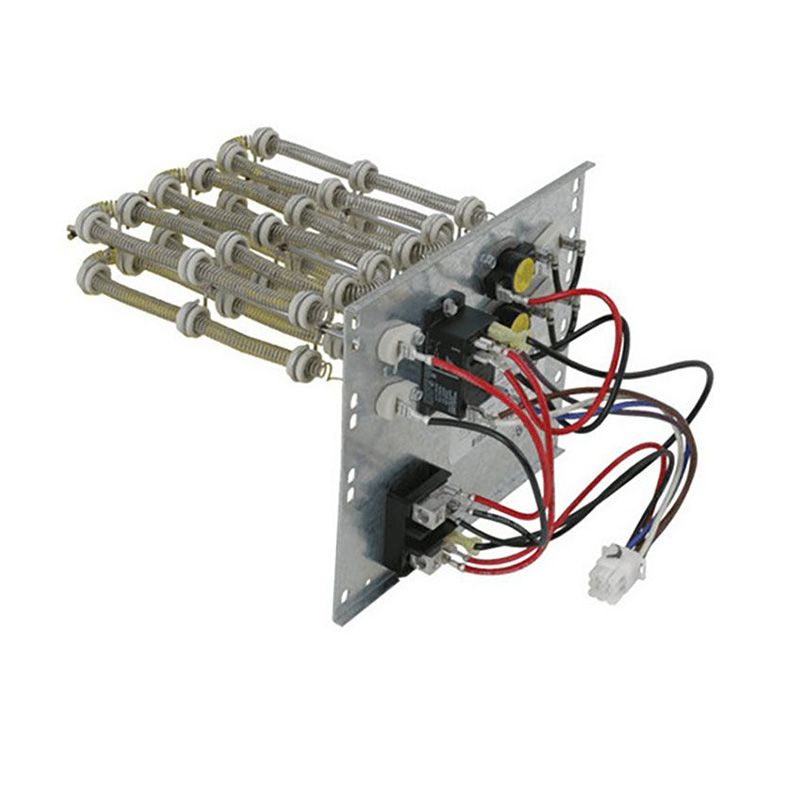
- Integrated electric heat strips for supplemental or emergency heating
- Horizontal configuration for manufactured-home and crawl-space duct connections
- Single-stage scroll compressor with factory-installed filter drier
About this system
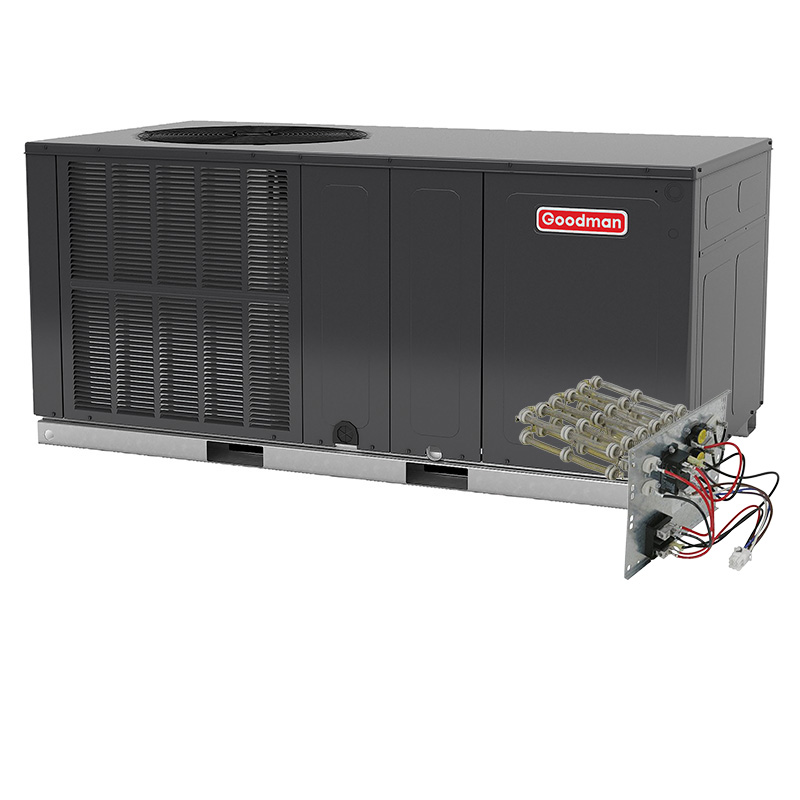
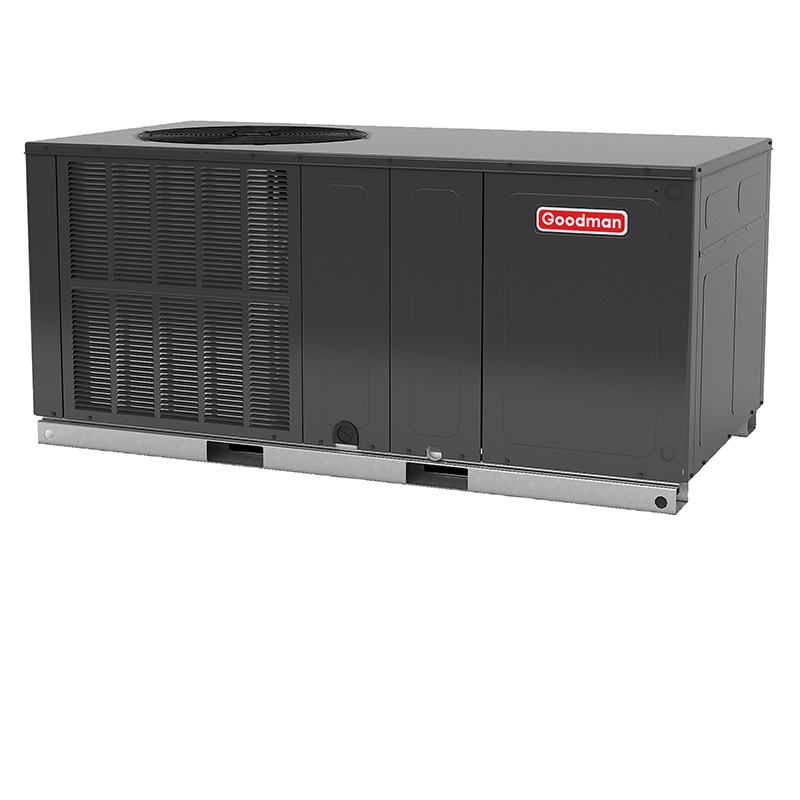
The Goodman 2.5-ton horizontal package unit is an all-in-one cooling and electric heating system designed for applications where a traditional split system simply will not work. Manufactured homes, modular homes, crawl-space installations, and tight mechanical rooms where horizontal ductwork runs directly off the unit are its natural habitat. Everything sits in a single cabinet — compressor, evaporator coil, condenser coil, and electric heat strips — which simplifies the installation footprint and eliminates the need for a separate indoor air handler or furnace.
At 13.4 SEER2, this unit meets current federal minimum efficiency standards and delivers competent, reliable cooling without the price premium of two-stage or variable-speed technology. R-32 refrigerant is a meaningful upgrade over the older R-410A that populated Goodman’s previous lineup: it carries a lower global warming potential, operates at slightly lower pressure, and has better heat-transfer properties that can contribute to real-world efficiency. For a homeowner who needs straightforward replacement cooling with electric supplemental heat, this configuration checks the practical boxes without asking for a budget that a premium brand would require.
The 2.5-ton capacity targets homes roughly in the 1,200 to 1,600 square foot range, though the right size always depends on a proper Manual J load calculation for your specific climate, insulation, and window area. Because this is a cooling-only unit with electric heat strips rather than a heat pump, heating costs in cold climates will be higher than a heat-pump package unit would produce. It is best suited for mild-winter climates or homes where electric heating is a backup rather than a primary heat source.
The Goodman 2.5-ton horizontal package unit is an honest, no-frills solution for manufactured homes and tight horizontal-duct installations where cost-effectiveness matters more than premium longevity. At 13.4 SEER2 it will not win efficiency awards, but it prices in 15 to 25 percent below comparable Carrier, Trane, and Lennox hardware and does the core job reliably when installed correctly. Owners who budget for a capacitor replacement around year 7 and keep annual maintenance current will likely get a decade or more of service from it.
Overall score is the average of the five ratings above.
What we like
- Priced 15 to 25 percent below comparable Carrier, Trane, and Lennox package units
- All-in-one horizontal cabinet is ideal for manufactured homes and crawl-space installations
- R-32 refrigerant offers lower environmental impact and good heat-transfer efficiency
- Simple single-stage design means fewer electronic components to service
- Widely stocked by HVAC distributors, making parts and service broadly available
Trade-offs
- Compressor lifespan averages 10 to 14 years versus 15 to 20 years in premium brands
- Dual-run capacitor failures are the most commonly reported repair, typically starting around year 7
- Evaporator coil leaks appear in a meaningful portion of owner reviews, a known Goodman pattern
- 13.4 SEER2 is entry-level efficiency; energy bills will be noticeably higher than a 17-plus SEER2 system over the long run
What homeowners and pros say about Goodman
Homeowners who have lived with Goodman package units tend to land in two camps. Those who had a careful installation and kept up with annual tune-ups often report a decade-plus of service and point to the lower purchase price as genuine value. Those who ran into trouble more frequently cite repairs arriving sooner than expected, a pattern that lines up with Goodman’s ConsumerAffairs score of roughly 2.5 out of 5, a channel that skews toward complaints and where the recurring theme is repair costs rising after approximately year 7. Google dealer reviews across hundreds of locations sit closer to 3.8 out of 5, where affordability earns the most consistent praise. The gap between those two scores tells a real story: buyers who go in with realistic expectations and budget for a capacitor swap at some point in year 7 or 8 tend to come away satisfied; buyers who expect premium-brand durability at a value price are more likely to be disappointed.
HVAC technicians who work on Goodman package units regularly point to the dual-run capacitor as the most predictable service call, a quick repair typically in the 300 to 600 dollar range that should not be treated as a system failure but rather as routine aging. More consequential are evaporator coil leaks, which appear in a meaningful share of owner reviews and can run into real money to diagnose and repair. Compressor longevity is honest rather than impressive, averaging 10 to 14 years compared to 15 to 20 years in Trane, Carrier, or Lennox compressors. A small minority of owners have reported refrigerant leaks within the first year, which technicians generally attribute to install or charging issues rather than the hardware itself, underscoring why selecting an experienced installer matters as much as the brand name on the cabinet.
Sources: ConsumerAffairs Goodman owner reviews, AHRI Directory of Certified Product Performance, U.S. DOE appliance and equipment efficiency standards, Goodman product specification sheets.
What it costs to run
At 13.4 SEER2, cooling this 2.5-ton system for a typical 1200-hour cooling season at the U.S. average electricity rate of $0.17/kWh works out to roughly $457 per year in cooling, about $0 less per year than a minimum-efficiency 13.4 SEER2 unit of the same size. Your real cost depends on your climate and local rate.
Method: (30,000 BTU/hr ÷ 13.4 SEER2) × 1200 hours ÷ 1000 × $0.17/kWh. Rate source: U.S. EIA average; cooling hours: moderate-climate estimate.
How it compares
| Brand | Comparable model | SEER2 | Stage | Price position |
|---|---|---|---|---|
| Goodman | 2.5-Ton Horizontal Package Unit (this unit) | 13.4 | Single-stage | Value pick |
| Carrier | WeatherMaster 50XC series | 14.0 | Single-stage | Typically 15 to 25 percent more than this Goodman |
| Trane | Precedent YSC series | 14.0 | Single-stage | Typically 15 to 25 percent more than this Goodman |
| Lennox | LRP14 series | 14.0 | Single-stage | Typically 15 to 25 percent more than this Goodman |
Competitor rows are comparable single-stage units at similar efficiency; price is relative position, not a quote.
Questions about this system
Can this unit replace an existing package unit on a manufactured home without major ductwork changes?
In most cases yes, provided your existing ductwork uses a horizontal connection that matches the unit's supply and return openings. You should verify the cabinet dimensions and duct collar sizes against your current setup before ordering, and confirm the electrical service at the disconnect matches the unit's requirements. A qualified technician familiar with manufactured-home installations should do the final hookup.
How does R-32 refrigerant affect service and maintenance compared to R-410A?
R-32 is mildly flammable (A2L classification), which means technicians are required to use specific handling procedures and certified recovery equipment. Most HVAC contractors have already updated their tools for A2L refrigerants, but it is worth confirming before you book service. On the upside, R-32 has a lower global warming potential and slightly better efficiency characteristics than R-410A.
What is the most likely repair I will face in the first ten years?
Based on documented owner experience with Goodman package units, the dual-run capacitor is the most common failure, typically showing up after year 7. This is a relatively inexpensive fix, usually in the 300 to 600 dollar range including labor. Evaporator coil leaks are the second most frequently reported issue and are more costly to address, so keeping the coil clean and scheduling annual checks is worthwhile.
Is 13.4 SEER2 enough, or should I spend more for higher efficiency?
13.4 SEER2 meets current minimum federal standards and will cool your home adequately. Whether upgrading efficiency pays off depends on your local electricity rates, how many cooling hours your climate accumulates per year, and how long you plan to stay in the home. In hot, high-use climates the energy savings from a 16-plus SEER2 unit can offset the higher upfront cost over five to eight years; in moderate climates the payback period stretches considerably longer.
Does this unit heat efficiently, or should I consider a heat-pump package unit instead?
Electric resistance heat strips convert electricity to heat at roughly 100 percent efficiency, which sounds good but is actually the least efficient form of electric heat compared to a heat pump, which can move two to three units of heat per unit of electricity consumed. If your winters are mild and heating is occasional, the electric heat strips are fine and reduce upfront cost. If heating is a significant seasonal load, a heat-pump package unit will lower your annual utility bills enough to justify its higher purchase price.
Specifications
| Cooling capacity | 2.5 Ton |
| Efficiency | 13.4 SEER2 |
| Configuration | Horizontal |
| Refrigerant | R-32 |