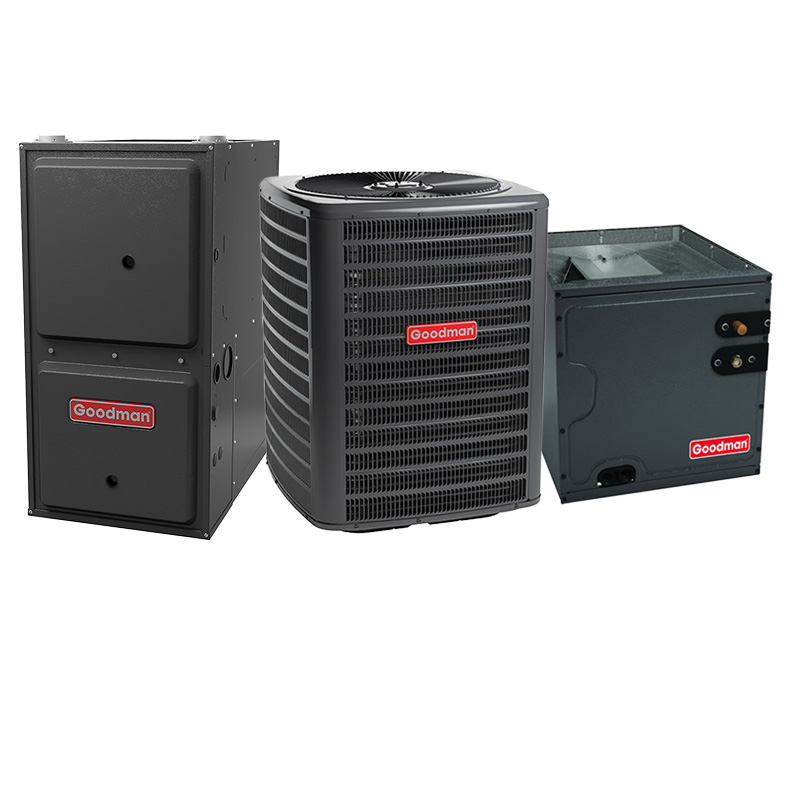
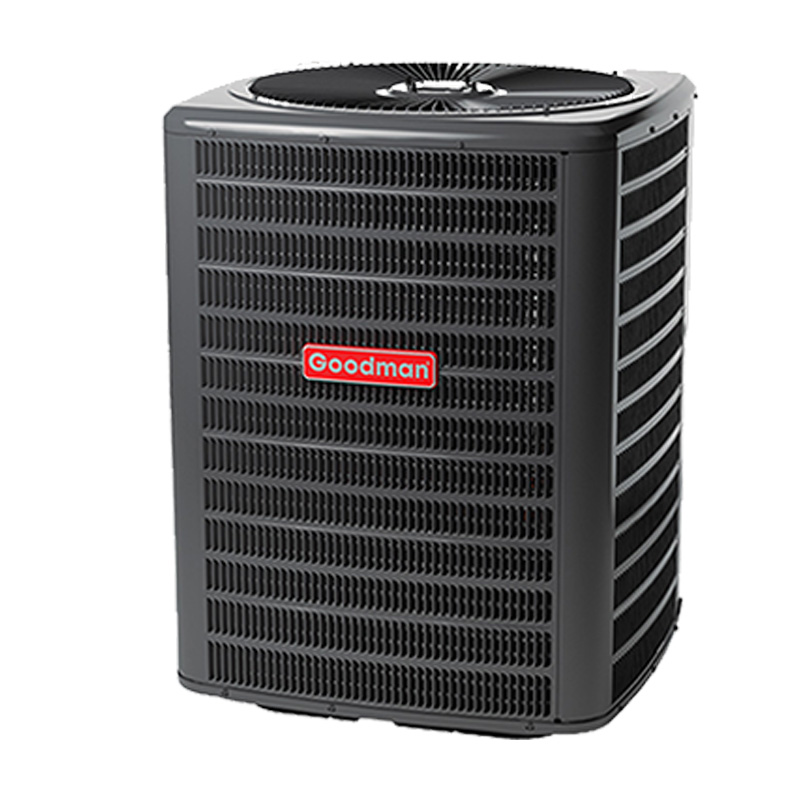
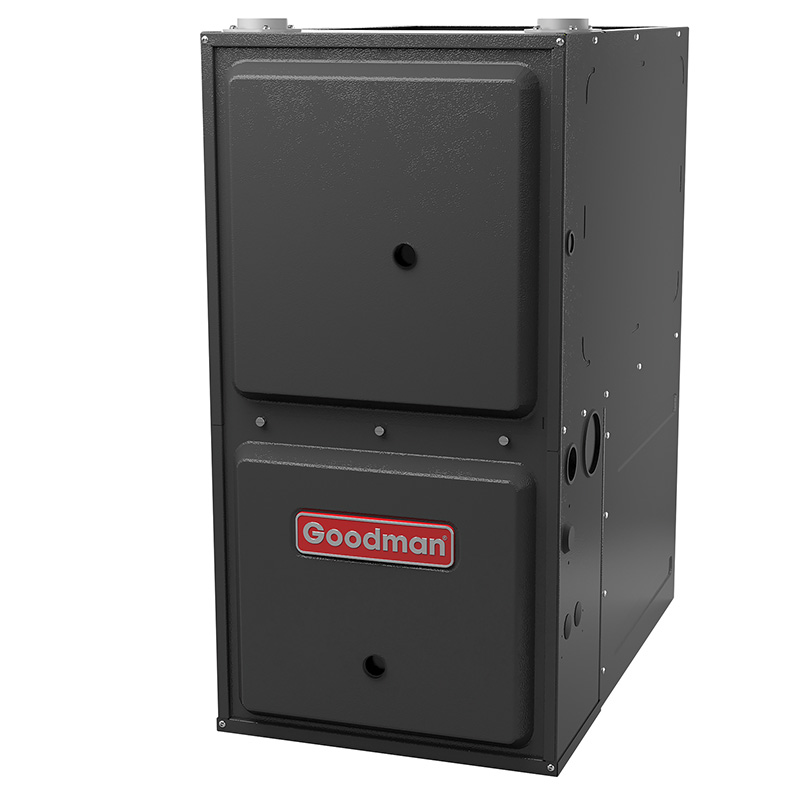
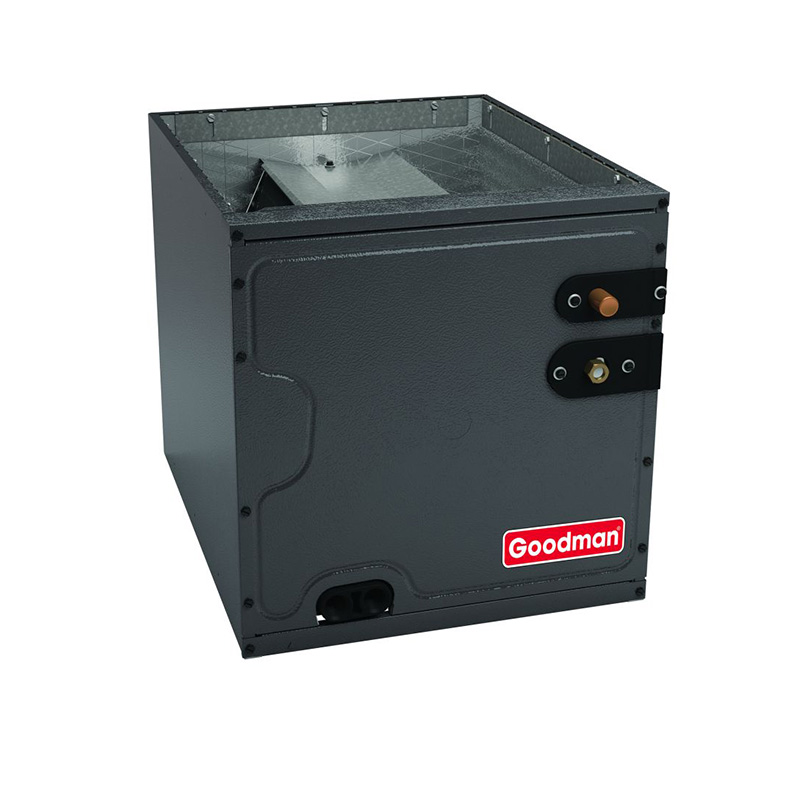
Goodman 2 Ton 13.8 SEER2 40000 BTU 96% AFUE Multi-Speed ECM Gas Furnace System – Downflow | R32
View on AC Direct see your lowest price →Check current price on AC Direct →
Key features
- 96% AFUE multi-speed ECM gas furnace rated at 40,000 BTU/hr heat output
- 13.8 SEER2 cooling efficiency, meeting current federal minimum standards
- Downflow configuration designed for floor-exit duct systems and crawlspace installations
- R-32 refrigerant with lower global warming potential than legacy R-410A systems
- ECM blower motor for reduced electrical consumption and quieter airflow vs. standard PSC motors
- 2-ton (24,000 BTU/hr) cooling capacity suited to smaller or well-insulated spaces
About this system
This Goodman 2-ton, 13.8 SEER2 downflow system pairs a cooling-only split with a 40,000 BTU, 96% AFUE multi-speed ECM gas furnace, making it a strong candidate for homes where ductwork exits through a floor or crawlspace rather than an attic. The downflow configuration is a specific constraint, so confirm your existing duct layout before purchasing. At 2 tons, this system is sized for spaces roughly in the 700 to 1,100 square foot range, depending on local climate, insulation quality, and ceiling height. The R-32 refrigerant is a notable upgrade over older R-410A units: it carries a lower global warming potential and is increasingly the direction the industry is moving.
The 96% AFUE rating on the furnace is genuinely strong, meaning roughly 96 cents of every dollar of gas you burn becomes useful heat. The ECM (electronically commutated motor) blower is more efficient than a standard PSC motor and supports variable airflow, which can improve comfort and reduce humidity in cooling mode. The 13.8 SEER2 cooling efficiency sits at the practical entry point of the current regulatory minimums in most regions, so it is not a high-efficiency standout on the cooling side, but it is code-compliant and adequate for moderate climates. Buyers in the hottest southern markets who run their AC heavily from May through September may want to weigh a higher SEER2 unit, while those with shorter cooling seasons will find 13.8 SEER2 a reasonable fit.
This Goodman system delivers a legitimate 96% AFUE furnace and a code-compliant 13.8 SEER2 cooling unit at a price point that undercuts comparable Carrier, Trane, and Lennox equipment by a meaningful margin. The trade-off is a brand history that shows real component failure rates above premium competitors, and real-world longevity that depends heavily on how well it is installed and maintained. It is a reasonable choice for cost-conscious buyers who vet their installer carefully and budget for possible repairs after year seven.
Overall score is the average of the five ratings above.
What we like
- Entry price is typically 15 to 25 percent below comparable Carrier, Trane, and Lennox systems
- 96% AFUE furnace rating cuts heating fuel waste to about 4 percent, a top-tier efficiency level
- R-32 refrigerant is more environmentally responsible and increasingly the industry standard
- ECM blower motor improves part-load efficiency and can reduce static noise compared to PSC motors
- Downflow furnace fills a specific installation need that not every lineup addresses
Trade-offs
- Dual-run capacitors are the most frequently reported failure point, typically needing replacement in the 300 to 600 dollar range
- Evaporator coil leaks appear in a notable share of owner reports, a potential mid-life repair cost
- Compressor lifespan averages 10 to 14 years versus 15 to 20 years for premium-brand compressors
- 13.8 SEER2 cooling efficiency is at the regulatory floor, leaving efficiency gains on the table for households with long cooling seasons
What homeowners and pros say about Goodman
Homeowners who have owned Goodman systems long enough to have service history tend to land in two camps. On ConsumerAffairs, where the audience skews toward people who had a problem bad enough to write about it, Goodman scores around 2.5 out of 5, with the recurring complaint being repair costs that start climbing after roughly year seven. The capacitor is the most frequently named culprit: a relatively low-cost fix at 300 to 600 dollars, but annoying when it happens more than once. Evaporator coil leaks show up with enough regularity in those reviews to be worth noting, and the compressor lifespan of 10 to 14 years trails the 15 to 20 years more commonly associated with Carrier, Trane, and Lennox. A smaller share of owners report refrigerant leaks within the first year, which technicians generally attribute to charge errors at installation rather than a product defect.
On Google dealer reviews, where the sample includes customers who had routine positive experiences, Goodman equipment lands around 3.8 out of 5 across several hundred reviews per dealer location, with affordability cited most often as the reason buyers chose it. HVAC pros who install Goodman regularly tend to echo that framing: the equipment is serviceable and the price is real, but they are consistent that the install itself is the deciding factor in longevity. For this specific downflow ECM system, the 96% AFUE furnace is genuinely competitive with premium brands at that efficiency level, so the efficiency story on heating holds up. The 13.8 SEER2 cooling side is where expectations need to stay measured: it is compliant and functional, not a leader.
Sources: ConsumerAffairs Goodman owner reviews, AHRI Directory of Certified Product Performance, U.S. DOE appliance and equipment efficiency standards, Goodman product specification sheets.
What it costs to run
At 13.8 SEER2, cooling this 2-ton system for a typical 1200-hour cooling season at the U.S. average electricity rate of $0.17/kWh works out to roughly $355 per year in cooling, about $10 less per year than a minimum-efficiency 13.4 SEER2 unit of the same size. Your real cost depends on your climate and local rate.
Method: (24,000 BTU/hr ÷ 13.8 SEER2) × 1200 hours ÷ 1000 × $0.17/kWh. Rate source: U.S. EIA average; cooling hours: moderate-climate estimate.
How it compares
| Brand | Comparable model | SEER2 | Stage | Price position |
|---|---|---|---|---|
| Goodman | 2 Ton 13.8 SEER2 / 96% AFUE Downflow ECM System | 13.8 | Multi-speed | Value pick |
| Carrier | Comfort Series (24ACC / 59SC5 pairing) | 14.0 | Single-stage | Typically 15 to 25 percent more than the Goodman |
| Trane | XR14 / S9X1 pairing | 14.0 | Single-stage | Typically 15 to 25 percent more than the Goodman |
| Lennox | Merit Series (14ACX / ML196 pairing) | 14.0 | Single-stage | Typically 15 to 25 percent more than the Goodman |
Competitor rows are comparable single-stage units at similar efficiency; price is relative position, not a quote.
Questions about this system
Is a downflow furnace the right choice for my home?
A downflow furnace blows heated or cooled air downward into ductwork that runs below the unit, typically through a floor into a crawlspace or basement plenum. If your duct system exits upward through an attic, you need an upflow or horizontal unit instead. Confirm your duct configuration with an HVAC technician before ordering.
What does R-32 refrigerant mean for me as a homeowner?
R-32 has a lower global warming potential than R-410A and is considered easier to recycle. For day-to-day operation, you will not notice a difference. Where it matters is servicing: make sure any technician you hire is certified to handle R-32, as it requires slightly different handling procedures than R-410A.
Is 2 tons enough for my space?
As a rough guide, 2 tons handles approximately 700 to 1,100 square feet in average climates, but the right size depends on insulation, window area, ceiling height, and local design temperatures. An undersized or oversized unit causes comfort and efficiency problems, so have a licensed contractor perform a Manual J load calculation before finalizing your purchase.
What are the most likely repairs I should budget for on a Goodman system?
The most commonly reported failure on Goodman equipment is the dual-run capacitor, which typically costs 300 to 600 dollars to replace and is a straightforward repair. Evaporator coil leaks are a secondary concern documented in owner reviews, and compressor replacement becomes a risk after roughly 10 to 14 years. Budgeting for a service contract or a repair reserve after year seven is a practical step.
How much does install quality actually matter with a Goodman system?
HVAC technicians consistently flag install quality as the single largest factor in how long any Goodman unit lasts. Refrigerant charge errors, poor duct sealing, and incorrect airflow setup are common contributors to early failures, including the first-year refrigerant leaks that appear in a minority of owner reports. Choosing an experienced, licensed installer and confirming they pressure-test the system is not optional if you want to reach the full expected service life.
Specifications
| Cooling capacity | 2 Ton |
| Efficiency | 13.8 SEER2 |
| Furnace output | 40000 BTU |
| Furnace efficiency | 96% AFUE |
| Configuration | Downflow |
| Refrigerant | R-32 |